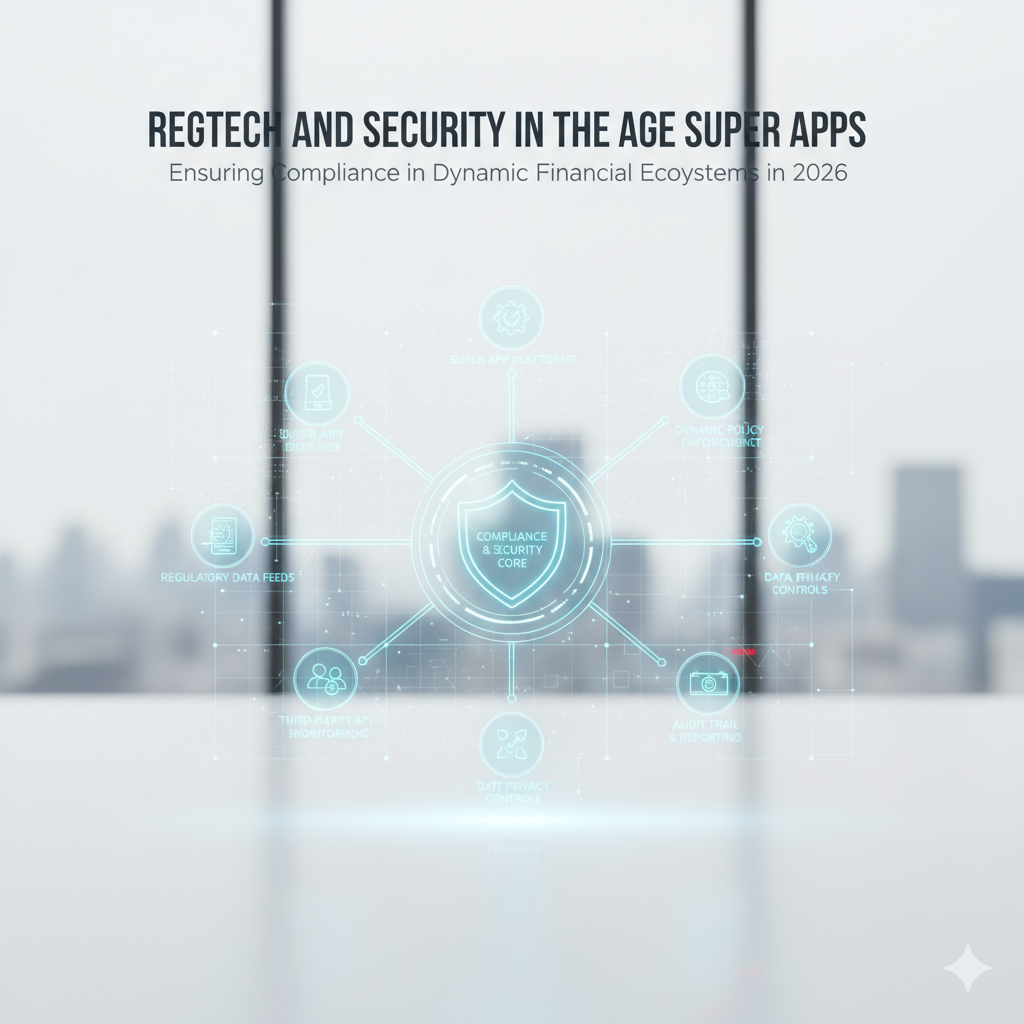
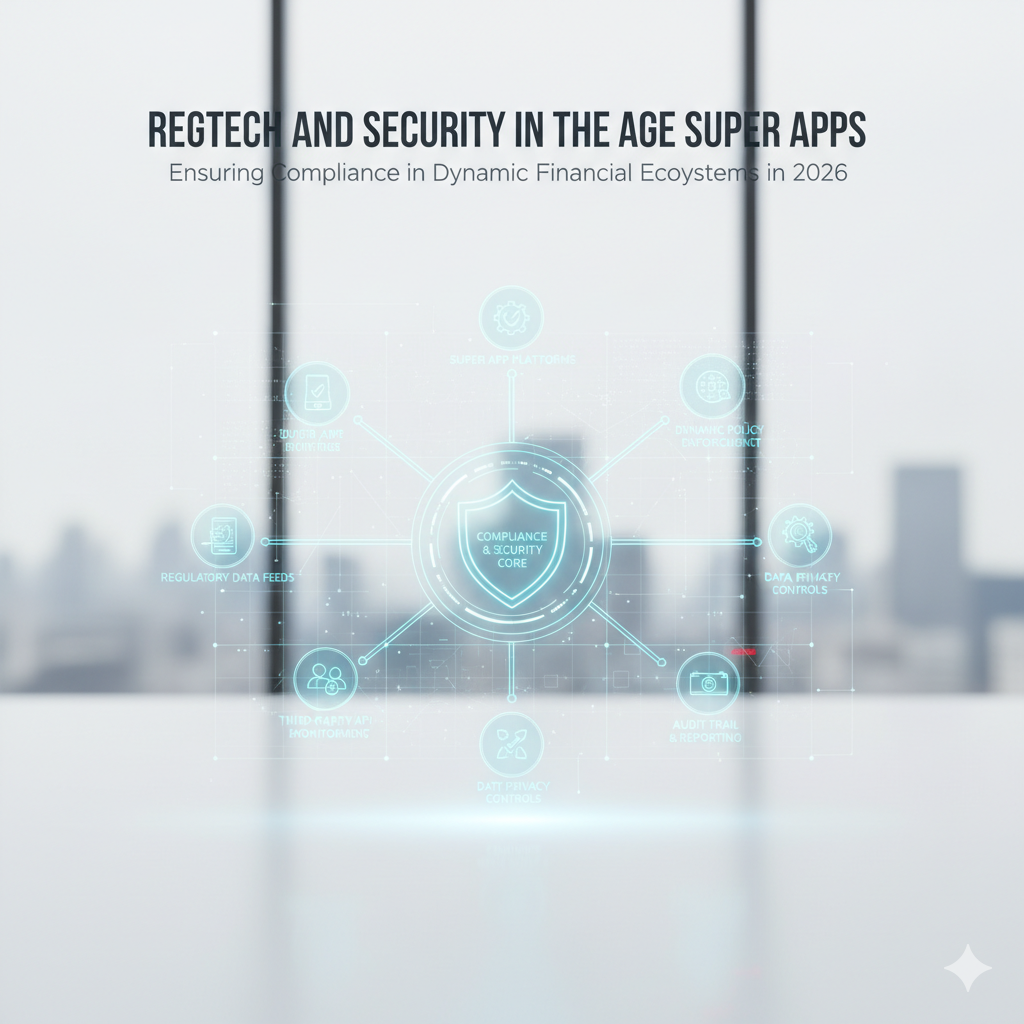
RegTech and Security in the Age of Super Apps: Ensuring Compliance in Dynamic Financial Ecosystems in 2026
Executive Summary
As super apps become the dominant paradigm in financial services, the intersection of RegTech (Regulatory Technology) and advanced security frameworks has emerged as a critical competitive differentiator. According to KPMG's analysis, RegTech investment reached $8.6 billion in 2025, reflecting growing recognition that compliance must evolve from a back-office function to core product infrastructure. This article examines how platforms like FinClip are enabling financial instit
Executive Summary
As super apps become the dominant paradigm in financial services, the intersection of RegTech (Regulatory Technology) and advanced security frameworks has emerged as a critical competitive differentiator. According to KPMG's analysis, RegTech investment reached $8.6 billion in 2025, reflecting growing recognition that compliance must evolve from a back-office function to core product infrastructure. This article examines how platforms like FinClip are enabling financial institutions to build secure super app ecosystems that not only meet current regulatory requirements but are also designed to adapt to evolving compliance landscapes, particularly in the context of dynamic mini-app ecosystems where third-party services operate within banking applications.
The Regulatory Challenge of Super App Ecosystems
Complexity of Multi-Service Compliance
Super app ecosystems introduce unprecedented regulatory complexity:
Traditional Banking App Compliance:
Single entity responsibility
Controlled technology stack
Predictable update cycles
Established regulatory frameworks
Super App Ecosystem Compliance:
Multiple entity accountability
Diverse technology stacks
Dynamic service composition
Evolving regulatory requirements
Key Regulatory Focus Areas for 2026
Regulatory attention in 2026 is particularly focused on several critical areas:
Third-Party Risk Management: Ensuring that integrated services meet the same security and compliance standards as core banking functions.
Data Sovereignty and Cross-Border Compliance: Managing data residency requirements in globally distributed service ecosystems.
Real-Time Transaction Monitoring: Detecting and preventing fraud across integrated services with varying security postures.
Consumer Protection in Automated Environments: Ensuring adequate safeguards for transactions initiated by AI agents or automated systems.
Advanced Security Architecture for Super Apps
Multi-Layered Security Framework
Effective super app security requires a comprehensive, multi-layered approach:
Layer 1: Infrastructure Security
Secure containerization of all third-party services
Isolation of mini-app execution environments
Hardware-based security modules for sensitive operations
Layer 2: Application Security
Code signing and verification for all mini-apps
Runtime integrity monitoring
Secure inter-process communication protocols
Layer 3: Data Security
End-to-end encryption for all data transmissions
Granular access controls at the data element level
Comprehensive audit trails for all data access
Layer 4: Operational Security
Real-time threat detection and response
Automated compliance monitoring
Continuous security posture assessment
Technical Implementation Patterns
Successful security implementations in super app ecosystems typically employ several key patterns:
Pattern 1: Zero-Trust Architecture
No implicit trust for any service or user
Continuous verification of all interactions
Least-privilege access controls
Pattern 2: Defense in Depth
Multiple overlapping security controls
Fail-safe default configurations
Comprehensive monitoring and alerting
Pattern 3: Security by Design
Security considerations integrated from initial design
Automated security testing throughout development lifecycle
Security requirements as first-class citizen in architecture
FinClip: Regulatory Compliance and Security Platform
Built-In Compliance Capabilities
FinClip provides comprehensive regulatory compliance features specifically designed for super app ecosystems:
Core Compliance Features:
Automated Regulatory Mapping: Pre-built compliance frameworks for major regulations (GDPR, PSD2, CCPA, etc.) that can be customized for specific implementations.
Real-Time Compliance Monitoring: Continuous assessment of all ecosystem activities against regulatory requirements.
Automated Reporting: Generation of compliance reports in formats required by different regulatory bodies.
Audit Trail Management: Comprehensive logging of all activities with tamper-evident storage and retrieval capabilities.
Advanced Security Controls
FinClip's security architecture includes several advanced features:
Dynamic Sandboxing: Each mini-app runs in an isolated environment with controlled access to system resources and user data.
Real-Time Threat Detection: Machine learning algorithms that identify suspicious patterns across the entire ecosystem.
Automated Vulnerability Management: Continuous scanning for security vulnerabilities with automated patching capabilities.
Comprehensive Access Controls: Fine-grained permission management for all users, services, and data elements.
Case Study: Global Banking Consortium Compliance
A consortium of international banks implemented a shared super app platform using FinClip, achieving remarkable compliance results:
94% Reduction in Regulatory Reporting Time: Through automated compliance monitoring and reporting.
Zero Regulatory Violations: Over 24 months of operation across multiple jurisdictions.
83% Faster Third-Party Onboarding: Through standardized security and compliance assessment processes.
67% Reduction in Security Incident Response Time: Through integrated threat detection and response capabilities.
Regulatory Technology (RegTech) Innovation
AI-Driven Compliance Automation
The most advanced RegTech solutions in 2026 leverage artificial intelligence for compliance automation:
Natural Language Processing for Regulatory Updates: AI systems that automatically interpret new regulatory requirements and map them to existing controls.
Predictive Compliance Analytics: Machine learning models that forecast potential compliance risks based on historical patterns and emerging trends.
Automated Control Testing: AI systems that continuously test compliance controls and identify gaps or weaknesses.
Intelligent Exception Management: Automated handling of compliance exceptions with appropriate escalation and resolution processes.
Blockchain for Regulatory Transparency
Blockchain technology is increasingly being used to enhance regulatory transparency:
Immutable Audit Trails: Tamper-proof records of all transactions and compliance activities.
Smart Contract Compliance: Automated enforcement of regulatory requirements through programmable contracts.
Regulatory Data Sharing: Secure, transparent sharing of compliance data between regulated entities and regulators.
Implementation Strategy for Financial Institutions
Phase 1: Foundation Building (3-6 Months)
Implement core security and compliance platform (e.g., FinClip)
Establish industry leadership in regulatory innovation
Risk Management in Dynamic Ecosystems
Proactive Risk Identification and Mitigation
Effective risk management in super app ecosystems requires proactive approaches:
Continuous Risk Assessment: Real-time evaluation of emerging risks across the entire ecosystem.
Dynamic Risk Scoring: Automated calculation of risk scores for all services, transactions, and users.
Automated Risk Mitigation: Pre-defined responses to identified risks with appropriate escalation procedures.
Comprehensive Risk Reporting: Clear, actionable risk information for all stakeholders.
Third-Party Risk Management Framework
Managing third-party risks requires a structured approach:
Assessment Phase:
Comprehensive security and compliance evaluation
Technical architecture review
Operational capability assessment
Integration Phase:
Secure onboarding processes
Clear contractual obligations
Defined performance metrics
Monitoring Phase:
Continuous security monitoring
Regular compliance assessments
Performance tracking and reporting
Response Phase:
Incident response procedures
Remediation requirements
Exit strategies for non-compliant partners
Future Trends and Strategic Recommendations
Emerging Regulatory and Security Developments
Looking beyond 2026, several key trends will shape the regulatory and security landscape:
AI Regulation and Governance: Increasing focus on regulating AI systems in financial services, particularly for autonomous decision-making.
Quantum-Resistant Cryptography: Preparation for quantum computing threats to current encryption standards.
Cross-Jurisdictional Regulatory Harmonization: Efforts to create consistent regulatory frameworks across different markets.
Privacy-Preserving Technologies: Advanced techniques for data analysis while maintaining privacy protections.
Strategic Recommendations for Financial Institutions
Based on current trends and developments, financial institutions should consider the following strategic approaches:
Adopt Compliance-by-Design Principles: Integrate regulatory requirements into all aspects of product design and development.
Invest in Regulatory Intelligence Capabilities: Develop systems for monitoring and interpreting evolving regulatory requirements.
Build Regulatory Technology Partnerships: Collaborate with RegTech providers to leverage specialized expertise and technology.
Develop Regulatory Innovation Capabilities: Create internal capabilities for regulatory innovation and adaptation.
Establish Regulatory Leadership Positions: Participate in regulatory discussions and standard-setting processes to influence future requirements.
Create Comprehensive Regulatory Training Programs: Ensure all employees understand regulatory requirements and their role in compliance.
Conclusion
The intersection of RegTech and super app security represents one of the most critical challenges and opportunities in modern financial services. As banking ecosystems become increasingly complex and dynamic, traditional approaches to compliance and security are no longer adequate.
Platforms like FinClip provide the essential infrastructure for building secure, compliant super app ecosystems that can adapt to evolving regulatory requirements. By leveraging advanced technologies and adopting proactive approaches to compliance and security, financial institutions can not only meet regulatory requirements but also create competitive advantages through enhanced trust, reduced risk, and improved operational efficiency.
The successful financial institutions of the future will be those that view compliance not as a constraint but as an opportunity—an opportunity to build more secure systems, create more trusted relationships with customers, and develop more resilient business models. The tools and frameworks now exist to make this vision a reality; the question is whether institutions have the vision and commitment to lead this transformation.