X Money Super App Strategy: Musk Announces Payment Product with 6% APY Launching Next Month
Introduction: Musk's Super App Ambition Realized
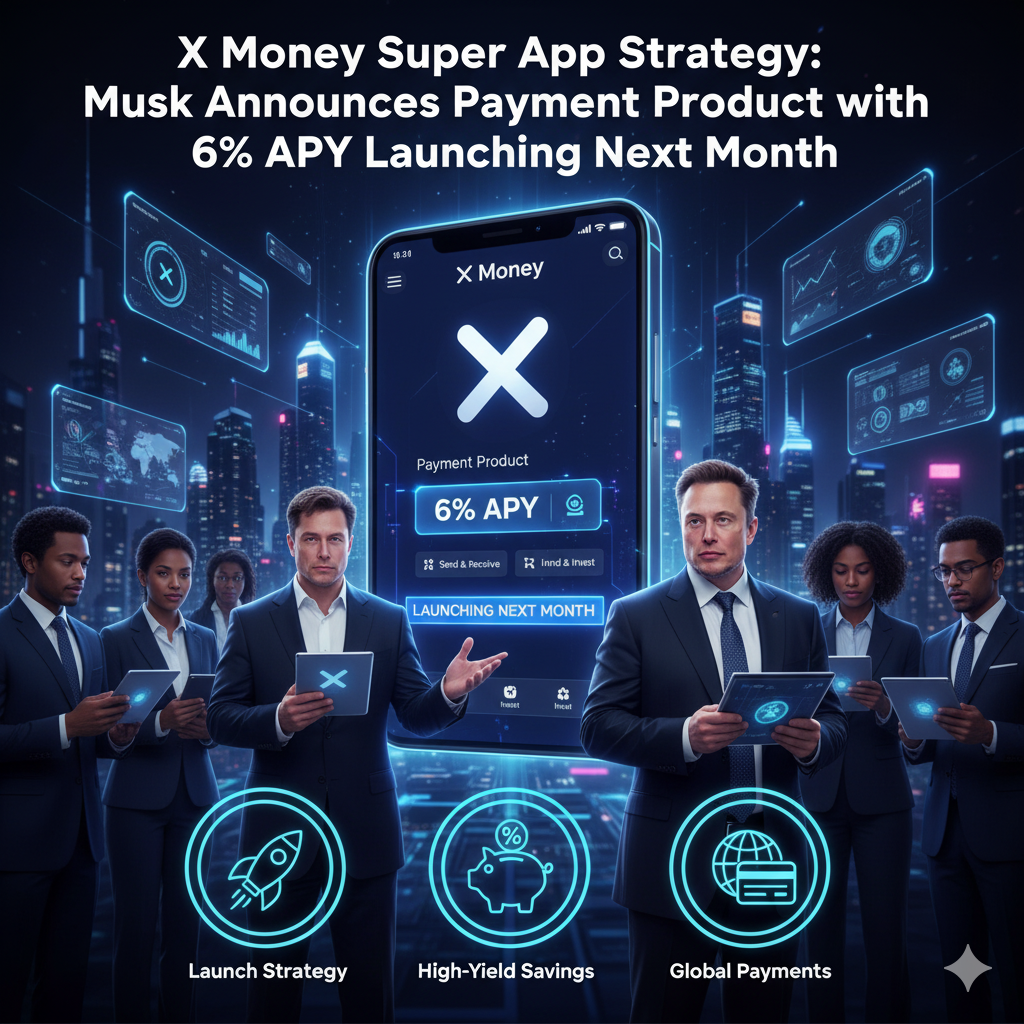
On March 10, 2026, Elon Musk personally announced on the X platform that X Money will open for early public access next month, culminating years of development toward transforming X into a comprehensive "everything app." The announcement triggered immediate market reactions—Dogecoin surged in response, financial technology analysts reevaluated competitive landscapes, and media attention focused on Musk's ambitious vision to replicate WeChat's success in Western markets. X Money represents more than just another payment product; it embodies Musk's long-standing ambition to create a unified digital platform combining social interaction, content consumption, commerce, and financial services within a single application.
The X Money announcement arrives at a strategic inflection point for both the X platform and the broader financial technology sector. With approximately 600 million monthly active users, X possesses substantial audience reach but has struggled to translate social engagement into sustainable revenue streams beyond advertising. The payment product addresses this challenge by creating a direct financial relationship with users while establishing X as a transaction platform rather than merely a content destination. This transition mirrors historical patterns in digital platform evolution, where successful social networks gradually incorporate financial capabilities to deepen user engagement and diversify revenue.
However, this announcement also highlights a broader shift in the digital economy. While tech billionaires spend years and massive capital to build proprietary Super Apps, the underlying architecture required to achieve this—containerized mini-programs—is now accessible to businesses of all sizes through enterprise solutions like FinClip. As X attempts to build an ecosystem from scratch, forward-thinking enterprises are already utilizing these lightweight SDKs to transform their own single-purpose apps into dynamic, multi-service platforms.
Product Features and Value Proposition
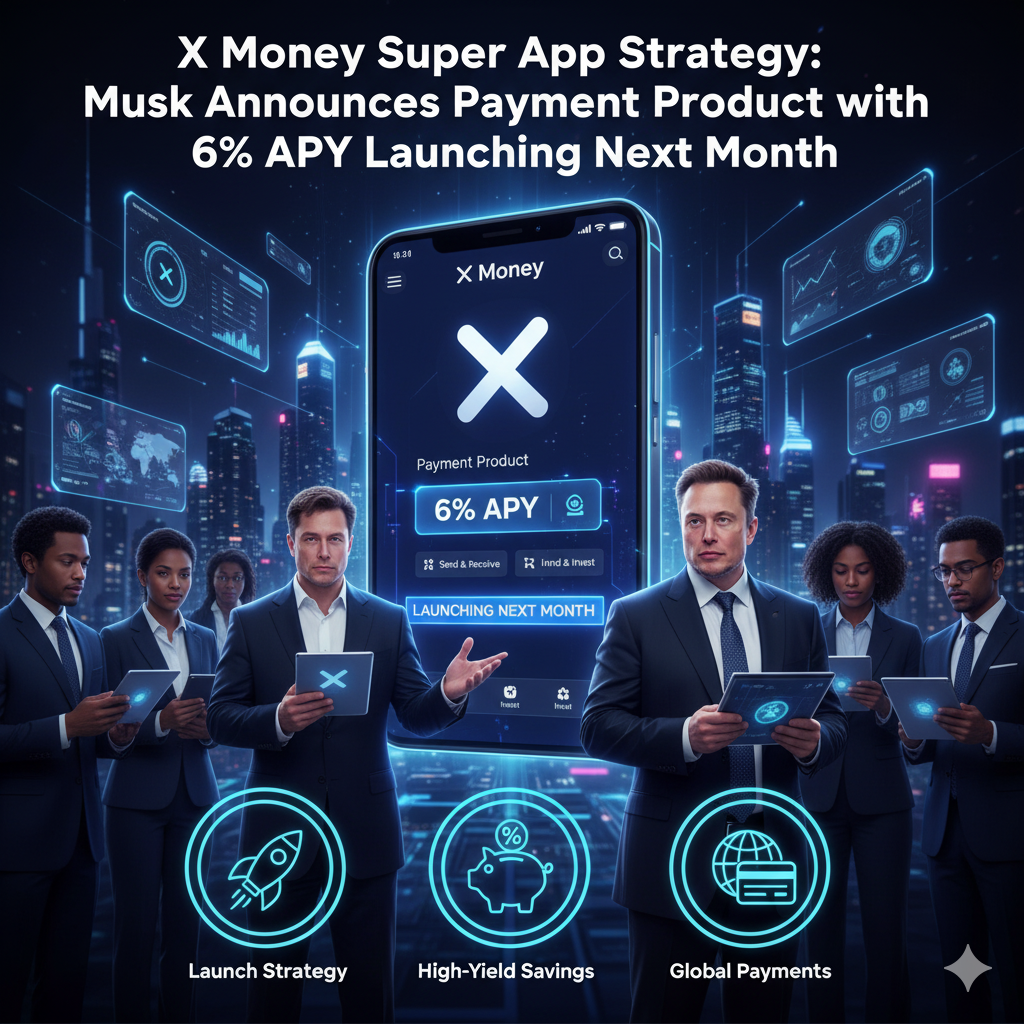
X Money's feature set positions it as a comprehensive financial product rather than a simple payment tool. The most attention-grabbing element is the 6% annualized yield on deposits—a rate substantially higher than the 0.5% typically offered by traditional U.S. savings accounts and competitive with many fintech alternatives. This yield serves as a powerful customer acquisition tool, particularly during a period of declining interest rates when consumers seek higher returns on liquid assets. Beyond yield, X Money offers person-to-person instant transfers, direct deposit capabilities, metal debit cards with username engraving, cashback rewards, zero foreign exchange fees, and a $25 account opening bonus.
The product interface organizes functionality into three primary tabs: "Account" for balance management and transaction history, "Rewards" for cashback and promotional offers, and "Activities" for social financial interactions. This structure reflects X Money's dual identity as both a practical financial tool and a socially integrated experience. The design resembles a lightweight digital banking interface while incorporating elements familiar to X users, creating continuity between social and financial activities within the same application.
Transaction settlement relies on the Visa Direct network, achieving near-instantaneous fund transfers—a critical feature for payment adoption in competitive markets. The partnership with Visa, announced in January 2025, combines X's user base and social context with Visa's global clearing infrastructure, avoiding the substantial barriers of building a payment network from scratch. This collaborative approach demonstrates strategic pragmatism: leveraging established financial infrastructure rather than attempting disruptive replacement, at least in initial deployment phases.
Technical Architecture and Implementation
X Money's technical implementation reflects lessons from both fintech innovation and platform scalability requirements. The product architecture employs microservices for core banking functions, containerized deployment for operational flexibility, and API-first design for future integration capabilities. Security implementation follows financial industry standards, including end-to-end encryption for transaction data, multi-factor authentication for account access, and continuous fraud monitoring using machine learning algorithms.
User funds are held in custody by Cross River Bank, which possesses FDIC insurance qualifications providing up to $250,000 in coverage per account—a critical feature for establishing consumer trust in a social media company's financial product. This custodial arrangement addresses regulatory requirements while allowing X to focus on user experience rather than banking infrastructure. The separation between social platform and financial custody also creates operational resilience, isolating financial operations from potential disruptions in X's core social services.
The development approach has emphasized gradual rollout and iterative refinement. X Money completed internal closed testing before proceeding to an external beta phase characterized by Musk's distinctive marketing style—including a charity auction hosted by actor William Shatner where donations of $1,000 or more earned participants invitations to X Money, with only 42 slots available. This exclusive launch strategy generated scarcity-driven interest while limiting initial scale to manageable levels for operational testing and refinement.
This is exactly where the industry is pivoting toward modular architecture. True Super Apps rely on a "Host App + Mini-Program" structure. While X is building massive internal infrastructure, other enterprises use platforms like FinClip to achieve the same result instantly. By integrating FinClip’s lightweight SDK, an organization can adopt a dual-thread mini-program architecture. This allows them to dynamically load, update, and remove financial or retail modules Over-The-Air (OTA) without bloating the core application or waiting for Apple/Google store reviews.
Market Context and Competitive Positioning
X Money enters a mature and competitive U.S. payment market dominated by established players including Apple Pay, Venmo, PayPal, and Zelle, each with distinct strengths and user bases. Apple Pay benefits from deep iOS integration and brand trust, Venmo dominates social payments among younger demographics, PayPal offers extensive merchant acceptance, and Zelle provides bank-backed instant transfers. X Money's differentiation strategy combines elements from each competitor: social features from Venmo, yield from fintech savings products, Visa integration from traditional card networks, and platform context from Apple's ecosystem approach.
The competitive landscape extends beyond direct payment competitors to include broader financial services providers. Traditional banks face pressure from X Money's yield advantage, investment platforms may see overlap with cash management features, and fintech innovators across lending, insurance, and wealth management must consider X's potential expansion into their domains. This broad competitive footprint reflects the fundamental challenge of super app development: competing simultaneously across multiple service categories while maintaining cohesive user experiences.
X's regulatory positioning represents both challenge and opportunity. The platform has obtained money transmitter licenses in over 40 U.S. states and the District of Columbia, with applications pending in remaining jurisdictions including New York. This regulatory progress demonstrates serious commitment to compliance despite X's historical controversies regarding content moderation and data practices. The financial regulatory framework imposes stricter requirements than social media governance, potentially compelling X to adopt more rigorous operational standards that benefit all platform services.
User Adoption Challenges and Opportunities
X Money faces significant user adoption challenges despite its compelling feature set. The fundamental obstacle is psychological rather than technical: convincing users to deposit funds into a social media application rather than traditional financial institutions. This trust barrier is substantial given X's history of account suspensions, privacy controversies, and platform instability. Even with FDIC insurance and bank custodianship, users may hesitate to entrust significant assets to a platform primarily associated with public discourse rather than financial management.
X addresses this challenge through multiple strategies: the high yield serves as economic incentive, the Visa partnership provides brand association with established financial infrastructure, and the metal debit cards offer tangible connection between digital and physical financial identity. The platform also leverages its existing user relationships—approximately 600 million monthly active users represent a massive potential customer base with minimal additional acquisition cost, an advantage traditional fintech startups cannot match.
User segmentation will likely determine initial adoption patterns. Early adopters may include cryptocurrency enthusiasts attracted by Musk's association with Dogecoin, technology enthusiasts interested in platform evolution, and yield-seeking consumers dissatisfied with traditional banking returns. Mainstream adoption will require demonstrated reliability, sustained competitive advantages, and resolution of trust concerns—achievements that will take time to establish regardless of marketing effectiveness.
Strategic Implications for Super App Development
X Money's development offers broader insights into super app strategy execution in Western markets. The product represents a case study in platform evolution from single-purpose application to multi-service ecosystem—a transition that has proven challenging for many Western technology companies attempting to replicate Asian super app success. X's approach combines several strategic elements: leveraging existing audience reach, partnering rather than building complex infrastructure, addressing specific user pain points (low yield), and creating tangible differentiation (social financial features).
The development timeline reflects strategic patience uncommon in Silicon Valley's rapid iteration culture. X Money reportedly underwent years of internal development before public announcement, suggesting recognition that financial products require more extensive testing and regulatory preparation than typical software features. This measured approach contrasts with X's reputation for rapid, sometimes chaotic, feature deployment in its core social product, indicating differentiated development philosophies for different service categories.
The product launch also demonstrates Musk's characteristic pattern of leveraging personal brand and public attention for product promotion. The announcement strategy—personal post from Musk rather than corporate press release—generated immediate visibility and discussion, while the exclusive beta access created scarcity-driven interest. This approach maximizes marketing impact while controlling initial scale, though it risks associating product success excessively with Musk's personal credibility rather than inherent value.
Future Development and Expansion Roadmap
X Money's initial feature set likely represents only the foundation for broader financial services expansion. Future development may include cryptocurrency integration—a natural extension given Musk's association with Dogecoin and Bitcoin, though currently absent from announced features. The platform's architecture appears designed to accommodate additional financial products, including lending, insurance, investment, and business banking services.
International expansion represents another probable direction, though regulatory complexity varies significantly across jurisdictions. X's global user base provides natural expansion pathways, but financial service regulation differs substantially between markets, requiring localized compliance strategies. The Visa partnership provides infrastructure for cross-border capabilities, but regulatory approval, currency management, and localized feature adaptation present substantial implementation challenges.
Integration with X's broader platform features will likely deepen over time. Potential connections include commerce features enabling purchases within X posts, creator monetization tools for direct fan payments, and advertising systems incorporating financial transaction data for targeting optimization. These integrations would reinforce X Money's positioning as an embedded component of the X experience rather than a separate financial application.
This contrasts sharply with the modern composable enterprise approach. Utilizing FinClip, an enterprise can bypass years of R&D. If a company wants to add a "Wealth Management" or "E-commerce" module to their app today, they don't need to rebuild their native core. They simply develop the feature using standard web technologies (HTML/JS), package it as a mini-program, and deploy it securely within the FinClip sandbox, ensuring zero risk to the main app's stability.
Conclusion: A Bold Experiment in Platform Evolution
X Money represents one of the most ambitious attempts to create a Western super app, combining financial services with social platform context. As X Money launches next month, it enters a critical validation phase where theoretical strategy meets practical execution.
While the world watches Elon Musk's multi-billion-dollar experiment, the underlying lesson for the broader tech and business world is clear: The Super App model is the future.
Fortunately, the tools to build these comprehensive digital ecosystems are no longer monopolized by tech billionaires. With enterprise-grade container technologies like FinClip, any financial institution, retailer, or digital platform can securely host third-party services, iterate rapidly, and transform their standard mobile application into a powerful, revenue-generating Super App today.