What Is a Mini Program Container and How Does It Work?
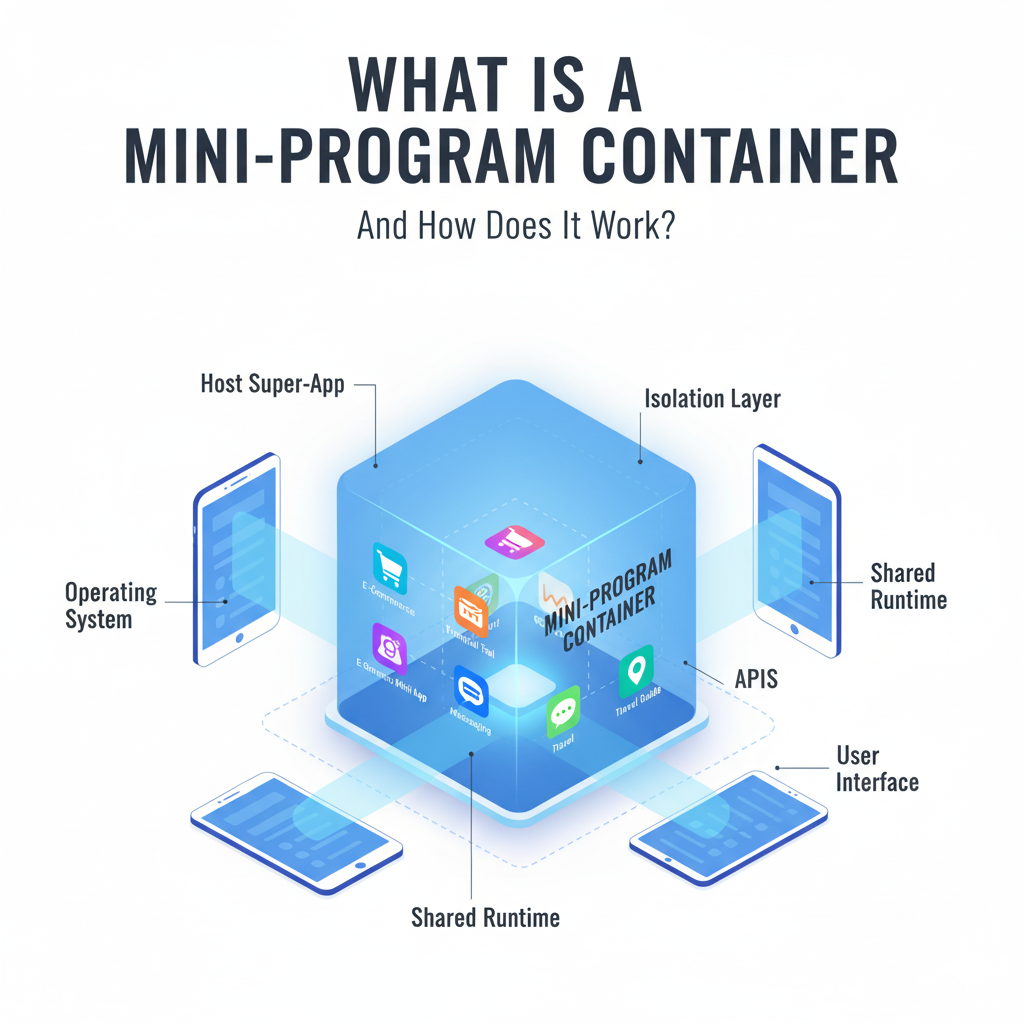
A mini program container is a secure runtime environment that allows applications to run within other applications, creating an "app within an app" architecture. This technology enables host applications to provide third-party services, features, or content without requiring users to download separate applications. The container creates isolated execution spaces similar to virtual machines or Docker containers, ensuring that code running within the container cannot compromise the security or stability of the host application.
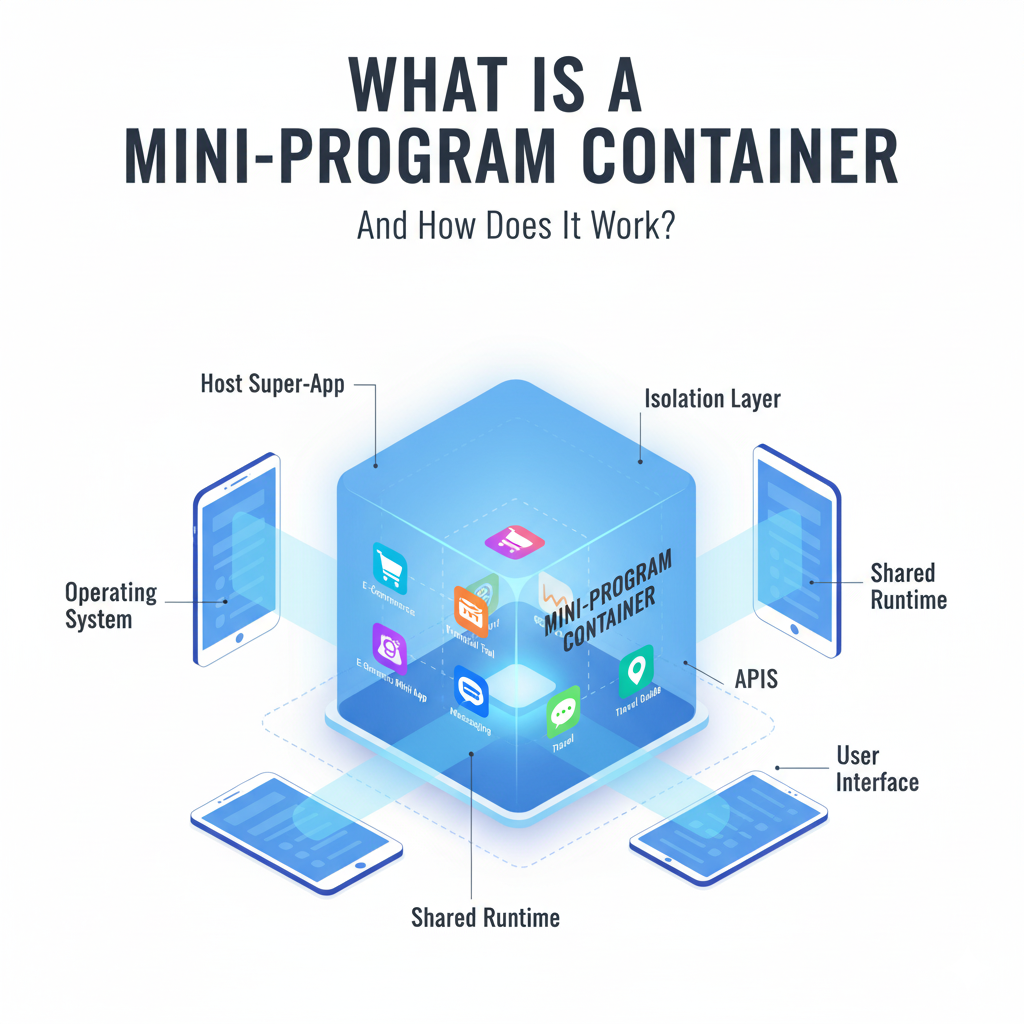
The fundamental architecture consists of three core components: the container runtime that manages execution, the bridge layer that enables communication between the container and host application, and the security sandbox that isolates container activities. This structure allows developers to extend application functionality dynamically while maintaining control over what resources containerized code can access. Containers typically support web technologies like HTML, CSS, and JavaScript, making them accessible to web developers while providing native-like performance through optimized rendering engines.
Container Architecture and Security Model
Mini program containers employ sophisticated security models to protect both users and host applications. The most critical component is the sandbox environment that isolates container execution from the host system. This sandbox restricts container access to device resources like file systems, network interfaces, and hardware capabilities based on explicitly granted permissions. Security policies are enforced at multiple levels, including code validation during loading, runtime monitoring for suspicious behavior, and resource access controls.
The bridge layer represents another security-critical component, managing all communication between the container and host application. This layer validates and sanitizes data passing between environments, preventing injection attacks and ensuring that containerized code cannot directly manipulate host application memory or state. Bridge implementations typically use message-passing architectures with strict serialization and validation protocols, creating controlled communication channels that maintain isolation while enabling necessary functionality.
Permission systems complete the security model, giving users control over what resources containers can access. Modern container implementations use granular permission requests similar to mobile operating systems, where containers must request specific capabilities like camera access, location data, or file system permissions. These requests are presented to users with clear explanations of why each permission is needed, and users can grant or deny permissions individually. This approach balances functionality with privacy protection, a critical consideration in enterprise environments handling sensitive data.
Performance Optimization and Resource Management
Performance represents a significant challenge for mini program containers, as they must deliver responsive user experiences while operating within resource constraints. Container runtimes employ several optimization strategies to achieve this balance. Code pre-compilation converts web technologies into optimized intermediate representations that execute more efficiently. Just-in-time compilation further improves performance by analyzing code execution patterns and optimizing hot paths during runtime.
Resource management systems monitor container resource consumption and enforce limits to prevent performance degradation of the host application. Memory allocation is carefully controlled, with containers receiving fixed memory budgets and garbage collection optimized for the container environment. CPU usage is similarly managed, with container threads receiving appropriate priorities and scheduling to ensure they don't monopolize system resources. These controls are particularly important in mobile environments where battery life and thermal constraints limit available processing power.
Caching strategies significantly impact container performance and user experience. Container runtimes implement sophisticated caching systems that store compiled code, assets, and data to reduce loading times. Multi-level caches operate at different scopes, from individual container instances to shared caches across containers within the same application. Cache invalidation policies ensure that updates are propagated correctly while maintaining performance benefits for unchanged resources. These systems enable containers to launch quickly and operate smoothly even with complex functionality.
Development Workflow and Tooling
Developing for mini program containers requires specialized tooling and workflows that bridge web development practices with mobile application constraints. Development environments typically include simulators that replicate the container runtime on desktop systems, allowing developers to test and debug containerized code without deploying to physical devices. These simulators provide inspection tools for debugging JavaScript execution, analyzing network requests, and monitoring performance metrics.
Build systems automate the process of preparing container code for deployment. This includes code minification to reduce download sizes, asset optimization for different screen densities and network conditions, and security validation to ensure code complies with container policies. Continuous integration pipelines can automate testing across multiple container versions and host application configurations, catching compatibility issues before they reach users.
Deployment mechanisms vary by container implementation but generally support both online and offline operation modes. Online deployment enables dynamic updates where container code is fetched from remote servers when needed, allowing instant updates without app store approvals. Offline deployment bundles container code with the host application, ensuring functionality is available without network connectivity. Hybrid approaches combine both methods, with core functionality included offline and additional features loaded dynamically as needed.
Integration Patterns and Use Cases
Mini program containers enable several integration patterns that extend host application functionality. The most common pattern involves feature extensions, where containers provide additional capabilities that complement the host application's core functionality. For example, an e-commerce application might use containers to provide augmented reality product visualization, social sharing features, or payment processing from third-party providers.
Another pattern involves content delivery, where containers present dynamic content that can be updated independently of the host application. News applications use this approach to deliver articles with interactive elements, while educational applications use containers for interactive lessons and assessments. The container model allows content creators to use web development skills while benefiting from native application distribution and monetization.
Platform ecosystems represent the most advanced use of mini program containers, where host applications provide complete environments for third-party developers to create and distribute containerized applications. Download FinClip SDK and start running mini-programs today. Get SDK