WeChat Mini Program Taskbar to Add "My Mini Programs" Section for Enhanced User Organization
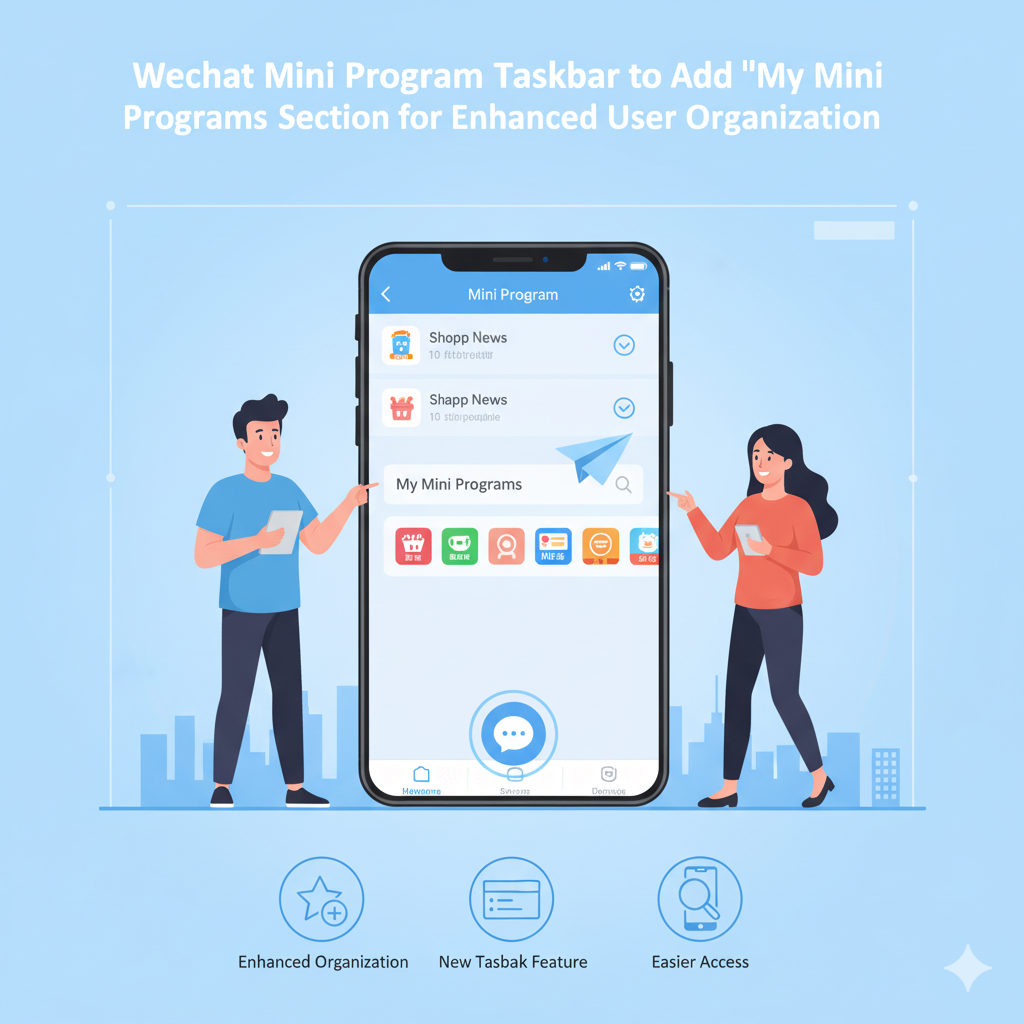
WeChat plans to introduce a "My Mini Programs" section within the platform's taskbar, providing users with personalized organization and quick access to frequently used mini-programs. The feature, revealed during developer discussions in March 2026, will appear in the chat page dropdown taskbar where users can customize content according to their preferences and usage patterns. This enhancement represents WeChat's continued refinement of its mini-program discovery and management system, building upon existing mechanisms like historical lists, Android desktop shortcuts, and the recently strengthened "starred" functionality. With mini-program adoption reaching 100 million published programs and 150 million developers, improved organizational tools address growing user needs for efficient service access within the increasingly crowded super app ecosystem.
What Happened
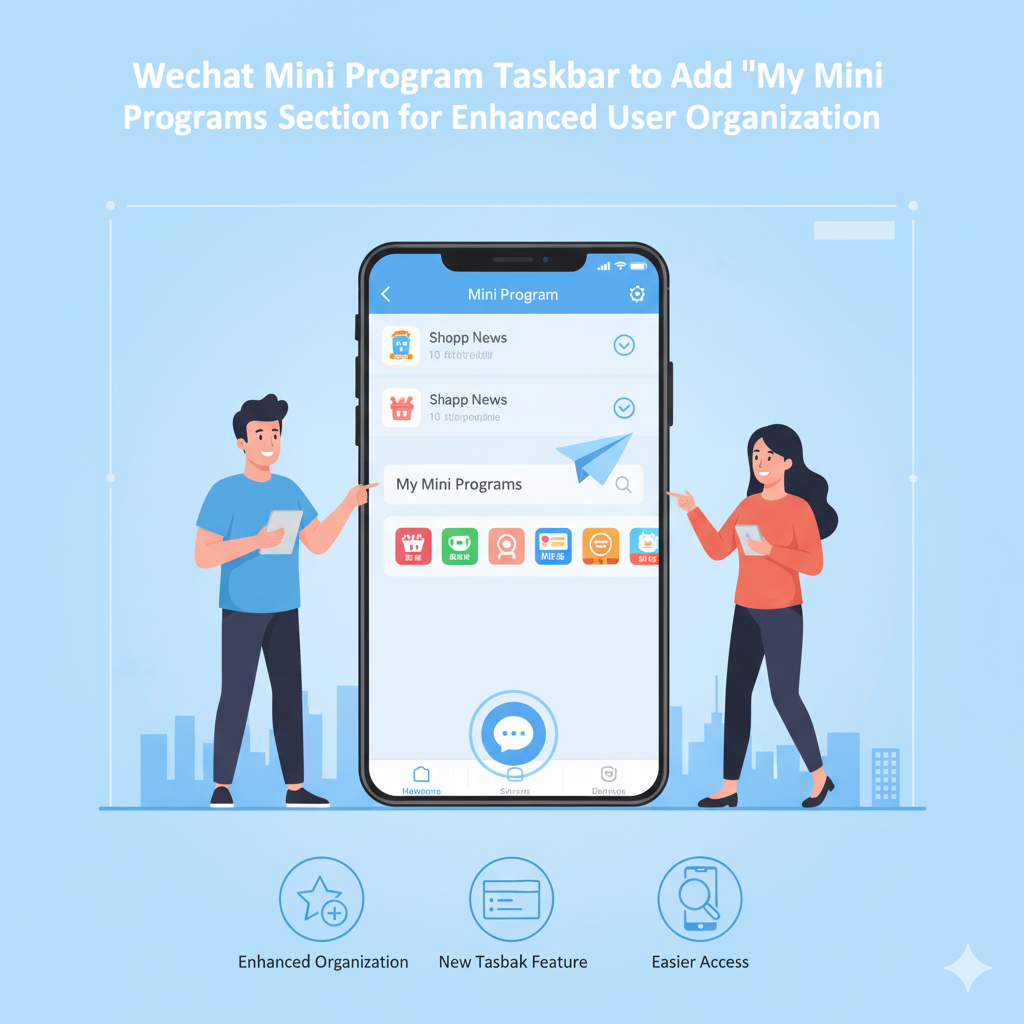
During March 2026 developer communications, WeChat revealed plans to introduce a "My Mini Programs" section within the platform's taskbar interface. The feature will appear in the chat page dropdown area—currently used for recent conversations and quick actions—where users can organize and access their most important mini-programs through a customizable interface. While specific launch timing remains undetermined, development priority indicates potential availability within the coming months.
The "My Mini Programs" concept extends and formalizes existing organizational mechanisms. WeChat currently allows users to "star" favorite mini-programs for quicker access, but this functionality operates somewhat hidden within settings menus. The new taskbar section makes starred items immediately visible and enhances organizational capabilities with user-defined categories, manual ordering, and potentially folder structures. The design philosophy emphasizes user control over content arrangement rather than algorithmic recommendations.
Technical implementation builds upon WeChat's existing taskbar architecture, which already supports dynamic content based on user behavior and preferences. The "My Mini Programs" section will likely integrate with WeChat's mini-program runtime environment to maintain state information and ensure quick launching without full reloads. Performance considerations include minimizing impact on taskbar dropdown speed and maintaining responsiveness even with dozens of saved mini-programs.
This development follows continued growth in WeChat's mini-program ecosystem. Recent statistics show over 100 million published mini-programs, 150 million registered developers, and 5,000 third-party platforms supporting mini-program creation and distribution. User engagement metrics reveal 54% of mini-program opens originate from active user behaviors like taskbar access, historical lists, and Android desktop shortcuts rather than shared links or QR codes—indicating strong habitual usage patterns that organizational tools can enhance.
Parallel developments in WeChat's mini-program platform provide context for the taskbar enhancement. Recent updates include improved brand and category search capabilities, better tablet computer adaptation, subscription messaging for repeated service scenarios, and enhanced group dynamic messaging. Performance improvements focus on independent subcontract loading and optimization, while advertising capabilities expand to mini-programs with over 1,000 unique visitors. These complementary enhancements create a more robust ecosystem where improved discovery and organization deliver increased value.
Why This Matters for Super App Usability
The "My Mini Programs" taskbar enhancement addresses a fundamental challenge in super app ecosystems: service discoverability and access efficiency as the platform scales. Early super apps benefit from novelty and limited options, but mature ecosystems with millions of mini-programs face the paradox of choice—overwhelming users with options while making frequently used services difficult to locate. Organizational tools transform super apps from chaotic marketplaces into personalized toolkits.
User behavior data reveals why taskbar optimization matters. With 54% of mini-program opens originating from active user access patterns (taskbar, history, desktop shortcuts) rather than passive discovery (shared links, scans), improving these primary entry points directly impacts overall platform engagement. Reducing the time and cognitive effort required to locate frequently used services increases daily utility and reinforces habitual usage—critical metrics for platform retention and monetization.
The psychological aspect of organization influences user satisfaction and perceived control. Customizable interfaces allow users to create mental models of service relationships, grouping related mini-programs (all banking services, all food delivery options, all transportation providers) according to personal workflows rather than platform-imposed categories. This sense of ownership and control increases platform attachment and reduces exploration of alternative ecosystems.
From a competitive perspective, organizational capabilities represent a defensible advantage for established super apps. New platforms can replicate individual features or service categories, but recreating years of user customization data and refined organizational patterns proves substantially more difficult. The "My Mini Programs" section leverages WeChat's decade of user behavior understanding to create personalized experiences that competitors cannot immediately match.
Business implications extend beyond user satisfaction. Improved organization increases service utilization rates for mini-program developers, particularly those offering utility-focused rather than entertainment-focused services. When users can quickly access banking, transportation, or productivity tools, they're more likely to incorporate these services into daily routines. This increased utility creates stronger developer incentives to maintain and enhance their WeChat mini-programs rather than diverting resources to standalone applications or competing platforms.
The Bigger Picture
WeChat's taskbar enhancement reflects broader trends in platform design: the shift from algorithmic curation to user-controlled organization. Early platform interfaces emphasized discovery through recommendations and trending lists, but mature ecosystems increasingly recognize that power users prefer manual organization for frequently accessed services. This design philosophy acknowledges different user segments—explorers who enjoy discovery versus executors who value efficiency—and attempts to serve both through layered interface options.
The organizational challenge scales with platform complexity. WeChat's solution represents one point on a spectrum of approaches. At one extreme, completely algorithmic interfaces (like TikTok's For You page) require minimal user configuration but offer limited control. At the other extreme, fully manual organization (like traditional computer desktops) provides complete control but demands configuration effort. Hybrid approaches like WeChat's taskbar attempt to balance these extremes, offering sensible defaults with customization options.
Cross-platform consistency becomes increasingly important as users access super apps across multiple devices. WeChat's taskbar enhancement likely considers synchronization across smartphones, tablets, and desktop versions, ensuring organizational efforts persist regardless of access point. This continuity reinforces platform loyalty by reducing the cognitive cost of device switching—users don't need to rebuild their organizational systems when moving from phone to computer.
Looking forward, organizational interfaces may incorporate intelligent assistance without sacrificing user control. Future iterations could suggest organizational patterns based on usage frequency, temporal patterns (workday versus weekend usage), or semantic relationships between services, while preserving ultimate user authority over final arrangements. This balanced approach respects user autonomy while reducing configuration effort for those who prefer guidance.
The evolution of super app interfaces reveals underlying assumptions about user capability and preference. Early mobile interfaces often simplified complexity to accommodate perceived technological naivety, but as user sophistication increases, platforms can reintroduce advanced organizational capabilities without overwhelming mainstream audiences. WeChat's gradual enhancement of organizational tools—from basic history to starring to customizable taskbar sections—demonstrates this maturation process.
What Interface Designers Should Do Now
Platform designers and product managers should evaluate their organizational strategies across three dimensions: default organization, customization capabilities, and cross-device consistency. Default organization systems should provide immediate utility for new users while remaining unobtrusive for power users who prefer manual configuration. Common approaches include recency-based lists, frequency-based rankings, and category-based groupings that reflect common usage patterns.
Customization capabilities should balance flexibility with simplicity. Advanced users may desire folder structures, manual ordering, color coding, or custom naming conventions, while mainstream users prefer straightforward drag-and-drop rearrangement. Progressive disclosure techniques can hide advanced options behind secondary menus or settings, preventing interface clutter while maintaining capability availability for those who need it.
Cross-device consistency requires careful synchronization design. Organizational preferences should sync automatically across devices, with conflict resolution protocols for simultaneous edits. Performance considerations include minimizing sync latency and bandwidth usage, particularly for users with limited data plans or older devices. Privacy-sensitive users may appreciate optional local-only organization that doesn't sync to cloud servers.
For organizations building their own platform ecosystems, container architectures provide flexible foundations for organizational features. Lightweight SDKs enable consistent organizational experiences across different mini-programs while maintaining security isolation between services. In enterprise deployments using container solutions, organizations have achieved 200% daily active user growth while reducing support requests related to service discovery by 40%.
The container approach addresses several organizational challenges. Security sandboxes ensure that organizational data remains protected even when coordinating between untrusted mini-programs. Cross-platform compatibility maintains consistent organizational interfaces across iOS, Android, and web access points. Hot update capabilities allow rapid enhancement of organizational features based on user feedback without requiring mini-program updates.
Download FinClip SDK and start running mini-programs today. Get SDK