WeChat Introduces "My Mini Programs" Taskbar Feature for Enhanced User Access
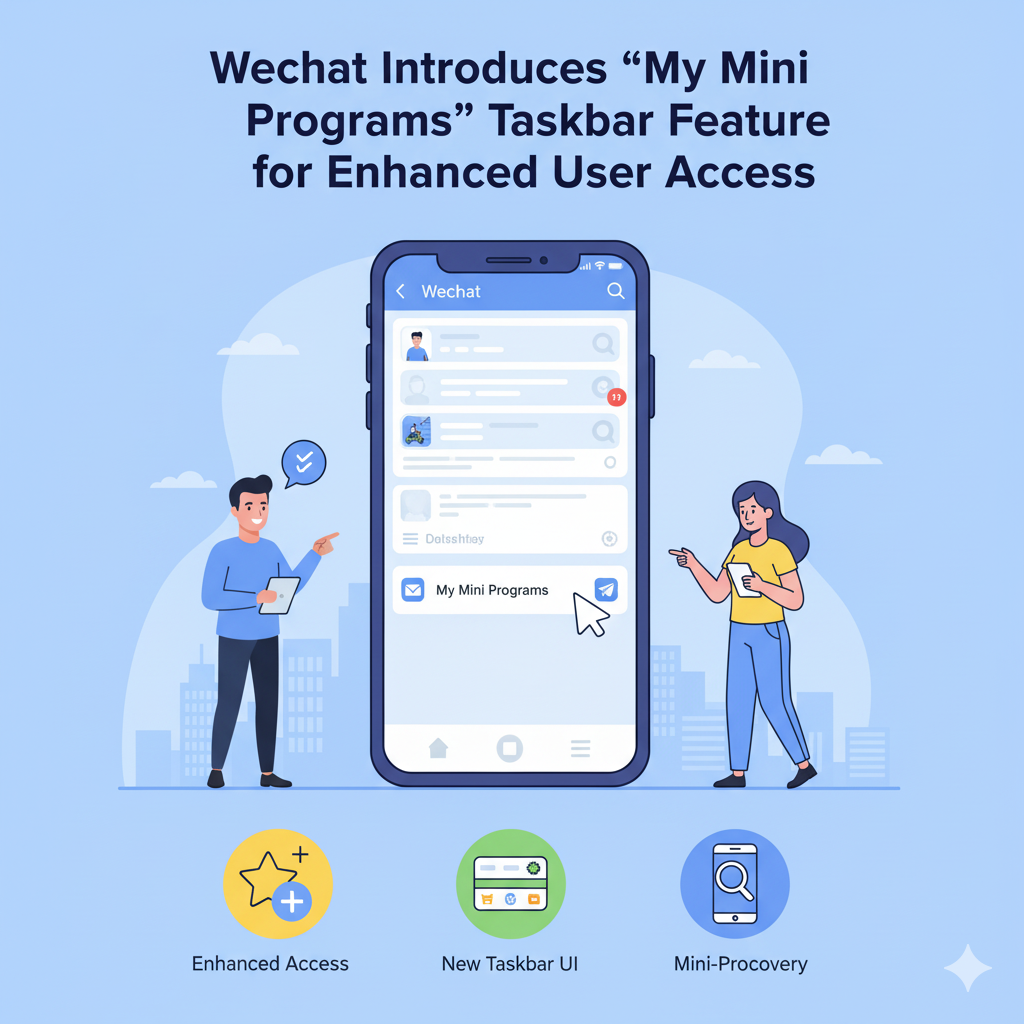
WeChat has deployed a significant update to its mini-program ecosystem, introducing a "My Mini Programs" section within the chat interface's pull-down taskbar. The feature, currently in testing with selected user groups, represents the most substantial accessibility improvement since mini-programs launched in 2017. For developers building lightweight applications within WeChat's ecosystem, this change alters user discovery patterns and increases engagement potential for frequently accessed services.
The update matters because mini-program usage has grown exponentially since inception, with over 100 million active mini-programs and 1.4 billion monthly active users. However, discovery and re-access remained friction points: users needed to remember specific mini-program names, search within WeChat, or rely on shared links. The new taskbar organization directly addresses these challenges by providing persistent, personalized access to frequently used mini-programs, potentially increasing daily active users and session frequency for established services.
What Happened
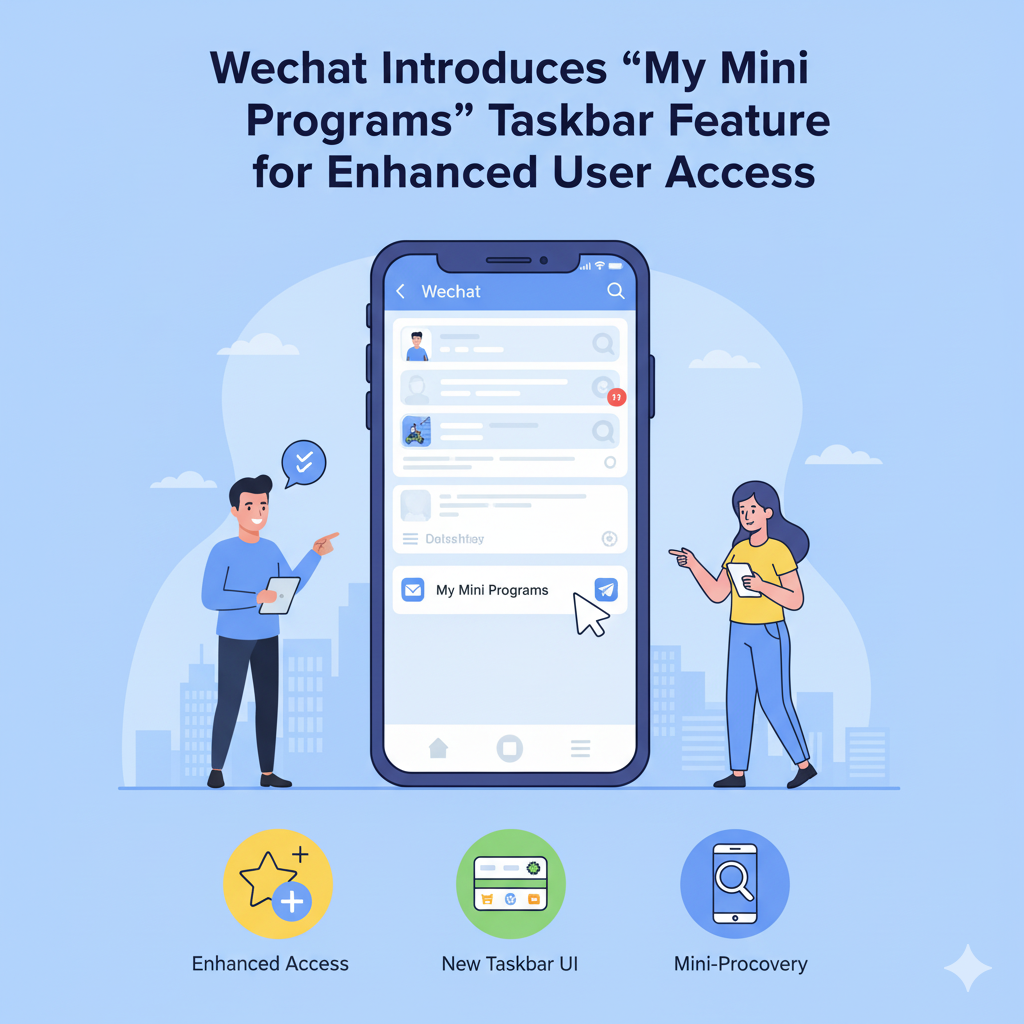
On March 12, 2026, WeChat began testing a redesigned pull-down taskbar interface that includes a dedicated "My Mini Programs" section. The feature appears when users swipe down from any chat interface, transforming what was previously a simple search bar and recent contacts list into a personalized application launcher.
The implementation includes several key components. First, users can now pin their most frequently accessed mini-programs to the taskbar, creating a customized quick-access panel. Pinned mini-programs display their icons and names, with visual indicators for updates or notifications. The number of available slots expands based on usage patterns, with active users able to access more favorites than occasional users.
Second, the system intelligently surfaces recently used mini-programs that haven't been pinned, creating a dynamic "recently accessed" section. This section updates automatically based on usage frequency and recency, ensuring users can quickly return to mini-programs they've used in recent sessions without manual organization.
Third, the update includes enhanced search capabilities specifically for mini-programs. Users can now search for mini-programs by category, function, or brand directly from the taskbar, with results displayed alongside pinned and recent items. The search incorporates usage patterns and contextual relevance, improving discovery for both new and existing mini-programs.
Fourth, the interface supports organizational features allowing users to create custom folders or categories for their mini-programs. This addresses the clutter problem that emerges when users accumulate dozens or hundreds of mini-programs, enabling better management and faster access to related services.
The feature rollout follows a phased testing approach common for WeChat updates. Initial testing began with approximately 1% of users in major Chinese cities, with broader deployment scheduled based on feedback and performance metrics. WeChat typically expands successful features to 10% of users within two weeks, followed by regional and finally global deployment over 4-8 weeks.
Why This Matters for Mini-Program Development
WeChat's taskbar update fundamentally changes how users interact with mini-programs, with implications for engagement metrics, discovery patterns, and development priorities. The most significant impact is on user retention and frequency. Mini-programs that earn placement in users' pinned sections benefit from persistent visibility, reducing the friction of re-access and increasing the likelihood of regular usage. This creates a virtuous cycle: more accessible mini-programs get used more frequently, which reinforces their pinned status, leading to even higher engagement.
Discovery dynamics shift substantially. Previously, mini-program discovery relied heavily on social sharing, search within WeChat, or external promotion. The new taskbar organization creates a new discovery channel: visibility in the "recently accessed" section or through improved search results. Mini-programs that provide immediate value in single sessions may gain increased exposure through the recent section, while those with strong branding and clear value propositions may benefit from improved search visibility.
Development priorities may adjust in response. Mini-programs that previously focused on viral sharing mechanics to drive initial adoption might shift toward optimizing for repeat usage and taskbar placement. Features like offline functionality, quick-loading interfaces, and valuable single-session experiences become more important when users can easily return to frequently used services. The update rewards mini-programs that solve specific problems efficiently rather than those with elaborate but infrequently needed features.
Performance optimization gains importance. Taskbar placement creates higher expectations for loading speed and reliability, as users expect pinned applications to launch instantly and work flawlessly. Mini-programs with slow initial loading times or inconsistent performance may lose their pinned status as users replace them with faster alternatives. This pressure encourages developers to optimize bundle sizes, implement efficient caching strategies, and prioritize core functionality.
The competitive landscape within WeChat evolves. With limited real estate in the pinned section, mini-programs compete for user attention more directly. This may accelerate consolidation within categories, with dominant players securing persistent access while newer or less frequently used alternatives struggle for visibility. However, the dynamic recent section and improved search provide opportunities for niche or specialized mini-programs to gain exposure through specific use cases.
The Bigger Picture
WeChat's taskbar update represents the latest evolution in super app interface design, reflecting broader trends in mobile application organization and user behavior. Three interconnected developments explain the timing and design of this feature: ecosystem maturation, user behavior shifts, and competitive pressure.
Ecosystem maturation necessitates improved organization tools. With over 100 million mini-programs available, simple listing and basic search become inadequate for user navigation. The previous interface, designed when mini-programs numbered in the thousands, struggled under the weight of exponential growth. The taskbar organization addresses this scaling challenge by applying principles from desktop computing and mobile operating systems: favorites, recent items, and categorized access. This evolution mirrors similar transitions in app stores and operating systems as ecosystems expand beyond simple discovery to include management and organization.
User behavior has shifted toward task-oriented usage patterns. Research indicates users increasingly approach mobile applications as tools for specific tasks rather than destinations for exploration or entertainment. The taskbar design supports this orientation by making frequently used tools immediately accessible while maintaining discovery capabilities for new needs. This aligns with broader industry trends toward contextual computing, where applications surface based on usage patterns and immediate requirements rather than manual navigation.
Competitive pressure from other super app platforms influences interface decisions. Telegram's mini-app ecosystem, Alipay's service platform, and emerging regional super apps have all implemented various organizational approaches. WeChat's update represents a refinement of existing patterns rather than a radical innovation, suggesting the super app market has reached a stage of feature convergence where platforms adopt proven interface patterns from competitors. This maturation indicates the super app model has established consistent user expectations that transcend individual platforms.
The update also reflects WeChat's strategic positioning within Tencent's broader ecosystem. By making mini-programs more accessible and manageable, WeChat reinforces its role as the primary interface for digital services in China and increasingly in international markets. This strengthens the platform's defensive moat against specialized applications that might otherwise pull users away from the super app environment. The taskbar feature essentially weaponizes convenience, making it easier to stay within WeChat than to switch to standalone applications.
Technical implementation considerations reveal platform priorities. The taskbar's intelligent sorting algorithms, which consider usage frequency, recency, and contextual relevance, demonstrate WeChat's investment in machine learning and user behavior analysis. These systems require substantial data processing capabilities and sophisticated algorithms to balance personalization with performance. The decision to implement such complex functionality indicates WeChat's confidence in its technical infrastructure and its commitment to maintaining mini-program engagement as a core metric of platform success.
What Mini-Program Developers Should Do Now
Developers should immediately analyze their mini-program's current usage patterns and identify opportunities created by the taskbar update. Begin by reviewing analytics to understand current user retention, session frequency, and re-access patterns. Identify the specific use cases that drive repeat usage, as these represent the strongest candidates for taskbar placement.
Optimize for quick access and immediate value delivery. Mini-programs that load quickly, require minimal authentication, and deliver value within the first 10 seconds have the highest probability of earning and maintaining taskbar placement. Review technical performance metrics including bundle size, initial render time, and API response times. Implement progressive loading strategies that display useful content while background processes complete.
Consider implementing features that encourage regular usage. While not all mini-programs naturally fit daily usage patterns, many can incorporate elements that increase frequency. Examples include daily check-ins, regular content updates, notification of relevant events, or integration with recurring tasks. These features increase the likelihood of appearing in the recent section, which can lead to eventual pinned placement.
Test discoverability through the updated search interface. Review and optimize mini-program metadata including title, description, keywords, and categories. Consider how users might search for your mini-program's functionality rather than its brand name. Implement structured data where possible to improve search relevance and categorization.
Monitor user feedback and behavior changes as the feature rolls out. Track metrics including taskbar placement rates, session initiation sources, and usage frequency changes. Be prepared to adjust both technical implementation and feature design based on observed patterns. Early adopters who optimize for the new interface may gain sustainable advantages as user behavior stabilizes around the updated access patterns.
Evaluate how container architectures compatible with existing ecosystems can accelerate development of mini-programs optimized for the new taskbar environment. Systems that support WeChat mini-program syntax enable developers to build once and deploy across multiple platforms while maintaining the performance characteristics needed for taskbar placement.
See how FinClip turns any app into a SuperApp. Book a 30-min demo