WeChat 2026 Updates: AI Integration and Homepage Redesign Reshape Mini-Program Landscape
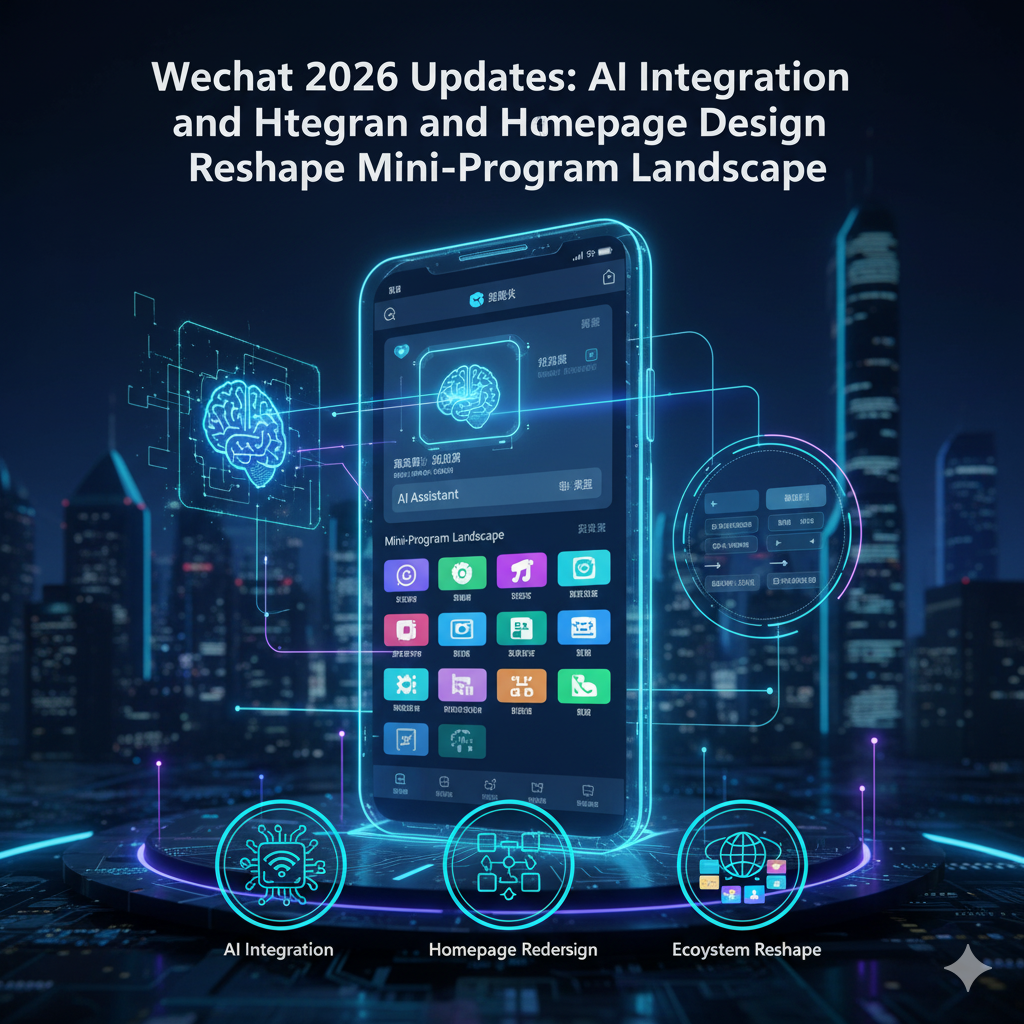
Introduction: WeChat's Evolution in the AI Era
In the opening months of 2026, Tencent's WeChat has unveiled its most substantial platform updates in years, signaling a strategic pivot toward artificial intelligence integration and enhanced mini-program capabilities. The announcements—spanning AI development resources, homepage redesign, and merchant tool enhancements—collectively represent WeChat's response to the transformative potential of AI while reinforcing its position as China's dominant super app. With over 1.3 billion monthly active users, WeChat's platform decisions reverberate across China's entire digital economy, influencing how merchants reach customers, how developers build applications, and how users experience mobile services.
The 2026 updates arrive at a critical inflection point in China's technology landscape. Domestic AI models have achieved parity with international counterparts in many domains, regulatory frameworks for AI deployment are maturing, and user expectations for intelligent digital experiences are rising rapidly. WeChat's comprehensive approach addresses these trends through practical implementation rather than theoretical promise, providing developers with tangible resources and merchants with actionable tools. This pragmatic orientation reflects WeChat's historical strength: translating technological potential into everyday utility for China's massive user base. This is where enterprise-grade container technologies like FinClip are stepping in, allowing independent apps to achieve WeChat-level agility, AI integration, and ecosystem building without surrendering data sovereignty.
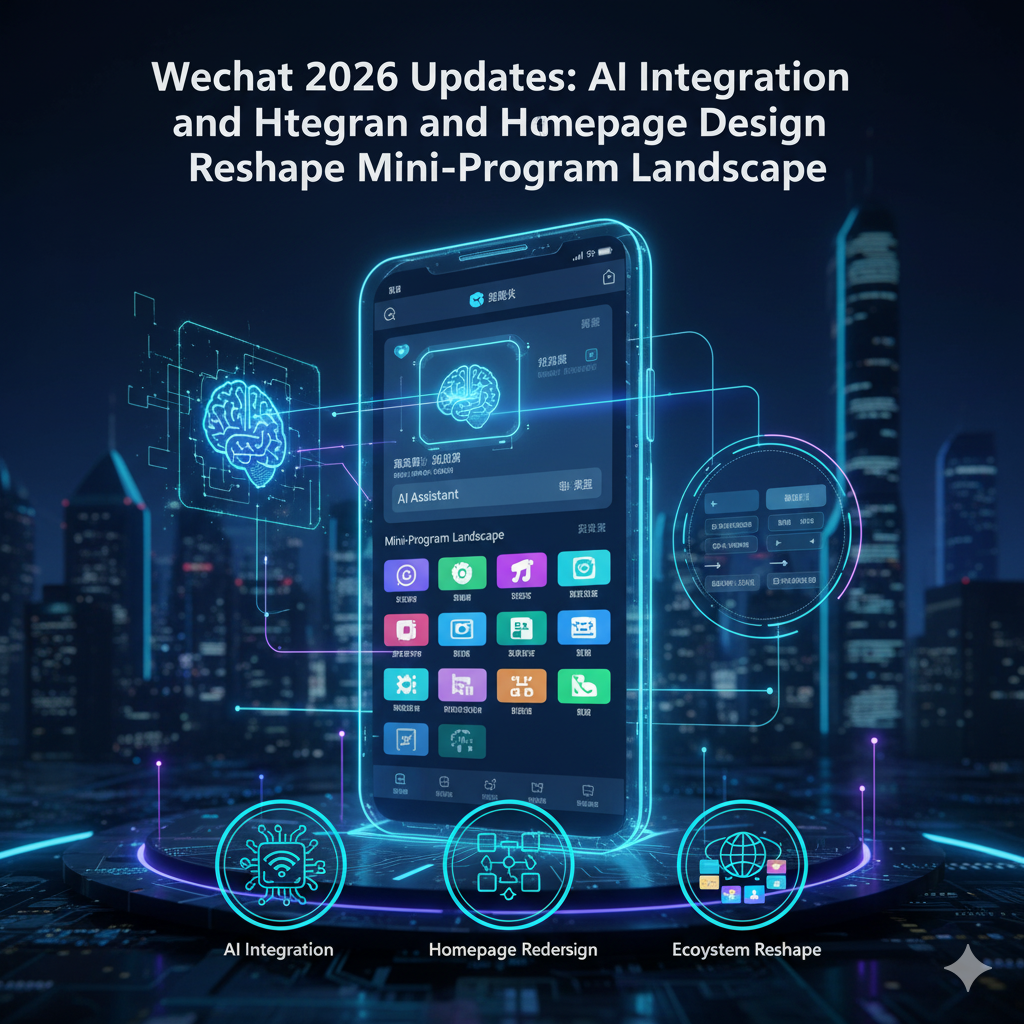
AI Integration Plan: Resources and Opportunities
Central to WeChat's 2026 strategy is the "AI Application and Online Tool Mini-Program Growth Plan," announced in January with incentives extending throughout the year. The plan's most notable component is the allocation of 100 million Hunyuan model tokens—Tencent's proprietary large language model—to qualified developers at no cost. This resource allocation represents more than just free computational capacity; it signals WeChat's commitment to democratizing AI development within its ecosystem and accelerating the integration of intelligent features into mini-programs.
The AI integration plan includes three primary components: computational resources, development support, and monetization pathways. Beyond the token allocation, developers receive free cloud development resources, technical documentation for AI API integration, and access to specialized support channels. For monetization, WeChat has addressed a longstanding limitation by enabling iOS virtual payments within mini-programs, creating a complete commercial loop for AI-powered services. This combination of resources, support, and monetization options creates a compelling proposition for developers considering AI integration.
Practical applications of WeChat's AI resources span multiple domains. Customer service automation represents an immediate opportunity, with developers able to create intelligent chatbots that handle common inquiries within mini-program interfaces. Content generation tools can help merchants create product descriptions, marketing copy, and user guides. Personalized recommendation engines can analyze user behavior within mini-programs to suggest relevant products or services. Image generation capabilities enable virtual try-on experiences, style transformations, and custom visual content creation. These applications demonstrate how AI can enhance rather than replace existing mini-program functionality.
While WeChat mandates the use of its Hunyuan model within its ecosystem, many enterprises require LLM neutrality and stricter data privacy. By utilizing FinClip, businesses can embed a secure mini-program engine into their own native iOS/Android apps. This allows enterprises to build AI-powered mini-programs that connect to any AI model (such as ChatGPT, Claude, or internally hosted proprietary LLMs). FinClip enables developers to achieve the exact same intelligent capabilities as WeChat mini-programs, but within a fully controlled, private environment.
Homepage Redesign: Reimagining Discovery and Engagement
Complementing its AI initiatives, WeChat has implemented the most significant homepage redesign in its history, introducing seven new aggregation pages that fundamentally reshape how users discover and engage with mini-programs. The redesign moves beyond cosmetic changes to address core user experience challenges: content discovery, service categorization, and contextual relevance. By reorganizing the homepage around thematic clusters rather than individual applications, WeChat creates more intuitive navigation pathways while exposing users to a broader range of mini-program capabilities.
The seven new aggregation pages target specific user interests and usage scenarios: Nearby Collections (local services), Short Videos, Mini-Games, Efficiency Tools, Education and Knowledge, Film and Music, and Life Services. Each aggregation page employs specialized ranking algorithms and presentation formats optimized for its content type. For instance, the Nearby Collections page prioritizes location-based relevance and user ratings, while the Mini-Games page emphasizes engagement metrics and social features. This thematic organization reduces discovery friction and increases the likelihood that users will encounter relevant mini-programs.
For merchants and developers, the homepage redesign creates both challenges and opportunities. The increased organization and categorization raise the visibility bar for mini-programs—mediocre applications may struggle to stand out in more structured environments. However, well-optimized mini-programs that align with specific aggregation themes can benefit from increased exposure to targeted user segments. The redesign also encourages developers to consider mini-program positioning more strategically, potentially leading to more specialized and higher-quality applications rather than generic multipurpose tools.
This shift proves that rigid, static app interfaces are obsolete. Modern apps must dynamically aggregate and display features based on user intent. FinClip empowers independent enterprises to replicate this dynamic discovery model. Through the FinClip Management Console, an app owner (like a Bank or a Telecom company) can instantly push, rearrange, or categorize mini-programs on their own app's homepage over-the-air (OTA). Just like WeChat, enterprises can use FinClip to segment users and display highly relevant "aggregation pages" without submitting a new app version to the App Store.
Merchant Tool Enhancements: Operational Efficiency
WeChat's 2026 updates extend beyond user-facing features to include substantial enhancements for merchant operational tools. Throughout January and February, WeChat Shop received multiple functional upgrades addressing key merchant pain points: customer acquisition, influencer collaboration, order fulfillment, and consumer protection. These improvements reflect WeChat's understanding that platform success depends not only on user experience but also on merchant viability—a holistic perspective that has characterized WeChat's ecosystem development.
The "One-Click Automatic Promotion" feature represents a significant advancement in merchant customer acquisition. When enabled, this feature automatically promotes non-promoted and newly added products through WeChat's Preferred Alliance network, exposing merchandise to millions of potential customers without requiring manual configuration. The system employs machine learning algorithms to match products with relevant audience segments based on historical performance data, user preferences, and contextual factors. For small and medium-sized merchants with limited marketing resources, this automated promotion capability levels the playing field against larger competitors.
Influencer collaboration tools have also received substantial upgrades. The "Exclusive Merchant Recruitment for Content Creators" feature enables four-star and above influencers to publish recruitment campaigns for brand partnerships. Merchants can browse these campaigns through the WeChat Shop backend, identifying influencers whose audience demographics, content style, and performance metrics align with their products. This structured approach to influencer marketing reduces coordination friction and increases the likelihood of successful collaborations, benefiting both merchants seeking exposure and influencers seeking quality partnerships.
WeChat’s operational upgrades demonstrate that platform success depends on merchant viability. However, brands operating inside WeChat must share their transaction data and adhere to Tencent's rules. For enterprises that want to build their own B2B2C marketplace, FinClip serves as the foundational infrastructure. A retail conglomerate or a payment wallet can use FinClip to allow thousands of independent merchants to launch their own mini-program storefronts inside the enterprise's proprietary app. This creates a self-sustaining ecosystem where the enterprise retains 100% of the transaction data and customer relationships.
Technical Implementation and Developer Experience
From a technical perspective, WeChat's 2026 updates introduce new APIs, SDK enhancements, and development patterns that affect how mini-programs are built and maintained. The AI integration capabilities are exposed through dedicated JavaScript APIs that abstract the complexity of large language model interactions, allowing developers to implement intelligent features with minimal specialized knowledge. These APIs handle token management, request optimization, and response formatting, reducing the implementation burden for development teams.
The homepage redesign necessitates updates to mini-program metadata and categorization systems. Developers must now provide more detailed classification information, including primary and secondary thematic tags, target user demographics, and feature descriptors. This enriched metadata enables more precise matching between mini-programs and aggregation pages, improving discoverability for relevant users. WeChat provides automated tools to analyze existing mini-programs and suggest appropriate categorizations, simplifying the transition for developers with established applications.
WeChat's development tools have been updated to support the new capabilities, including enhanced debugging features for AI integration, performance profiling for aggregation page optimization, and testing utilities for merchant tool compatibility. The development experience emphasizes progressive enhancement—existing mini-programs continue to function without modification, while developers can selectively adopt new features based on their specific requirements and resources. This approach minimizes disruption while encouraging gradual innovation.
For multinational corporations, financial institutions, and government agencies, putting sensitive AI interactions and user data into a public super app like WeChat poses significant compliance and data sovereignty risks. FinClip solves this by offering on-premise or private cloud deployment. The mini-programs run within a secure, isolated sandbox inside the host app. If a third-party partner's mini-program is compromised, it cannot access the host app's core data. This allows enterprises to foster innovation safely, adhering to the strictest zero-trust architecture and cross-border compliance laws.
Competitive Implications and Market Positioning
WeChat's comprehensive 2026 updates occur within a highly competitive super app landscape where platforms like Alipay, Douyin, and Meituan are aggressively expanding their mini-program ecosystems. Each platform employs distinct strategies: Alipay emphasizes financial services integration, Douyin leverages短视频 content discovery, and Meituan focuses on local lifestyle services. WeChat's AI-centric approach differentiates its ecosystem while addressing a broader trend toward intelligent digital assistants across China's technology sector.
The timing of WeChat's updates coincides with increased regulatory attention to AI development and deployment in China. Recent guidelines emphasize responsible AI practices, including transparency about AI-generated content, protection of user data, and mitigation of algorithmic bias. WeChat's implementation appears designed to comply with these emerging standards while maximizing developer flexibility. By providing structured resources within a controlled environment, WeChat positions itself as a responsible platform for AI innovation rather than an unregulated frontier.
Internationally, WeChat's updates demonstrate how China's digital platforms are evolving beyond imitation of Western models to develop distinctive capabilities tailored to local market conditions. The integration of AI resources with mini-program development, combined with sophisticated merchant tools and user experience enhancements, represents a uniquely Chinese approach to platform evolution—one that balances technological ambition with practical utility. As global technology companies observe these developments, they may identify transferable insights about ecosystem development and AI integration strategies.
Future Directions and Strategic Considerations
Looking beyond the immediate 2026 updates, several strategic directions emerge for WeChat's ongoing evolution. The AI integration plan likely represents an initial phase in a longer-term strategy to embed intelligence throughout the WeChat ecosystem. Future updates may include more specialized AI models for particular domains (e-commerce, education, healthcare), enhanced tools for training custom models on proprietary data, and deeper integration with Tencent's broader AI research initiatives.
The homepage redesign may evolve toward more personalized aggregation experiences, where the specific pages and content arrangements adapt to individual user preferences, behavior patterns, and contextual factors. Machine learning algorithms could continuously optimize homepage layouts based on engagement metrics, creating unique experiences for each user while maintaining platform consistency. This personalization would further enhance discovery efficiency while increasing user engagement.
For merchants, future enhancements may focus on cross-platform integration, allowing WeChat Shop data and operations to synchronize with other business systems (ERP, CRM, inventory management). Advanced analytics capabilities could provide deeper insights into customer behavior, campaign effectiveness, and operational efficiency. These improvements would position WeChat not just as a sales channel but as a comprehensive commerce platform supporting end-to-end business operations.
Conclusion: A Platform in Transition
WeChat's 2026 updates collectively represent a significant transition point for China's most influential super app. By integrating AI capabilities, redesigning user interfaces, and enhancing merchant tools, WeChat addresses multiple dimensions of platform evolution simultaneously. This comprehensive approach reflects the complex challenges facing super apps in the AI era: maintaining technological relevance while preserving user familiarity, enabling innovation while ensuring stability, and supporting diverse stakeholders with varying needs and capabilities.
The practical implementation of these updates—through concrete resources like token allocations, structured tools like aggregation pages, and operational enhancements like automated promotion—demonstrates WeChat's characteristic emphasis on utility over spectacle. Rather than announcing visionary concepts without clear pathways to realization, WeChat provides developers and merchants with actionable resources and defined frameworks for adoption. This pragmatic orientation has historically contributed to WeChat's ecosystem vitality and likely will continue to do so as AI transforms digital experiences.
As WeChat continues to define the standard for consumer-facing super apps, FinClip is democratizing this exact architecture for the broader enterprise world. Organizations no longer need to rely solely on public tech giants to reach their users. By adopting mini-program container technology, any business can transform its standalone app into a dynamic, AI-ready, and highly engaging Super App ecosystem—combining WeChat's technological brilliance with total enterprise independence.