Spatial Computing Strategy: Bridging the Reality Gap by Porting 2D Ecosystems into the 3D World
Introduction: The "Empty World" Problem in XR
With the launch of Apple Vision Pro and the maturity of Meta Quest 3, we have officially entered the era of Spatial Computing. The hardware capabilities—hand tracking, passthrough, and resolution—are finally ready for mass adoption.
However, the industry faces a critical bottleneck: The Content Crisis.
While there are plenty of immersive games and 3D experiences, the "Utility Layer" of the Metaverse is empty.
- Where is the banking app?
- Where is the food delivery app?
- Where is the ride-hailing app?
For a user inside a headset, performing a simple real-world task (like paying a bill) breaks the immersion. They have to take off the headset, pick up their smartphone, do the task, and put the headset back on. This friction kills user retention.
For Enterprises, the challenge is economic. Rewriting a complex mobile application (like a Banking App) natively in Unity or Unreal Engine is prohibitively expensive. It requires a completely different skill set (3D modeling, C#) and introduces massive security risks.
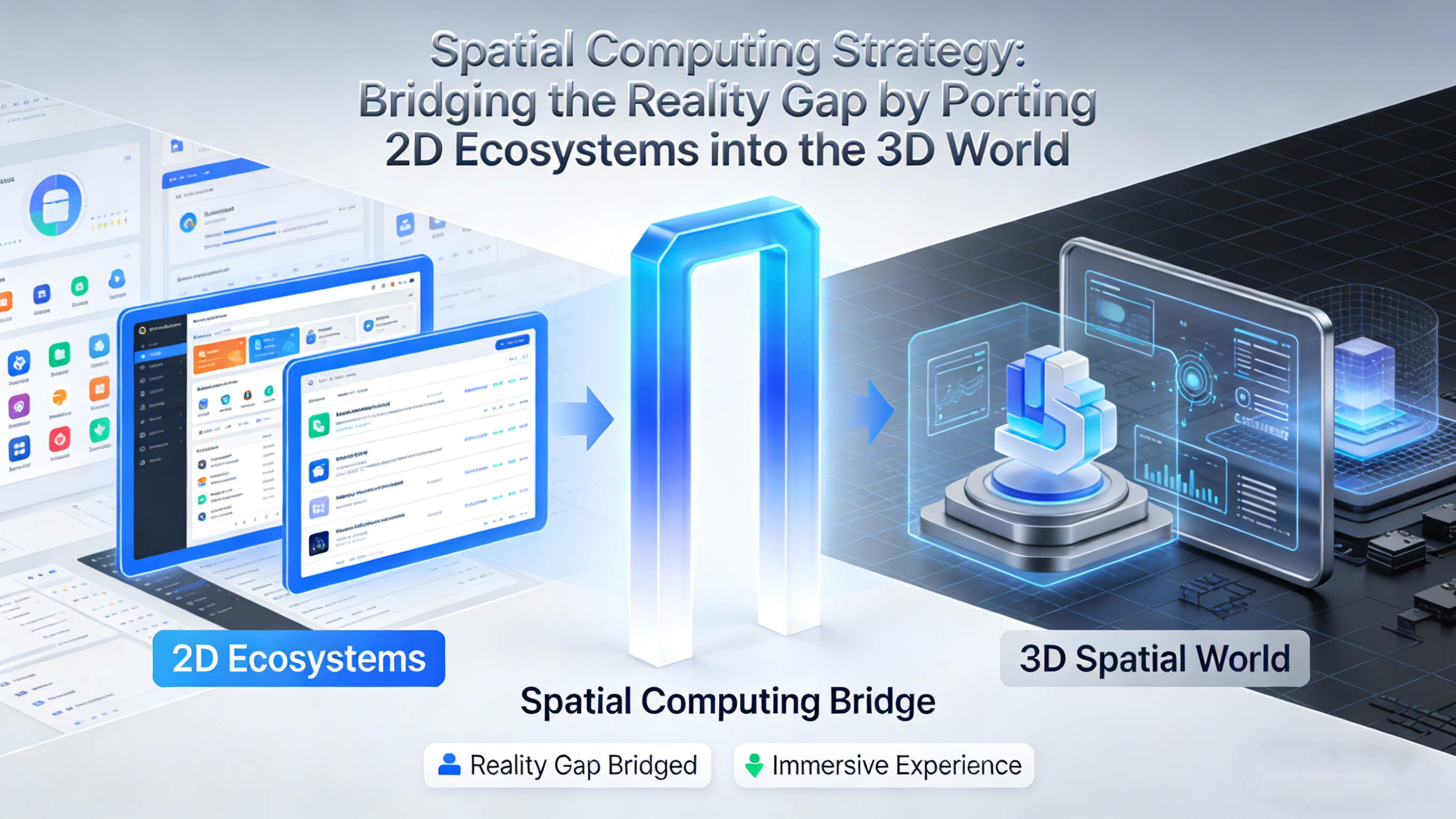
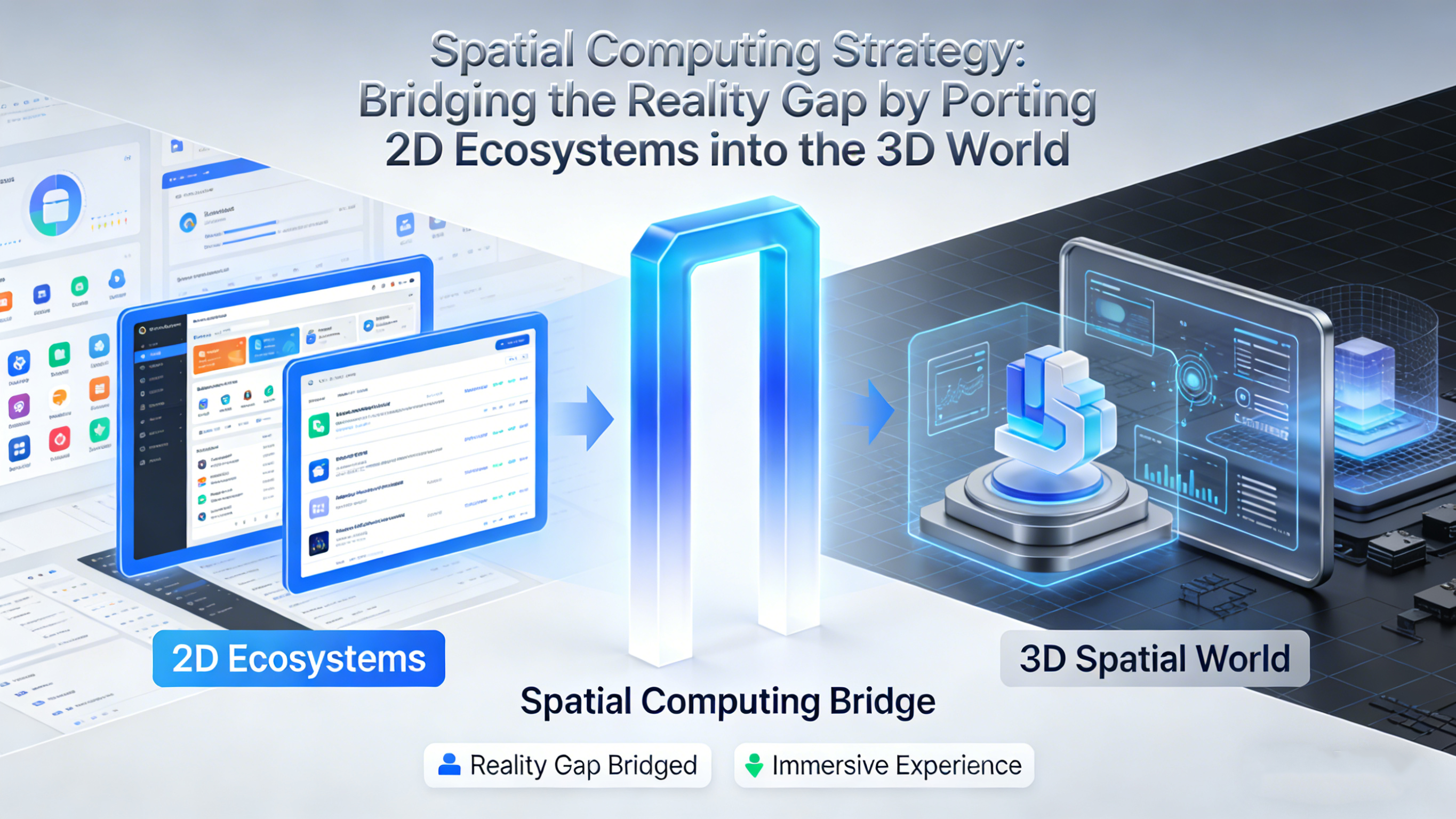
FinClip offers a strategic shortcut. It acts as a Spatial Bridge, allowing enterprises to project their massive existing library of 2D Mini-Apps directly into the 3D spatial environment without a single line of code rewrite.
1. The Concept: FinClip as a Spatial Surface
To understand the solution, we must rethink what an "App" looks like in Spatial Computing. Not everything needs to be a 3D volumetric object.
As Apple’s visionOS guidelines suggest, a significant portion of spatial computing will consist of "Windows" or "Slates"—2D planes floating in 3D space.
FinClip functions as a Texture Renderer.
FinClip provides an SDK for Unity and Unreal Engine. This SDK allows a 3D developer to place a "Virtual Screen" inside the VR/AR environment.
- The Container: A 3D plane (Canvas) in the virtual world.
- The Content: The FinClip SDK renders the standard Mini-App (HTML/CSS/JS) onto this plane.
- The Interaction: The SDK maps the user's controller ray-casts or hand-tracking "pokes" to standard touch events (Click, Scroll, Swipe).
This means your existing "Flight Booking" mini-app, which runs on iOS and Android today, can run unchanged floating in the air inside a virtual living room.
2. Use Case: The "Metaverse Super App"
Imagine building a social VR platform—a "Metaverse Plaza" where avatars hang out.
Currently, monetization is hard. You can sell virtual hats, but that’s it.
By integrating FinClip, you can turn this 3D space into a Real-World Service Hub.
Scenario: The Virtual Mall
- The Environment: Users walk around a 3D shopping mall.
- The Interaction: They walk up to a "Nike" kiosk.
- The FinClip Integration: When they touch the kiosk, a floating 2D window pops up. It loads the Nike E-commerce Mini-App.
- The Transaction: The user browses real shoes (using the familiar 2D grid interface), logs in with their existing account (SSO), and buys a pair of physical shoes to be delivered to their real home.
- The Immersion: The user never leaves the 3D world.
This architecture turns a VR Game into a Super App. It allows the platform operator to leverage the millions of existing mini-programs in the FinClip ecosystem to populate the empty virtual world with real utility.
3. The "Legacy" Advantage: Security and Compliance
For Banks and Insurance companies exploring the Metaverse, security is the primary blocker.
Building a native VR banking app implies putting sensitive logic inside a Unity build. This is a new attack surface that security teams are not equipped to audit.
FinClip solves the Compliance Gap.
- Trusted Runtime: The mini-app running in the headset is the exact same code running on the mobile phone. It has already passed security audits. It uses the same HTTPS endpoints. It uses the same encryption standards.
- Sandboxing: Even if the VR environment is compromised (e.g., a malicious game plugin), the FinClip container is isolated. The banking mini-app runs in its own memory space.
This allows conservative industries to enter Spatial Computing immediately. They don't need to build "VR Apps"; they just need to deploy their "Mobile Mini-Apps" to a "VR Endpoint."
4. Cross-Reality Continuity: From Hand to Headset
The future of computing is Multi-Device. A user will start a task on their phone on the subway and finish it on their headset at home.
FinClip’s architecture is uniquely suited for this Cross-Reality (XR) Continuity.
Because the mini-app state is managed by the cloud-based FinClip ecosystem:
- On the Phone: User adds items to the cart in the "IKEA" mini-app.
- Transition: User puts on the Vision Pro.
- In the Headset: User opens the "IKEA" floating window. The session syncs. The cart is still there.
- Enhancement: The Headset version might trigger a specific "AR View" feature (available only in VR) to place the furniture in the room, while the checkout logic remains standard 2D web code.
5. Developer Economics: Decoupling UI from World-Building
Finally, this strategy solves the Talent Shortage.
3D Developers (Unity/Unreal) are expensive and rare. They should focus on lighting, physics, and world-building. They should not be wasting time building "Settings Menus," "Login Forms," or "Payment Lists."
The FinClip Decoupling Strategy:
- The 3D Team: Builds the immersive environment. They simply place empty "FinClip Screens" where needed.
- The 2D Web Team: Builds the UI/UX for those screens using React/Vue.
This allows enterprises to leverage their existing army of web developers to build for the Metaverse. It creates a parallel development pipeline where the "World" and the "Services" are built by different teams using the tools they know best.
Conclusion: The Fastest Route to Spatial Utility
Spatial Computing is undoubtedly the future, but "Native 3D" is not the answer for every interaction. Text, lists, and forms are still best consumed in 2D.
FinClip provides the pragmatic bridge between the two worlds. It allows enterprises to port their massive investment in mobile digital transformation directly into the spatial era.
Don't wait years to rebuild your services for VR. Project them into the future today.