The Super App Revolution in Banking: How Container Technology is Reshaping Financial Services in 2026
Executive Summary
The banking super app landscape is undergoing a seismic shift in 2026, driven by evolving consumer expectations, regulatory changes, and technological breakthroughs. According to S&P Global's 2026 Fintech Trends Report, the financial services sector is moving beyond simple digitalization to embrace comprehensive platform-level reinvention. This transformation is fundamentally altering how banks deliver value, with container technology emerging as the critical enabler for creating dynamic, ecosystem-driven financial experiences. Platforms like FinClip are at the forefront of this revolution, providing the infrastructure that allows traditional financial institutions to transform into agile, service-rich digital banking platforms.
The 2026 Super App Imperative: Beyond Traditional Banking
The Evolution from Monolithic to Modular Banking
The traditional banking app model—characterized by rigid, monolithic architectures and infrequent updates—is rapidly becoming obsolete. Research from KPMG's Pulse of Fintech H2 2025 reveals that global fintech investment reached $44.7 billion across 2,216 deals in H1 2025 alone, with much of this capital flowing toward modular, platform-based solutions. The shift is driven by several key factors:
- Consumer Demand for Consolidation: Modern users increasingly expect to manage all aspects of their financial lives through a single interface. The "app fatigue" phenomenon—where users resist downloading separate applications for every service—has created strong market pressure for consolidated experiences.
- Regulatory Push for Interoperability: Open banking mandates in the UK, EU, Australia, and India are evolving into comprehensive open finance frameworks, requiring banks to share data across a broader spectrum of financial services including insurance, pensions, and investments.
- Competitive Pressure from Big Tech: Companies like Apple, Google, and Meta are embedding financial services directly into their platforms, forcing traditional banks to either become platform players themselves or risk becoming commoditized infrastructure providers.
The Technical Architecture Revolution
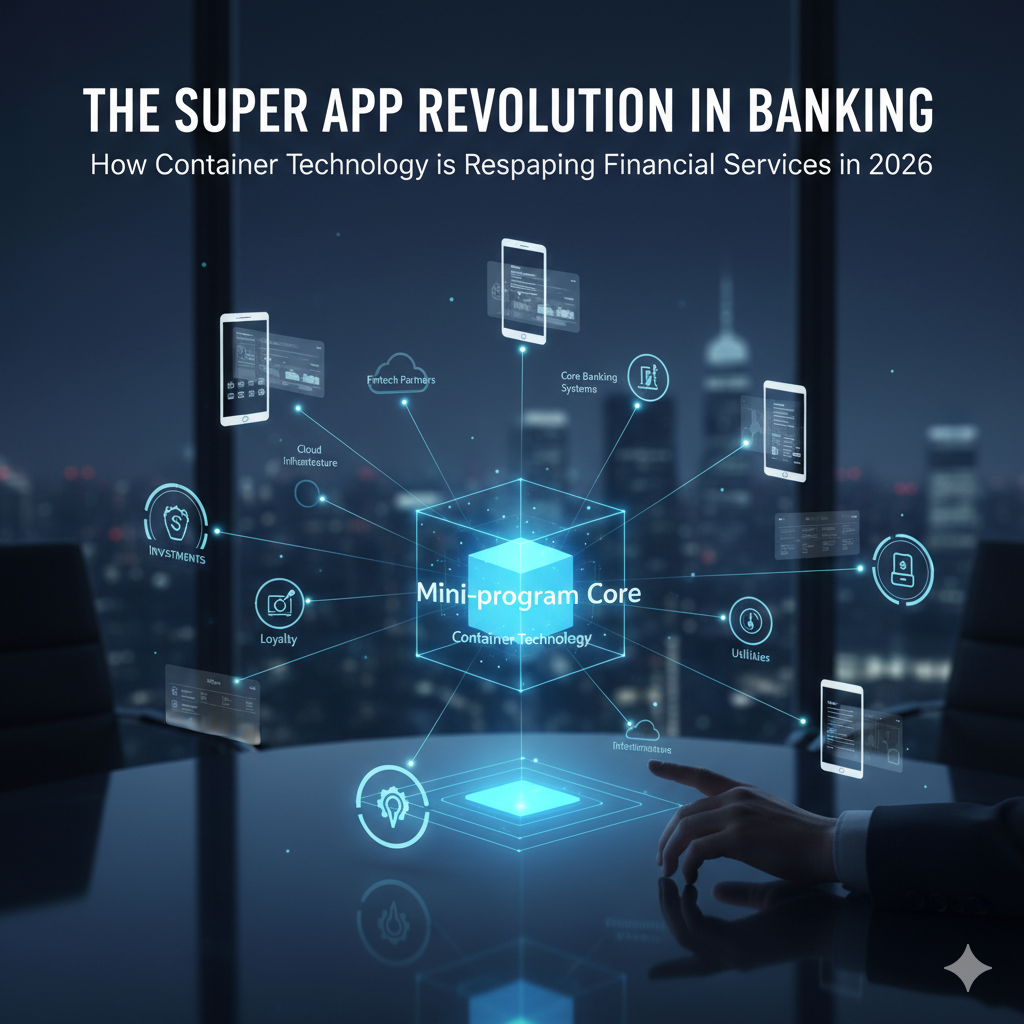
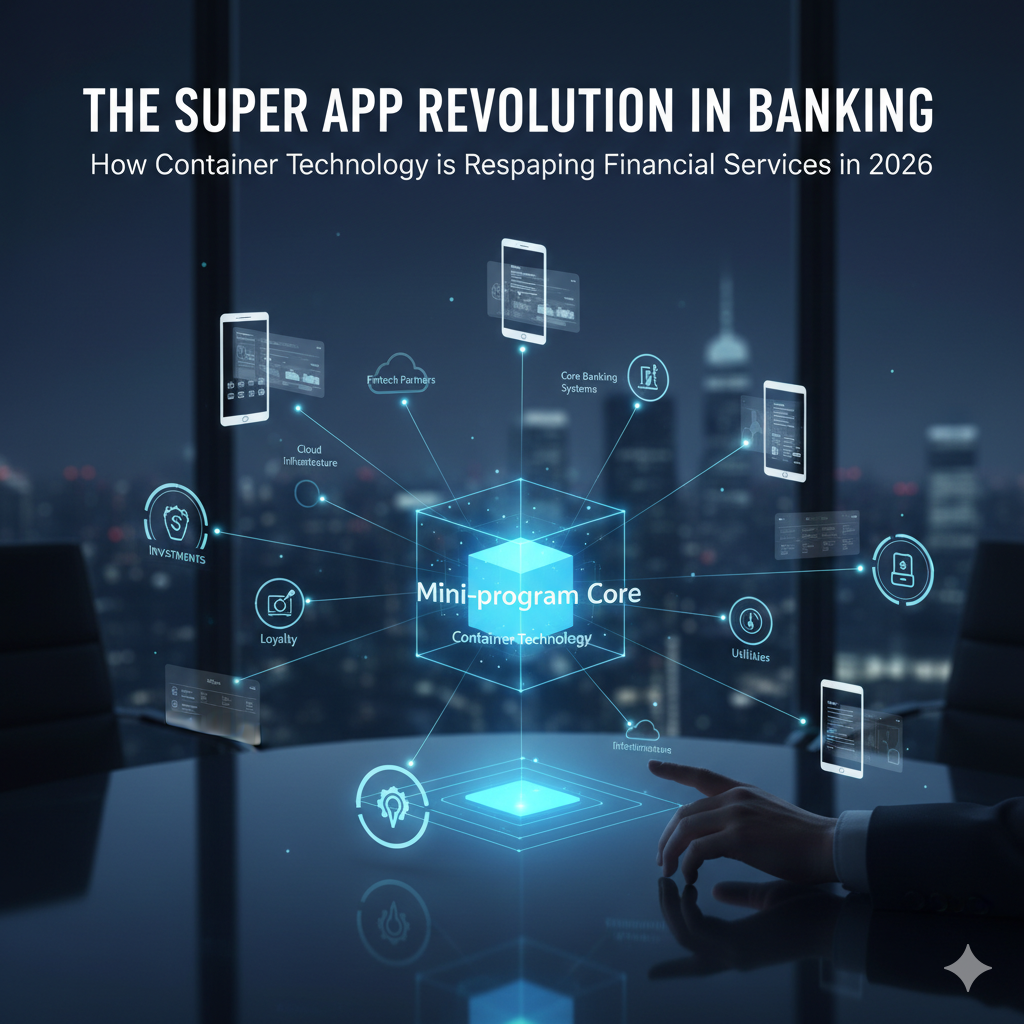
At the heart of the super app banking transformation lies container technology. Unlike traditional app development approaches that require complete rebuilds for every new feature, container-based solutions enable banks to:
- Decouple Business Logic from Core Infrastructure: By embedding lightweight SDKs like FinClip's, banks can maintain stable core banking systems while rapidly deploying new services as independent mini-applications.
- Enable Real-Time Updates: Container technology allows for over-the-air (OTA) updates, bypassing the lengthy App Store review processes that traditionally slowed financial innovation. According to industry data, this capability can reduce feature deployment time from weeks to hours.
- Ensure Security Through Isolation: Advanced sandboxing techniques ensure that third-party mini-apps run in isolated environments, preventing potential security breaches from affecting core banking functions.
FinClip: The Infrastructure for Banking Super Apps
Technical Architecture and Capabilities
FinClip represents a mature, battle-tested solution for banks seeking to implement super app strategies. Its architecture is built around three core components:
- Cross-Platform SDKs: With integration times as short as 30 minutes, FinClip's SDKs can be embedded into iOS, Android, Windows, Mac, and Linux applications, providing consistent mini-app execution across all platforms.
- Secure Sandbox Containers: Each mini-app runs in an isolated environment with controlled access to device capabilities and user data, addressing one of the primary concerns in third-party service integration.
- High-Performance Rendering Engine: A customized JavaScript engine leverages multi-threading and aggressive caching to deliver near-native performance, crucial for maintaining user trust in financial applications.
Real-World Implementation: Case Study Analysis
A prominent case study involves a large commercial bank in China that implemented FinClip to transform its mobile banking application. Within two months of integration, the bank was able to:
- Develop and launch over 100 mini-apps, each representing a distinct business scenario
- Reduce technical integration cycles with third-party partners by approximately 80%
- Achieve 60% savings on partner integration human resources
- Increase user engagement metrics by 89% through the introduction of lifestyle and utility services
This implementation demonstrates how container technology enables banks to rapidly expand their service offerings without compromising security or performance.
The Business Impact of Super App Transformation
Revenue Diversification and Ecosystem Monetization
The transition to a super app model creates multiple new revenue streams for financial institutions:
- Platform Fees: Banks can charge third-party service providers for access to their customer base, similar to how app stores operate.
- Data Monetization: With user consent and proper regulatory compliance, aggregated, anonymized data can provide valuable insights to partners while generating additional revenue.
- Enhanced Cross-Selling: By understanding user behavior across multiple services, banks can more effectively recommend relevant financial products at optimal moments.
Operational Efficiency Gains
Container-based architectures deliver significant operational benefits:
- Development Acceleration: Independent teams can work on different mini-apps simultaneously, dramatically reducing time-to-market for new services.
- Resource Optimization: The modular nature of mini-apps allows banks to allocate development resources based on business priorities rather than technical constraints.
- Risk Management: The ability to instantly disable problematic mini-apps provides unprecedented control over operational risk.
Regulatory Considerations and Compliance
Navigating the Complex Regulatory Landscape
As banks expand into super app territories, they must carefully navigate an increasingly complex regulatory environment:
- Data Privacy and Protection: Regulations like GDPR in Europe and various state-level laws in the US impose strict requirements on data collection, storage, and sharing across integrated services.
- Financial Services Licensing: Offering third-party financial services may require additional licensing or trigger regulatory scrutiny, particularly in jurisdictions with strict financial services regulations.
- Consumer Protection: Regulators are increasingly focused on ensuring that integrated services don't create confusion about liability, particularly in areas like dispute resolution and fraud protection.
FinClip's Compliance Advantage
FinClip addresses these challenges through several built-in features:
- Granular Permission Controls: Fine-grained access controls ensure that mini-apps only access the data and device capabilities explicitly authorized by users and the hosting bank.
- Audit Trail Generation: Comprehensive logging provides clear visibility into all mini-app activities, facilitating regulatory compliance and audit requirements.
- Real-Time Risk Management: The platform allows for immediate suspension of non-compliant mini-apps, providing banks with powerful tools for maintaining regulatory standards.
Future Trends and Strategic Implications
The Convergence of Super Apps and AI
Looking beyond 2026, the most significant evolution in banking super app technology will be the integration of advanced AI capabilities:
- Intelligent Service Orchestration: AI will increasingly determine which services to present to users based on contextual understanding of their needs and behaviors.
- Automated Financial Management: Beyond simple aggregation, AI-driven super apps will provide proactive financial guidance and automated decision-making.
- Personalized User Experiences: Machine learning algorithms will continuously adapt app interfaces and service recommendations to individual user preferences.
Strategic Recommendations for Financial Institutions
Based on current market trends and technological developments, financial institutions should consider the following strategic actions:
- Begin with a Phased Approach: Start by containerizing non-core services to build internal expertise before expanding to more critical functions.
- Establish Clear Governance Frameworks: Develop comprehensive policies for third-party service integration, focusing on security, compliance, and user experience standards.
- Invest in Partner Ecosystems: Actively cultivate relationships with potential service providers, recognizing that the value of a super app grows with the breadth and quality of available services.
- Prioritize User Education: Help customers understand the benefits and safeguards of the new super app model to build trust and encourage adoption.
Conclusion
The super app revolution in banking represents more than just a technological shift—it signifies a fundamental reimagining of what financial institutions can be in the digital age. By embracing container technology through platforms like FinClip, banks can transform from single-purpose service providers into comprehensive financial ecosystems. This transition offers not only enhanced customer value but also new revenue opportunities and strategic advantages in an increasingly competitive landscape.
As we move through 2026 and beyond, the institutions that successfully implement super app strategies will be those that balance technological innovation with robust governance, user-centric design with commercial objectives, and platform expansion with security and compliance. The tools and frameworks now exist to make this transformation achievable; the question is whether traditional financial institutions have the vision and agility to seize this opportunity.