The Super-Agent App: Empowering Insurance Advisors with Real-Time Digital Tools
Executive Summary: The Gap Between Product and Distribution
The insurance industry is currently witnessing a decoupling of speed. On one side, the Product Teams (Actuaries and Underwriters) are moving faster than ever. Driven by AI and dynamic risk modeling, they are tweaking premium rates weekly, launching niche "scenario-based" policies, and adjusting compliance terms in near real-time.
On the other side, the Distribution Channel (the Agents and Advisors) is stuck in the slow lane. The digital tools provided to agents—typically monolithic iPad or Android apps—are bound by rigid release cycles. It often takes 2-4 weeks to update a native mobile application via the App Store.
This creates a dangerous "Speed Gap."
- Compliance Risk: Agents might quote premiums based on outdated logic hard-coded in the app v1.0, while the core system is already on v1.1.
- Lost Revenue: A new, competitive product launches on Monday, but agents can't sell it digitally until the app update rolls out next month.
- Agent Frustration: Top-tier advisors revert to using paper PDFs or clunky web portals because the official mobile app is always "out of date."
To close this gap, InsurTech leaders must reimagine the architecture of the Agent App. It is time to move from a Monolithic Native App to a Dynamic Super App powered by FinClip.
1. The Architecture of Agility: Product as an App
The fundamental flaw in traditional insurance apps is that "Insurance Products" are treated as "Data rows" inside a hard-coded "Sales Engine."
The FinClip approach is radical: Treat every Insurance Product as a separate Mini-App.
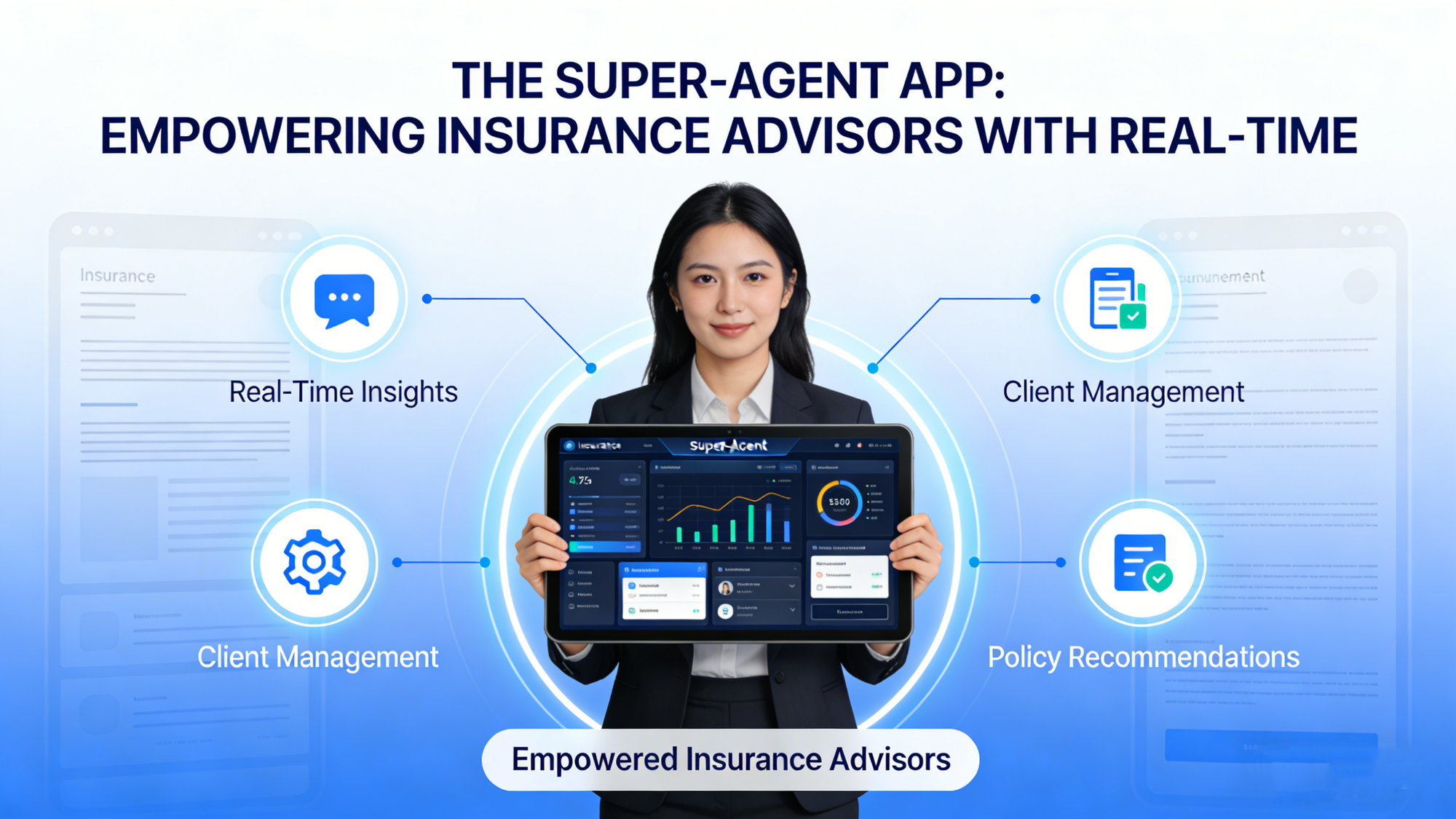
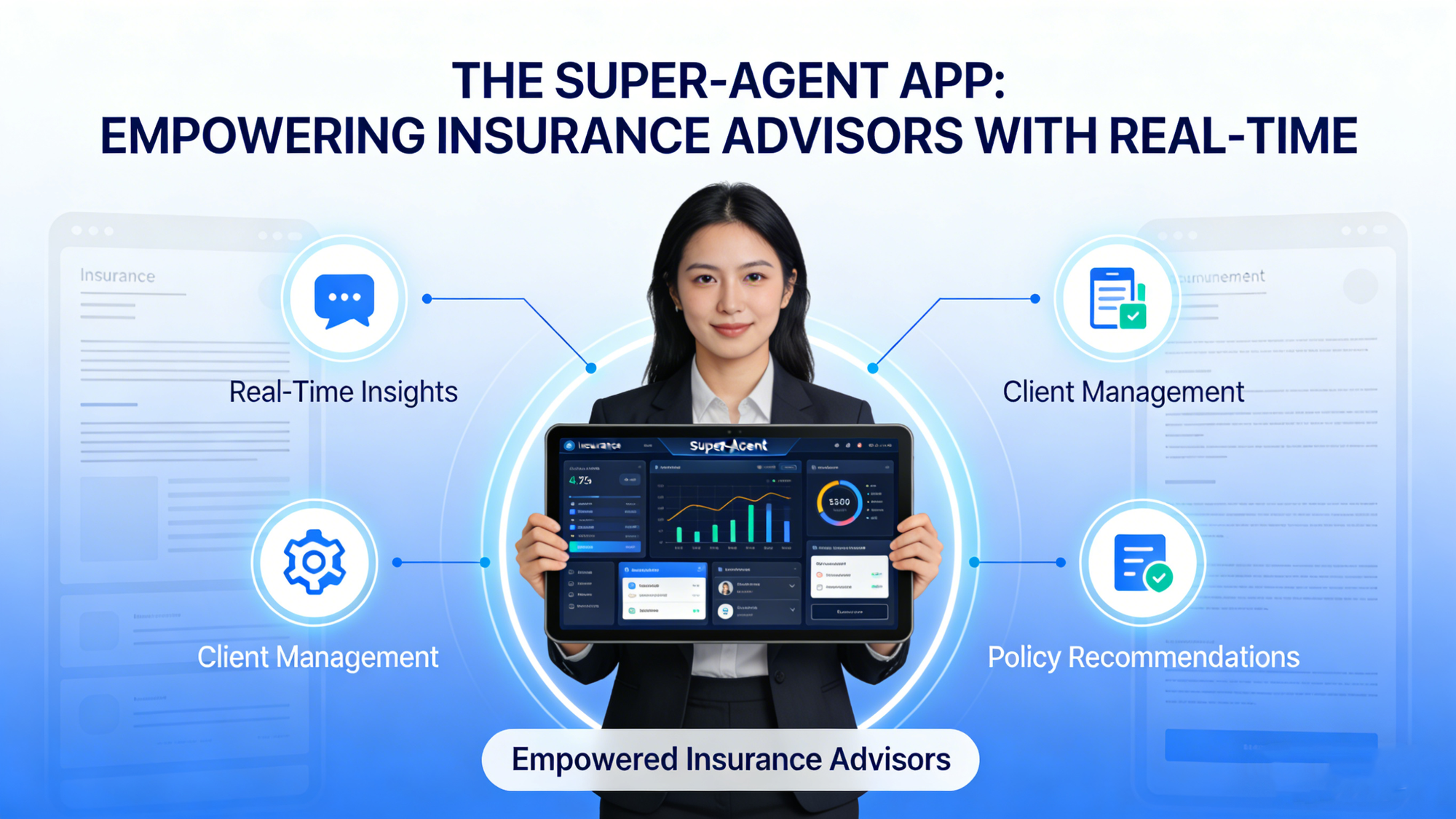
Imagine the Agent’s iPad app not as a single tool, but as a Digital Briefcase (The Host). Inside this briefcase, every policy type—"Whole Life 2026", "Auto Insurance Premium", "SME Cyber Risk"—is a distinct, lightweight Mini-App.
The "Zero-Day" Launch Workflow
How does this change the business?
- Monday Morning: The Actuarial team finalizes the rates for a new "Summer Travel Policy."
- Monday Noon: The IT team wraps the new quote calculator and proposal form into a FinClip Mini-App.
- Monday Afternoon: The Mini-App is published to the enterprise’s private FinClip Store.
- Monday Evening: When 10,000 agents open their iPad app, the new "Summer Travel" icon appears instantly on their dashboard.
There is no App Store review. No user action required to update. The "Speed Gap" is eliminated. The agent is selling the new product the same day it is invented.
2. Solving the "Basement Boiler" Problem: Offline-First Capability
Insurance agents are field workers. They visit clients in rural farmhouses, industrial basements to inspect boilers, or high-security office buildings with shielded signals.
A common complaint with "Web-based" or "H5" agent tools is that they fail the moment the internet connection drops. If an agent is halfway through a complex proposal and the Wi-Fi cuts out, the data is lost. This is unacceptable.
FinClip provides the "Offline-First" resilience of Native Apps with the flexibility of the Web.
How the FinClip Sandbox Handles Connectivity
Unlike a web page that streams data, a FinClip Mini-App is a downloaded package.
- Caching: When the agent opens the app in the morning (on Wi-Fi), the FinClip SDK silently downloads the latest logic packages for all key products.
- Execution: When the agent sits in a client’s basement (Offline), the quote calculator runs locally on the device’s CPU. The business logic does not need to ping the server to calculate a premium.
- Data Queuing: When the agent hits "Submit Proposal," the mini-app stores the data in a secure, encrypted local queue.
- Synchronization: As soon as the device reconnects to 4G/5G, the FinClip container automatically syncs the queued proposals to the Core Insurance System.
This reliability builds trust. Agents know their tool will work everywhere, empowering them to focus on the client relationships, not the signal bars.
3. Just-in-Time Enablement: Embedded Micro-Learning
The insurance market is becoming increasingly complex. Agents are expected to know the intricacies of dozens of products.
Traditionally, training is disconnected from sales. Agents have to log into a separate "LMS" (Learning Management System) on a PC to watch training videos. They watch them once and forget them.
With FinClip, training becomes contextual. You can embed "Micro-Learning Mini-Apps" directly into the sales flow.
The "Learn-Then-Sell" Workflow
Suppose an agent clicks on a complex new "Investment-Linked Assurance Scheme (ILAS)" product.
- The Guardrail: The Host App checks the agent’s profile. If they haven't completed the mandatory certification for this new product, the sales form is locked.
- The Intervention: A "Training Mini-App" slides up instantly. It plays a 3-minute video summary of the key risks and features.
- The Quiz: The agent answers 3 quick compliance questions inside the mini-app.
- The Unlock: Upon passing, the mini-app signals the Host App to unlock the sales form.
This ensures 100% Compliance. Agents are learning exactly when they need to apply the knowledge. This reduces mis-selling risks and eliminates the need for expensive off-site training days.
4. Governance and version Control
In insurance, Version Control is a legal matter.
If a client signs a contract based on "Version 1.0" terms, but the current valid terms are "Version 1.2", the insurance company faces a lawsuit.
FinClip’s Management Console offers military-grade version governance.
- Forced Updates: You can configure a specific mini-app to be "Force Update." The agent cannot open the quote tool until the new version is downloaded.
- Version Locking: You can tie specific saved proposals to specific mini-app versions, ensuring an audit trail. "This proposal was generated using Logic v1.2 on Jan 15th."
5. ROI: The Business Case for the Super-Agent App
Transitioning to a FinClip Super App architecture delivers measurable Return on Investment (ROI):
- Revenue Acceleration: New products start generating revenue weeks earlier by bypassing App Store delays.
- Reduced IT Costs: Instead of maintaining separate iOS and Android native codebases for every product calculator, developers write the logic once in JavaScript.
- Agent Retention: Agents are gig-economy workers. They gravitate towards the insurer that provides the best, fastest, and most reliable tools. A frictionless app is a recruiting tool.
Conclusion: The Digital Briefcase of the Future
The insurance industry is moving away from "One-Size-Fits-All" products to hyper-personalized protection. The tools used to sell these products must adapt just as quickly.
A monolithic Agent App is a relic of the past. It is too heavy, too slow, and too rigid.
By adopting FinClip, insurers can build a Super-Agent Ecosystem. A platform that is always up-to-date, works offline, and trains its users.
It transforms the Agent from a "Form Filler" into a "Smart Advisor," armed with the full agility of the enterprise in the palm of their hand.