The Engineering Guide to AI Agents: Making Your Mobile Services "Agent-Accessible"
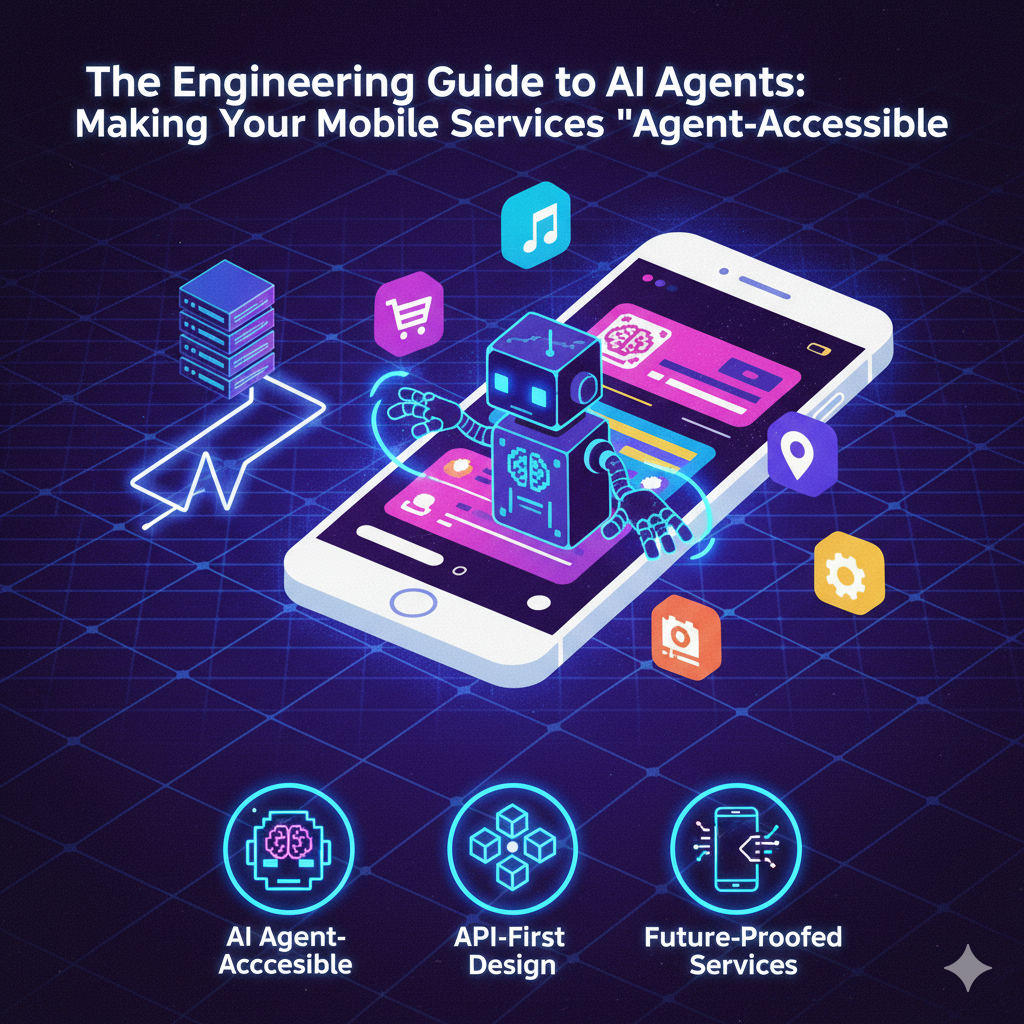
The mobile technology landscape is experiencing a fundamental shift: we are moving from "AI as an interface" to "AI as infrastructure." Recent industry movements—most notably reports of major super apps like WeChat developing ecosystem-wide AI agents capable of executing complex, multi-step tasks—signal the end of the traditional graphical user interface (GUI) dominance.
In the near future, users will no longer navigate through nested menus to hail a ride, order food, or book a flight. Instead, they will use natural conversational prompts, relying on an AI agent to orchestrate these services in the background.
For service providers and enterprise developers, this transition introduces a critical new requirement: your digital services must evolve from being "human-centric" to becoming "agent-accessible." If an AI cannot reliably read, understand, and execute your app's functions, your service will become invisible in the intent-driven economy.
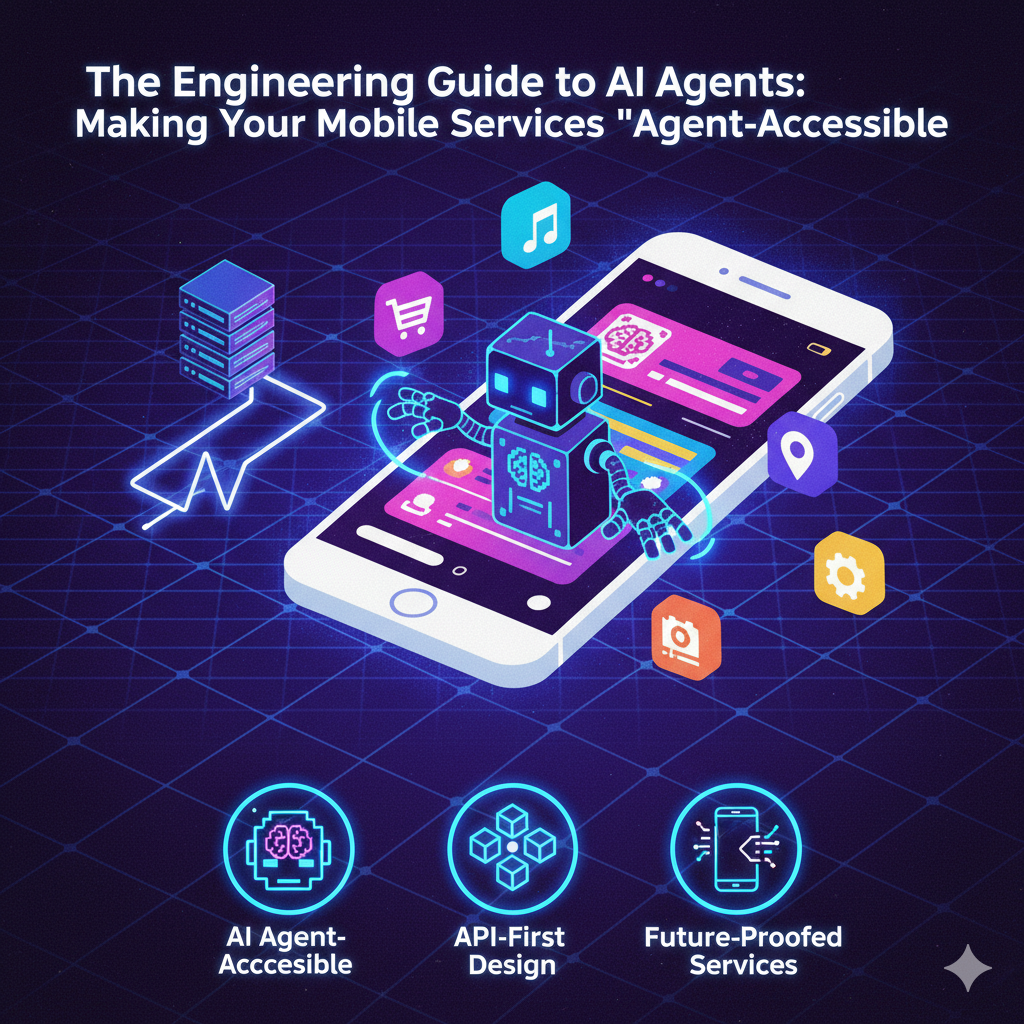
The Execution Bottleneck: Why Traditional Apps Fail at Automation
Currently, large language models (LLMs) are exceptionally good at understanding user intent and planning actions. However, the bottleneck lies in execution. When an AI agent attempts to interact with a traditional monolithic native application, it hits a wall. Native apps are designed for human fingers and eyes, relying on complex visual states, unexposed internal logic, and unpredictable UI changes.
To enable cross-service automation, the underlying architecture must change. Automated agents require controlled execution environments with varying levels of API accessibility, strict authentication requirements, and absolute interface consistency. An AI agent must navigate these differences while maintaining user trust through predictable outcomes.
This is why the tech giants are leveraging mini-program architectures combined with agent frameworks. A mini-program operates in a sandboxed environment with clearly defined inputs and outputs, making it the perfect "tool" for an AI agent to pick up and use.
The Multi-Model Reality of Task Execution
When building an AI agent to execute tasks across thousands of third-party services, relying on a single foundation model is highly risky. Industry leaders recognize that no single AI model currently handles all edge cases reliably, particularly for financial transactions, data privacy, or time-sensitive operations.
Instead, the future of enterprise AI orchestration relies on a multi-model approach. A routing layer evaluates the user's prompt and assigns the task to the most appropriate model—using a massive, generalized LLM for complex reasoning, and smaller, fine-tuned, self-developed models for executing strict transactional API calls. This ensures stability and predictability when handling complex multi-step tasks that require reliable execution across diverse digital interfaces.
What Service Providers Must Do Now: Becoming "Agent-Friendly"
The difference between being "agent-friendly" and "agent-resistant" will determine which digital services thrive in the automated future. Development teams must begin evaluating their readiness for agent-driven interaction models immediately.
1. Audit APIs for Machine Accessibility
Technical teams should audit their mini-program or service APIs specifically for machine consumption. Well-documented RESTful interfaces with consistent error codes, comprehensive authentication support, and predictable response formats form the foundation for reliable agent integration. Services that currently rely heavily on visual interfaces or complex multi-page workflows must expose equivalent functionality through programmatic endpoints.
2. Implement Standardized Metadata
An AI agent needs to know what your service does before it can recommend it. Standardized metadata describing your service capabilities, required parameters, and expected outcomes will become increasingly valuable. Think of this as SEO, but for AI agents. If your mini-program's metadata clearly defines "Books flights to Europe; requires destination, date, and passenger count," the AI can seamlessly prepare this data before invoking your service.
3. Evolve Security and Delegation Protocols
Security architecture must evolve to accommodate agent authorization while maintaining user control. OAuth 2.0 and similar delegation protocols that support granular permission scopes enable users to grant specific capabilities to agents without providing blanket access. Audit logging that captures both agent decisions and user confirmations creates accountability trails for compliance and dispute resolution.
Bridging the Gap: Open-Source AI Middleware
For organizations building their own platform capabilities, transitioning to an agent-driven model doesn't require rebuilding your entire application from scratch. The most efficient path forward is utilizing AI chat middleware designed specifically to coordinate with modular app architectures.
This is where solutions like FinClip ChatKit come into play. Available as an open-source framework on GitHub, FinClip ChatKit provides a foundation for implementing conversational agent functionality seamlessly within existing mobile apps.
Instead of struggling to connect an LLM to a monolithic native app, FinClip ChatKit acts as the intelligent routing layer. It parses the user's natural language intent, selects the appropriate underlying AI model, and directly triggers the corresponding FinClip mini-program to execute the task visually and securely for the user.
This modular approach supports testing different interaction patterns and integration depths before committing to comprehensive agent deployment. It allows enterprises to gradually adopt agent capabilities, transforming their traditional mobile applications into intelligent, intent-driven Super Apps.
Ready to make your mobile architecture Agent-Accessible? See how FinClip ChatKit turns conversational intent into secure execution. Book a 30-min demo.