Next Evolution of Super Apps: From Manual Taps to Autonomous Mini-Programs
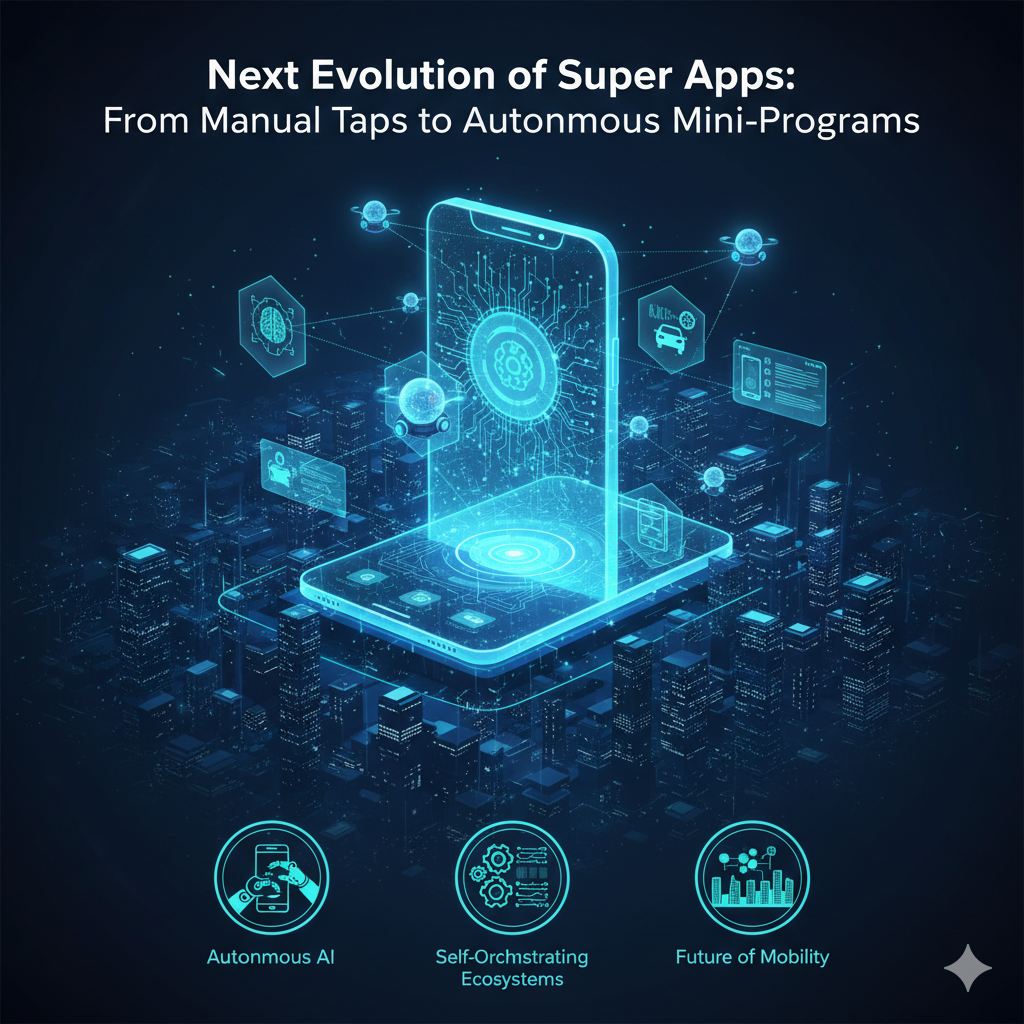
In March 2026, reports emerged that Tencent is actively developing a highly advanced AI agent for its dominant Super App, WeChat. This initiative aims to deeply integrate artificial intelligence with WeChat’s massive mini-program ecosystem, allowing the AI to autonomously execute daily tasks—such as ordering food, booking travel, or paying bills—based on simple conversational prompts.
For global businesses and developers, this news represents a watershed moment. It proves that the future of mobile development is no longer just about building a standalone app or even a standard Super App; it is about creating a modular, containerized ecosystem that AI can actively interact with. As tech giants redefine digital execution, independent enterprises must rethink their mobile architectures to avoid being left behind.
What Happened
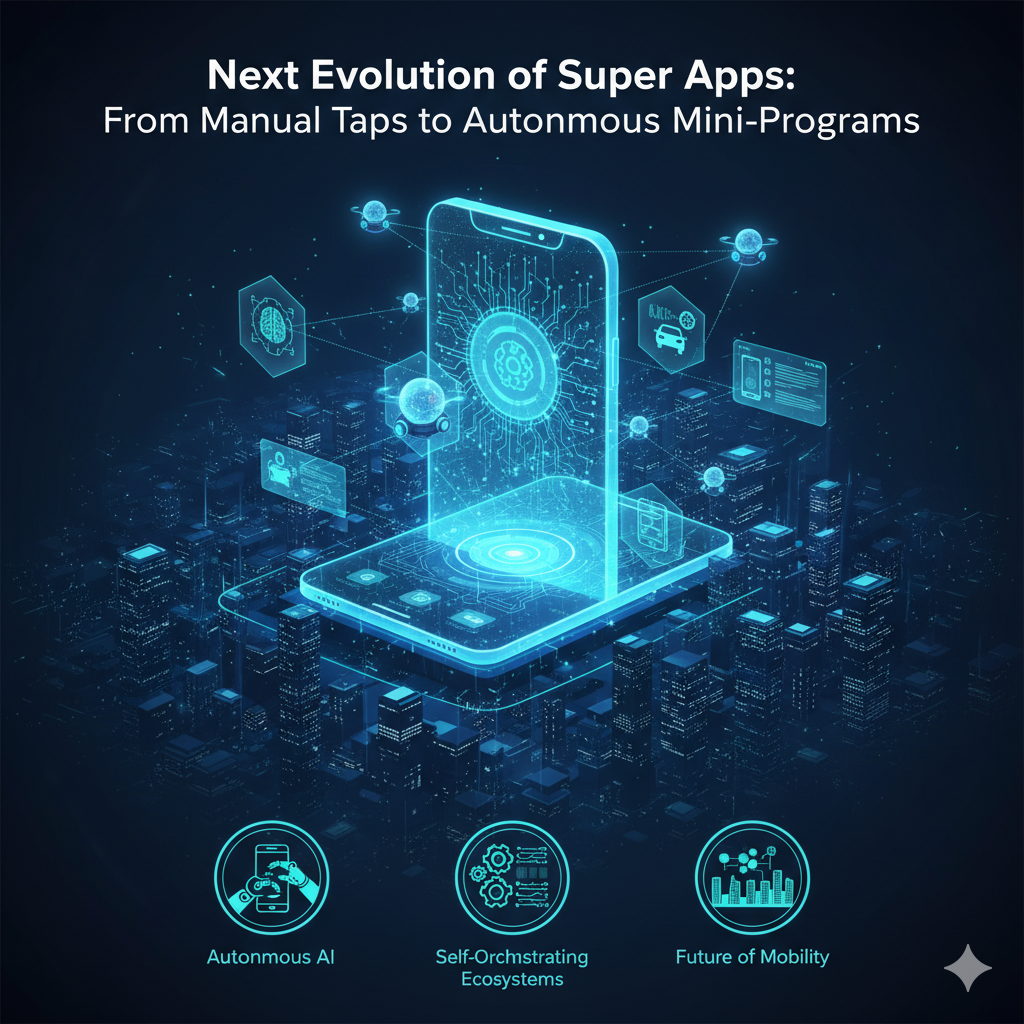
According to March 2026 reports from Asia Business Outlook and 36kr, Tencent is accelerating the development of a "top-secret" AI agent designed to live inside WeChat. Instead of functioning merely as a conversational chatbot, this AI agent is being engineered to connect directly with WeChat's vast library of third-party mini-programs.
The goal is to eliminate manual navigation. Rather than a user opening the app, searching for a ride-hailing mini-program, entering an address, and clicking "book," the user simply tells the AI agent, "Get me a ride home." The AI agent then autonomously dispatches the correct mini-program in the background and executes the service.
Industry sources suggest the project aims for gray-box testing by mid-2026, with a wider rollout potentially in the third quarter. By linking a proprietary large language model (LLM) to its established ecosystem of e-commerce, transportation, and local life services, Tencent is transforming WeChat from a centralized service hub into an "intelligent execution layer."
Why This Matters for Mobile Development
This development fundamentally shifts the economics and technical requirements of mobile app development. For years, the industry focus was on creating intuitive User Interfaces (UI). Now, the focus is shifting to Agentic Workflows—where the AI navigates the UI on the user's behalf.
However, AI agents cannot easily navigate clunky, monolithic native applications. To execute complex tasks securely, AI requires an app architecture that is strictly modular. The reason WeChat can build this autonomous agent is precisely because of its mini-program architecture. Because every service (banking, shopping, delivery) is encapsulated in a standardized, sandboxed mini-program, the AI can easily call specific functions via APIs without breaking the host app.
For Western markets and independent enterprises, this serves as a massive wake-up call. If your enterprise application is a monolithic block of legacy code, integrating advanced "Action-Bots" or AI agents will be nearly impossible. The specialization of mobile architecture into "Host Apps + Modular Containers" is no longer just a trend for user convenience; it is a strict technical prerequisite for the AI era.
The Bigger Picture: Democratizing the AI Super App
The integration of AI agents and mini-programs represents a massive competitive moat for tech giants. However, it also highlights an urgent need for independent organizations—banks, retail chains, telecommunications providers, and SaaS platforms—to upgrade their own infrastructures.
If businesses continue to rely solely on public Super Apps to reach their customers, they will eventually be reduced to mere "dumb pipes" or invisible backend providers, while the platform's AI owns the entire customer relationship and data.
To survive, enterprises must build their own independent Super App ecosystems. By adopting a containerized architecture, a traditional bank or retailer can host third-party services within their own branded app. This not only increases daily active user (DAU) engagement but also lays the structural groundwork required to implement their own enterprise-grade AI assistants in the future.
The shift is clear: instead of funding yet another generic app redesign, forward-thinking CTOs are investing in platform infrastructure that allows them to decouple their frontend services into agile, independent mini-programs.
What App Creators Should Do Now
For businesses evaluating digital transformation initiatives, the WeChat AI news demonstrates the critical importance of architectural flexibility. Development teams should immediately assess how their current mobile apps can be decoupled.
The optimal approach is to combine the security of traditional native development with the agility of modular mini-programs. This is where true enterprise Super App strategies shine.
While Tencent spends billions on proprietary infrastructure, independent enterprises can achieve the exact same architectural capability using proven commercial solutions. In enterprise deployments using FinClip, development teams have achieved 80% faster integration and a 60% cost reduction by adopting a containerized mini-program architecture.
FinClip’s lightweight 3MB SDK integrates into any existing iOS or Android application in minutes. It provides a secure, enterprise-grade sandbox container that allows you to dynamically load, update, and manage mini-programs Over-The-Air (OTA)—perfectly mimicking the architectural advantages of the world's leading Super Apps.
By adopting FinClip, organizations can modernize their legacy monolithic apps into dynamic, ecosystem-ready platforms. Whether you want to onboard third-party merchant partners today or prepare your app to be navigated by AI agents tomorrow, a containerized architecture is the essential first step.
Ready to future-proof your mobile architecture? See how FinClip turns any app into a powerful Super App.