Tencent QClaw AI Agent Now Integrates as WeChat Mini-Program for Cross-Device Task Execution
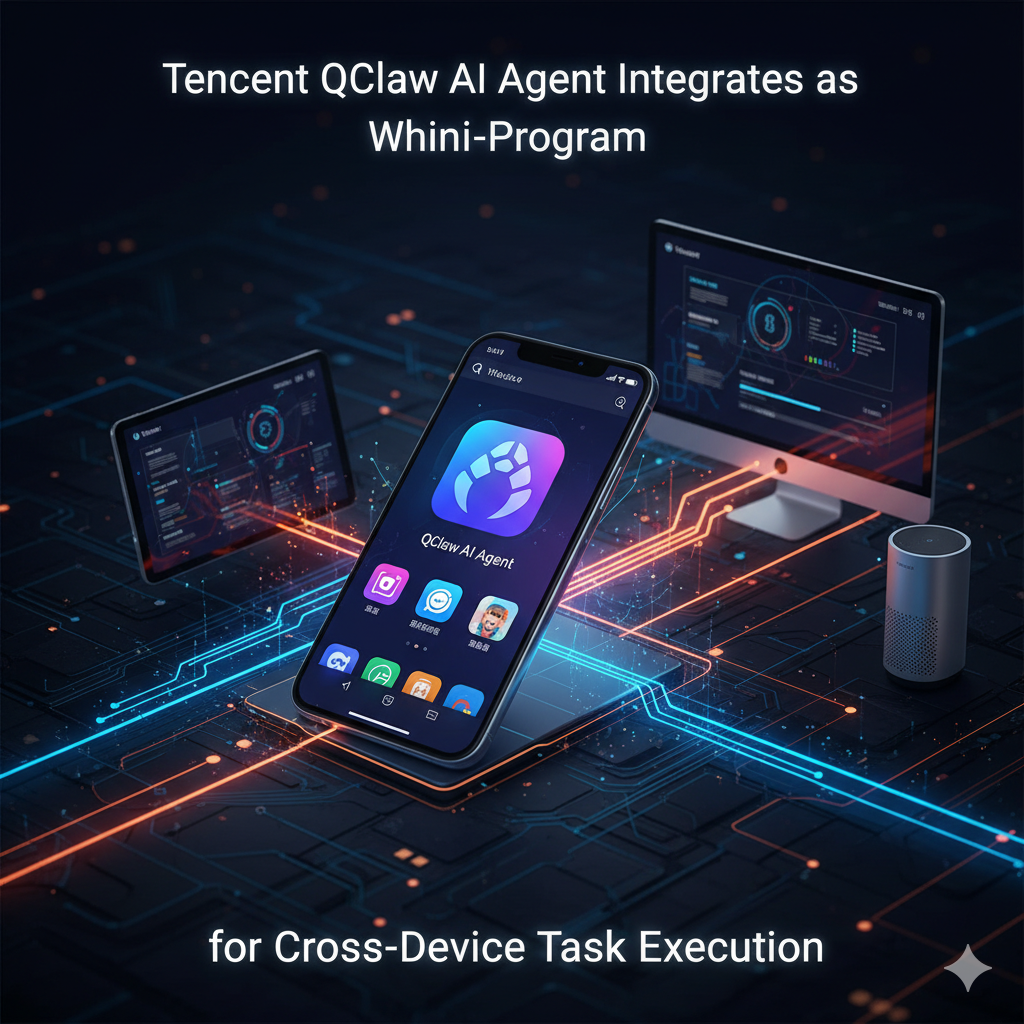
Tencent Cloud has officially released version 0.1.9 of QClaw, transforming the AI agent from a customer service account interface into a fully functional WeChat mini-program. Announced during Tencent's Q4 2025 earnings call on March 18, 2026, and detailed in subsequent technical documentation, this update significantly lowers the barrier for ordinary users to leverage AI for complex computer tasks. As the first "Lobster" AI agent deeply adapted to the WeChat ecosystem, QClaw's mini-program integration enables seamless file transfers between mobile devices and computers, native multimodal interactions, and remote task management—all within China's most widely used messaging platform. For businesses exploring AI-assisted workflow automation, this development represents a major step toward making advanced AI capabilities accessible to mainstream users through familiar interface paradigms.
What Happened
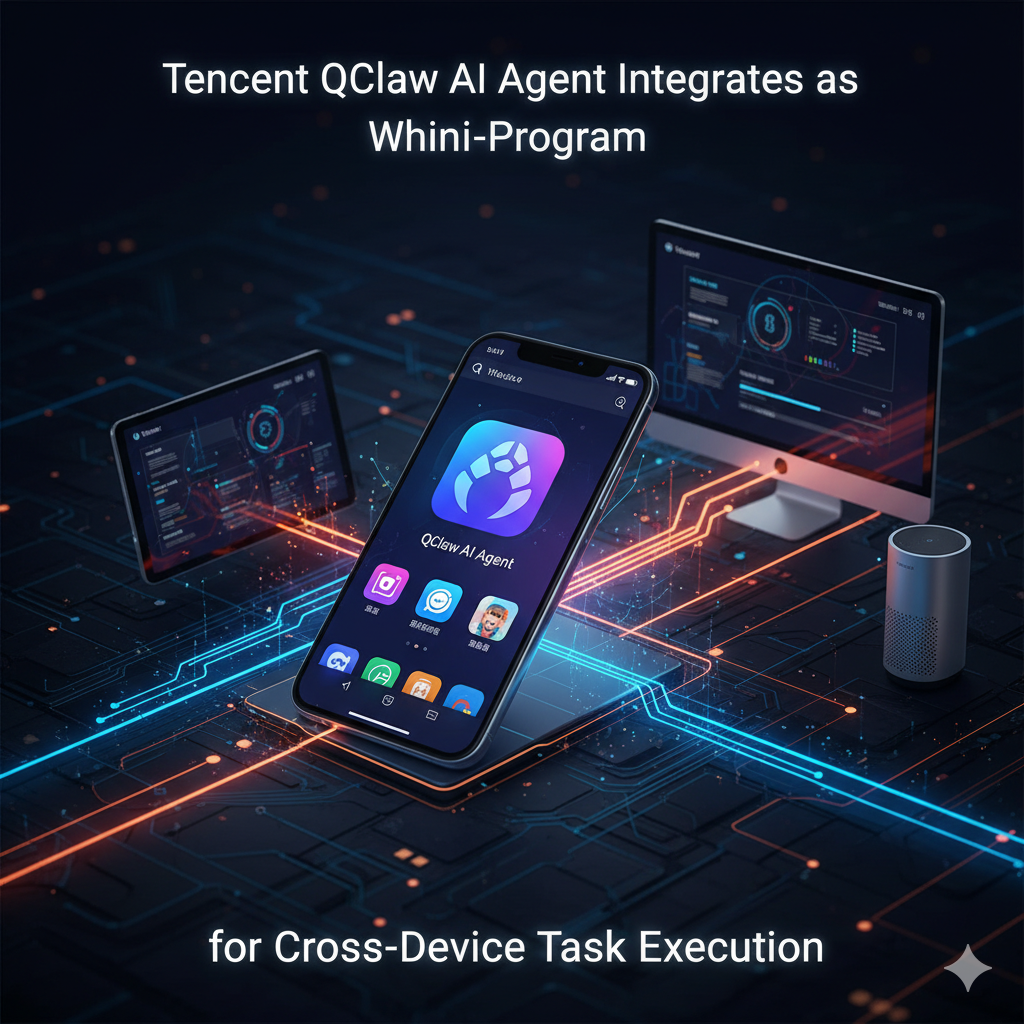
Tencent Cloud announced the QClaw 0.1.9 update, marking a strategic shift in how AI agents are deployed and accessed within the WeChat ecosystem. Previously operating as a customer service account, QClaw now functions as a native WeChat mini-program, enabling significantly smoother cross-device interactions between mobile phones and computers. The transition was confirmed during Tencent's quarterly earnings presentation, where executives highlighted the company's broader AI strategy and upcoming launch of the Hunyuan 3.0 large language model scheduled for April 2026.
The updated QClaw platform introduces several key capabilities: direct file reception and upload between computer and mobile devices through the mini-program interface, upcoming support for voice and image interactions native to WeChat's communication patterns, and future remote management features including scheduled task creation, real-time progress monitoring, and underlying model switching within the mini-program environment. Perhaps most notably, the update includes an "Inspiration Square" feature designed to address "command anxiety" among new users—preset scenarios covering office efficiency, in-depth research, entertainment games, and self-disciplined living eliminate the need for technical command syntax.
Technical documentation reveals that QClaw is minimally packaged based on the OpenClaw framework, emphasizing "no environment configuration, no command line, no model debugging." The Tencent development team stated the product's goal is simplicity accessible even to older generations, deeply embedding the AI assistant entry within WeChat to enable deployment of digital helpers that handle daily information tasks with minimal technical requirements. The platform currently supports integration with various AI models including Kimi, MiniMax, GLM, and DeepSeek, allowing custom configurations for complex workflow automation.
Why This Matters for Enterprise AI Adoption
Tencent's integration of QClaw as a WeChat mini-program addresses several critical barriers to enterprise AI adoption, particularly in markets where WeChat serves as a primary digital interface. First, it dramatically reduces deployment friction by leveraging existing user behavior patterns. Rather than requiring separate application installations or specialized interfaces, AI assistance becomes accessible through a platform already integrated into daily workflows for millions of business users across China and other Asian markets. This approach recognizes that technology adoption often depends more on familiarity and convenience than on technical superiority.
Second, the mini-program model enables more natural multimodal interactions aligned with how users already communicate. By supporting voice messages, images, and file transfers through WeChat's native functionality, QClaw reduces the cognitive load associated with learning new interaction paradigms. This is particularly important for enterprise applications where user resistance to interface changes can impede adoption even when underlying capabilities offer significant benefits. The "Inspiration Square" feature further addresses this challenge by providing template-based task initiation that doesn't require users to formulate precise technical commands.
Third, this development reflects the increasing importance of ecosystem integration in AI platform strategies. Standalone AI tools often struggle with adoption because they exist outside established workflow patterns. By embedding AI capabilities within WeChat—a platform already used for communication, payments, document sharing, and business operations—Tencent creates a more seamless user experience that requires minimal behavioral change. This ecosystem approach is particularly valuable in enterprise environments where integration complexity often outweighs individual feature benefits.
The timing of this release alongside Tencent's earnings announcement also highlights the growing business importance of AI capabilities in competitive positioning. With the company reporting 2025 revenue of 751.8 billion yuan (approximately $108.8 billion), a 14% year-on-year increase, and net profit of 224.8 billion yuan, up 16%, executives are clearly positioning AI as a key growth driver. The planned Hunyuan 3.0 model launch in April 2026 further emphasizes the strategic priority given to AI development within Tencent's broader technology roadmap.
The Bigger Picture
Tencent's QClaw integration exemplifies a broader trend toward embedding advanced AI capabilities within existing platform ecosystems rather than developing standalone applications. This approach recognizes that user adoption often depends more on accessibility and familiarity than on technical sophistication. By making AI assistance available through WeChat—a platform with over a billion monthly active users—Tencent can accelerate adoption while minimizing the training and onboarding typically required for new enterprise tools.
The emphasis on reducing "command anxiety" through preset scenarios and template-based interactions represents an important evolution in AI interface design. Early AI systems often required precise technical syntax or specific prompting techniques that created barriers for non-technical users. The Inspiration Square approach acknowledges that many business users may understand what tasks they want accomplished but lack the vocabulary or structure to articulate those tasks in machine-readable form. This human-centered design philosophy could significantly expand the addressable market for AI-assisted productivity tools.
Another significant aspect is the cross-device functionality enabled by the mini-program architecture. Traditional desktop AI assistants typically operate within isolated computing environments, but QClaw's integration with WeChat enables seamless transitions between mobile and desktop contexts. This aligns with modern work patterns where business users frequently switch between devices throughout their workdays. The ability to initiate computer-based tasks from a mobile device and monitor progress through a familiar messaging interface addresses a genuine workflow need rather than simply adding another technical capability.
The broader competitive landscape in enterprise AI is also evolving toward greater integration with existing business systems. As AI capabilities mature beyond experimental phases, successful implementation increasingly depends on how well these tools integrate with established workflows, data sources, and communication patterns. Platforms that can deliver AI assistance within familiar business environments—rather than requiring users to adapt to new interfaces or workflows—are likely to gain adoption advantages even when their underlying AI models might not lead in benchmark performance metrics.
What Development Teams Should Do Now
For enterprise development teams evaluating AI integration strategies, Tencent's QClaw approach offers several valuable considerations. First, assess how existing platform ecosystems within your organization could serve as deployment channels for AI capabilities. Rather than building standalone AI applications, consider embedding AI features within tools already used by business teams. This reduces adoption friction and leverages existing user familiarity with interface conventions and workflow patterns.
Second, examine the multimodal interaction patterns enabled by platform integrations like WeChat mini-programs. Voice, image, and file-based interfaces often align more naturally with how business users communicate than traditional text-based command interfaces. Evaluate whether your current AI implementations could benefit from similar multimodal approaches, particularly for use cases involving document processing, data analysis, or cross-device workflow coordination.
Third, consider the infrastructure implications of cross-device AI assistance. Systems that enable seamless interaction between mobile devices and desktop computers require careful architecture for synchronization, security, and performance. Begin planning for these requirements, particularly regarding data transmission security, authentication across devices, and consistent user experience regardless of access point.
In enterprise deployments using FinClip, development teams have achieved 126% satisfaction increases and 200% daily active user growth through non-intrusive mini-program integration. The security sandbox provides device-side isolation similar to containerization approaches, ensuring data protection while enabling flexible functionality deployment. This architecture supports rapid iteration and A/B testing capabilities without app store review delays, allowing continuous optimization based on user feedback.
See how FinClip turns any app into a SuperApp.