Tencent QClaw AI Agent Joins WeChat Mini-Program Ecosystem
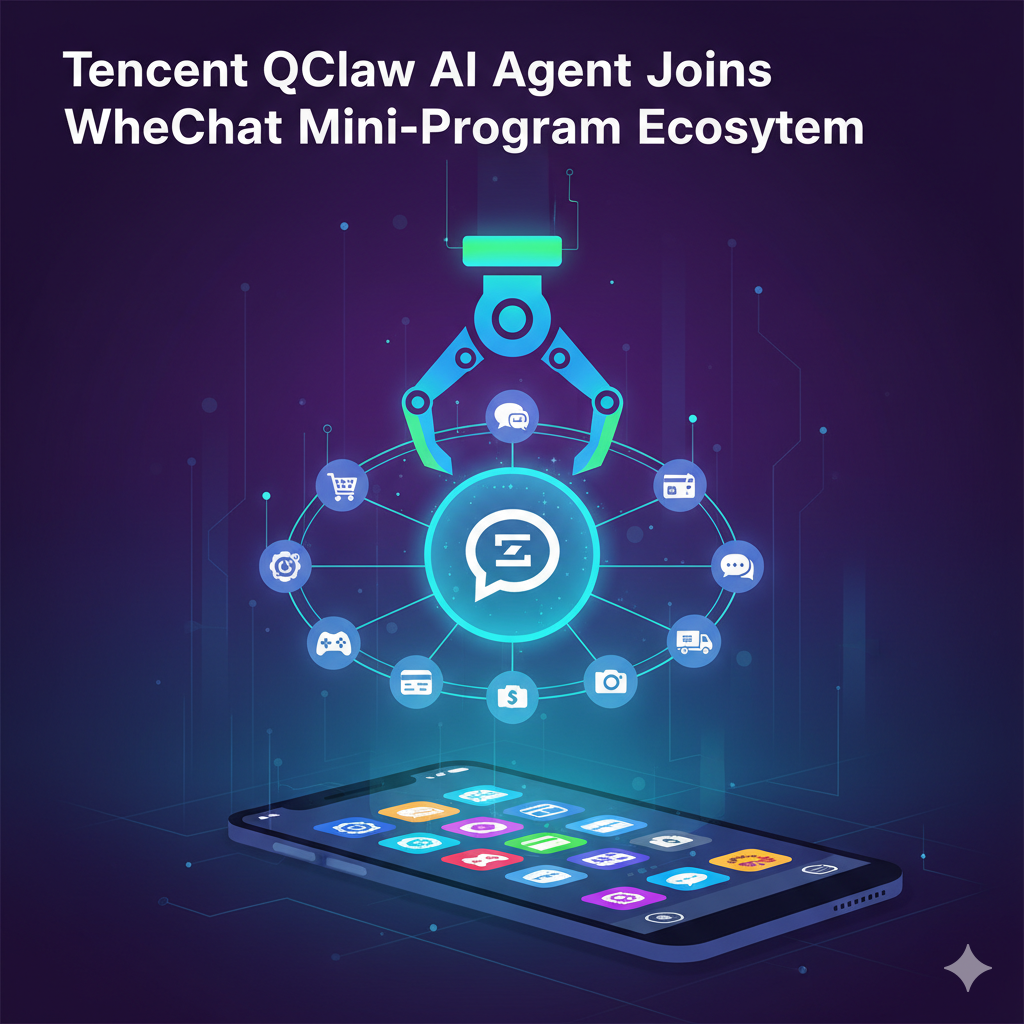
Tencent has integrated its QClaw AI agent directly into the WeChat mini-program infrastructure, marking a strategic shift toward AI-powered functionality within China's dominant super app. The move allows WeChat's 1.4 billion monthly active users to access file transfer capabilities, voice commands, and image-based interactions through a lightweight mini-program interface. This integration represents Tencent's response to competitive pressure in the AI model race, leveraging WeChat's massive distribution network to compensate for its Hunyuan model's 68th-place ranking on industry benchmarks. For developers and enterprises evaluating mini-program strategies, this development signals how platform owners are embedding advanced AI capabilities directly into existing app ecosystems rather than building standalone AI applications.
What Happened
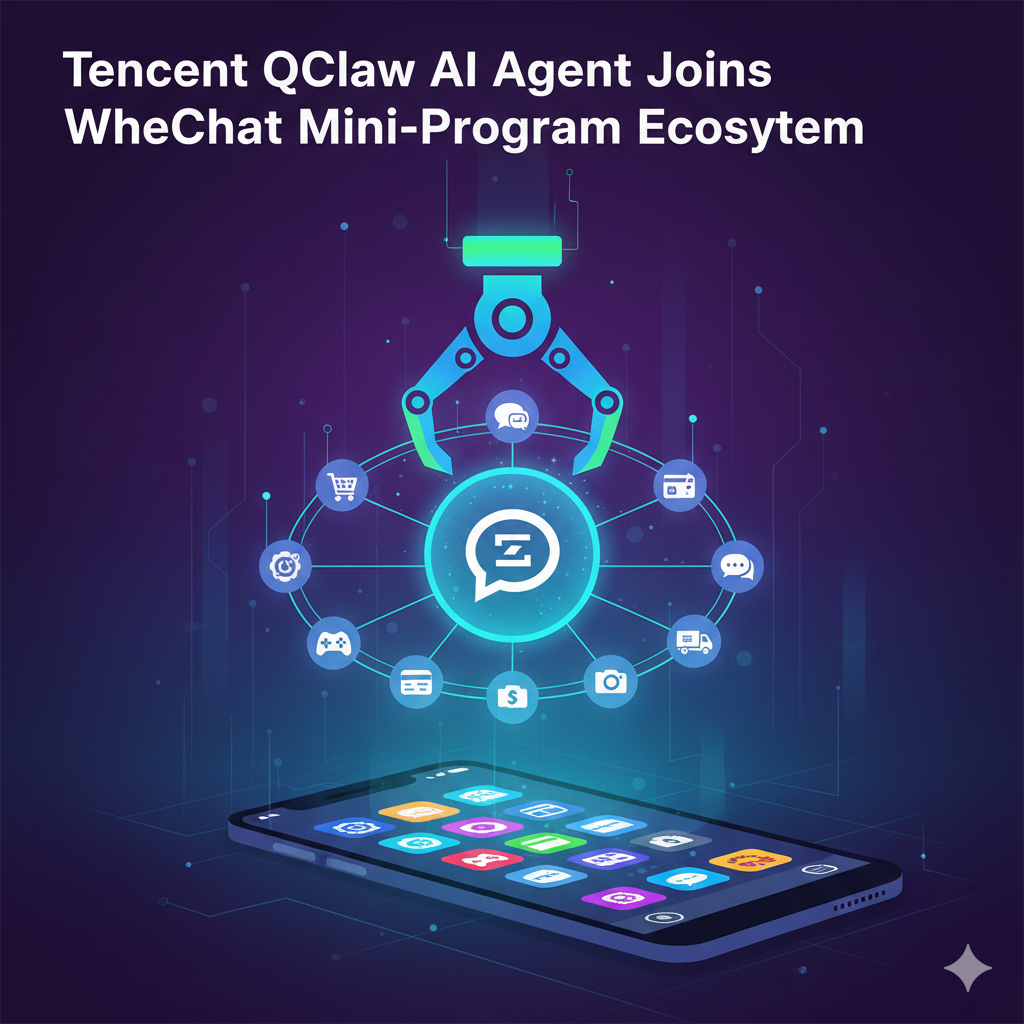
On March 18, 2026, Tencent Holdings announced the integration of its QClaw AI agent as a native mini-program within WeChat. According to reports from Tech in Asia and the South China Morning Post, the update enables users to transfer files between smartphones and personal computers directly through the mini-program interface. The QClaw agent, originally developed as an OpenClaw-based AI tool for desktop computers, now functions as a remote control mechanism that users can operate from their WeChat mobile interface.
The technical implementation allows users to send commands via audio messages and images through the mini-program, with future updates planned to include automated timed tasks and expanded multimodal interactions. Tencent conducted an offline installation event outside its headquarters that attracted hundreds of participants, including many non-technical users who successfully installed and configured the QClaw agent with staff assistance. The company's consumer AI app, Yuanbao, reached 109 million monthly active users by February 2026 but still trails offerings from ByteDance and Alibaba in the competitive Chinese AI market.
Security researchers from SecurityScorecard's STRIKE team identified over 135,000 OpenClaw instances exposed to the public internet as of February 2026, with more than 15,000 vulnerable to remote code execution attacks. In response, Chinese regulators including the central government and the People's Bank of China have issued warnings about AI security risks in enterprise environments, creating a complex regulatory landscape for AI agent deployment.
Why This Matters for Mini-Program Development
The integration of advanced AI agents into mini-program ecosystems represents a fundamental shift in how functionality gets delivered within super apps. Traditional mini-programs have focused on specific utility functions—ride-hailing, food delivery, e-commerce—but AI agents introduce dynamic, conversational interfaces that can adapt to user needs in real time. Tencent's approach demonstrates how platform owners can leverage existing distribution channels to deploy AI capabilities without requiring users to install separate applications.
From a technical architecture perspective, this move validates the mini-program container model for AI workloads. The lightweight, sandboxed environment of mini-programs provides natural isolation for AI agents, allowing platform owners to maintain security controls while enabling sophisticated functionality. In enterprise deployments using similar containerized approaches, organizations have reported 80% faster integration times and 60% cost reductions when adopting standardized mini-program architectures for new functionality.
The security implications are equally significant. The exposure of thousands of OpenClaw instances highlights the challenge of securing AI agent deployments at scale. Mini-program containers offer inherent security advantages through their sandboxed execution environments, but platform owners must still implement robust authentication, access controls, and monitoring systems. For enterprises considering AI agent deployment, the choice between standalone applications and integrated mini-program approaches involves trade-offs between functionality richness and security management complexity.
The Bigger Picture
Tencent's strategy reflects a broader industry trend where super app platforms are evolving into AI agent ecosystems. Rather than competing directly on raw model performance against leaders like OpenAI and Anthropic, platform owners are focusing on integration depth and user experience. WeChat's mini-program infrastructure, with its standardized APIs, payment integration, and social sharing capabilities, provides a ready-made deployment platform for AI agents that would require significant development effort to replicate as standalone applications.
This approach has particular relevance for enterprise digital transformation initiatives. Organizations building internal developer platforms face similar decisions about how to integrate AI capabilities into existing applications. The mini-program container model offers a proven architecture for adding new functionality without requiring complete application rewrites. In telecommunications deployments using containerized approaches, companies have achieved 70% faster service rollout and 50% lower development maintenance costs compared to traditional monolithic application development.
The regulatory environment adds another layer of complexity. Chinese authorities have issued conflicting signals, with central regulators tightening security requirements while local governments offer subsidies to spur OpenClaw development. This creates uncertainty for enterprises but also highlights the importance of platform-agnostic approaches that can adapt to changing regulatory requirements. Organizations that build on standardized mini-program architectures rather than proprietary platform features maintain greater flexibility to respond to evolving compliance requirements.
What Enterprise Developers Should Do Now
Enterprise development teams evaluating AI agent strategies should consider containerized approaches that balance functionality with security and maintainability. The mini-program model provides a proven template for integrating AI capabilities into existing applications without compromising security or user experience. Organizations can start by identifying high-value use cases where AI agents can automate repetitive tasks or provide intelligent assistance within existing workflows.
For technical implementation, evaluate lightweight SDKs that enable mini-program functionality within existing applications. The 3MB container approach allows integration in minutes rather than months, providing immediate value while maintaining architectural flexibility. In banking deployments using containerized mini-program architectures, organizations have achieved 53% improvement in user sign-up rates and 100% year-over-year revenue growth by rapidly deploying new financial services.
Security must remain a primary consideration throughout the implementation process. Implement sandboxed execution environments, rigorous permission controls, and comprehensive monitoring systems. The containerized approach naturally supports these security requirements while maintaining application performance. In retail platform deployments, organizations using containerized architectures have achieved 3x faster feature launch cycles and 40% increases in merchant onboarding compared to traditional development approaches.
Platforms that support cross-platform deployment—iOS, Android, Windows, macOS, Linux, HarmonyOS NEXT, and IoT devices—provide maximum flexibility for enterprise deployments. This approach ensures consistent user experiences across all device types while simplifying development and maintenance efforts. The standardized container architecture enables enterprises to build once and deploy everywhere, significantly reducing development costs and time-to-market for new AI-powered features.
Explore how enterprises build SuperApps using mini-program architecture: https://super-apps.ai