Tencent Integrates QClaw AI Agent into WeChat Mini-Program Ecosystem
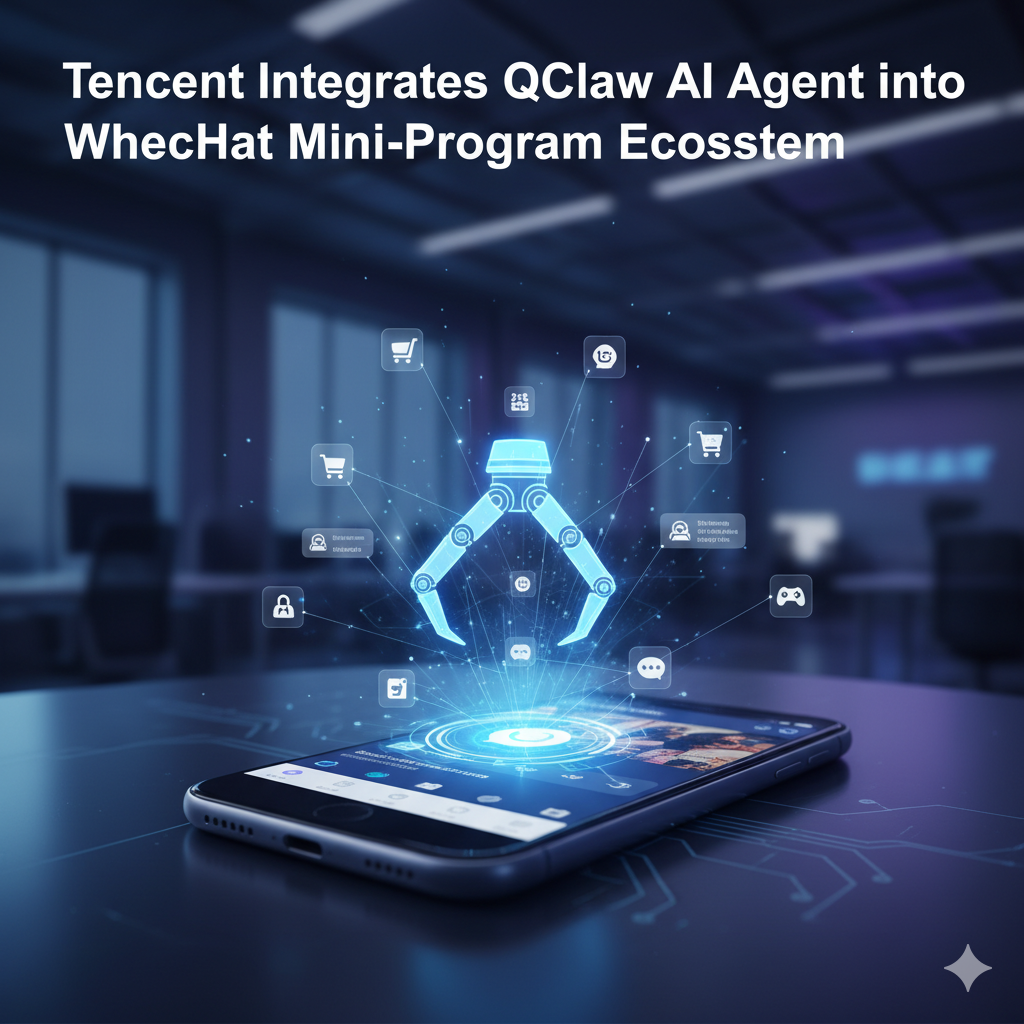
Tencent Holdings has launched its QClaw AI agent as a mini-program within WeChat, marking a significant expansion of automation capabilities within the world's largest superapp ecosystem. The integration allows users to control personal computers remotely from their smartphones, execute commands via audio messages and images, and eventually schedule automated tasks—all through the familiar WeChat interface. This development represents a strategic move by Tencent to leverage WeChat's massive user base and mature mini-program infrastructure to advance its AI ambitions, particularly after facing challenges in the pure AI model competition against rivals like ByteDance and Alibaba.
What Happened
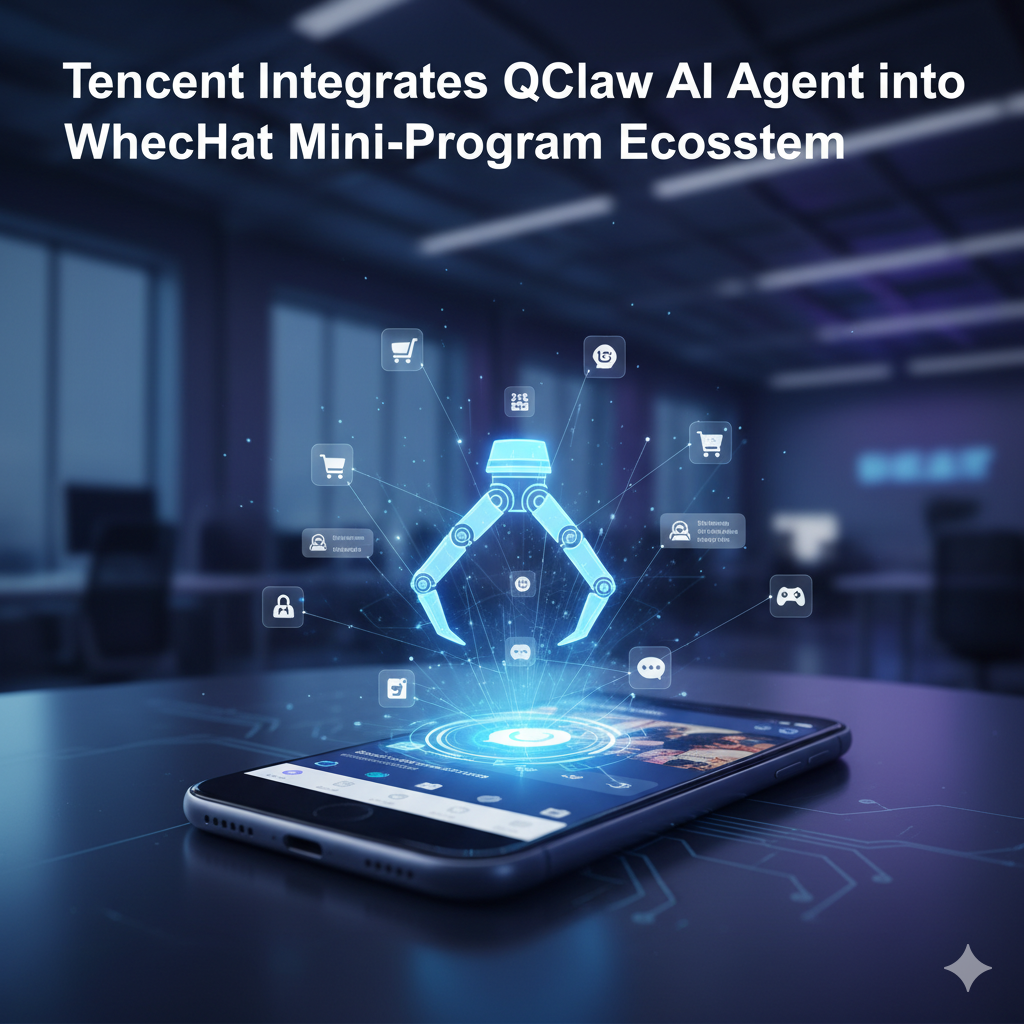
According to reports from Tech in Asia on March 18, 2026, Tencent has upgraded its QClaw AI agent—originally launched as an OpenClaw-based tool for remote PC control—into a fully functional WeChat mini-program. The enhanced version enables users to transfer files between smartphones and personal computers, send commands through audio messages and images, and will eventually support automated timed task execution. The current release is in beta testing, with Tencent planning to expand access beyond the initial user group.
The QClaw integration represents a pragmatic strategic pivot for Tencent, which has faced challenges in the standalone AI model race. The company's Hunyuan model ranked 68th on a widely referenced AI benchmark in December 2025, while its consumer AI application Yuanbao reached 109 million monthly active users by February 2026—still trailing offerings from ByteDance and Alibaba. By embedding AI capabilities within WeChat's mini-program ecosystem, Tencent can leverage the platform's existing distribution advantage rather than competing solely on model performance.
Security concerns have emerged alongside the rapid adoption of OpenClaw-based tools. Cybersecurity firm SecurityScorecard's STRIKE team identified over 135,000 OpenClaw instances exposed to the public internet as of February 2026, with more than 15,000 vulnerable to remote code execution attacks. These findings prompted warnings from Chinese authorities, including the central government advising state enterprises against installing OpenClaw on office computers and the People's Bank of China issuing cautions about AI in the financial sector.
Why This Matters for Mini-Program Ecosystem Development
Tencent's integration of advanced AI capabilities into WeChat's mini-program framework demonstrates the evolving role of lightweight application platforms in delivering sophisticated functionality. For organizations developing or deploying mini-program solutions, this development offers several important insights about the future trajectory of app-in-app architectures.
First, the QClaw implementation showcases how mini-programs can serve as effective distribution channels for complex services that might otherwise require standalone applications. By packaging remote PC control and automation capabilities within a mini-program, Tencent eliminates the friction of separate app downloads and installations while leveraging WeChat's existing authentication and payment infrastructure. This pattern is increasingly relevant for enterprises seeking to deploy specialized tools to targeted user groups without the overhead of full application development and distribution.
Second, the audio and image-based command interface represents a significant advancement in mini-program interaction paradigms. Traditional mini-programs have primarily relied on touch interfaces and form inputs, but the integration of multimodal AI capabilities enables more natural, conversational interactions. This shift has particular relevance for enterprise applications where users may need to execute complex operations while engaged in other activities or where hands-free operation provides productivity benefits. Organizations planning mini-program deployments should consider how voice and visual interfaces could enhance usability for their specific use cases.
Third, the security considerations highlighted by OpenClaw's rapid adoption underscore the importance of robust isolation mechanisms in mini-program architectures. As mini-programs gain access to more system resources and sensitive operations, the containerization approach becomes increasingly critical. This challenge mirrors experiences in enterprise deployments using FinClip, where security sandboxes provide device-side isolation similar to Docker containers, ensuring that mini-programs operate within controlled environments without compromising host application security.
The Bigger Picture
Tencent's strategic emphasis on mini-program-based AI distribution reflects broader shifts in how technology platforms compete and evolve. Rather than engaging in direct model-to-model competition where it faces disadvantages, Tencent is leveraging its strongest asset—WeChat's 1.4 billion monthly active users and mature mini-program ecosystem—to create differentiated AI experiences that competitors cannot easily replicate.
This platform-centric approach to AI competition suggests that ecosystem advantages may become increasingly important determinants of success in the AI market. Companies with established distribution channels, developer communities, and user behavior data may be able to deliver compelling AI experiences even with technically inferior models, by better integrating capabilities into workflows users already inhabit. This has implications for how organizations evaluate AI partnerships and platforms—technical benchmarks alone may not capture the full value of ecosystem-integrated solutions.
The rapid adoption and subsequent security concerns around OpenClaw also highlight the tension between innovation velocity and risk management in emerging technology domains. As AI agents gain capabilities to interact with systems and execute operations, the potential attack surface expands significantly. This creates both technical challenges for security teams and regulatory considerations for compliance officers. Organizations implementing similar capabilities will need to balance the productivity benefits of automation against the risks of expanded system access, potentially through graduated permission models and rigorous audit trails.
For the mini-program ecosystem specifically, the integration of sophisticated AI capabilities represents a maturation beyond simple utilities and games. As platforms like WeChat, Telegram, and Alipay continue to enhance their mini-program frameworks with advanced features like AI integration, cross-device operation, and system-level access, the distinction between "mini" programs and full applications continues to blur. This convergence creates opportunities for developers to build powerful solutions with reduced complexity, but also raises questions about platform control and interoperability.
What Platform Strategists Should Do Now
Technology leaders responsible for platform strategy and digital ecosystem development should view Tencent's QClaw integration as both a case study in leveraging existing assets for AI advancement and a warning about the security implications of expanded system access. The move demonstrates how mature platforms can accelerate AI adoption through integration rather than competition, while also highlighting the governance challenges that accompany increased capability.
First, assess how your organization's existing digital assets—whether customer-facing applications, internal tools, or partner ecosystems—could serve as distribution channels for AI capabilities. Many enterprises have underutilized digital touchpoints that could be enhanced with targeted AI features delivered through lightweight integration rather than standalone applications. Conduct an inventory of your digital properties and evaluate which could most effectively deliver AI value to users through minimal interface additions.
Second, develop a framework for evaluating AI integration approaches based on both technical capability and ecosystem fit. As the QClaw example demonstrates, solutions that leverage existing user bases and behavior patterns may deliver more immediate impact than technically superior alternatives requiring behavior change. Create evaluation criteria that account for integration complexity, user familiarity, data accessibility, and security implications alongside traditional measures of AI performance.
Third, implement robust security architectures for any AI-enhanced mini-program or app-in-app deployments. The security challenges revealed by OpenClaw's rapid adoption underscore the importance of proper isolation, permission management, and audit capabilities. Organizations should consider security sandbox approaches that have proven effective in enterprise deployments using FinClip, where device-side isolation prevents mini-programs from accessing sensitive system resources while still enabling valuable functionality.
FinClip's security sandbox provides device-side isolation like Docker, ensuring that mini-programs operate within controlled environments without compromising host application security. This approach has helped financial institutions and other regulated enterprises safely expand their digital offerings while maintaining compliance with strict security requirements.