Telegram Mini Apps Emerge as Western Counterpart to WeChat's Ecosystem Strategy
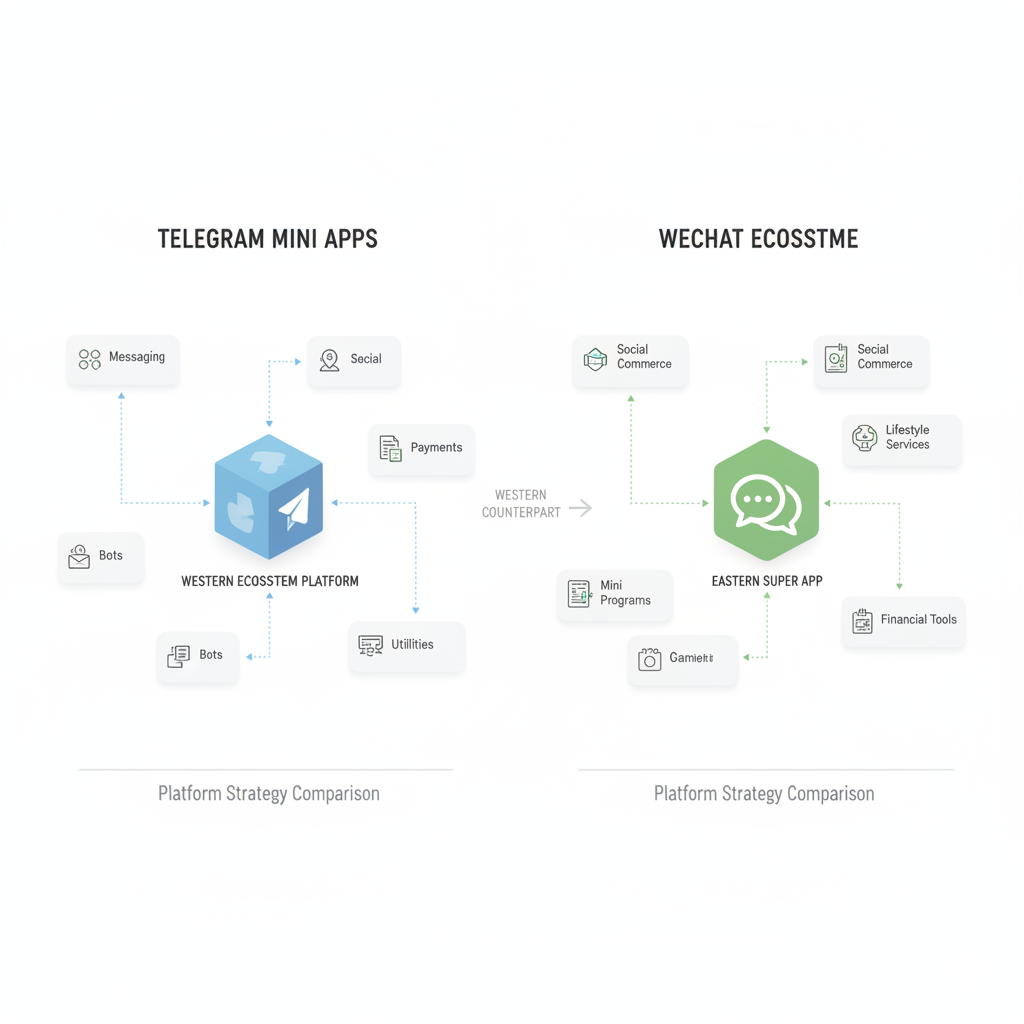
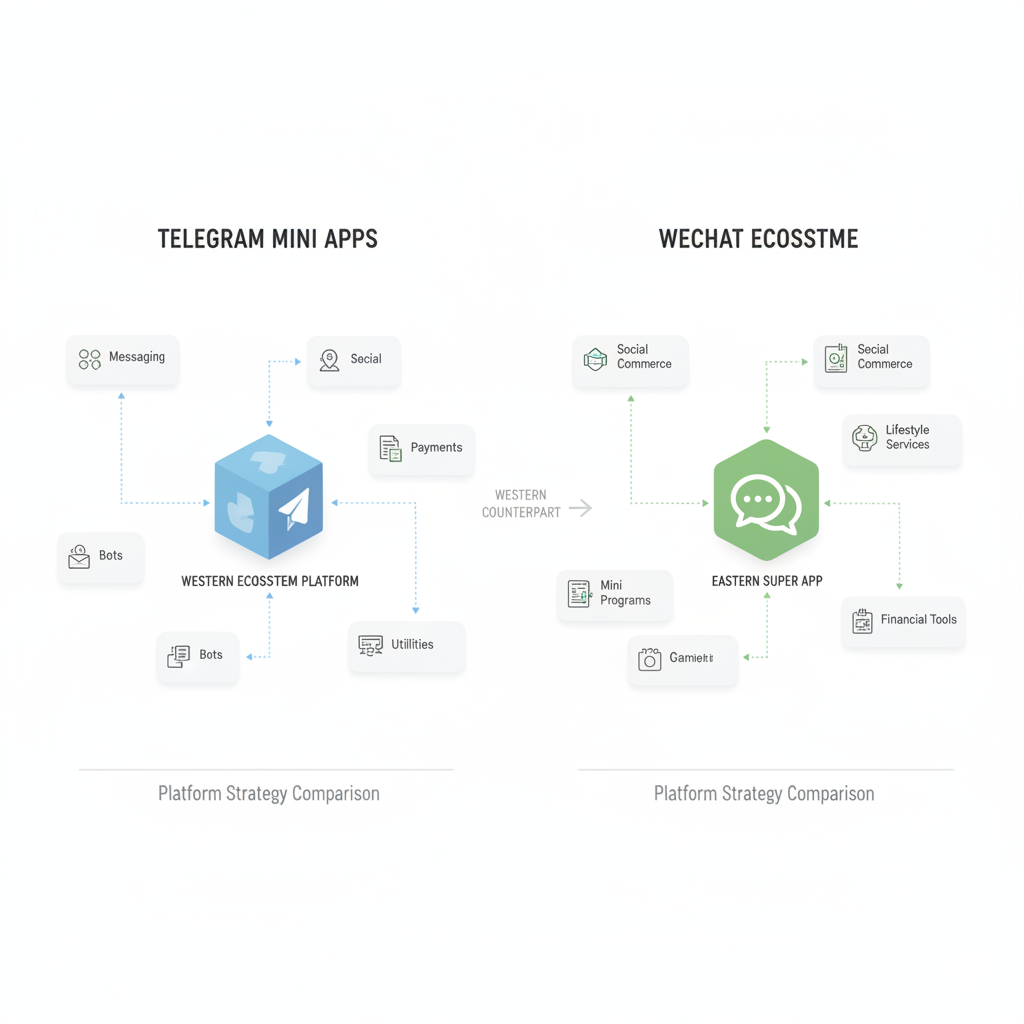
Telegram has reached 10 billion monthly active users while fully integrating its TON payment system, creating what industry observers describe as the Western world's first viable super app ecosystem through its mini app platform. This development represents more than user growth—it signals Telegram's evolution from messaging application to comprehensive platform ecosystem, offering developers distribution, monetization, and user engagement mechanisms that directly parallel WeChat's successful model in China. For businesses targeting global audiences, this creates new strategic considerations for platform selection and development investment.
What Happened
Telegram's mini app ecosystem has matured throughout 2025-2026, reaching critical mass with both user adoption and developer tooling. The platform now supports instant application loading within chat windows (0.5 second average startup time), native integration of TON Space wallet for cryptocurrency payments, and sophisticated notification systems with 80% open rates compared to typical app push notification rates of 3-5%. These technical capabilities combine with Telegram's 10 billion MAU to create what developers describe as "the last low-cost user acquisition channel" for mobile applications.
The TON Foundation's February 2026 launch of TON Pay further accelerates ecosystem development. This payment SDK enables merchants and mini app developers to accept Toncoin and USDt within Telegram through single checkout flows targeting sub-second transactions with average fees below $0.01. The wallet-agnostic integration allows users to transact without leaving Telegram's interface, creating seamless payment experiences that previously existed only in fully integrated ecosystems like WeChat Pay.
Developer adoption patterns reveal strategic shifts. Successful mini apps employ hybrid casual mechanics combined with strong social integration—squad systems that bind mini apps to Telegram channels or groups, creating community-driven growth loops. Unlike early clicker games that dominated the initial mini app landscape, current successful implementations incorporate idle mechanics, merge gameplay, or simple RPG elements with social competition features that leverage Telegram's native group structures.
Why This Matters for Global Digital Strategy
Telegram's ecosystem maturation creates the first Western super app platform with comparable scale and integration to Asian counterparts. This matters for businesses because it offers alternative distribution and monetization pathways that bypass traditional app store economics. Where Google Play and Apple App Store user acquisition costs have reached $3-5 per install for casual games, Telegram mini apps demonstrate near-zero acquisition costs through social sharing and community integration mechanisms.
The payment integration represents particular significance for digital goods and services. Traditional app store payment systems typically take 15-30% of transaction value, with additional complexities around international payment methods and currency conversion. Telegram's cryptocurrency integration (with planned fiat payment options through Telegram Stars) offers substantially lower transaction costs while supporting global payment methods without country-by-country payment processing agreements. For digital goods with typically thin margins, this 15-30% cost reduction directly impacts profitability.
User engagement metrics reveal platform advantages. Mini apps within Telegram benefit from what developers term "ambient availability"—users already within the messaging interface can discover and launch mini apps with minimal friction. This contrasts with traditional app discovery requiring users to exit their current context, search app stores, download applications, and complete registration processes. The reduction in activation friction results in 8-12x higher initial engagement rates compared to traditional app installs.
The Bigger Picture
Telegram's success with mini apps reflects broader platform evolution patterns observed in other regions. Messaging applications naturally evolve toward platform ecosystems as they reach critical user mass—first adding basic services (payments, file sharing), then opening development platforms (mini apps, bots), and finally creating comprehensive ecosystems where third-party services become integral to platform value. This pattern has played out consistently across regions, with timing differences primarily related to market structure and competitive dynamics.
The Western market has historically resisted super app adoption due to user preferences for specialized applications and regulatory concerns about platform concentration. Telegram's approach addresses these concerns through its decentralized architecture (server distribution across jurisdictions) and optional integration model (users choose which mini apps to engage with). This creates what might be termed "opt-in super app functionality"—users access integrated services when desired while maintaining traditional app usage patterns for other needs.
The cryptocurrency integration represents strategic differentiation from Asian super app models. While WeChat Pay and Alipay dominate Chinese digital payments through traditional financial infrastructure, Telegram leverages cryptocurrency's global accessibility and lower transaction costs. This positions Telegram particularly well for international services and cross-border transactions where traditional payment systems face regulatory complexity and high costs. The approach also aligns with Telegram's historical user base, which includes substantial cryptocurrency community participation.
What Global Businesses Should Do Now
Companies with international digital services should immediately evaluate Telegram mini app development against their existing distribution channels. The near-zero user acquisition costs and high engagement metrics warrant testing even for businesses with established app store presence. Initial experiments should focus on lightweight implementations that leverage Telegram's social features—community integration, group competitions, or social sharing mechanics that differ from traditional app store distribution patterns.
Payment strategy requires particular attention. Businesses should test both cryptocurrency and fiat payment options through Telegram's evolving payment infrastructure. The sub-dollar transaction costs represent substantial savings for digital goods and subscription services, but require adaptation to cryptocurrency price volatility and user education about cryptocurrency transactions. Hybrid approaches—accepting both traditional payments and cryptocurrency—may offer transition paths while cryptocurrency adoption continues growing.
Development resource allocation should consider Telegram's technical advantages. The platform's web-based development approach (React/Vue with Trusted Web Activity protocols) enables rapid prototyping with existing web development skills. Unlike native app development that requires platform-specific expertise, Telegram mini apps can leverage existing web development teams with minimal retraining. This reduces experimentation costs and accelerates time-to-market for testing platform viability.
Businesses operating across diverse platforms should examine container-based approaches that maintain consistent experiences while adapting to platform-specific requirements. Cross-platform runtime environments enable applications to run within different super app ecosystems while maintaining single codebase management. This approach reduces development overhead when targeting multiple platform ecosystems like WeChat, Telegram, and native app stores simultaneously. Read comprehensive documentation about implementing this adaptive architecture. View docs