Super Apps Market to Surge at 27.2% CAGR Through 2033: Embedded Finance Drives Growth
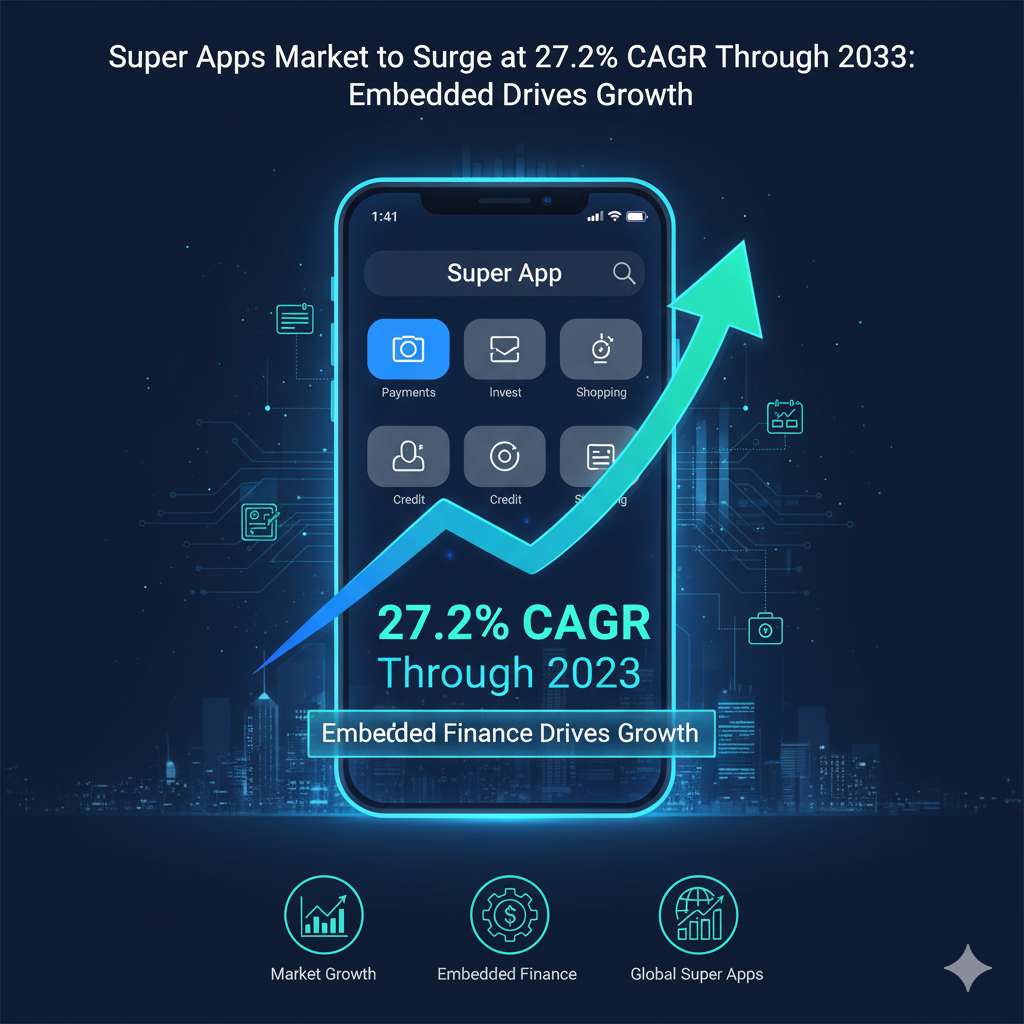
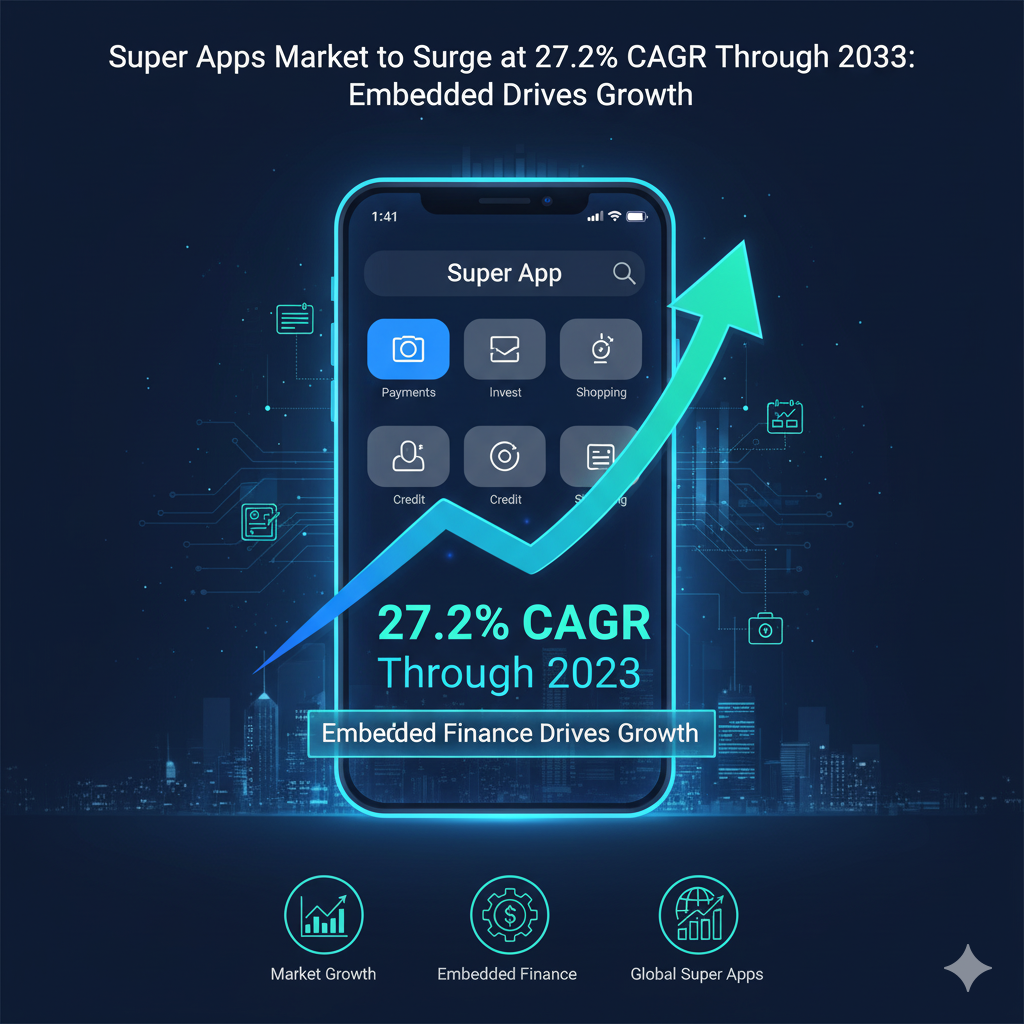
The global super apps market is witnessing exponential growth as digital payments, mobility services, embedded finance, and e-commerce converge into unified digital ecosystems. Projected to reach $155.2 billion in 2026 and surge to $838.3 billion by 2033, this remarkable 27.2% compound annual growth rate reflects a structural shift from single-purpose mobile applications toward integrated, multi-service digital platforms that function as financial gateways and lifestyle hubs. This expansion represents more than market growth—it signals fundamental changes in how consumers interact with digital services, how businesses structure their offerings, and how economic value flows through platform ecosystems.
Market Segmentation and Revenue Drivers
The super apps market divides into several key service segments, each contributing differently to overall growth and revenue generation. Payments remain the dominant service category, accounting for approximately 33% of revenue in 2026, as they serve as the primary engagement anchor within super app ecosystems. High-frequency digital wallet transactions create strong platform stickiness, enabling cross-selling of additional services such as lending, insurance, and wealth management. This payment-first approach mirrors successful models in Asia, where platforms like WeChat Pay and Alipay established initial user engagement through convenient payment functionality before expanding into broader service offerings.
Financial services represent the fastest-growing segment, expanding at nearly 31% CAGR through 2033, driven by embedded lending, AI-powered credit underwriting, digital insurance distribution, and micro-investment products. Super apps leverage proprietary consumer data to assess risk, personalize offers, and improve underwriting precision—capabilities that traditional financial institutions often lack due to data fragmentation across different service providers. This shift toward embedded finance significantly enhances revenue diversification and average revenue per user, transforming super apps from simple service aggregators into comprehensive financial ecosystems.
By platform architecture, monolithic super apps lead with 55% market share in 2026 due to centralized data control, integrated ecosystems, and vertical monetization capabilities. However, mini-app ecosystems are expected to grow fastest through 2033, offering advantages in developer engagement, innovation velocity, and service diversification. Mini-app frameworks allow third-party developers to integrate services seamlessly, reducing development costs and accelerating ecosystem expansion while maintaining platform control over core user experience and data governance. This architectural evolution reflects the tension between centralized control and distributed innovation that characterizes platform development strategies.
Regional Growth Patterns and Adoption Dynamics
Asia Pacific dominates the global super apps landscape with an estimated 52% revenue share in 2026, supported by high digital wallet penetration exceeding 70% in several economies, government-backed instant payment systems, and strong consumer adoption of platform-based commerce. Countries like China, India, and Southeast Asian nations have created favorable conditions for super app growth through regulatory frameworks that encourage digital payment adoption, smartphone penetration rates exceeding 80% in urban areas, and cultural acceptance of all-in-one platform solutions. Government initiatives like India's Unified Payments Interface have reduced transaction friction and strengthened interoperability within digital ecosystems, creating fertile ground for super app expansion.
North America and Europe witness steady adoption driven by open banking frameworks and fintech innovation, though cultural resistance to all-in-one platforms and established competitive landscapes create different growth dynamics. In Europe, regulatory initiatives promoting interoperability and secure data sharing enable integrated financial platforms, while consumer preferences for specialized applications over comprehensive platforms moderate growth compared to Asian markets. The United States presents a particularly complex landscape with mature payment ecosystems, strong brand loyalty to specialized services, and regulatory fragmentation across states—factors that have historically impeded super app adoption but may evolve as platform convergence accelerates.
Emerging markets in Southeast Asia, Latin America, and Africa experience rapid super app adoption due to rising smartphone penetration, financial inclusion initiatives, and fewer legacy system constraints. In these regions, super apps often represent the primary point of digital access for populations previously excluded from formal financial systems, creating unique opportunities for financial inclusion alongside commercial growth. Platforms like Grab, Gojek, and Rappi have demonstrated how super apps can address multiple service needs simultaneously while building user loyalty through convenience and accessibility—factors particularly valuable in markets with underdeveloped traditional service infrastructure.
Technology Architecture and Implementation Considerations
The technical architecture supporting super app ecosystems involves complex considerations around scalability, security, interoperability, and user experience consistency. Monolithic architectures offer advantages in data control and integrated user experiences but face challenges in development velocity and ecosystem expansion. Mini-app ecosystems address these challenges through containerized execution environments that enable third-party service integration while maintaining platform control over security, performance, and user interface standards. These containerized approaches have proven successful in enterprise deployments, with retail platforms achieving 3x faster feature launch cycles and 40% increases in merchant onboarding through well-implemented mini-program architectures.
Security represents a critical consideration as super apps aggregate increasing amounts of sensitive financial and behavioral data, creating attractive targets for malicious actors while raising regulatory scrutiny around data protection and consumer privacy. Containerized execution environments with device-side isolation similar to Docker provide security boundaries between different service components while maintaining user experience cohesion. This architectural pattern has demonstrated effectiveness in regulated industries, with banking deployments achieving 80% faster integration and 60% cost reduction compared to traditional development approaches while meeting stringent security requirements.
Interoperability between different platform components and external services becomes increasingly important as super apps expand their service offerings and user bases. Standardized APIs, consistent data formats, and clear integration protocols enable seamless service connections while maintaining platform control over user experience and data governance. The evolution toward open banking frameworks in many regions accelerates this interoperability trend, creating both opportunities for service expansion and challenges around data sovereignty and competitive dynamics. Platforms that successfully navigate these interoperability considerations can create more valuable ecosystems while avoiding the fragmentation that often plagues rapidly expanding service portfolios.
Future Development Trajectories and Strategic Implications
The super apps market evolution points toward several key development trajectories that will shape platform strategies through 2033 and beyond. Embedded finance will continue its expansion beyond payments into more complex financial products including insurance, wealth management, and business banking services, driven by AI-powered personalization and risk assessment capabilities. This expansion creates opportunities for revenue diversification but also increases regulatory complexity and operational requirements, particularly around compliance, risk management, and consumer protection in different jurisdictional contexts.
AI integration will transform from feature addition to architectural foundation, with intelligence embedded throughout platform ecosystems rather than added as peripheral components. This shift enables more personalized user experiences, automated service delivery, and predictive functionality that anticipates user needs before explicit requests. The technical implementation of this AI integration benefits from containerized execution environments that provide consistent interfaces for AI agent deployment while maintaining security isolation and performance monitoring capabilities—approaches that have demonstrated 126% satisfaction increases in social application deployments.
Mini-app ecosystems will experience accelerated growth as platforms seek to balance centralized control with distributed innovation, enabling third-party developers to contribute services while maintaining platform standards for security, performance, and user experience. This evolution requires careful architecture design around API governance, developer tooling, and monetization models that incentivize third-party participation while protecting platform value. Successful implementations have shown that well-structured mini-app ecosystems can reduce development barriers by 70-80% while accelerating deployment timelines from months to weeks for new service offerings.
As super apps evolve toward more comprehensive digital ecosystems, the underlying infrastructure supporting service integration becomes increasingly critical. Lightweight SDKs that enable non-intrusive integration of mini-program containers can transform existing applications into platform environments without requiring complete rebuilds. See how FinClip turns any app into a SuperApp. Book a 30-min demo