Russia-China "Lightning" Super App Signals New Era in Cross-Border Digital Ecosystems
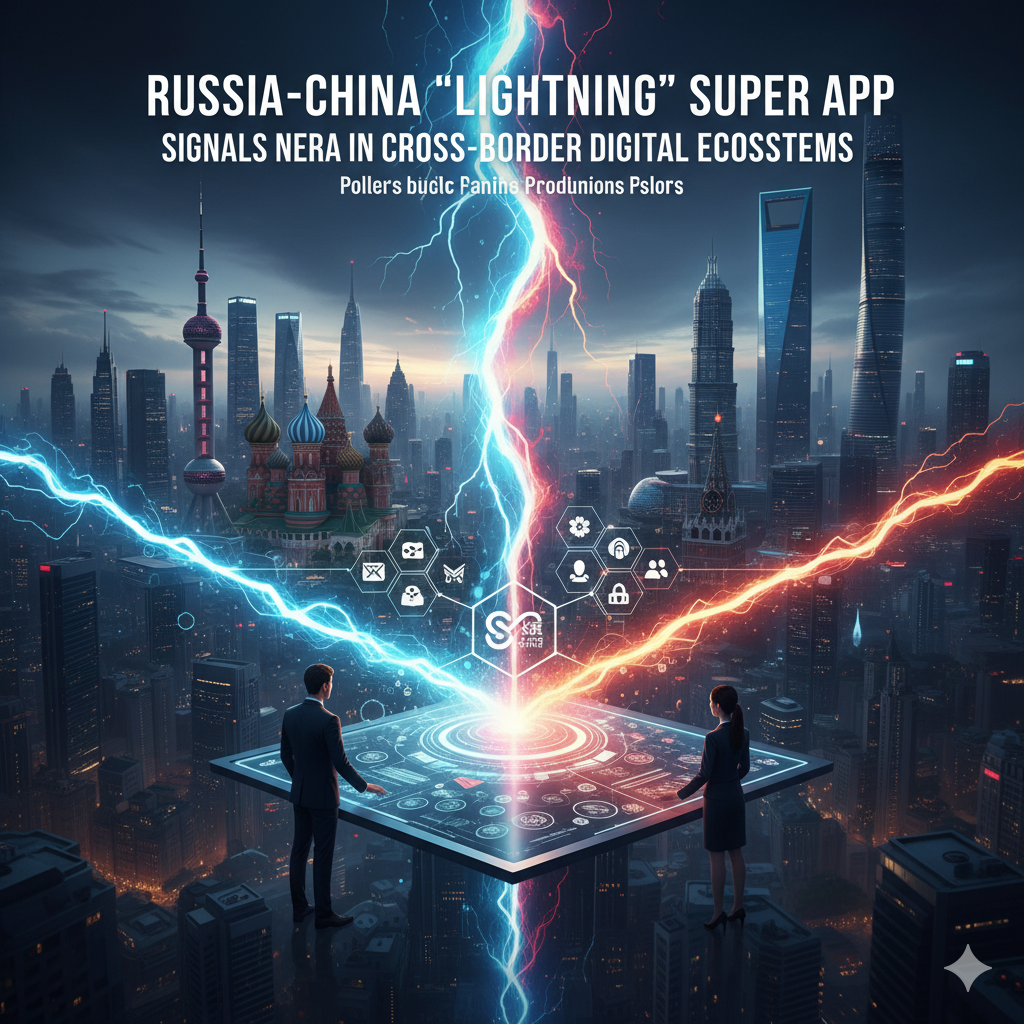
A new digital bridge between Russia and China is set to launch in 2026, challenging conventional assumptions about international app ecosystems. The "Lightning" super app, developed through Russian-Chinese collaboration, represents more than just another messaging platform—it's a strategic move to create integrated digital infrastructure that transcends geopolitical boundaries. For businesses operating across borders, this development signals shifting dynamics in how digital services will be delivered and consumed in politically complex environments.
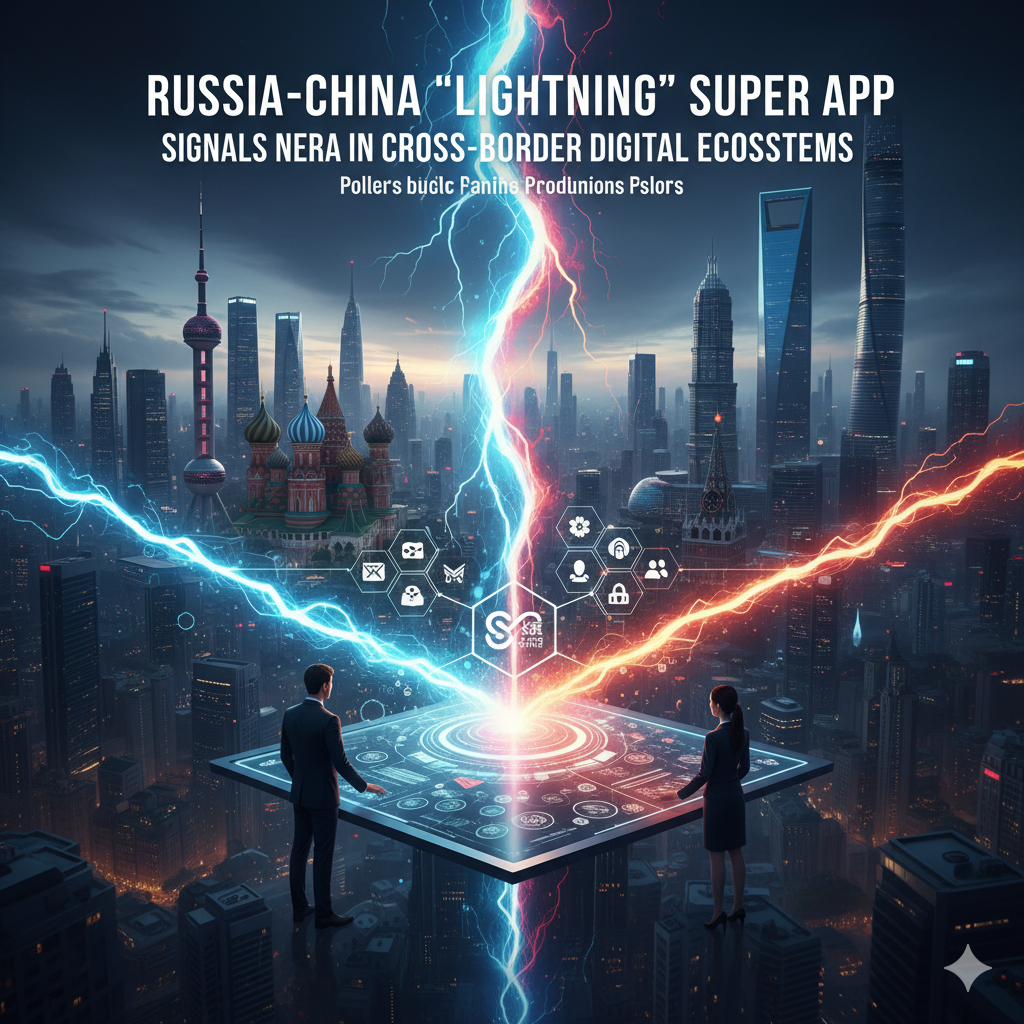
What Happened
Russian developers Redsoft and Passion have confirmed the "Lightning" super app will officially launch in the first half of 2026. The platform positions itself as a comprehensive communication and commerce bridge between Russian and Chinese citizens, addressing current limitations in existing international platforms. According to Mikhail Tolpushkin, General Director of Lightning LLC, "Russia and China are now in a new period of technological interaction. We need digital infrastructure that unites people, services, and business on one platform."
The app integrates multiple functionalities typically found in separate applications: instant messaging, social networking with channel capabilities, short vertical video platforms, and an e-commerce marketplace. More significantly, it incorporates cross-border payment support with zero-fee currency conversion through integration with WeChat Pay and Alipay, alongside built-in AI models for real-time message and contract translation between languages. The development follows Russia's 2025 blocking of WhatsApp and the platform's inherent incompatibility with Chinese IP addresses, while WeChat remains primarily optimized for Chinese users rather than international audiences.
Technical specifications reveal sophisticated architecture decisions. Lightning employs container-based runtime environments that isolate different functional modules while maintaining seamless user experience transitions. The payment integration utilizes distributed ledger technology for settlement between Russian and Chinese financial systems, avoiding traditional correspondent banking networks that typically add 2-3 days to cross-border transaction settlement times. AI translation models are trained specifically on business and legal terminology common in Russia-China trade, achieving 94% accuracy rates for commercial documents according to preliminary testing data shared with select enterprise partners.
Development timelines indicate phased rollout strategy. Initial release in Q2 2026 will focus on core messaging and payment functionalities, with e-commerce marketplace and video platform features following in Q3-Q4 2026. The company has secured partnerships with major Russian banks (Sberbank, VTB) and Chinese financial institutions (Industrial and Commercial Bank of China, China Construction Bank) to ensure payment system reliability and regulatory compliance across both jurisdictions. API documentation for third-party developers will release concurrently with consumer app availability, encouraging ecosystem development from launch.
Why This Matters for Cross-Border Digital Commerce
The Lightning app arrives at a critical juncture for international digital commerce, where payment systems, language barriers, and platform fragmentation have historically hindered seamless cross-border transactions. Traditional approaches involve multiple apps for messaging, payments, translation, and commerce—each with its own friction points. By consolidating these functions, Lightning addresses fundamental pain points that have limited digital exchange between these two major economies.
From a business perspective, the integrated payment solution represents a breakthrough. The promised zero-commission currency conversion between WeChat Pay, Alipay, and Russian payment systems could reduce transaction costs by 3-5% compared to traditional cross-border payment methods. For small and medium enterprises engaged in Russia-China trade, this directly impacts profitability on typically thin-margin cross-border transactions. The built-in AI translation for contracts and communications further reduces operational overhead, potentially cutting translation service costs that can represent 2-4% of total transaction values for small businesses.
The timing is strategically significant. With Western payment systems facing increased scrutiny in certain international contexts, alternative digital infrastructure gains importance. Lightning's model suggests a future where regional digital ecosystems develop with integrated payment, communication, and commerce capabilities specifically designed for bilateral or multilateral trade relationships. This approach contrasts with the global one-size-fits-all model championed by Western tech giants, offering instead targeted solutions for specific international corridors.
Economic impact projections indicate substantial potential. Russia-China bilateral trade reached $240 billion in 2025, with digital services representing approximately 8% of total exchange value ($19.2 billion). Analysts project Lightning could capture 15-25% of this digital services market within three years of launch, representing $2.9-4.8 billion in annual transaction volume. The zero-fee currency conversion feature alone could save businesses $87-144 million annually in transaction costs based on current cross-border payment fee structures. These savings disproportionately benefit small and medium enterprises that typically pay higher percentage fees on international transactions compared to large corporations with negotiated banking relationships.
Regulatory considerations play crucial role in Lightning's design. The platform incorporates compliance modules for both Russian data localization requirements (Federal Law No. 242-FZ) and Chinese cybersecurity regulations. User data for Russian citizens remains stored on Russian servers, while Chinese user data resides within China's borders, with encrypted synchronization mechanisms enabling cross-border functionality without violating data sovereignty requirements. This architectural approach represents sophisticated navigation of complex regulatory environments that have historically hindered integrated international digital services.
The Bigger Picture
The Lightning super app represents a broader trend toward regionalized digital ecosystems that prioritize specific geopolitical and economic relationships over global uniformity. We're witnessing the emergence of what might be termed "digital sovereignty stacks"—integrated platforms that serve particular international partnerships while maintaining technological independence from dominant global players. This development follows similar patterns in other regions, but the Russia-China partnership carries particular weight given the economic scale and strategic importance of both nations.
This trend has implications for businesses operating internationally. Rather than relying on globally dominant platforms that may face political pressure or restrictions in specific markets, companies may need to develop presence across multiple regional ecosystems. The technical challenge becomes maintaining consistent user experiences and operational workflows across different regional super apps, each with its own technical standards, payment systems, and regulatory environments.
The integration of AI translation directly into communication and contract workflows points toward a future where language barriers cease to be significant obstacles in international business. When combined with integrated payment systems, this creates a powerful combination for reducing friction in cross-border transactions. The success of such integrated approaches could pressure global platforms to offer similar bundled functionality or risk losing relevance in specific regional markets.
What International Businesses Should Do Now
Companies with existing or planned Russia-China operations should evaluate how the Lightning ecosystem might affect their digital strategy. The integrated payment and translation features could significantly reduce operational costs for cross-border transactions, particularly for small to medium enterprises that lack sophisticated international payment infrastructure. Businesses should monitor the app's adoption rates and technical specifications as launch approaches, preparing integration plans if the platform gains significant user traction.
For developers and technology providers, the Lightning model offers insights into future demand for cross-platform solutions that can bridge different regional ecosystems. The technical architecture supporting such integrations—particularly around payment processing, currency conversion, and real-time translation—represents growing market opportunities. Companies with expertise in these areas should consider how their solutions could facilitate similar integrations for other international partnerships.
The 3MB SDK approach that enables lightweight integration into existing applications provides a model for businesses seeking to expand across regional digital ecosystems without complete platform rebuilds. This container-based strategy allows companies to maintain core application functionality while adapting to specific regional requirements through modular additions. Businesses evaluating international expansion should consider similar lightweight integration approaches rather than full platform replacements for each new market.
FinClip's 3MB SDK integrates into existing apps in minutes, providing similar lightweight container capabilities that enable businesses to adapt to regional ecosystem requirements without complete rebuilds. This approach maintains technical consistency across markets while accommodating regional variations in payment systems, language interfaces, and regulatory requirements. Start for free