OpenAI's Desktop SuperApp Strategy: What It Means for AI Integration
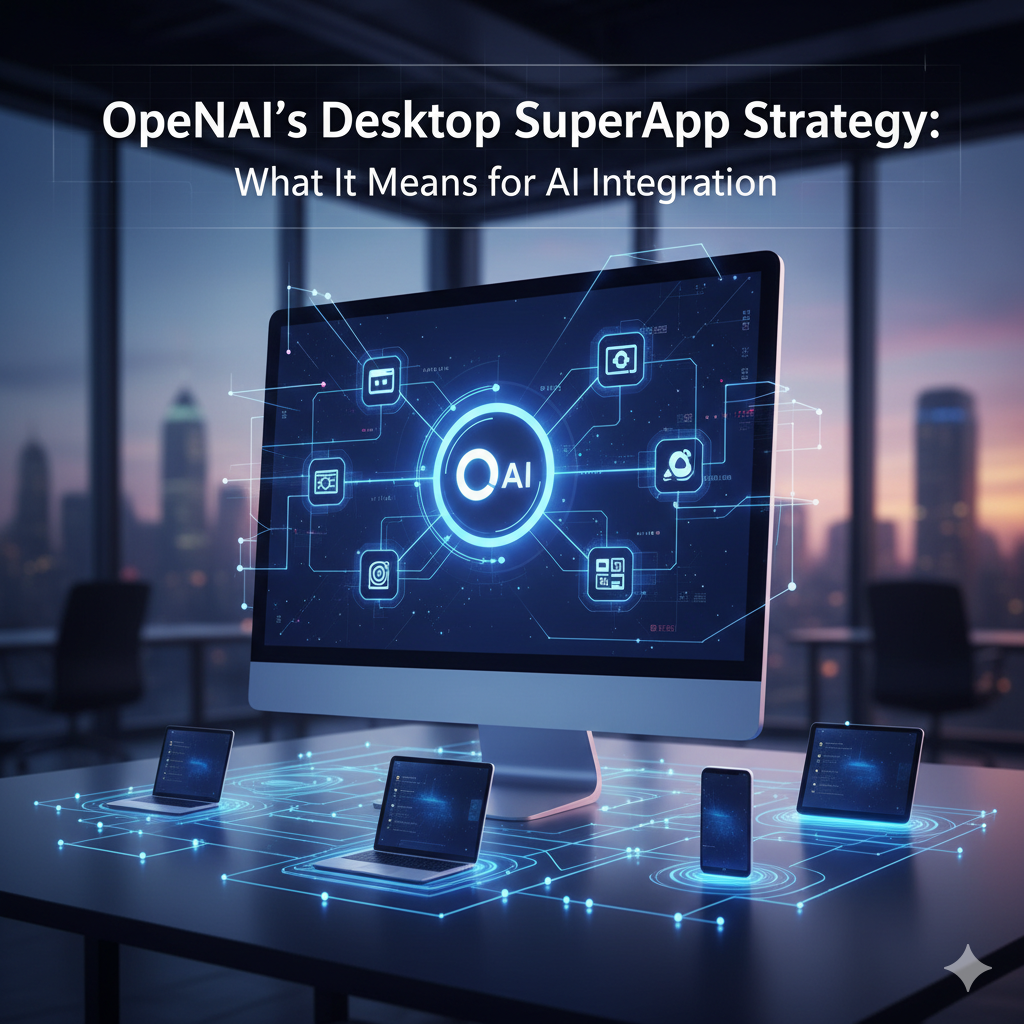
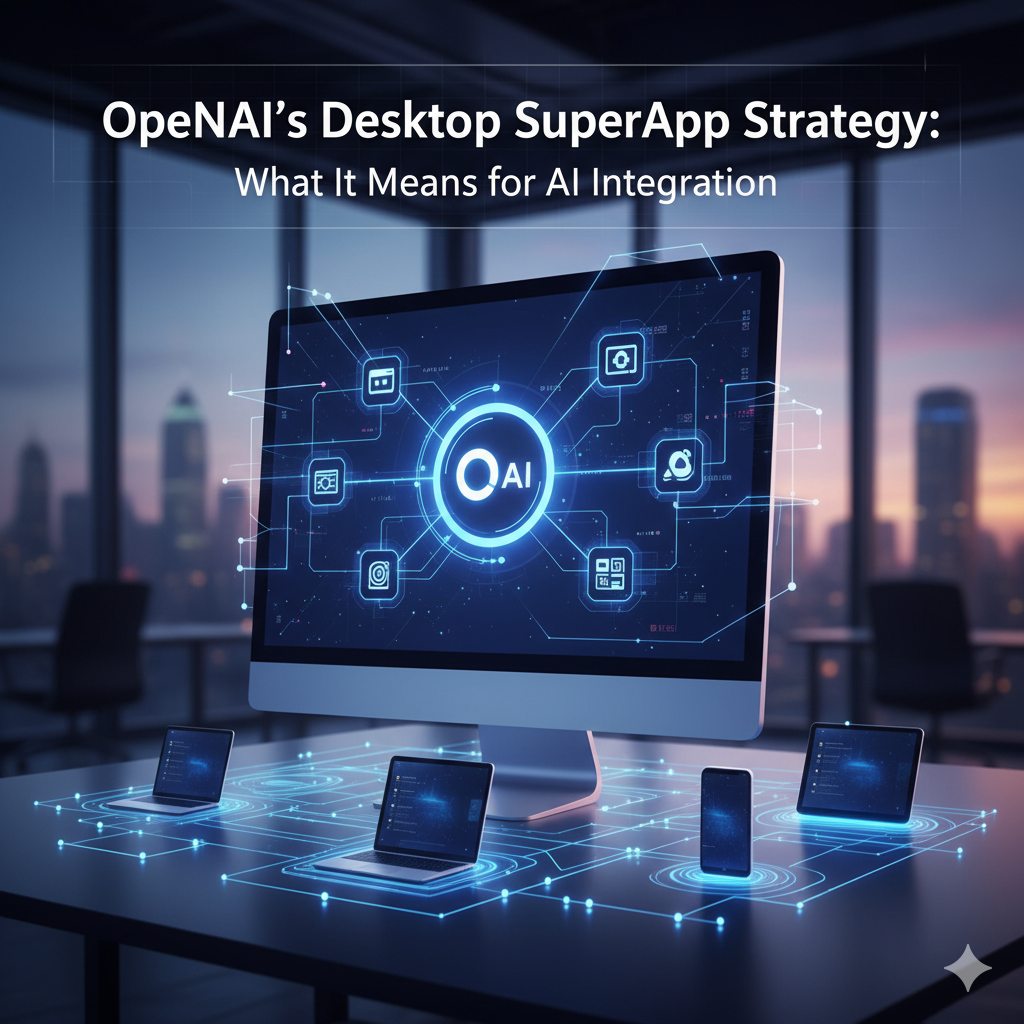
OpenAI confirmed plans to consolidate its ChatGPT application, Codex coding platform, and Atlas browser into a single desktop "superapp" designed to simplify user experience and strengthen enterprise offerings. This strategic pivot comes as the AI giant faces increasing competition from Anthropic in enterprise and developer markets, with the company characterizing its current situation as a "red alert" requiring immediate refocusing. For technology leaders evaluating AI integration strategies, this consolidation represents a fundamental shift in how major AI providers approach product architecture and workflow integration.
What Happened
According to reports from The Wall Street Journal on March 20, 2026, OpenAI executives have initiated a comprehensive product reorganization that will merge three core offerings into a unified desktop application. The consolidation follows a period of rapid expansion where OpenAI launched multiple standalone products, including the Sora video generation model and various hardware initiatives. Chief of Applications Fidji Simo will oversee the initiative, working alongside President Greg Brockman to align organizational structures around this single core product.
The integration will occur in two phases: first, expanding Codex's agentic capabilities beyond coding to broader productivity tasks, followed by merging ChatGPT and the Atlas browser into the unified platform. OpenAI's mobile ChatGPT app will remain separate, indicating a strategic distinction between mobile and desktop use cases. Internal communications cited in the report reveal that executives recognized the company was "spreading our efforts across too many apps and stacks," with this fragmentation "slowing us down and making it harder to hit the quality bar we want."
Market data underscores the competitive pressure driving this decision. Similarweb statistics show ChatGPT's web traffic share declined from 75.7% to 61.7% over the past year, with much of the流失份额 captured by Google's Gemini. Meanwhile, Anthropic's Claude platform grew from 1.7% to over 3% during the same period, particularly gaining traction with enterprise customers and developers through offerings like Claude Code and Cowork.
Why This Matters for Enterprise AI Integration
The shift toward a unified AI superapp represents more than just product consolidation—it signals a fundamental rethinking of how AI should integrate with enterprise workflows. For organizations investing in AI capabilities, this development carries several important implications that extend beyond OpenAI's specific implementation.
First, the move validates the "app-in-app" architectural approach that has gained traction in enterprise mobile development. By creating a container that hosts multiple AI capabilities, OpenAI is adopting a pattern familiar to organizations that have implemented mini-program platforms within their applications. This architecture allows for better resource sharing, consistent user experience, and simplified updates across functionality domains. Enterprises evaluating AI platforms should consider how well their chosen solutions support this integrated approach versus maintaining separate, disconnected tools.
Second, the emphasis on "agentic" capabilities highlights the evolving expectation that AI should do more than respond to prompts—it should autonomously execute multi-step workflows. OpenAI's planned expansion of Codex beyond coding to general productivity tasks suggests a future where AI agents can navigate across applications, analyze local data, and perform complex operations without constant human supervision. This has particular relevance for enterprises seeking to automate business processes, where the ability to work across system boundaries represents a significant competitive advantage.
Third, the competitive dynamics revealed by this move underscore the importance of developer and enterprise adoption in the AI platform wars. Anthropic's success with Claude Code and Cowork demonstrated that focused, integrated solutions for specific professional domains can challenge broader, more diffuse offerings. For enterprise technology decision-makers, this suggests evaluating AI platforms not just on model capabilities but on how well they integrate with existing tools and workflows that matter to their specific industry and use cases.
The Bigger Picture
OpenAI's strategic pivot reflects broader trends in software architecture and platform economics that extend well beyond the AI sector. The consolidation of multiple functionalities into unified applications represents a maturation of the "superapp" concept that originated in Asian markets with platforms like WeChat and has since spread globally through services like Telegram and WhatsApp.
Historically, software development has oscillated between monolithic applications and modular ecosystems. The current trend toward integrated AI platforms suggests we may be entering a new phase where the benefits of unified interfaces outweigh the flexibility of best-of-breed tool combinations. This is particularly true for AI applications, where context preservation across tasks and seamless data flow between different capabilities can significantly enhance utility.
The economic implications are equally significant. As AI companies prepare for potential public offerings—with both OpenAI and Anthropic reportedly considering listings later this year—investor expectations are shifting from pure technological innovation to sustainable business models and clear growth trajectories. A unified superapp with multiple revenue streams (subscriptions, enterprise licensing, API usage) presents a more compelling investment thesis than a collection of experimental products with unclear monetization paths.
For the broader technology ecosystem, this consolidation may accelerate the adoption of standardized interfaces and protocols for AI integration. Just as mobile app stores established common patterns for distribution and monetization, AI superapps could establish norms for how AI capabilities are packaged, discovered, and utilized within enterprise environments. This standardization would reduce integration costs and accelerate adoption, potentially creating network effects that benefit the entire AI industry.
What Technology Leaders Should Do Now
Enterprise technology decision-makers should view OpenAI's strategic shift as both a validation of integrated AI approaches and an opportunity to reassess their own AI architecture decisions. The move toward unified AI platforms suggests that organizations should prioritize solutions that offer comprehensive capabilities within coherent frameworks rather than accumulating point solutions that create integration challenges and data silos.
First, evaluate your current AI tool portfolio with an eye toward consolidation opportunities. Many organizations have accumulated multiple AI tools through departmental experimentation and vendor promotions. Look for platforms that offer breadth of capability while maintaining depth in areas critical to your business. Consider conducting a capability mapping exercise to identify functional overlaps and integration gaps that could be addressed through platform consolidation.
Second, assess the "agentic" readiness of your AI infrastructure. The trend toward autonomous AI agents that can execute multi-step workflows requires robust security frameworks, clear permission models, and well-defined interfaces between systems. Begin developing governance frameworks for AI agent deployment, including audit trails, approval workflows, and performance monitoring systems. These foundations will become increasingly important as AI capabilities evolve from responsive tools to proactive assistants.
Third, consider how mini-program or app-in-app architectures could enhance your own digital platforms. The technical pattern underlying OpenAI's superapp—a container hosting multiple functional modules—has proven effective in enterprise deployments using FinClip. Organizations implementing similar architectures have achieved 80% faster integration times and 60% cost reductions compared to traditional app development approaches. By adopting lightweight SDKs that enable rapid feature deployment within existing applications, enterprises can accelerate digital transformation initiatives while maintaining architectural consistency.
FinClip's 3MB SDK integrates into existing apps in minutes.