OpenAI Plans Desktop SuperApp to Unify ChatGPT, Codex, and Browser
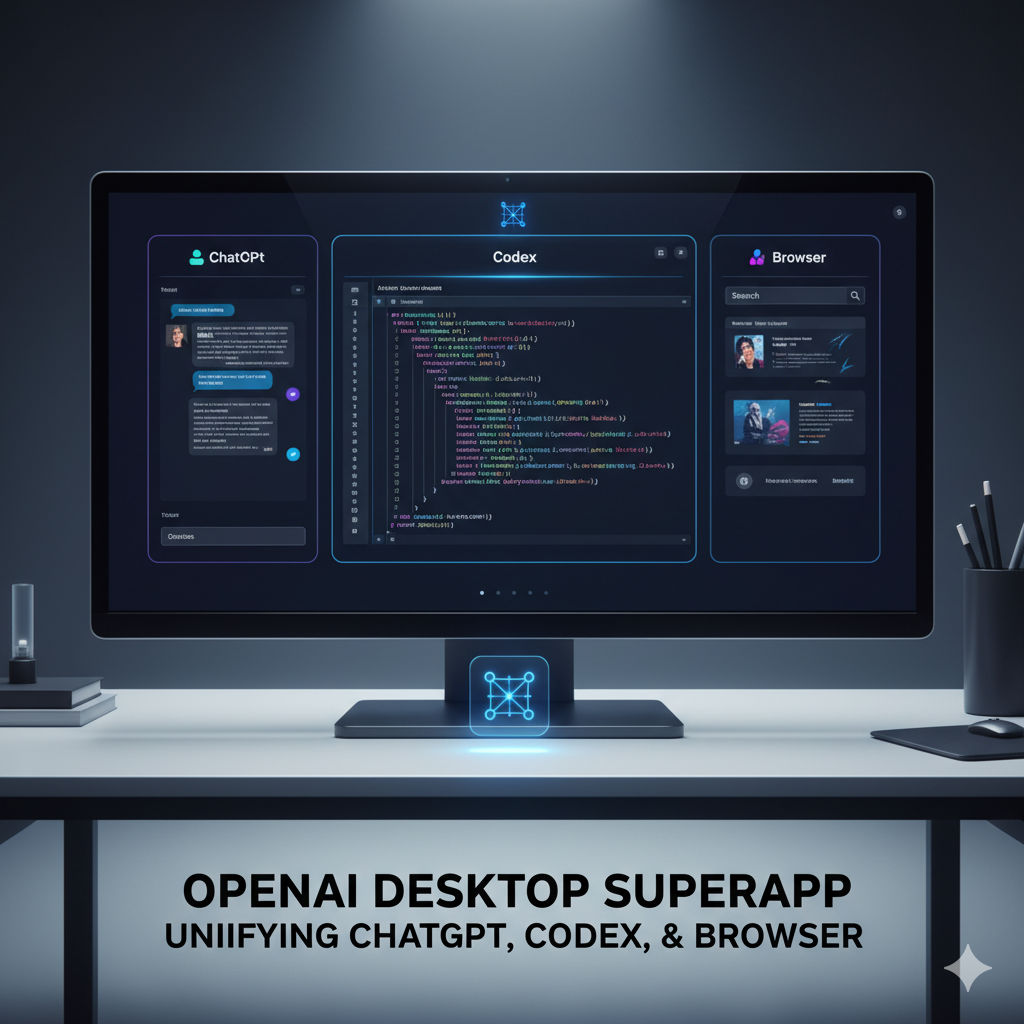
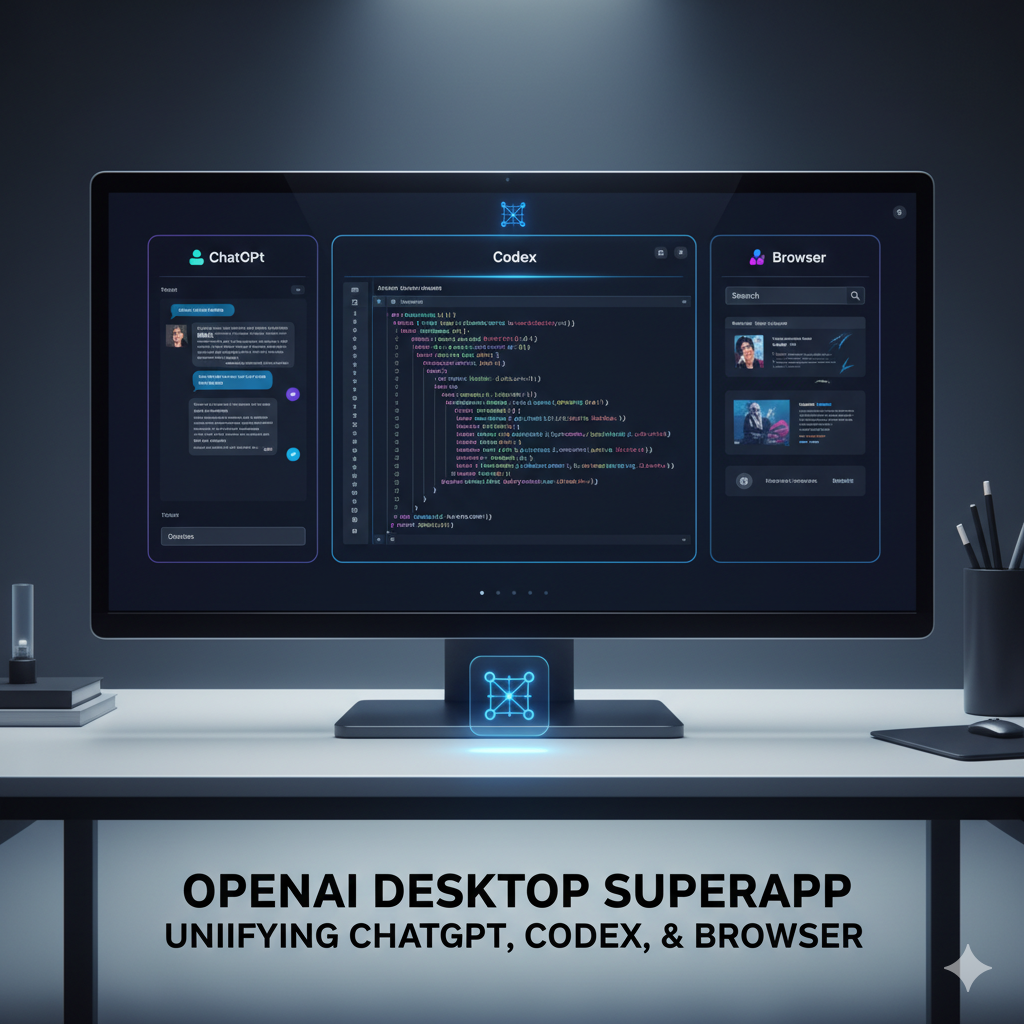
OpenAI has confirmed plans to merge its ChatGPT application, Codex coding platform, and Atlas browser into a single desktop "superapp," according to a Wall Street Journal report published March 19-20, 2026. This strategic consolidation represents a significant shift for the AI giant, which had previously pursued a multi-app strategy with standalone products. The move comes as OpenAI faces increasing competition from Anthropic in enterprise and developer markets, prompting the company to refocus its efforts around a unified platform that can deliver more cohesive user experiences and stronger enterprise offerings. For developers and businesses evaluating AI integration strategies, this consolidation signals a broader industry trend toward platform unification rather than tool fragmentation.
What Happened
The Wall Street Journal reported that OpenAI executives are planning a major product reorganization that will bring three core applications—ChatGPT, Codex, and the Atlas browser—under a single desktop superapp interface. According to the report, which cites internal company documents and employee communications, the consolidation initiative is being led by OpenAI's chief of applications Fidji Simo, with president Greg Brockman overseeing organizational changes. The company confirmed the plans in a statement, noting that the move aims to "simplify user experience" after a period of rapid expansion that resulted in multiple standalone tools.
Internal communications reveal that Simo told employees during an all-hands meeting that OpenAI "couldn't afford to be distracted by side quests" given Anthropic's rapid success winning over enterprise and coding customers. She described the current situation as a "red alert" (Code Red) status, highlighting the competitive pressure the company faces. The planned superapp will focus heavily on "agentic" AI capabilities—systems that can operate autonomously across tasks such as writing software, analyzing data, and managing workflows without constant user supervision.
The integration will occur in two phases: first, expanding Codex with broader productivity features beyond coding; second, merging ChatGPT and Atlas browser into the unified platform. Notably, the mobile ChatGPT app will remain separate from this desktop consolidation. Company executives have emphasized that this shift will help streamline resources and improve product quality by reducing fragmentation across development teams.
Why This Matters for AI Platform Development
OpenAI's strategic pivot toward a unified superapp reflects several critical developments in the AI platform landscape. First, it acknowledges the limitations of tool fragmentation in enterprise environments. When AI capabilities are scattered across multiple applications, integration complexity increases, data silos form, and workflow continuity suffers. A unified platform addresses these challenges by providing a single interface where AI can assist across the entire productivity stack—from code generation and debugging to research and content creation.
Second, the move highlights the growing importance of "agentic" AI capabilities in competitive differentiation. Autonomous systems that can execute multi-step tasks with minimal supervision represent the next frontier in AI utility. By consolidating its tools, OpenAI can more effectively develop and deploy these agentic capabilities across different task domains within a consistent framework. This approach contrasts with the current model where each application might develop its own agentic features independently, leading to inconsistent user experiences and redundant engineering efforts.
Third, OpenAI's consolidation signals a maturation of the AI market where platform stickiness and ecosystem integration become more valuable than individual tool capabilities. As enterprises make longer-term commitments to AI infrastructure, they increasingly prefer comprehensive platforms that can grow with their needs rather than point solutions that might require frequent integration work. This trend is particularly evident in the enterprise sector, where Anthropic has gained traction by offering a more unified approach to AI assistance across different business functions.
The competitive dynamics revealed by this announcement also underscore the intensifying battle for developer mindshare and enterprise contracts. With Anthropic reporting strong adoption of its Claude Code and Cowork offerings among technical teams, OpenAI faces pressure to strengthen its position in these high-value segments. A unified superapp that combines coding assistance with general AI capabilities could help OpenAI compete more effectively for developer loyalty and enterprise adoption.
The Bigger Picture
OpenAI's superapp initiative reflects broader industry trends toward platform consolidation and vertical integration in the AI space. Several major technology companies are pursuing similar strategies, recognizing that comprehensive platforms often deliver more value than collections of standalone tools. This trend mirrors earlier consolidations in software markets, where suites eventually replaced best-of-breed point solutions in many enterprise environments.
The emphasis on agentic AI capabilities represents a significant evolution in how AI systems interact with users and computer environments. Traditional AI assistants typically respond to individual queries or commands, but agentic systems can plan and execute multi-step workflows autonomously. This requires deeper integration with operating systems, applications, and data sources—integration that becomes more feasible within a unified platform architecture. As these capabilities mature, they could transform how knowledge workers interact with computers, shifting from manual task execution to supervisory roles where humans define objectives and AI handles implementation details.
The competitive landscape in enterprise AI is also evolving rapidly. While early competition focused primarily on model capabilities and benchmark performance, enterprise adoption increasingly depends on factors like integration ease, security features, workflow compatibility, and total cost of ownership. Platforms that can address these concerns comprehensively have advantages over solutions that excel in narrow technical areas but require significant integration effort. OpenAI's consolidation suggests the company recognizes this shift and is adjusting its strategy accordingly.
Another important dimension is the relationship between consumer-facing AI tools and enterprise offerings. Many AI companies initially gained traction with consumer products before expanding into enterprise markets. However, enterprise requirements often differ significantly from consumer needs, particularly regarding security, compliance, integration capabilities, and support structures. The superapp approach allows OpenAI to develop features that serve both markets while maintaining appropriate separation where needed—such as keeping the mobile ChatGPT app distinct from the desktop enterprise platform.
What Enterprise Teams Should Do Now
For development teams and IT leaders evaluating AI integration strategies, OpenAI's consolidation provides valuable insights into platform evolution. First, consider how unified versus fragmented AI tooling affects your organization's workflows and integration requirements. While specialized tools might offer superior capabilities in specific domains, platform approaches typically reduce integration complexity and improve workflow continuity. Assess whether your current AI toolset creates friction through context switching, data silos, or inconsistent interfaces.
Second, evaluate the agentic AI capabilities available in your current tooling and how they might evolve. Autonomous task execution represents a significant productivity opportunity, but its implementation requires careful consideration of security, oversight, and error handling. Begin piloting agentic features in controlled environments to understand their potential benefits and limitations. Look for platforms that provide appropriate controls and transparency for autonomous operations, particularly in regulated industries or sensitive workflows.
Third, monitor how major AI providers are evolving their platform strategies and consider how these developments align with your organization's technology roadmap. Platform consolidation often creates both opportunities and risks—opportunities for more integrated experiences but risks of vendor lock-in or feature deprecation. Maintain flexibility in your architecture by using standards-based integration approaches where possible and avoiding over-reliance on proprietary interfaces that might limit future options.
In enterprise deployments using FinClip, development teams have achieved 80% faster integration times and 60% cost reductions compared to native rebuild approaches. The 3MB SDK integrates into existing applications in minutes, providing a non-intrusive path to adding mini-program capabilities without platform lock-in concerns. This lightweight approach allows organizations to maintain architectural flexibility while still benefiting from modern app-in-app architectures.
FinClip's 3MB SDK integrates into existing apps in minutes.