No-Code iOS App Builder Superapp Secures $1.6M to Democratize Mobile Development
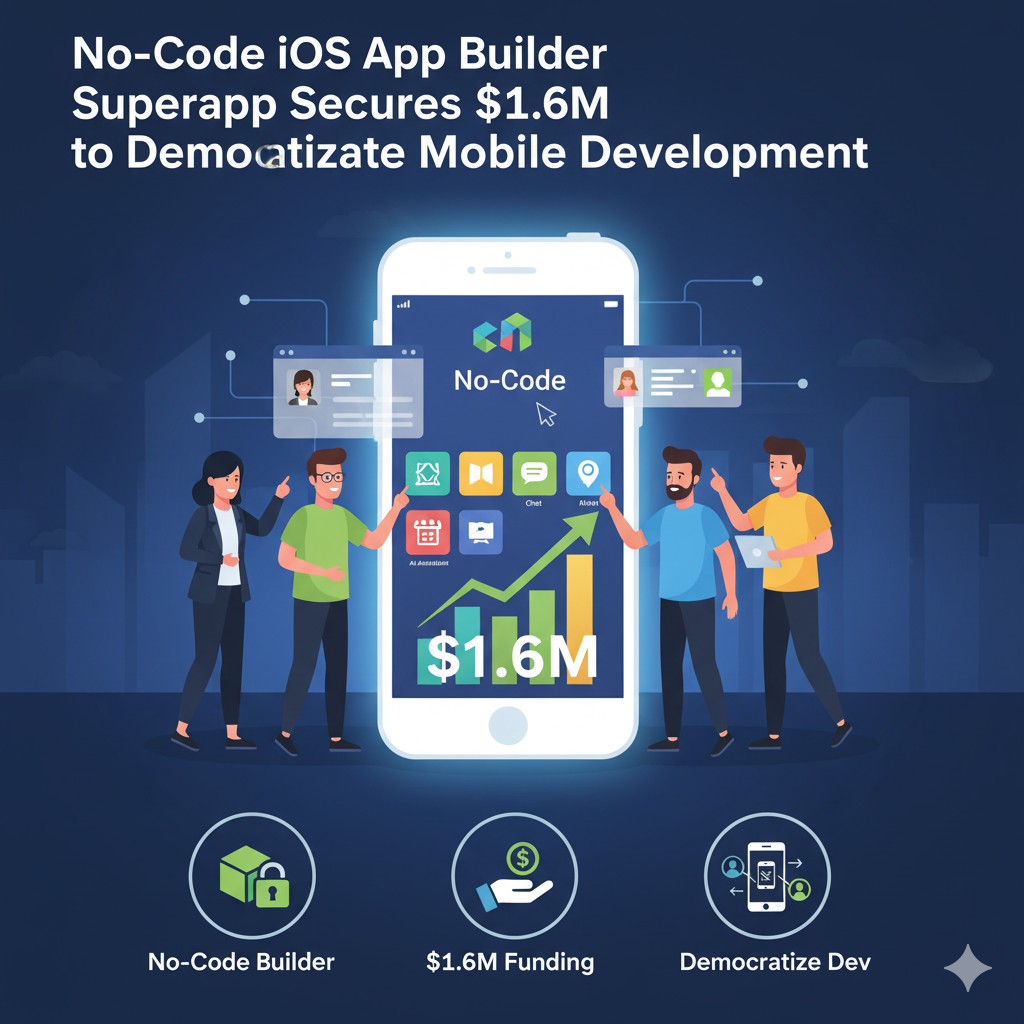
A Delaware-based startup has recently raised $1.6 million in pre-seed funding to expand its no-code platform for creating native iOS applications. The investment, led by Vesna Capital with participation from Flyer One Ventures, Silicon Gardens, and other venture firms, targets the growing market of non-technical professionals who want to build iPhone and Mac applications without writing code. This funding round represents more than just a capital injection—it signals increasing investor confidence in tools that lower technical barriers for mobile application creation, potentially reshaping how businesses approach digital product development.
What Happened
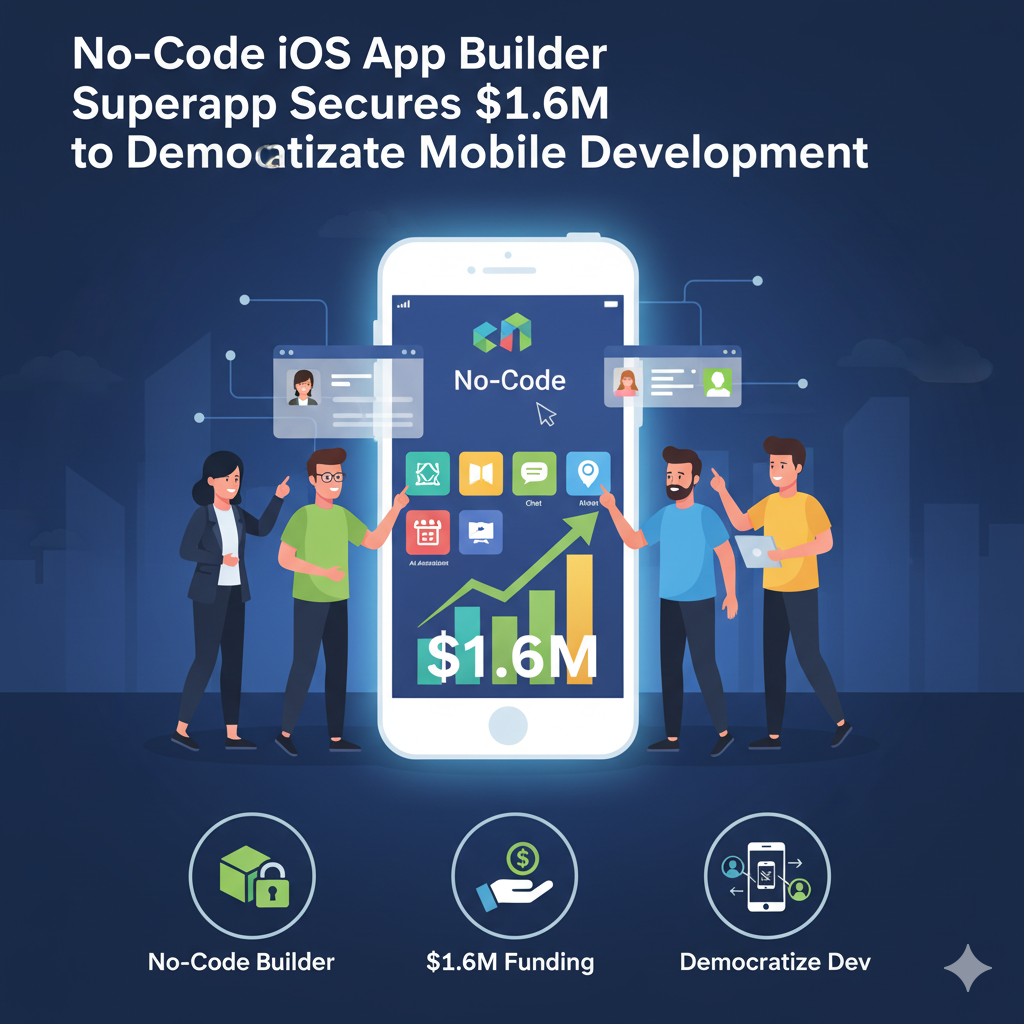
The $1.6 million pre-seed funding round, announced on March 5, 2026, saw participation from multiple venture capital firms and angel investors. The newly funded company, founded in 2025, specializes in no-code app development specifically for Apple's iOS ecosystem, including iPhone and Mac applications. According to CB Insights data, this represents the platform's first institutional funding since its founding last year.
The investment consortium includes Vesna Capital, Flyer One Ventures, Silicon Gardens, HEARTFELT_, and StratMinds VC. Vesna Capital highlighted the development team's "global thinking and fast execution" in their investment announcement, noting that this platform aims to "open doors that have been closed for too long" in application development. The tool uses artificial intelligence to generate Swift code, allowing users to transform app ideas into functional native applications without technical expertise.
The technology focuses strictly on Apple's ecosystem, generating native Swift code that complies with App Store requirements. By emphasizing alignment with Apple's design philosophy and removing technical complexity throughout the development process, this approach distinguishes itself from broader, generic cross-platform no-code solutions.
Why This Matters for Mobile Development
This recent investment reflects shifting priorities in mobile development economics. As application development costs continue rising—with enterprise mobile projects often exceeding $500,000—tools that reduce technical barriers address genuine market needs. The specialized focus on iOS development acknowledges Apple's continued dominance in premium mobile markets, where user spending and engagement metrics consistently outperform other platforms.
No-code platforms traditionally struggle with performance limitations and platform-specific optimizations. By generating native Swift code, emerging AI-driven platforms attempt to bridge the gap between no-code accessibility and native application performance. This specialization appeals to small businesses, entrepreneurs, and content creators who prioritize iOS users but lack six-figure development budgets.
The timing coincides with Apple's increasing emphasis on developer tools and ecosystem growth. With Xcode 26 mandates taking effect in April 2026, specialized tools that simplify iOS development align well with broader ecosystem strategies. The funding suggests investors see a massive opportunity in helping more creators participate in the mobile economy without requiring traditional engineering skills.
The Bigger Picture: From Single Apps to True "Super Apps"
This funding reflects broader trends in software development tooling. The no-code/low-code market has expanded beyond simple website builders to encompass complex application development. Gartner estimates that by 2027, 70% of new applications will use low-code or no-code technologies.
However, as businesses scale, simply building a standalone native app is often not enough. The true evolution of mobile strategy is the transition toward a "Super App" architecture.
While no-code builders help create a single app shell, enterprise growth relies on building an ecosystem. A genuine Super App is a platform that can dynamically host dozens or hundreds of lightweight "mini-programs" within a single native host application. Instead of constantly updating a monolithic codebase and waiting for App Store approvals, enterprises are looking for ways to decouple features and load them dynamically over the air (OTA).
The investment in developer productivity tools shows that the market craves agility. Whether it's through AI code generation or modular architecture, the goal is the same: faster time-to-market and reduced engineering overhead.
What App Creators Should Do Now
For businesses and individuals considering mobile application development, the emergence of AI-driven no-code builders represents another option in an expanding toolkit. Development teams should assess how these tools fit within existing workflows. No-code platforms can accelerate prototyping, validate concepts, or build simple utilities without diverting core engineering resources.
However, organizations building complex internal tools or customer-facing ecosystems should consider hybrid, containerized approaches. This is where the true Super App strategy shines.
By combining the rapid iteration of modern UI development with a modular mini-program architecture, enterprises can achieve unmatched scalability. Traditional development handles complex native business logic, while dynamic mini-programs handle frequently changing features, marketing campaigns, and third-party integrations.
For enterprises evaluating digital transformation initiatives, tools like FinClip demonstrate the pinnacle of developer productivity and architectural flexibility. In enterprise deployments using FinClip's 3MB SDK, development teams have achieved 80% faster integration and a 60% cost reduction by combining containerized mini-program architecture with streamlined development workflows.
FinClip's lightweight SDK integrates into your existing iOS or Android application in minutes, providing secure containerization for mini-program content while maintaining complete platform compatibility. This approach allows organizations to leverage both traditional development methodologies and agile module deployment within a unified architecture.