MWC 2026 Hardware Evolution Sets Stage for Next-Generation Super App Experiences
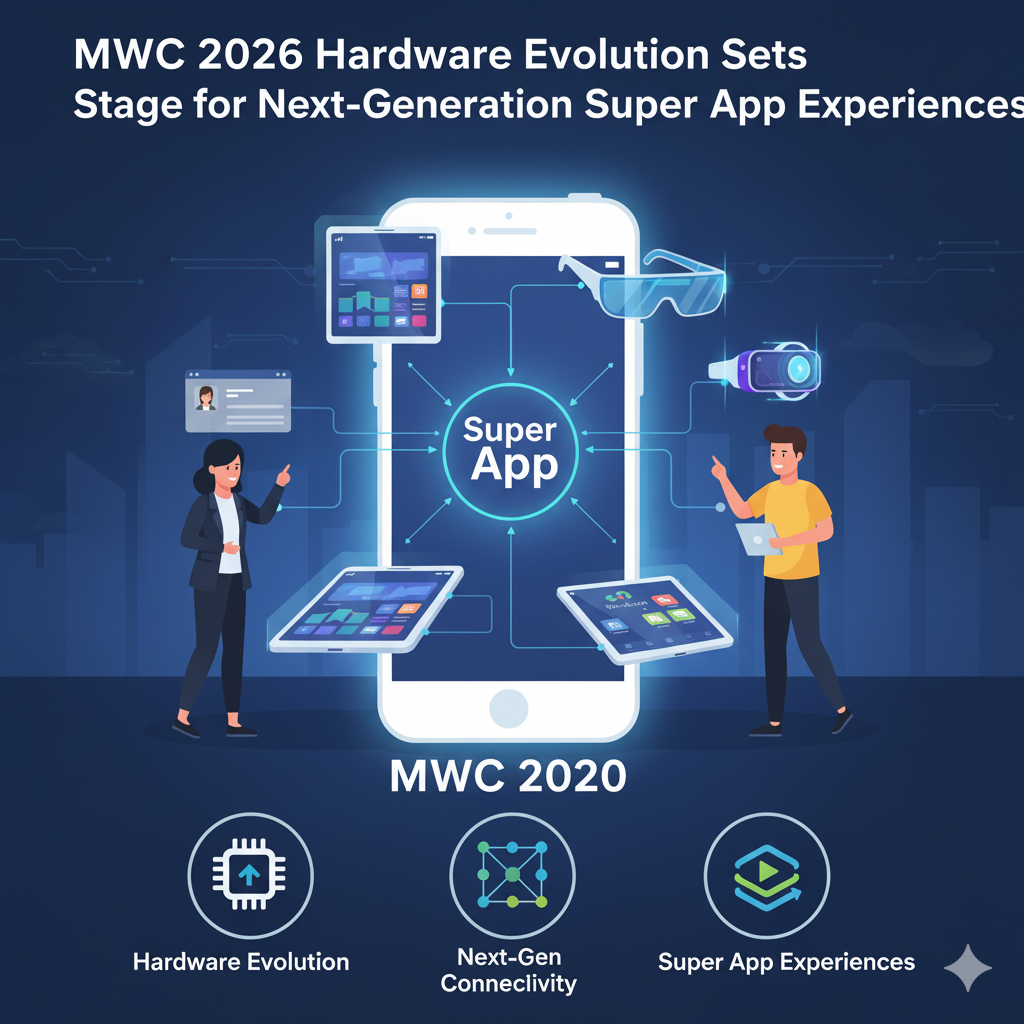
Mobile World Congress 2026 concluded in Barcelona with hardware announcements that will fundamentally reshape mobile computing capabilities and user experiences. From Qualcomm's first 3nm wearable processor to Honor's record-thin foldable and TECNO's modular smartphone concept, this year's event demonstrated how hardware innovation enables new application paradigms. These advancements matter for Super App developers because they change device capabilities, user interaction patterns, and performance expectations—factors that directly influence mini-program architecture, feature development, and user engagement strategies across global markets.
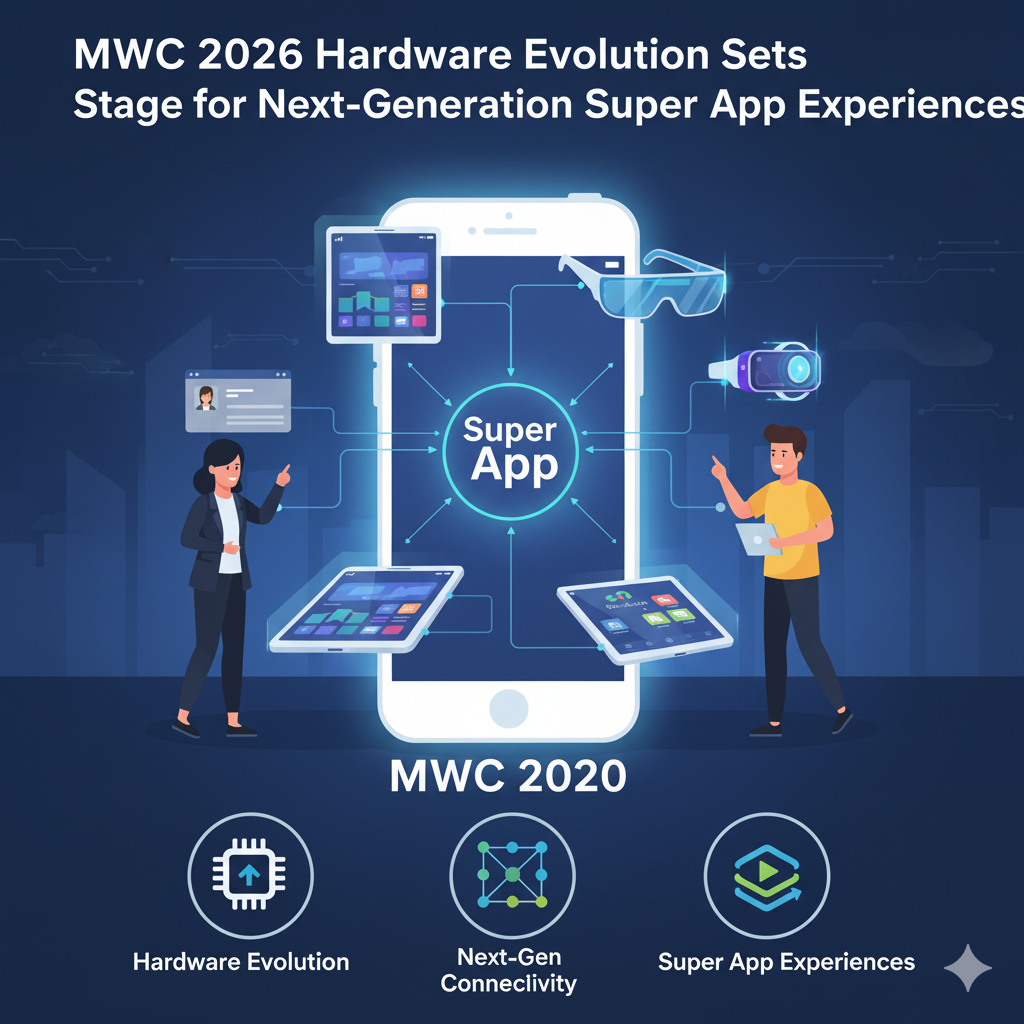
What Happened
MWC 2026 featured several transformative hardware announcements that will impact mobile application development throughout 2026 and beyond. Qualcomm unveiled the Snapdragon Wear Elite, its first Elite-branded wearable processor built on a 3nm manufacturing process. The chip delivers substantial CPU and graphics performance improvements while emphasizing on-device AI capabilities for features like smart replies, activity recognition, and AI-powered fitness coaching without heavy cloud dependency.
Honor showcased the Magic V6, currently the world's thinnest foldable at 8.75mm when closed, yet packing a substantial 6,660mAh battery. This combination addresses historical tradeoffs between foldable design and battery life, potentially making foldable devices more practical for daily Super App usage. The device includes flagship specifications like Snapdragon 8 Elite Gen 5 processor and stylus support with IP68/IP69 ratings rarely seen in foldables.
TECNO demonstrated a modular smartphone concept built around an ultra-thin 4.9mm base device. The Modular Magnetic Interconnection Technology allows accessories like power banks, action cameras, and telephoto lenses to attach without creating bulky combinations. This approach revisits modular phone concepts with a focus on maintaining reasonable device thickness through extreme base thinness.
Additional announcements included Xiaomi's 17 Ultra with advanced photography capabilities, Lenovo's gaming and modular computing concepts, and various AI-focused hardware integrations across multiple manufacturers. Collectively, these announcements signal hardware evolution toward specialized capabilities rather than generic performance improvements.
Why This Matters for Super App Development
Hardware capabilities directly influence what Super Apps and mini-programs can achieve. Qualcomm's Snapdragon Wear Elite with dedicated AI hardware enables wearable devices to run more sophisticated on-device processing, reducing cloud dependency for features like real-time language translation, health monitoring, and contextual assistance within mini-program ecosystems. This shift toward edge AI processing aligns with Super App architectures that distribute functionality across devices and cloud services.
Foldable devices like Honor's Magic V6 change user interaction patterns and screen real estate considerations. Super Apps traditionally designed for single-screen smartphones must adapt to folding displays that offer expanded canvas for multi-tasking, split-view interfaces, and immersive content consumption. Mini-program developers need to consider how their interfaces respond to folding actions, screen ratio changes, and the unique ergonomics of foldable devices.
Modular concepts from TECNO and Lenovo suggest future hardware may become more customizable and purpose-specific. For Super App platforms, this could mean deeper hardware integration opportunities—mini-programs that leverage specialized camera modules, extended battery accessories, or enhanced sensors available through modular attachments. This hardware diversification requires more flexible application architectures that can adapt to varying device capabilities.
The emphasis on AI hardware across multiple announcements indicates that AI features will become standard expectations rather than premium differentiators. Super Apps incorporating AI assistants, personalized recommendations, or intelligent automation will benefit from hardware acceleration, while platforms without AI capabilities may appear outdated. This hardware trend accelerates the AI integration timeline for all mobile applications.
The Bigger Picture
MWC 2026 hardware announcements reflect broader industry shifts toward specialized computing and AI integration. The transition from generic performance improvements to capability-specific enhancements mirrors how Super App ecosystems evolved from simple application bundles to integrated service platforms. Just as Super Apps combine multiple services into cohesive experiences, modern hardware combines specialized components into devices optimized for specific use cases.
The 3nm manufacturing process for wearable chips represents continued Moore's Law progression, enabling more powerful computing in increasingly compact form factors. This miniaturization supports wearable devices becoming more capable standalone platforms rather than smartphone accessories. For Super App developers, this means considering wearable-first experiences and how mini-program functionality translates to smaller screens and different interaction modalities.
Modular hardware concepts challenge the assumption that smartphones are monolithic devices with fixed capabilities. If modular accessories become mainstream, applications may need to detect and adapt to available hardware modules, creating more dynamic user experiences. Super App platforms could offer mini-programs specifically designed for certain hardware configurations or partner with hardware manufacturers for exclusive integrations.
The convergence of hardware specialization and software ecosystems creates opportunities for deeper integration between device capabilities and application functionality. Super Apps that leverage specialized hardware—whether foldable displays, wearable processors, or modular accessories—can offer differentiated experiences that generic applications cannot replicate. This hardware-software co-evolution will increasingly distinguish premium mobile experiences from basic functionality.
What Mobile Developers Should Do Now
Application developers should evaluate how MWC 2026 hardware announcements impact their development roadmaps. Begin testing applications on foldable device emulators and wearable simulators to identify interface adaptation requirements. Prioritize features that leverage emerging hardware capabilities, particularly AI acceleration and modular accessory support, to maintain competitive differentiation.
Super App platform architects should consider how hardware evolution influences mini-program standards and capabilities. Establish guidelines for foldable display support, modular hardware detection, and wearable-optimized interfaces within mini-program frameworks. These standards ensure consistent user experiences as hardware diversity increases across global markets.
Performance optimization becomes more critical with specialized hardware. While 3nm processors offer improved efficiency, applications must still manage resource consumption effectively. Implement adaptive performance scaling based on device capabilities, ensuring mini-programs provide optimal experiences across diverse hardware from entry-level smartphones to premium foldables and wearables.
For organizations building integrated digital experiences, hardware diversity presents both challenges and opportunities. Cross-platform compatibility remains essential, but platform-specific optimizations for foldables, wearables, or modular devices can create competitive advantages. In enterprise deployments using FinClip's container technology, development teams have achieved 53% sign-up improvement and 100% YoY revenue growth by optimizing experiences for specific device categories while maintaining broad compatibility.
FinClip's 3MB SDK provides consistent runtime environments across iOS, Android, Windows, macOS, Linux, HarmonyOS NEXT, and IoT platforms, ensuring mini-program functionality regardless of underlying hardware differences. This cross-platform foundation allows developers to focus on hardware-specific optimizations where they matter most. Download FinClip SDK and start running mini-programs today. Get SDK