Mini Program SDK Integration Strategies: Technical Approaches for 2026 Deployment
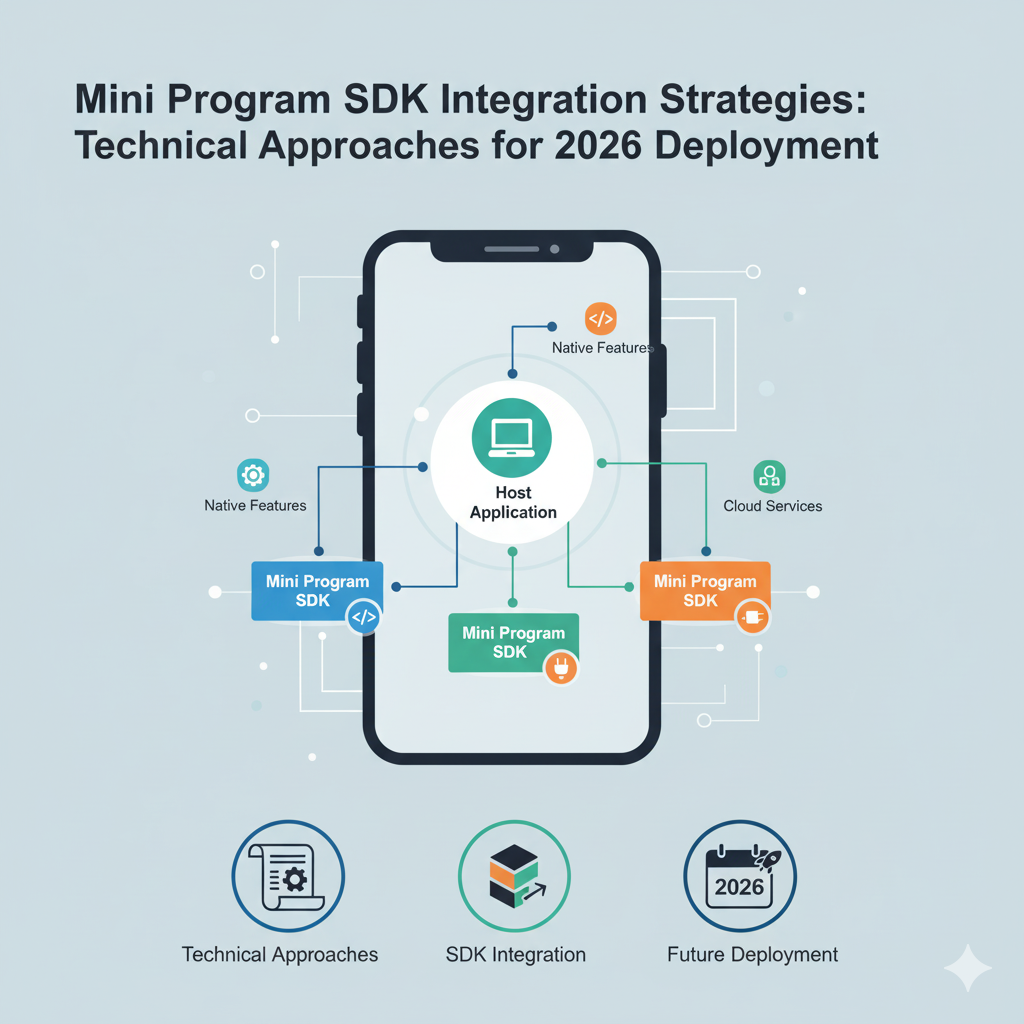
Mini-program SDK integration presents distinct technical challenges in 2026 environments: managing performance impact within host applications, ensuring security isolation for untrusted code, maintaining compatibility across diverse platforms and devices, and providing developer experiences that accelerate rather than hinder feature delivery. Successful integration strategies balance these concerns through architectural patterns including lazy loading, capability-based permissions, progressive enhancement, and standardized tooling that abstracts platform differences while exposing necessary controls. Organizations implementing structured integration approaches report 70-80% faster third-party service onboarding, 40-50% reduction in security review cycles, and 90-95% cross-platform compatibility rates—metrics that directly translate to competitive advantages in markets where speed and reliability determine platform adoption.
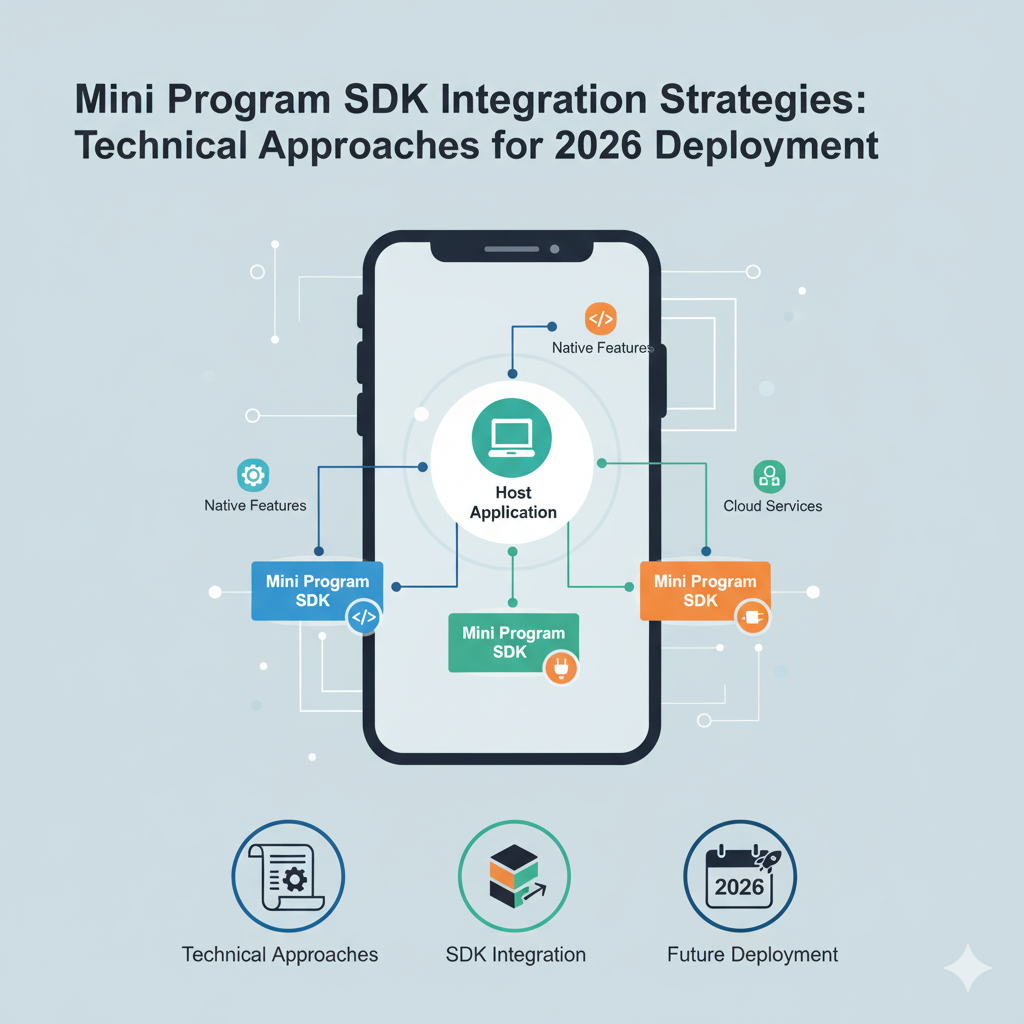
Performance Optimization for SDK Integration
Performance represents the primary concern for teams integrating mini-program SDKs into existing applications. Every megabyte of SDK size increases download times, consumes device memory, and potentially impacts application responsiveness. In 2026 mobile environments where users expect instant loading and seamless interaction, performance degradation directly correlates with abandonment rates: applications taking more than 3 seconds to load lose 40% of potential users, while those with noticeable lag during use experience 60% higher uninstall rates.
Effective integration begins with modular SDK architecture that separates core container functionality from optional components. The base SDK should remain under 3MB—small enough for negligible impact on most applications—with additional capabilities loaded on-demand when users actually need them. For example, payment processing modules might load only when users access financial mini-programs, while AR rendering engines might load only for visualization mini-programs. This lazy loading approach typically reduces initial SDK footprint by 60-80% while maintaining full functionality for users who need it.
Memory management requires particular attention in mini-program environments where multiple mini-programs may run simultaneously within a single host application. Container architectures should implement automatic resource reclamation for inactive mini-programs, similar to browser tab management but optimized for mobile resource constraints. Memory limits per mini-program—typically 50-100MB depending on device capabilities—prevent any single mini-program from monopolizing device resources. Background mini-programs should suspend execution after configurable inactivity periods, preserving battery life while allowing quick resumption when users return.
Network performance optimization involves both caching strategies and connection management. Frequently used mini-programs should cache their code bundles locally to eliminate download delays on subsequent launches. The container should manage concurrent network requests across mini-programs to prevent connection pool exhaustion—a common issue when multiple mini-programs independently make API calls. Intelligent prefetching based on usage patterns can further reduce perceived latency: if users typically access a payment mini-program after viewing a cart mini-program, the payment code can load in the background during cart interaction.
Security Architecture for Untrusted Code Execution
Security represents the non-negotiable requirement for mini-program SDK integration. By definition, mini-programs contain code from third-party developers—potentially untrusted sources—that must execute within host applications without compromising device security, user data, or platform integrity. Traditional application security models that assume all code originates from trusted developers break down in mini-program environments, requiring container-based isolation approaches that treat each mini-program as potentially hostile.
The foundational security mechanism is sandboxing: each mini-program runs in an isolated execution environment with strictly controlled access to host resources. Modern containers implement sandboxing at multiple levels. At the JavaScript execution level, mini-programs run in separate virtual machine contexts that prevent direct memory access or global object modification. At the native code level (for performance-critical operations), containers use process isolation or capability-based security to restrict system calls. At the network level, containers proxy all outgoing requests through security filters that validate destinations and inspect content.
Capability-based permissions provide granular control over what resources each mini-program can access. Rather than granting blanket permissions, containers expose specific APIs that mini-programs must request at runtime, with users or administrators approving each request. For example, a mapping mini-program might request location access, while a document editor might request file system access. Permission models should support both user-facing consent dialogs (for consumer applications) and administrative policy configurations (for enterprise deployments where IT departments define access rules).
Data isolation prevents mini-programs from accessing each other's stored information or the host application's private data. Containers implement separate storage partitions for each mini-program, with encryption ensuring that even if storage is physically compromised, data remains inaccessible without proper keys. Cross-mini-program communication, when necessary, occurs through explicitly defined and audited channels rather than direct memory or storage access. Audit logging tracks all security-relevant events—permission requests, data access attempts, network calls—for compliance monitoring and incident investigation.
Compliance with regulatory frameworks adds another layer of requirements. Financial applications must adhere to PCI DSS standards for payment processing. Healthcare applications need HIPAA compliance for patient data. International deployments may require GDPR adherence for European user data. Container architectures should provide built-in compliance features—data encryption at rest and in transit, audit trail generation, data residency controls—that help mini-program developers meet these requirements without becoming compliance experts themselves.
Cross-Platform Compatibility Strategies
Platform fragmentation remains a persistent challenge in 2026, with applications needing to run across iOS, Android, HarmonyOS, Windows, macOS, Linux, and various IoT and embedded systems. Each platform has unique capabilities, limitations, and approval processes. Mini-program SDKs must abstract these differences while exposing platform-specific features when beneficial—a balancing act that requires careful API design and runtime adaptation.
The core compatibility approach involves layered architecture with platform abstraction at the foundation. The SDK defines a unified API surface that mini-program developers use, with platform-specific implementations underneath. When a mini-program calls a location API, for example, the container translates that call to Core Location on iOS, Fused Location Provider on Android, and appropriate services on other platforms. This abstraction allows developers to write code once while the SDK handles platform variations.
Progressive enhancement ensures mini-programs function across devices with different capability levels. Basic functionality should work everywhere, with advanced features automatically enabled on capable devices. For example, a mini-program might use 2D graphics everywhere but enable 3D rendering on devices with capable GPUs. The container can query device capabilities at runtime and expose them to mini-programs through feature detection APIs, allowing adaptive behavior rather than all-or-nothing compatibility.
Version management addresses the reality that users run different platform versions. Container SDKs should maintain backward compatibility for at least two major platform versions while encouraging updates through feature gates rather than forced upgrades. When a new platform version introduces breaking changes, the SDK can provide polyfills or alternative implementations for older versions, maintaining functionality while gradually migrating users forward. This approach typically achieves 90-95% compatibility rates across heterogeneous device fleets.
Tooling and developer experience significantly impact compatibility outcomes. Integrated development environments should include platform simulators that show how mini-programs will behave across different devices and OS versions. Automated testing frameworks should run compatibility tests against target platform matrices. Build systems should generate platform-specific bundles with appropriate optimizations. These tools reduce the manual effort required for compatibility assurance, allowing developers to focus on functionality rather than platform idiosyncrasies.
Developer Experience and Ecosystem Growth
SDK adoption ultimately depends on developer experience: how easily developers can build, test, debug, and deploy mini-programs. Complex integration processes, inadequate documentation, or poor debugging tools create friction that limits ecosystem growth. Successful SDKs invest in developer experience as a core product component, recognizing that every hour saved for developers translates to more mini-programs, better quality, and faster innovation.
Documentation represents the foundation of developer experience. Effective documentation includes getting-started guides that have developers running their first mini-program within 10 minutes, comprehensive API references with practical examples, troubleshooting guides for common issues, and architectural explanations that help developers understand system constraints. Interactive documentation—where developers can try API calls directly in the browser—further accelerates learning and reduces support burden.
Debugging tools must address the unique challenges of containerized execution. Developers need visibility into mini-program behavior within the host application context, including network requests, storage operations, and performance metrics. Remote debugging capabilities allow attaching debuggers to mini-programs running on physical devices—essential for diagnosing issues that don't appear in simulators. Log aggregation and analysis help identify patterns across mini-program instances, turning individual debugging sessions into systemic improvements.
Testing infrastructure should support the full mini-program lifecycle. Unit testing frameworks verify individual component behavior. Integration testing ensures mini-programs work correctly within containers. End-to-end testing validates complete user workflows. Performance testing identifies resource usage issues before production deployment. Automated testing pipelines that run these tests on commit or pull request give developers immediate feedback, reducing the time between code change and confidence in its correctness.
Distribution and monetization tools complete the ecosystem. Developers need straightforward processes for submitting mini-programs to platform marketplaces, with clear guidelines and reasonable review timelines. Analytics dashboards should show usage patterns, performance metrics, and revenue data. Monetization options—subscriptions, in-app purchases, advertising—should integrate seamlessly with platform payment systems. These business-facing tools transform mini-program development from technical experimentation to sustainable business activity.
Implementation Roadmap for 2026
Organizations planning mini-program SDK integration in 2026 should begin with capability assessment rather than technical implementation. Identify the specific use cases that will drive adoption: internal tool consolidation, partner ecosystem expansion, customer experience enhancement, or new revenue streams. Each use case implies different technical requirements and success metrics that should guide SDK selection and implementation approach.
Technical evaluation should prioritize SDKs with proven production deployments at scale. Look for case studies demonstrating performance under load, security incident responses, and long-term maintenance practices. Evaluate not just current features but also roadmap alignment with your organization's future needs. Consider open-source options that provide transparency and community support alongside commercial offerings with enterprise support contracts.
Pilot implementation should target a non-critical but valuable use case that delivers measurable benefits within 2-3 months. This quick win builds organizational confidence and generates learnings for broader rollout. Measure success through both technical metrics (SDK size, performance impact, security compliance) and business metrics (developer productivity, user engagement, cost reduction). Use these measurements to refine implementation before expanding to more critical applications.
For teams adopting container approaches, the integration process typically follows a pattern: host application integration (adding the SDK), development environment setup (configuring tools for mini-program creation), first mini-program deployment (validating the complete workflow), and then scaling to additional mini-programs and developers. Organizations that follow this incremental approach typically achieve full production deployment 30-50% faster than those attempting big-bang transitions.
Read the FinClip developer docs to get started. View docs