Mini Program Performance Optimization: Techniques for Faster Loading, Smoother Interactions, and Reduced Resource Consumption
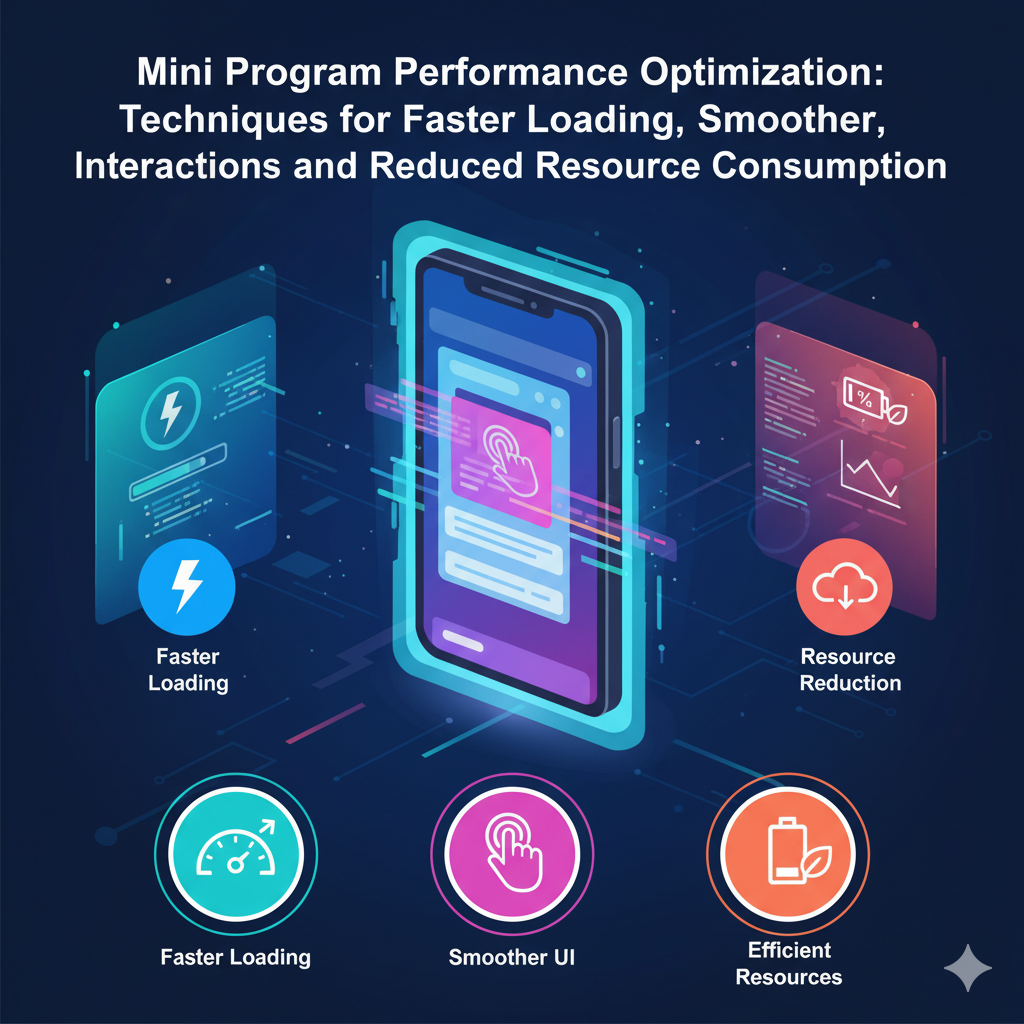
Mini program performance optimization encompasses technical strategies for improving loading speed, interaction responsiveness, memory efficiency, and battery consumption within containerized application environments. Unlike traditional web or native applications, mini programs operate within constrained runtime environments that impose specific limitations and opportunities for optimization. Effective performance tuning can reduce initial loading times by 601-80%, decrease memory usage by 30-50%, and improve interaction smoothness to 60 frames per second even on mid-range devices. This optimization matters because performance directly correlates with user retention, conversion rates, and platform satisfaction metrics—studies show that each 100ms reduction in loading time increases conversion rates by approximately 1%, while smooth scrolling interfaces increase session duration by 20-30%.
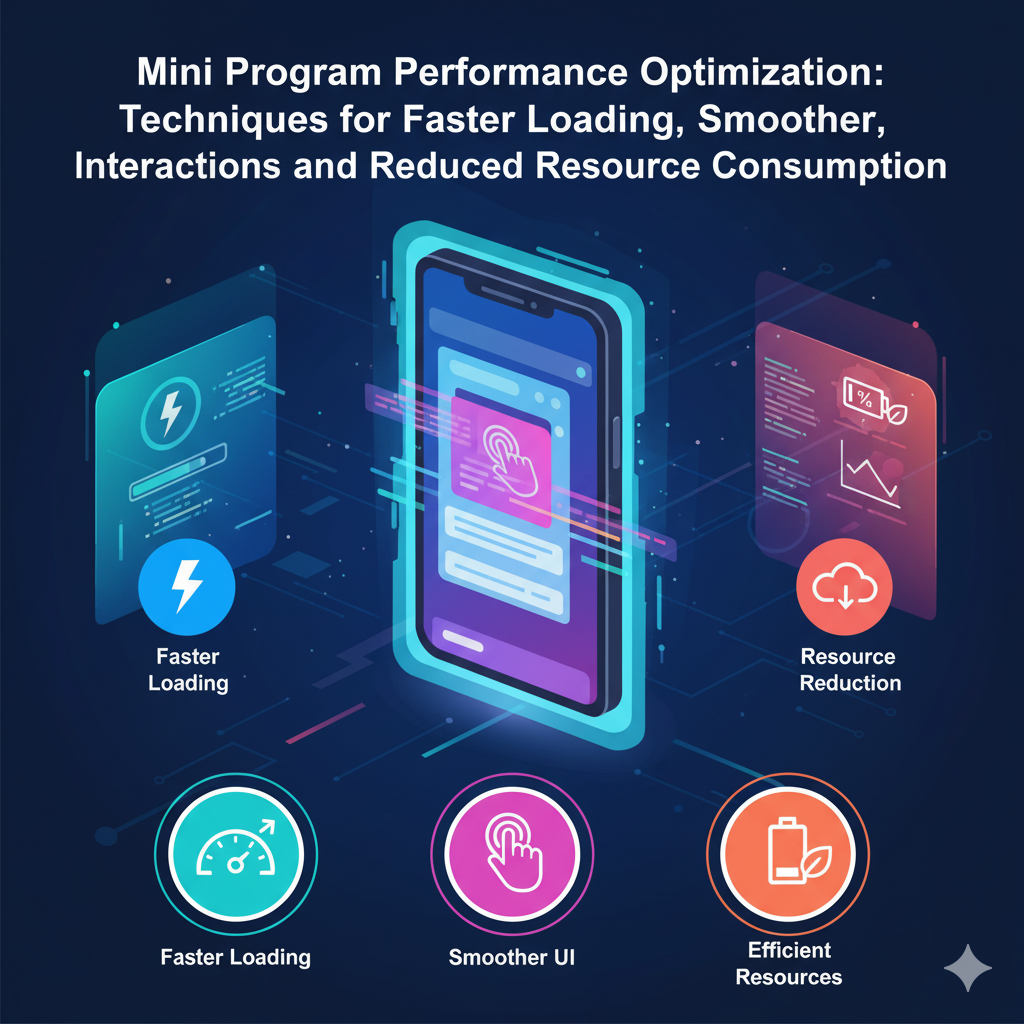
Loading Performance Optimization
Initial loading performance represents the most critical optimization target, as first impressions determine whether users abandon mini-programs before experiencing their functionality. The loading process typically involves multiple sequential phases: container initialization, package downloading, resource decompression, component rendering, and data fetching. Parallelizing these phases where possible and minimizing each phase's duration creates cumulative improvements.
Package size reduction delivers the most significant loading improvements through multiple techniques. Code minification removes whitespace, comments, and unnecessary characters without affecting functionality, typically reducing JavaScript file sizes by 30-40%. Tree shaking analyzes import/export relationships to eliminate unused code branches, particularly effective for applications incorporating large third-party libraries. Asset optimization compresses images, fonts, and media files using format-specific techniques: WebP conversion for photographs, SVG optimization for vector graphics, and variable font subsets for typography.
Lazy loading defers non-critical resource initialization until after initial rendering completes. Images below the viewport, secondary interface components, and background data prefetching can wait until the user interacts with primary content. This approach prioritizes perceived performance—showing something useful quickly—over complete functionality. Implementation requires careful dependency analysis to ensure deferred resources don't block essential interactions when eventually requested.
Caching strategies leverage platform capabilities to avoid repeated downloads. Mini-program containers typically provide both memory and disk caching mechanisms with configurable expiration policies. Static resources like images, fonts, and configuration files benefit from long-term caching with content-based versioning (using hash values in filenames). Dynamic content requires more sophisticated cache invalidation strategies, often combining time-based expiration with manual invalidation triggers for specific data updates.
Network optimization addresses the reality of mobile connectivity variability. HTTP/2 or HTTP/3 protocols enable multiplexed requests that reduce connection overhead. Resource prioritization ensures critical assets download before secondary content. Connection reuse minimizes TLS handshake overhead for subsequent requests to the same domain. For users with poor connectivity, progressive enhancement techniques provide basic functionality with minimal data transfer, enhancing capabilities as bandwidth permits.
Runtime Performance Optimization
Runtime performance focuses on maintaining smooth interactions after initial loading completes. The primary metrics include frames per second for animations and transitions, input response latency, and memory usage stability over extended sessions. These factors influence user perception of application quality and reliability, particularly for interactive mini-programs like games, drawing tools, or data visualization dashboards.
JavaScript execution optimization begins with identifying and eliminating performance bottlenecks. Common issues include excessive DOM manipulation, inefficient algorithms for large datasets, and memory leaks from unmanaged event listeners or object references. Profiling tools within mini-program development environments help identify specific functions consuming disproportionate CPU time or memory allocation. Optimization techniques include algorithmic improvements (replacing O(n²) operations with O(n log n) alternatives), memoization of expensive calculations, and web worker offloading for computationally intensive tasks.
Rendering performance depends on efficient use of the mini-program container's rendering engine. The critical rendering path—the sequence of steps from content changes to screen updates—should minimize layout thrashing (repeated style recalculation and geometry computation). Batch DOM updates using document fragments or virtual DOM techniques reduce browser reflow/repaint cycles. CSS containment establishes isolation boundaries that limit style recalculation scope, particularly valuable for complex component libraries.
Memory management prevents the gradual performance degradation that occurs when applications accumulate unused memory allocations. Garbage collection in JavaScript environments isn't instantaneous, and excessive allocation pressure can trigger disruptive "stop-the-world" collections that freeze user interfaces. Memory optimization strategies include object pooling for frequently created/destroyed entities, explicit nullification of references to large objects no longer needed, and avoidance of memory-leaking patterns like circular references between DOM elements and JavaScript objects.
Animation performance requires special attention to maintain visual smoothness. CSS transforms and opacity changes typically perform better than layout property animations because they can leverage hardware acceleration. The will-change CSS property provides hints to the browser about anticipated changes, enabling optimization preparation. JavaScript-based animations should use requestAnimationFrame for synchronization with display refresh rates rather than setTimeout or setInterval, which can cause frame skipping or excessive CPU usage.
Memory and Resource Management
Memory efficiency becomes increasingly important as mini-programs grow in complexity and users maintain longer sessions. The memory footprint includes JavaScript heap allocations, DOM node storage, cached resources, and internal data structures maintained by the mini-program container. Excessive memory usage can trigger operating system interventions that degrade performance or terminate applications entirely.
Memory profiling identifies allocation patterns and retention causes. Modern development tools provide heap snapshots that show object relationships and reference chains keeping objects alive. Common memory issues include: cached data structures that grow without bounds, event listeners attached to long-lived objects without proper cleanup, and closure references that unintentionally retain large context objects. Regular profiling during development catches these issues before they affect production users.
Resource loading management balances immediate needs against memory constraints. Images represent the most significant memory consumers in typical mini-programs. Responsive image techniques serve appropriately sized files for different device resolutions, avoiding memory waste from oversized assets. Lazy loading defers offscreen image decoding until needed, while intelligent prefetching anticipates likely navigation paths to load resources just before they're required.
Background processing management respects device resource limitations. Mini-programs operating in background tabs or minimized states should reduce activity to essential tasks only. Periodic data synchronization, notification processing, and state preservation can continue, but animation, media playback, and intensive computation should pause. The Page Visibility API and related mini-program container events provide signals for transitioning between foreground and background behavior.
Storage optimization considers both capacity and performance characteristics. Mini-program containers typically provide several storage options with different tradeoffs: in-memory storage for frequently accessed volatile data, local storage for persistent key-value pairs, and file system access for larger structured data. Choosing appropriate storage mechanisms based on access patterns and persistence requirements improves both performance and reliability.
Battery Consumption Optimization
Battery optimization has gained importance as users increasingly judge application quality by power efficiency. Mini-programs significantly impact battery life through CPU usage, network activity, screen illumination, and sensor access. Each percentage point of battery preservation extends usable device time and improves user satisfaction, particularly for power-intensive mini-programs like navigation apps, media players, or augmented reality experiences.
CPU usage optimization reduces active processing time. The most effective approach involves identifying and eliminating unnecessary computation loops—background timers that fire too frequently, animation frames that continue when invisible, and data processing that occurs more often than required for user experience. Throttling techniques limit execution frequency based on actual needs: debouncing user input handlers, coalescing data updates, and batching network requests.
Network activity represents a major battery drain due to radio power states. Cellular and WiFi radios consume significant power during active transmission, with additional overhead for state transitions between idle and active modes. Network optimization strategies include: request batching to minimize radio activations, intelligent prefetching during expected connectivity periods, and background sync coordination that aligns multiple mini-programs' network activity to share radio activation costs.
Sensor usage requires careful management because many sensors (GPS, accelerometer, gyroscope) consume substantial power when active. Mini-programs should request only necessary sensor data at appropriate frequencies—navigation applications might need continuous high-accuracy GPS, while fitness trackers could use lower-frequency sampling with sensor fusion to estimate movement between measurements. The key principle is minimum viable sampling: using the lowest frequency and accuracy that still delivers required functionality.
Screen impact considerations extend beyond brightness control. OLED displays consume power proportionally to illuminated pixels, making dark mode interfaces potentially more efficient for devices with such screens. Animation smoothness affects power consumption indirectly—dropped frames represent wasted computation that consumed power without producing visible results. Fixed refresh rate content (like 30fps video) can sometimes be more efficient than variable rate interfaces that trigger unnecessary rendering cycles.
Testing and Measurement Strategies
Performance optimization requires reliable measurement before, during, and after implementation. Establishing baseline metrics enables quantitative assessment of improvement effectiveness, while continuous monitoring detects regressions before they affect substantial user populations. A comprehensive performance testing strategy incorporates multiple measurement approaches with different strengths and limitations.
Synthetic testing uses controlled environments to measure specific performance aspects under reproducible conditions. Lab testing with device farms provides consistent hardware and network configurations for comparing optimization iterations. Automated test scripts simulate user interactions while collecting timing metrics, memory usage data, and power consumption measurements. Synthetic testing excels at identifying regressions and measuring improvement magnitude but may not capture real-world usage complexity.
Real User Monitoring (RUM) captures performance data from actual production usage. Instrumentation within mini-programs records key metrics: navigation timing API data for loading performance, custom markers for business-relevant milestones, and resource timing information for network requests. RUM systems aggregate this data across user segments, device types, and geographic regions to identify patterns and prioritize optimization efforts. Real user data reveals actual experience rather than laboratory approximations.
Field testing bridges synthetic and RUM approaches by observing performance in realistic but instrumented environments. Beta testing programs with performance instrumentation provide early warning about optimization effectiveness across diverse real-world conditions. Canary releases gradually expose optimizations to increasing user percentages while monitoring for unintended consequences. Field testing validates that laboratory improvements translate to actual user benefits without introducing new issues.
Performance budgets establish quantitative limits for key metrics, preventing gradual degradation as features accumulate. Common budget categories include: maximum bundle size (e.g., 2MB compressed), time to interactive threshold (e.g., 3 seconds on 4G networks), memory usage ceiling (e.g., 100MB heap), and animation frame rate minimum (e.g., 50fps during transitions). Development processes should include budget validation at key milestones, with explicit approval required for exceptions.
Getting Started with Performance Optimization
Development teams beginning performance optimization should follow a structured approach: measurement first, prioritization based on impact, implementation of proven techniques, and validation through continued measurement. This iterative process ensures efforts focus on changes that deliver actual user value rather than micro-optimizations with negligible real-world effect.
Initial assessment should establish current performance baselines across the metrics most relevant to user experience and business outcomes. Loading time measurements should include both laboratory conditions and real-user percentiles (p50, p75, p95) to understand typical versus worst-case experiences. Runtime performance evaluation should test across device tiers representing the actual user base, not only latest-generation flagship devices.
Optimization prioritization uses impact-effort analysis to identify high-value opportunities. The performance impact potential estimates user experience improvement magnitude, while implementation effort considers development time, testing requirements, and maintenance complexity. High-impact, low-effort optimizations (like image compression or code minification) typically deliver the best return on investment and should precede more complex architectural changes.
Implementation should follow established patterns with proven effectiveness rather than experimental approaches. The mini-program ecosystem has accumulated substantial optimization knowledge through platform evolution and developer experience. Platform documentation, community forums, and case studies provide guidance about which techniques work effectively within specific container environments. When uncertain, small-scale A/B testing can validate optimization effectiveness before full deployment.
Validation requires comparing post-optimization metrics against original baselines using the same measurement methodologies. Statistical significance testing ensures observed improvements exceed normal measurement variation. Business impact assessment connects performance metrics to outcomes like conversion rates, session duration, or user retention to demonstrate optimization value beyond technical measurements.
For organizations building mini-program ecosystems, container architectures provide foundational performance advantages. Lightweight SDKs minimize integration overhead while security sandboxes prevent performance degradation from untrusted code. In enterprise deployments using optimized container solutions, organizations have achieved 53% improvement in user sign-up completion rates while reducing application memory usage by 40% compared to traditional web application approaches.
The container approach enables performance optimization at multiple levels: platform-level improvements benefit all mini-programs without developer effort, while application-specific optimizations address unique requirements. Cross-platform compatibility ensures performance investments deliver value across all user devices, and hot update capabilities allow continuous optimization refinement based on real-world usage data.
Read the FinClip developer docs to get started. View docs