MCP C# SDK Release: .NET Developers Gain Standardized AI Tool Integration
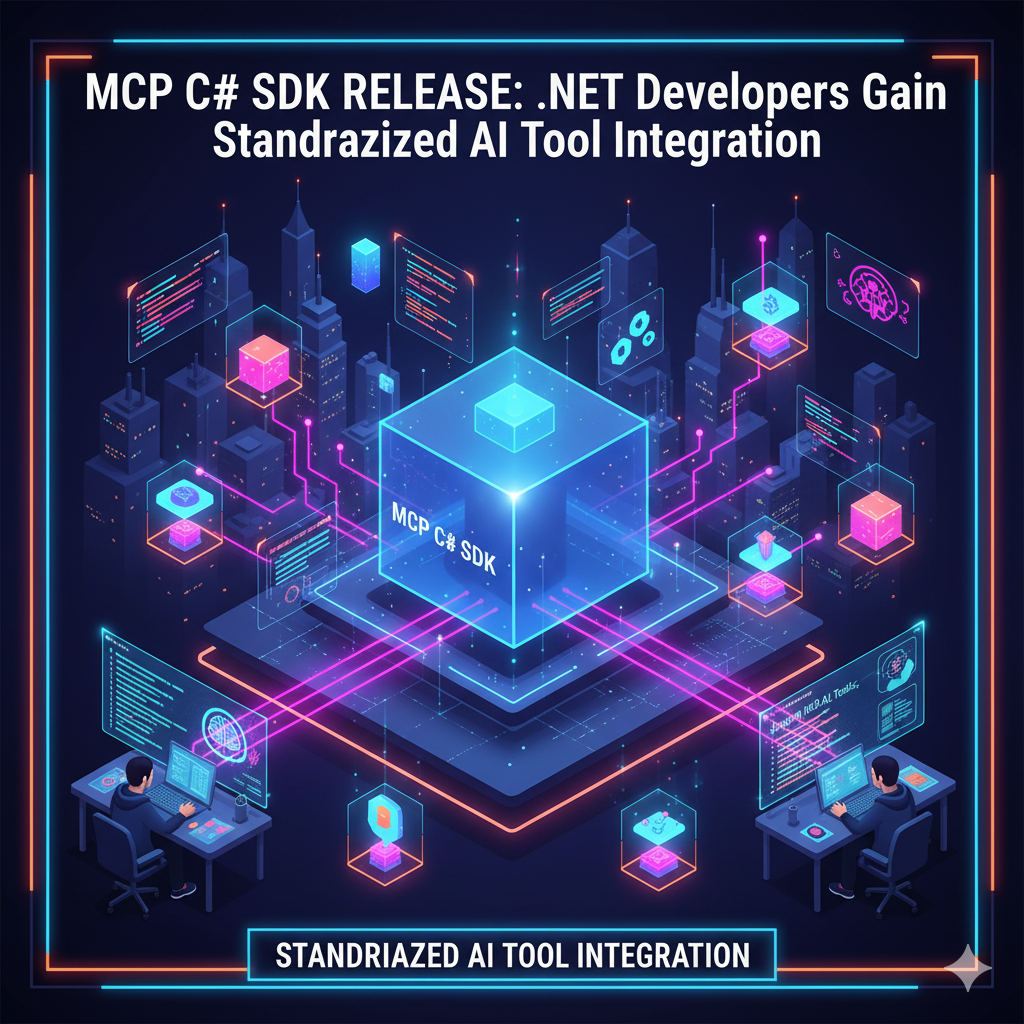
Microsoft introduced the C# SDK for the Model Context Protocol (MCP) on March 5, 2026, making it easier for .NET developers to build AI-powered applications that interact with external tools and services. The v1.0 release represents a significant milestone in enterprise AI adoption, providing standardized protocols for AI tool integration that previously required custom implementations. For .NET developers exploring AI capabilities, this SDK removes technical barriers that have prevented widespread adoption of intelligent agent systems in enterprise environments.
What Happened
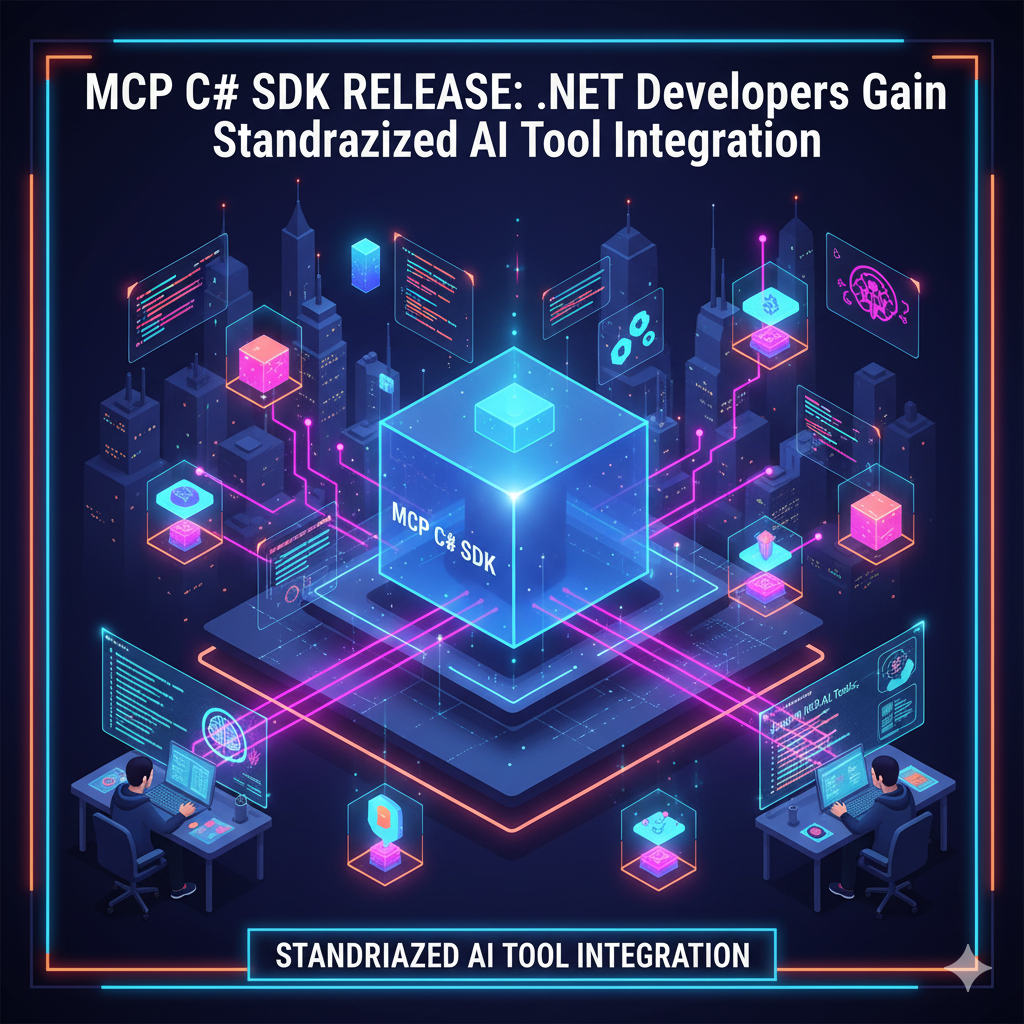
Microsoft released the official MCP C# SDK v1.0, enabling developers to create MCP servers and tools using familiar .NET technologies such as ASP.NET Core, dependency injection, and middleware. MCP is an open protocol that allows AI models to securely connect with systems like APIs, databases, and business applications. Instead of building custom integrations for every AI feature, developers can expose functionality as standardized tools that AI agents can discover and use dynamically.
The SDK integrates seamlessly with the broader .NET ecosystem, supporting ASP.NET Core for web APIs, dependency injection for service configuration, middleware pipelines for request processing, and built-in logging and telemetry for observability. This means enterprise development teams can leverage existing skills and infrastructure while adding AI capabilities to their applications.
The MCP ecosystem also integrates well with AI orchestration frameworks such as Microsoft Semantic Kernel, enabling developers to build powerful AI agents and automation workflows. This release positions .NET as a first-class citizen in the growing AI agent ecosystem, where previously Python-dominated tooling created adoption friction for enterprise .NET teams.
Why This Matters for Enterprise Development
For enterprise organizations with substantial .NET investments, the MCP C# SDK represents more than technical convenience—it's an enabler for AI adoption at scale. The SDK unlocks several critical capabilities: building AI agents that interact with business systems, creating standardized AI tools for internal platforms, integrating LLMs with enterprise APIs, and developing automation workflows powered by AI.
The standardization aspect matters most. Before MCP, each AI integration required custom implementation with unique error handling, authentication, and data transformation logic. This created maintenance overhead and limited reusability. With MCP, tools expose standardized interfaces that any MCP-compatible agent can use, regardless of the underlying implementation technology.
Consider enterprise scenarios: a customer service agent needs access to CRM data, order history, and inventory systems. Previously, this required three separate integrations with custom authentication and data formatting. With MCP C# SDK, each system exposes standardized tools through MCP servers built with familiar .NET patterns. The AI agent discovers available tools at runtime and uses them through consistent interfaces.
The SDK's design emphasizes enterprise requirements. It supports dependency injection for testability and maintainability, middleware for cross-cutting concerns like authentication and logging, and integration with existing .NET authentication and authorization systems. This means enterprise security policies and compliance requirements can be enforced consistently across both traditional and AI-enhanced application components.
The Bigger Picture
The MCP C# SDK release signals broader industry trends toward standardized AI tool integration. As AI agents move from prototypes to production systems, enterprises need consistent, maintainable integration patterns. The protocol-first approach of MCP addresses this need by decoupling tool implementation from agent consumption.
This standardization enables ecosystem growth. Tool developers can build once and support multiple AI platforms. Agent developers can discover and use tools without understanding implementation details. Enterprise architects can establish governance patterns around tool exposure and consumption. Everyone benefits from reduced integration complexity.
The timing aligns with increased enterprise AI investment. Gartner predicts that by 2027, 40% of enterprise applications will include AI-generated functionality. However, integration complexity remains a primary barrier. Standardized protocols like MCP lower this barrier by providing common patterns for exposing functionality to AI systems.
For .NET-focused enterprises, this release matters because it reduces the "Python tax" previously associated with AI integration. Teams no longer need Python expertise or infrastructure to participate in the AI ecosystem. They can leverage existing .NET skills, tools, and infrastructure while adding AI capabilities through standardized protocols.
What .NET Development Teams Should Do Now
Start by evaluating existing application functionality that could benefit from AI enhancement. Look for repetitive tasks, complex decision processes, or information retrieval scenarios where AI could improve efficiency or user experience. These become candidates for MCP tool exposure.
Implement proof-of-concept MCP servers for low-risk functionality. Use the SDK's integration with ASP.NET Core to expose existing API endpoints as MCP tools. Focus on stateless, idempotent operations initially to minimize risk. Document tool capabilities using the SDK's metadata features to enable agent discovery.
Establish governance patterns for MCP tool exposure. Define standards for authentication, authorization, error handling, and rate limiting. Consider tool categorization and versioning strategies. Remember that tools exposed through MCP become part of your application's public API surface, even if only consumed by AI agents.
For teams building cross-platform applications, standardized tool exposure becomes particularly valuable. In enterprise deployments using FinClip, the ability to expose functionality consistently across platforms reduces development overhead and improves maintainability. The cross-platform nature of modern development aligns with standardized AI tool integration patterns.
See how FinClip turns any app into a SuperApp. Book a 30-min demo