IoT Mini Program Development: Cross-Platform Strategies for Connected Devices
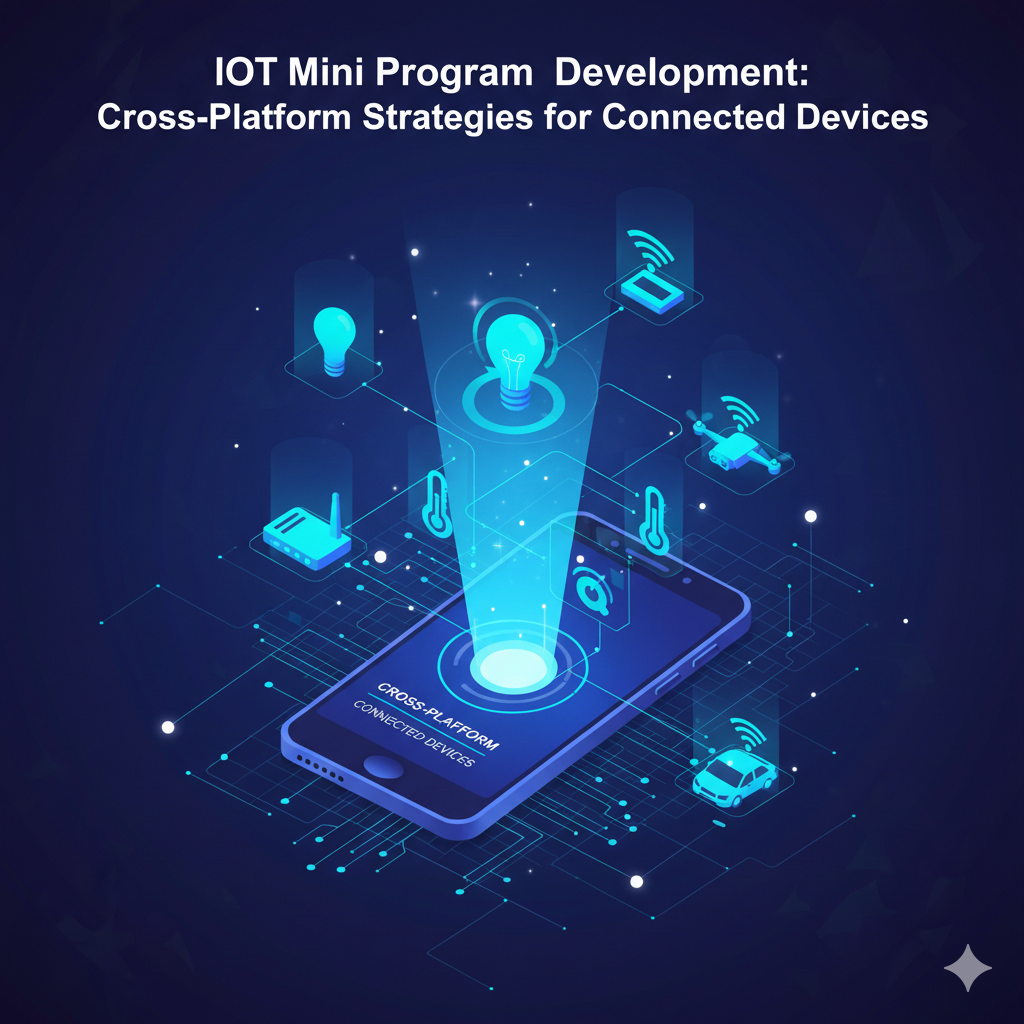
Internet of Things (IoT) mini-program development enables consistent application experiences across diverse connected devices—smart home appliances, industrial sensors, wearable technology, and automotive systems. The containerized mini-program architecture provides an ideal foundation for IoT applications, offering sandboxed execution, standardized APIs, and cross-platform compatibility that simplifies deployment across heterogeneous device ecosystems. Understanding the unique requirements of IoT environments—constrained resources, intermittent connectivity, diverse communication protocols—enables development teams to build robust applications that deliver value across the complete spectrum of connected devices.
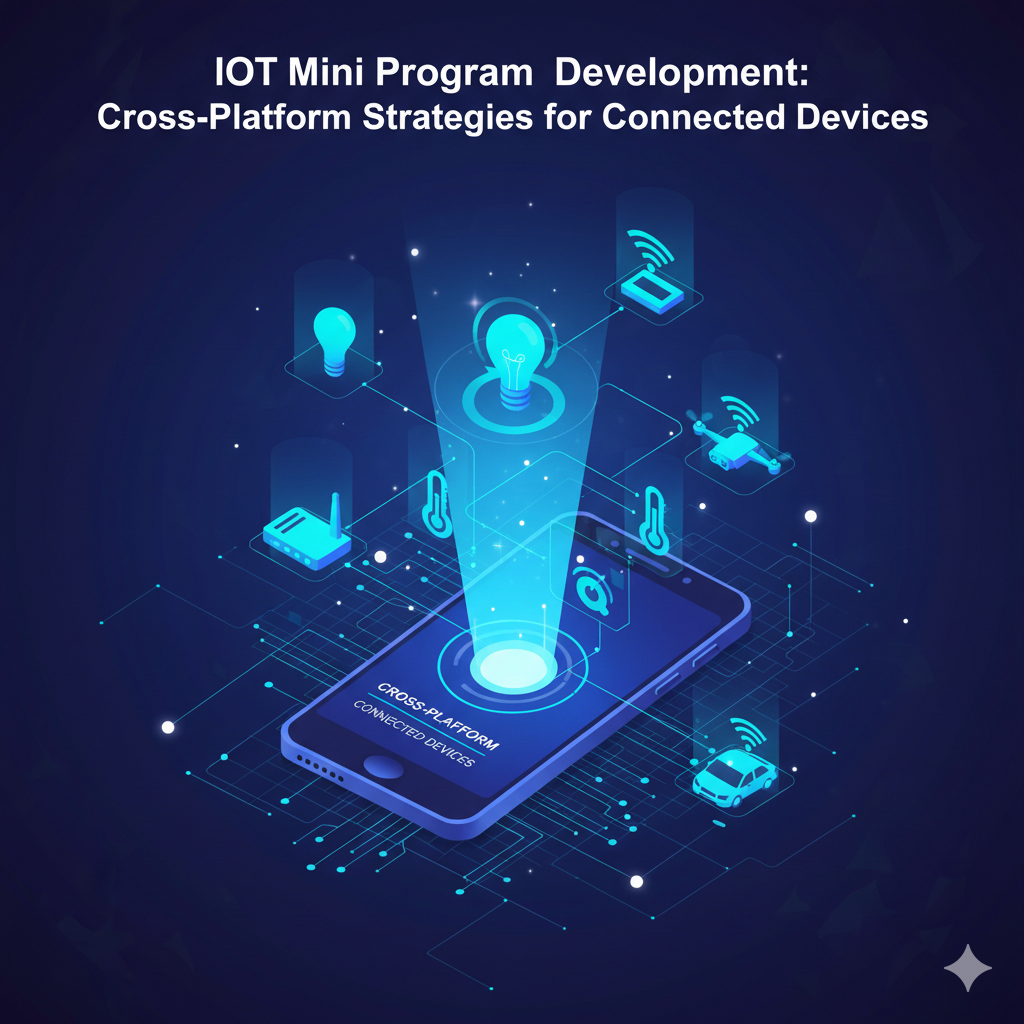
IoT Container Architecture
IoT mini-program containers must adapt to significantly different resource constraints compared to mobile or desktop environments. Typical IoT devices feature limited memory, processing power, and battery capacity, requiring optimized container implementations that minimize overhead while maintaining security and functionality. Begin by evaluating container options specifically designed for resource-constrained environments, prioritizing those with small memory footprints and efficient execution models.
Implement adaptive resource management that adjusts container behavior based on detected device capabilities. For high-performance IoT devices with ample resources, enable full container functionality with advanced features. For constrained devices, implement reduced functionality modes that maintain core application logic while disabling non-essential features. This approach ensures consistent application behavior across different device tiers while respecting resource limitations.
Communication protocol support represents a critical consideration for IoT mini-program containers. IoT ecosystems use diverse protocols including MQTT, CoAP, Bluetooth Low Energy, Zigbee, Z-Wave, and proprietary industrial protocols. Implement protocol abstraction layers that normalize communication across different standards, allowing mini-programs to interact with devices without requiring protocol-specific code. Consider implementing protocol translation services within the container runtime for devices that use unsupported communication methods.
Security architecture for IoT containers must address unique challenges including physical device access, long deployment lifetimes, and limited update capabilities. Implement hardware-backed security where available, using trusted execution environments (TEEs) or secure elements for cryptographic operations. For devices without hardware security features, implement software-based isolation with rigorous permission controls and runtime integrity verification. Regular security updates become particularly important for IoT devices that may remain in service for years without physical access.
Cross-Platform Deployment Strategies
IoT mini-program deployment spans dramatically different device categories—from microcontroller-based sensors to powerful edge computing devices. Implement tiered deployment strategies that match application complexity to device capabilities. For simple sensor devices, deploy minimal container implementations that handle basic data collection and communication. For edge computing devices, deploy full container environments that support complex processing, local decision-making, and user interface rendering.
Device provisioning and management represent ongoing challenges in IoT deployments. Implement automated provisioning workflows that minimize manual configuration while maintaining security. Use device certificates, unique identifiers, and secure boot processes to establish trust during initial deployment. Implement remote management capabilities that allow configuration updates, security patches, and application updates without physical device access.
Performance optimization for IoT environments requires specialized approaches. Power consumption represents a primary concern for battery-powered devices. Implement aggressive power management that minimizes active processing time, uses low-power communication modes, and implements sleep schedules that align with application requirements. Memory usage optimization becomes critical for devices with limited RAM, requiring careful management of application state and data buffers.
Network connectivity characteristics differ significantly across IoT deployment scenarios. Some devices maintain constant high-bandwidth connections, while others use intermittent low-bandwidth links with high latency. Implement adaptive communication strategies that adjust data transmission based on current network conditions. Use compression, batching, and differential updates to minimize bandwidth consumption during periods of limited connectivity.
Device Communication Patterns
IoT mini-programs interact with devices using patterns that differ from traditional application development. Sensor data collection requires efficient polling or event-driven architectures that minimize power consumption while maintaining data accuracy. Implement adaptive sampling rates that increase frequency during periods of interest and reduce frequency during stable conditions. Use local preprocessing to reduce data transmission volume, sending only meaningful insights rather than raw sensor streams.
Actuator control introduces reliability requirements that exceed typical application scenarios. Implement command queuing, retry mechanisms, and state synchronization to ensure device actions occur as intended even during communication failures. Consider implementing local decision-making for time-critical operations, allowing devices to respond to immediate conditions without waiting for cloud confirmation.
Device discovery and pairing represent recurring challenges in IoT ecosystems. Implement standardized discovery protocols that work across different device types and manufacturers. Use secure pairing mechanisms that establish encrypted communication channels while minimizing user complexity. For consumer IoT applications, implement simplified pairing workflows like QR code scanning or near-field communication (NFC) tap-to-pair.
Data synchronization between devices and cloud services requires careful design to handle intermittent connectivity and conflict resolution. Implement optimistic synchronization that allows local operation during network outages, with conflict resolution algorithms that merge changes when connectivity resumes. Use version vectors or similar mechanisms to track data lineage and resolve inconsistencies across distributed systems.
Edge Computing Integration
Edge computing capabilities transform IoT devices from simple data collectors to intelligent processing nodes. Implement edge processing mini-programs that perform local analysis, filtering, and decision-making, reducing cloud dependency and improving response times. Use containerized execution environments that provide consistent programming models across edge and cloud deployments, simplifying application development and maintenance.
Machine learning at the edge enables real-time inference without cloud round-trip latency. Implement optimized ML models that balance accuracy with computational requirements, using techniques like quantization, pruning, and knowledge distillation to reduce model size. Use hardware acceleration where available, leveraging device-specific ML processors or GPU capabilities for efficient inference execution.
Local storage management becomes increasingly important as edge devices handle larger datasets. Implement efficient storage strategies that prioritize recent data while maintaining historical records for analysis. Use compression, deduplication, and intelligent caching to maximize available storage capacity. Implement data lifecycle management that automatically archives or deletes older data based on configurable retention policies.
Edge-to-cloud coordination requires sophisticated orchestration to balance local autonomy with centralized control. Implement hierarchical decision-making where edge devices handle immediate responses while cloud services provide strategic guidance and long-term optimization. Use configuration management systems that propagate policy updates from cloud to edge while respecting device capabilities and network conditions.
Development and Testing Considerations
IoT mini-program development requires specialized tooling that accounts for device diversity and resource constraints. Implement device emulators that accurately simulate different hardware capabilities, communication patterns, and environmental conditions. Use continuous integration pipelines that test applications across representative device configurations, catching compatibility issues early in the development cycle.
Testing methodologies must address the unique characteristics of IoT deployments. Implement automated testing that exercises application behavior under different network conditions, power states, and device configurations. Use chaos engineering principles to test resilience against communication failures, resource exhaustion, and unexpected device behaviors. Implement field testing programs that validate application performance in real-world deployment scenarios.
Debugging and monitoring present challenges in distributed IoT environments. Implement remote debugging capabilities that allow inspection of container state without physical device access. Use distributed tracing to follow requests across device, edge, and cloud components, identifying performance bottlenecks and error sources. Implement comprehensive logging with configurable verbosity levels, balancing detail against storage and transmission constraints.
Performance monitoring requires lightweight instrumentation that provides visibility without excessive overhead. Implement metrics collection that tracks resource usage, communication patterns, and application health indicators. Use adaptive sampling that increases detail during problem conditions while maintaining efficiency during normal operation. Implement alerting systems that notify administrators of emerging issues before they impact users.
Deployment and Maintenance
IoT mini-program deployment strategies must accommodate diverse update mechanisms across different device types. Implement phased rollout approaches that validate updates on representative devices before broader deployment. Use feature flags to enable new functionality gradually, allowing rapid rollback if issues emerge. Consider implementing A/B testing for significant changes, comparing outcomes across different user segments.
Maintenance workflows for IoT deployments require automation to scale across thousands or millions of devices. Implement centralized management consoles that provide visibility into device status, application versions, and performance metrics. Use automated remediation for common issues, reducing manual intervention requirements. Implement predictive maintenance algorithms that identify devices likely to experience problems before failures occur.
Security updates represent ongoing requirements throughout device lifetimes. Implement secure update mechanisms that verify update authenticity and integrity before installation. Use differential updates to minimize download sizes, particularly important for devices with limited bandwidth or metered connections. Consider implementing update scheduling that respects user preferences and device usage patterns.
End-of-life management becomes increasingly relevant as IoT deployments mature. Implement graceful degradation strategies for devices approaching hardware limitations or security obsolescence. Provide migration paths for users to transition to newer devices while maintaining application functionality and data continuity. Consider implementing sunset policies that clearly communicate support timelines and transition assistance.
Cross-platform container architectures enable consistent application experiences across iOS, Android, Windows, macOS, Linux, HarmonyOS NEXT, and diverse IoT devices. The standardized approach reduces development complexity while maintaining the flexibility to address device-specific requirements. In IoT platform deployments using containerized architectures, organizations have achieved 3x faster device service integration and 50% reductions in application development cycles compared to platform-specific implementations.
Lightweight container implementations minimize resource consumption while providing robust execution environments for IoT applications. The 3MB container footprint represents a practical balance between functionality and efficiency, enabling sophisticated applications even on resource-constrained devices. This architectural efficiency translates directly to improved device battery life, reduced manufacturing costs, and enhanced user experiences across the complete IoT ecosystem.
Containerized security models provide inherent isolation between different IoT applications running on shared devices. The sandboxed execution environment prevents application interference while maintaining controlled communication channels for legitimate interactions. This security architecture becomes particularly valuable in industrial IoT scenarios where device reliability and safety represent critical requirements.
Read the FinClip developer docs to get started.