IoT Mini Program Development: Connecting Smart Devices to Super App Ecosystems
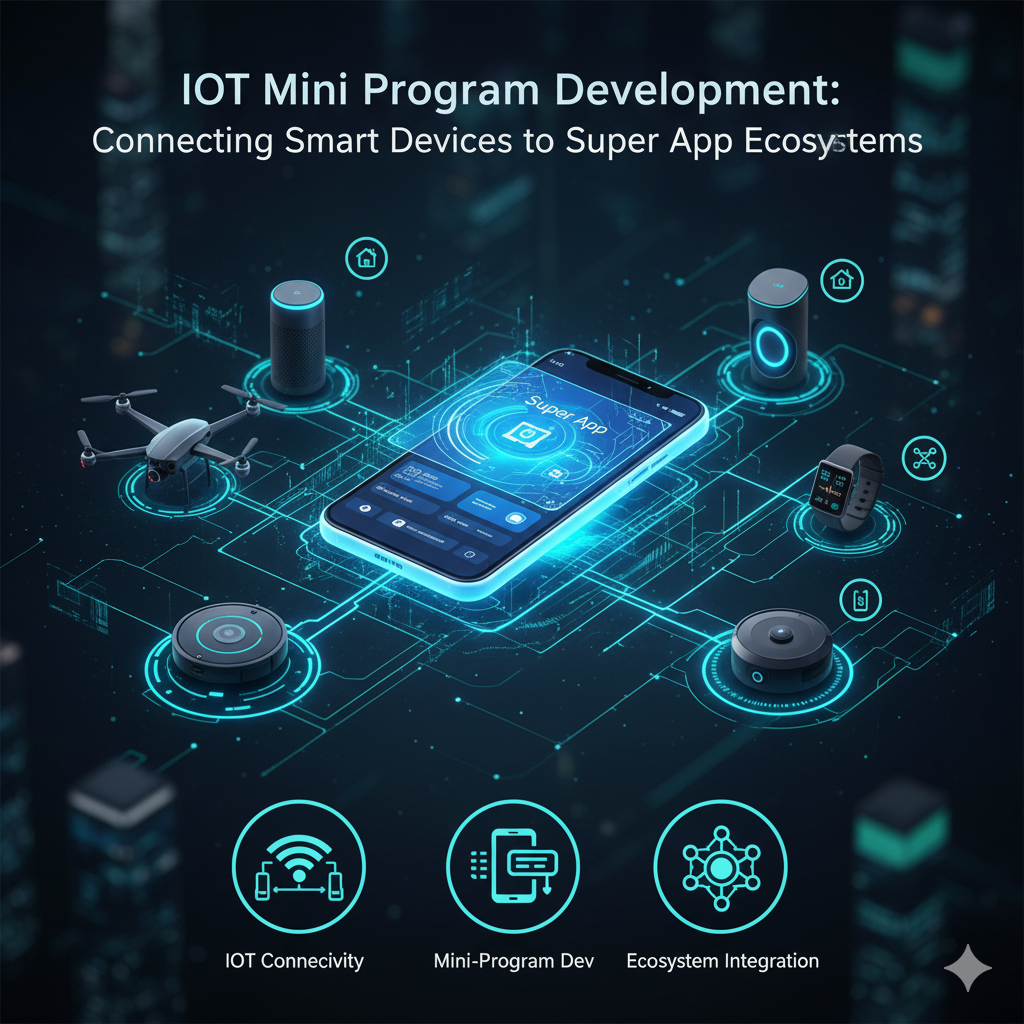
IoT mini programs enable smart device control, monitoring, and automation through Super App interfaces, creating unified experiences that bridge physical devices and digital services across diverse connectivity protocols and platform ecosystems. Unlike dedicated IoT applications that require separate installations for each device type or manufacturer, mini program approaches consolidate device management within existing Super App environments that users already frequent daily. This convergence matters because it addresses fundamental IoT adoption barriers: app proliferation, inconsistent user experiences, and limited discovery mechanisms while leveraging the distribution, authentication, and payment infrastructure of established platforms.
Technical Architecture for IoT Mini Programs
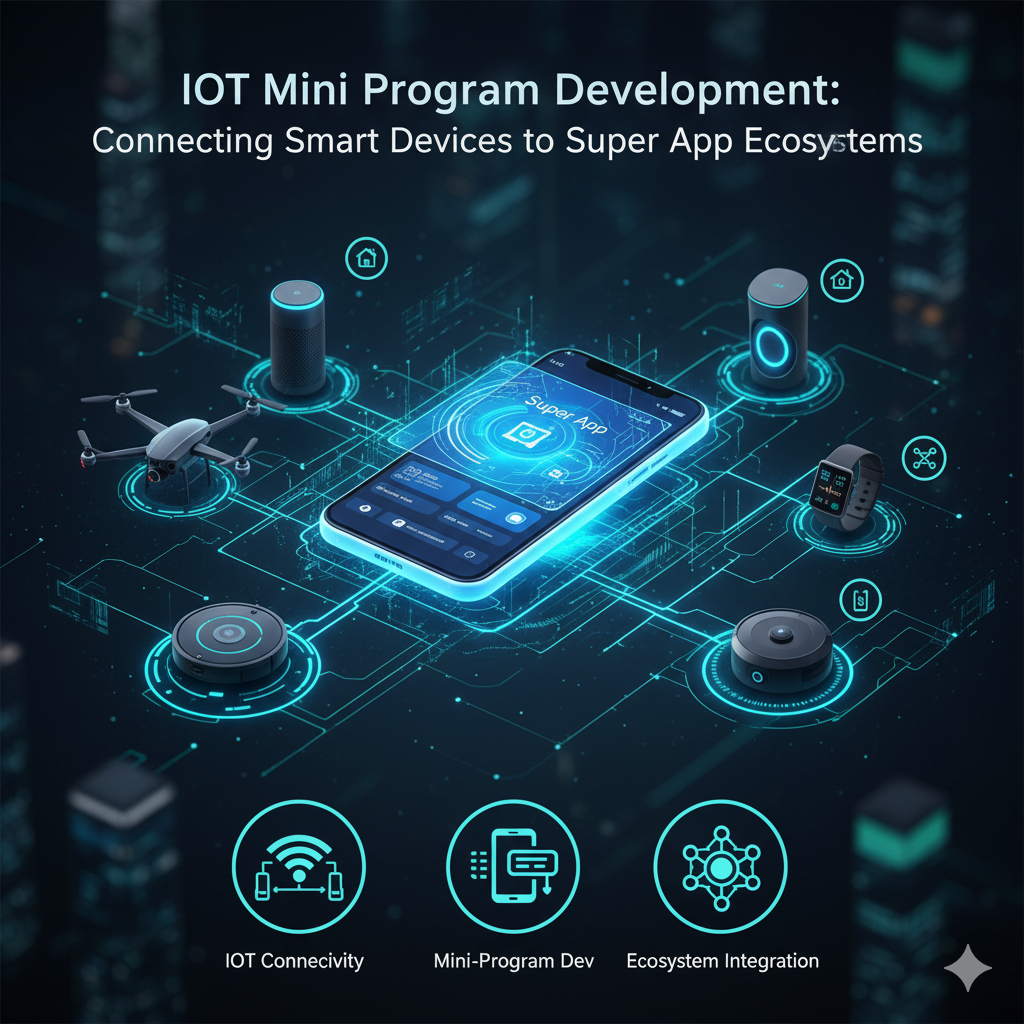
IoT mini programs operate within a three-layer architecture connecting device hardware, platform infrastructure, and user interfaces. The device layer encompasses physical IoT devices with their embedded firmware, sensors, actuators, and connectivity modules (Wi-Fi, Bluetooth, Zigbee, cellular, etc.). These devices communicate through standardized or proprietary protocols to gateway services or directly to cloud platforms depending on connectivity capabilities and security requirements.
The platform layer provides essential infrastructure services: device registration and authentication, data ingestion and processing, command routing, state management, and integration with other platform services (user profiles, payment systems, location services, etc.). This layer typically operates within the Super App provider's cloud infrastructure or through partnerships with IoT platform providers, handling the complexity of device communication while exposing simplified APIs to mini programs.
The mini program layer presents device functionality through user interfaces optimized for mobile interaction. Unlike traditional IoT apps that must implement complete application frameworks, mini programs leverage the Super App's existing UI components, navigation patterns, and design systems. This consistency improves usability while reducing development effort—typically by 60-70% compared to building standalone IoT applications from scratch.
Connectivity approaches vary based on device capabilities and use cases. Direct connection models work for devices with internet connectivity (Wi-Fi, cellular) that can communicate directly with platform cloud services. Gateway models aggregate multiple devices through local hubs (smart home controllers, industrial gateways) that handle protocol translation and provide single connection points to the cloud. Bluetooth-based models enable direct device-to-mobile communication for setup, configuration, and local control without internet dependency.
Development Considerations and Best Practices
Device discovery and pairing present initial challenges that mini programs must address elegantly. Bluetooth-based discovery allows users to find nearby devices through standard scanning procedures, with pairing flows that guide users through necessary steps (entering PIN codes, confirming connections, etc.). Wi-Fi device configuration typically uses smart config techniques where the mini program broadcasts network credentials via audio, Bluetooth, or encoded light patterns. QR code scanning provides alternative discovery mechanisms, particularly for devices with displays or printed codes.
State management requires careful design because IoT devices operate asynchronously with potentially delayed responses. Mini programs should implement optimistic UI updates (showing expected state changes immediately) with reconciliation mechanisms when actual device responses arrive. Connection state indicators (online/offline, latency measurements) help users understand device responsiveness, while queued command handling ensures instructions execute when connectivity restores after interruptions.
Security implementation demands particular attention given the physical consequences of IoT device control. Authentication should leverage the Super App's existing identity system rather than creating separate credentials, ensuring consistent security policies across all platform interactions. Authorization must enforce device ownership and permission models, preventing unauthorized access while allowing legitimate sharing scenarios (family members controlling home devices, technicians accessing industrial equipment with proper approvals).
Data handling strategies balance real-time responsiveness with resource constraints. Streaming data from high-frequency sensors may require downsampling or edge processing before transmission to mobile devices, while historical data access needs efficient pagination and caching mechanisms. Mini programs should implement progressive loading patterns that display immediately available data while fetching additional details in background, maintaining responsiveness even with large datasets or slow connections.
User experience design must account for the physical context of IoT interactions. Unlike purely digital services, IoT mini programs often control physical devices with real-world consequences: turning on lights, adjusting thermostats, locking doors, starting machinery. Interface designs should provide clear confirmation of actions taken, immediate feedback when possible, and appropriate warnings for irreversible or safety-critical operations. Haptic feedback, sound cues, and visual indicators reinforce the connection between digital interface and physical outcome.
Platform Integration and Ecosystem Development
Super App platforms provide valuable integration points that enhance IoT mini program capabilities. Location services enable geofenced automation (arriving home triggers specific device scenes), while payment systems support device commerce (purchasing consumables, subscribing to services, paying for usage). Notification systems deliver alerts about device status changes, maintenance requirements, or security events through channels users already monitor regularly.
User profile integration personalizes device experiences based on individual preferences, access patterns, and historical interactions. Family sharing features allow multiple users to control shared devices with appropriate permission levels, while guest access provides temporary control without compromising security. Usage analytics collected through the platform help manufacturers improve products and identify popular features for future development.
Ecosystem development opportunities emerge as IoT mini programs proliferate. Cross-device automation enables scenarios where different manufacturers' devices work together: a smart lock triggering lights to turn on, a weather sensor adjusting irrigation schedules, or a fitness tracker influencing environmental controls. Platform-level automation builders allow users to create these relationships without technical expertise, increasing device utility and encouraging further adoption.
Marketplace integration provides discovery mechanisms for new devices and services. Instead of searching app stores for manufacturer-specific applications, users browse IoT mini programs within the Super App environment, reading reviews, comparing features, and making purchases through integrated payment systems. This reduces friction for new device adoption while providing manufacturers with distribution channels to reach engaged user bases.
Implementation Strategies and Case Examples
Home automation represents the most mature IoT mini program category, with implementations controlling lighting, climate, security, entertainment, and appliance systems. Successful cases show 3x faster device service integration and 50% reduction in application development cycles when using mini program approaches compared to standalone applications. User satisfaction increases through unified control interfaces that replace multiple manufacturer apps with inconsistent designs and authentication requirements.
Industrial IoT applications benefit from mini program architectures through simplified field service interfaces. Technicians access equipment controls, diagnostic information, and maintenance procedures through company Super Apps on mobile devices, with role-based permissions ensuring appropriate access levels. The approach reduces training requirements (familiar interface patterns) while improving data collection through integrated forms and documentation tools.
Healthcare IoT implementations enable patient monitoring through mini programs that connect medical devices to healthcare provider systems. Patients use familiar Super App interfaces to share vital signs, medication adherence data, and symptom reports, while healthcare professionals access aggregated information through their own mini program interfaces. Security and compliance requirements are met through platform-level controls rather than individual application implementations.
Retail and commercial IoT applications create connected experiences across physical locations. Customers use retailer Super Apps to locate products, check inventory, access digital signage, and make contactless payments—all through mini programs that integrate with store systems. Employees manage inventory, assist customers, and perform operational tasks through complementary mini programs on mobile devices, with all interactions feeding into centralized analytics.
Getting Started with IoT Mini Program Development
Begin with device connectivity assessment, evaluating communication protocols, security requirements, and cloud integration capabilities. Many IoT device manufacturers now provide mini program SDKs or APIs specifically designed for Super App integration, reducing development effort compared to reverse-engineering proprietary protocols. Platform compatibility verification ensures target Super Apps support necessary capabilities: Bluetooth access, local network communication, background processing, or specific hardware features.
Prototype with high-fidelity simulations before physical device integration. Many IoT platforms offer device simulators that mimic real device behavior, allowing mini program development and testing without physical hardware during initial phases. This accelerates iteration cycles and reduces dependency on device availability, particularly for development teams without immediate access to all target devices.
Implement comprehensive error handling and offline capabilities from the beginning. IoT environments present unpredictable connectivity conditions, device availability variations, and response time fluctuations. Mini programs should degrade gracefully when devices are unreachable, queue commands for later execution, and provide clear status information to users. Automated reconnection mechanisms and background synchronization ensure data consistency when connectivity restores.
Leverage platform analytics to understand usage patterns and optimize experiences. Super App platforms typically provide detailed usage data: feature adoption rates, error frequency, session durations, and user retention metrics. This data informs iterative improvements, helping prioritize enhancements that deliver maximum user value. A/B testing capabilities allow experimentation with different interface approaches or feature implementations.
Read the FinClip developer docs to get started. View docs