Indian Railways Consolidates Services into RailOne Super App, Discontinues UTS App
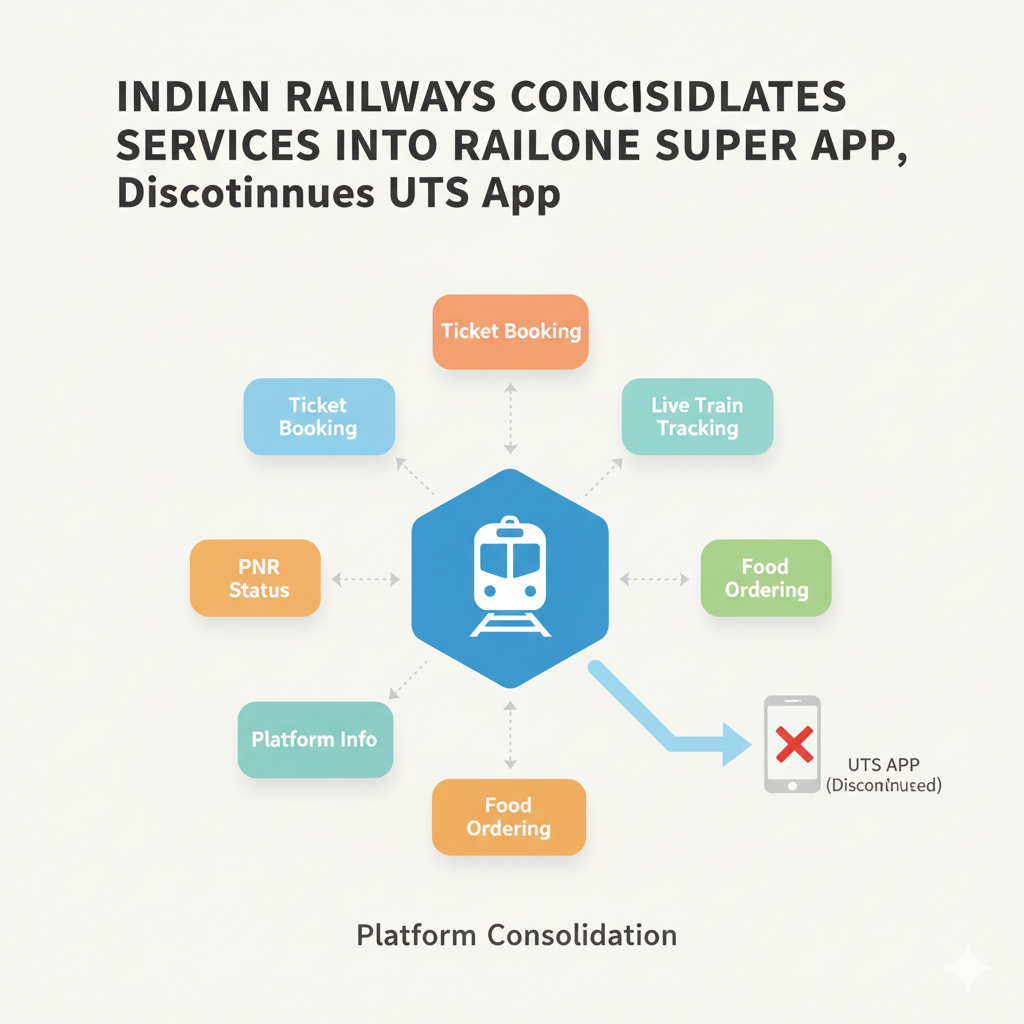
Indian Railways announced it will officially discontinue its Unreserved Ticketing System (UTS) mobile application starting March 1, 2026, directing millions of passengers to transition to "RailOne," the national transporter's integrated Super App. This consolidation represents one of the largest government digital transformation initiatives globally, merging multiple standalone railway services into a single, streamlined digital interface. For organizations managing complex service portfolios, the RailOne case study demonstrates how platform consolidation can improve user experience while reducing operational complexity.
What Happened
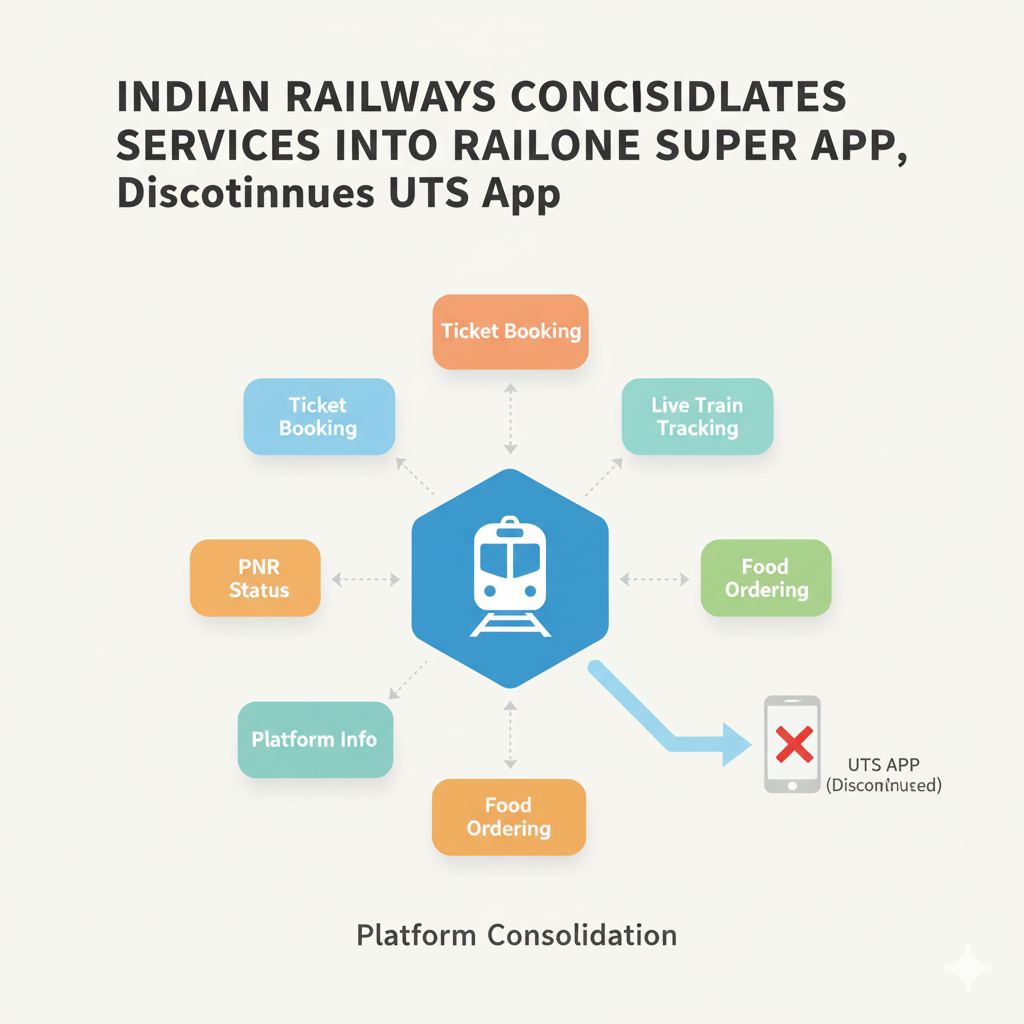
On February 8, 2026, Indian Railways confirmed that the UTS mobile application would be discontinued effective March 1, with all unreserved and platform ticket booking functionality migrating to the newly launched RailOne Super App. The UTS app, which has been in service since December 2014 and played a pivotal role in reducing long queues at physical ticket counters, will be replaced by RailOne as part of a broader strategy to consolidate multiple railway services into one comprehensive digital platform.
The RailOne app functions as a complete digital hub for passengers, integrating services that were previously available through separate applications. Beyond booking unreserved, reserved, and platform tickets, the app allows users to track PNR status and live train running information, access real-time coach positions and platform numbers, order meals directly to their seats via IRCTC-approved vendors through 'Food on Track,' and lodge complaints or feedback via the integrated 'Rail Madad' portal.
To encourage adoption of the new platform, the Ministry of Railways introduced financial incentives for digital booking. Passengers using RailOne receive a 3% discount when paying via digital modes such as UPI, debit cards, credit cards, or net banking. This discount scheme runs for six months from January 14 to July 14, 2026. Additionally, the existing 3% bonus for those using the R-wallet system continues unchanged, ensuring regular commuters don't lose accumulated benefits.
According to Dilip Kumar, Executive Director (Information & Publicity) at the Railway Board, the transition aims to provide a more user-friendly experience. "The new app RailOne includes all the features of the existing UTS app," Kumar stated, confirming that the platform supports existing credentials from both UTS and RailConnect, allowing frequent travelers to migrate their accounts without needing new registration.
Why This Matters for Government Digital Transformation
The Indian Railways consolidation represents a landmark case in government digital transformation, demonstrating how public sector organizations can leverage technology to improve citizen services while streamlining operations. With approximately 8 billion passenger journeys annually before the pandemic and millions of daily commuters, Indian Railways faces scalability challenges that few private sector organizations encounter. The RailOne initiative addresses these challenges through platform consolidation.
From a technical perspective, merging multiple legacy systems into a unified platform represents considerable complexity. The UTS app alone handled millions of daily transactions, requiring robust backend infrastructure and reliable connectivity across diverse geographic regions. Integrating this functionality with reservation systems, meal ordering services, and customer support portals requires careful architectural planning and phased implementation.
The user experience benefits are substantial. Previously, passengers needed to navigate between different applications for ticket booking, meal ordering, complaint registration, and journey tracking. The consolidated approach reduces cognitive load and simplifies the travel planning process. For infrequent travelers or those with limited digital literacy, having a single application for all railway needs significantly lowers the barrier to digital service adoption.
Financial incentives represent another strategic element. The 3% discount for digital bookings encourages migration to the new platform while providing immediate value to users. This approach follows established patterns in digital platform adoption, where initial incentives help overcome user inertia and establish new behavior patterns. The continued support for R-wallet bonuses ensures that existing digital payment users maintain their benefits during the transition.
The Bigger Picture
The RailOne initiative reflects global trends in government digital service delivery. From Singapore's SingPass to Estonia's X-Road, governments worldwide are consolidating citizen services into unified digital platforms. These initiatives aim to reduce administrative burden, improve service accessibility, and leverage data analytics for better policy decisions. The Indian Railways case is particularly noteworthy for its scale and complexity, serving one of the world's largest and most diverse user bases.
Technical architecture plays a crucial role in these transformations. Modern government platforms increasingly adopt microservices architectures and API-first design principles, enabling different departments and agencies to contribute services to a unified platform without compromising security or performance. Containerization technologies allow for isolated execution of different service components while maintaining data separation as required by regulatory frameworks.
User adoption strategies for government Super Apps face unique challenges compared to commercial applications. Digital literacy varies widely across user demographics, and trust in government technology systems must be carefully cultivated. The Indian Railways approach of maintaining existing login credentials and providing financial incentives addresses both concerns, reducing friction for existing digital users while providing clear value propositions for new adopters.
Data integration represents another significant consideration. Government Super Apps must balance comprehensive service delivery with strict data privacy and security requirements. The RailOne platform presumably incorporates robust authentication mechanisms and data protection measures, given the sensitive nature of travel information and payment data. These security considerations become increasingly important as platforms expand their service portfolios.
What Government Agencies Should Do Now
For government organizations considering similar digital consolidation initiatives, the RailOne case offers several implementation insights. First, prioritize user experience continuity during transition periods. Maintaining existing login credentials and familiar functionality helps reduce user resistance to change. The Indian Railways approach of ensuring feature parity between old and new systems represents a practical implementation strategy.
Second, consider phased rollout with clear communication. The six-month overlap period for the UTS app discontinuation provides users adequate time to transition while allowing the technical team to address any emerging issues with the new platform. Clear communication about timelines, feature availability, and support resources helps manage user expectations and reduces support burden during the transition.
Third, leverage incentives to drive adoption. The 3% discount for digital bookings represents a relatively small financial commitment that generates substantial user engagement. Similar approaches in enterprise deployments have shown 126% satisfaction increases and 200% daily active user growth when combined with well-designed user interfaces and reliable backend systems.
Finally, invest in scalable technical architecture. Government services often experience unpredictable demand spikes and must maintain availability across diverse geographic regions. Containerized application approaches enable horizontal scaling and geographic distribution while maintaining consistent user experiences. These technical foundations support the kind of large-scale service delivery that Indian Railways requires.
See how container technology turns any application into a comprehensive service platform without rebuilding from the ground up. Book a 30-min demo