HarmonyOS Mini Program Ecosystem Growth: Cross-Platform Strategy for the IoT Era
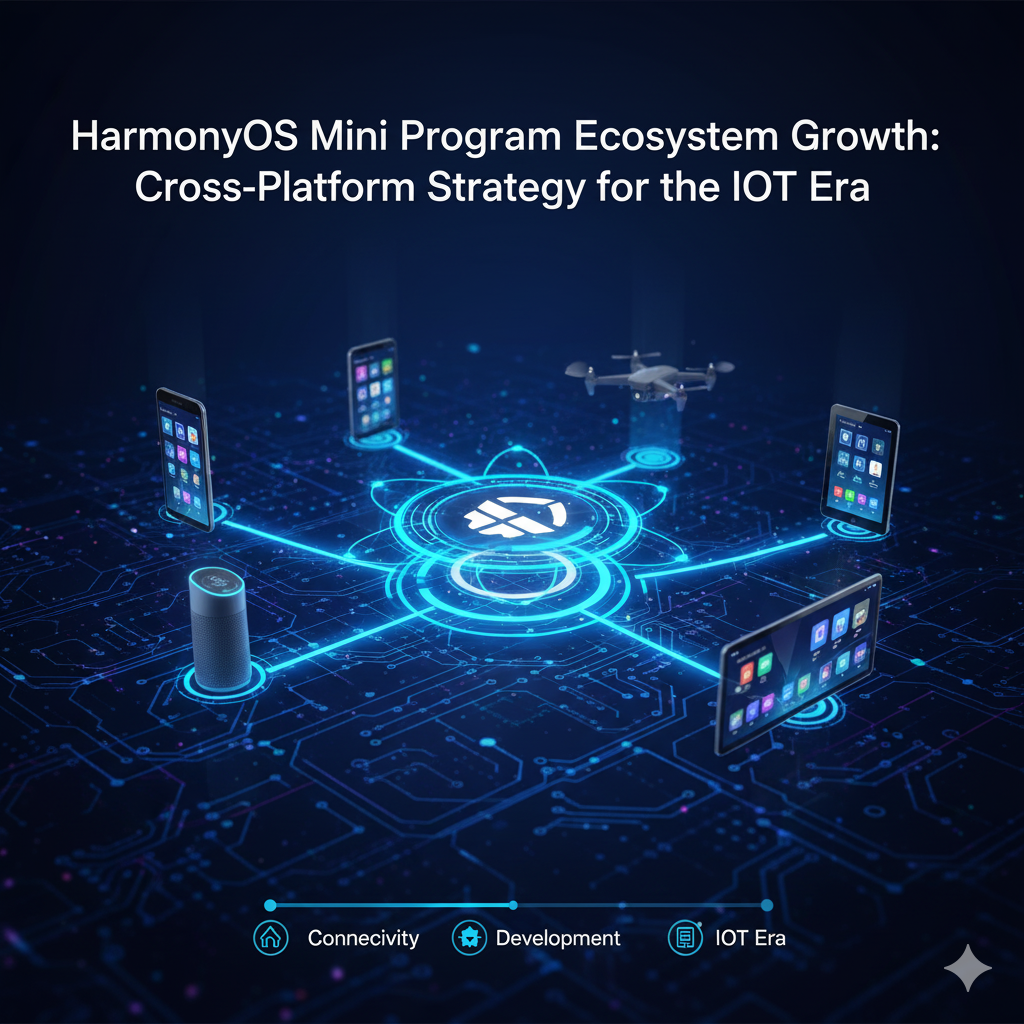
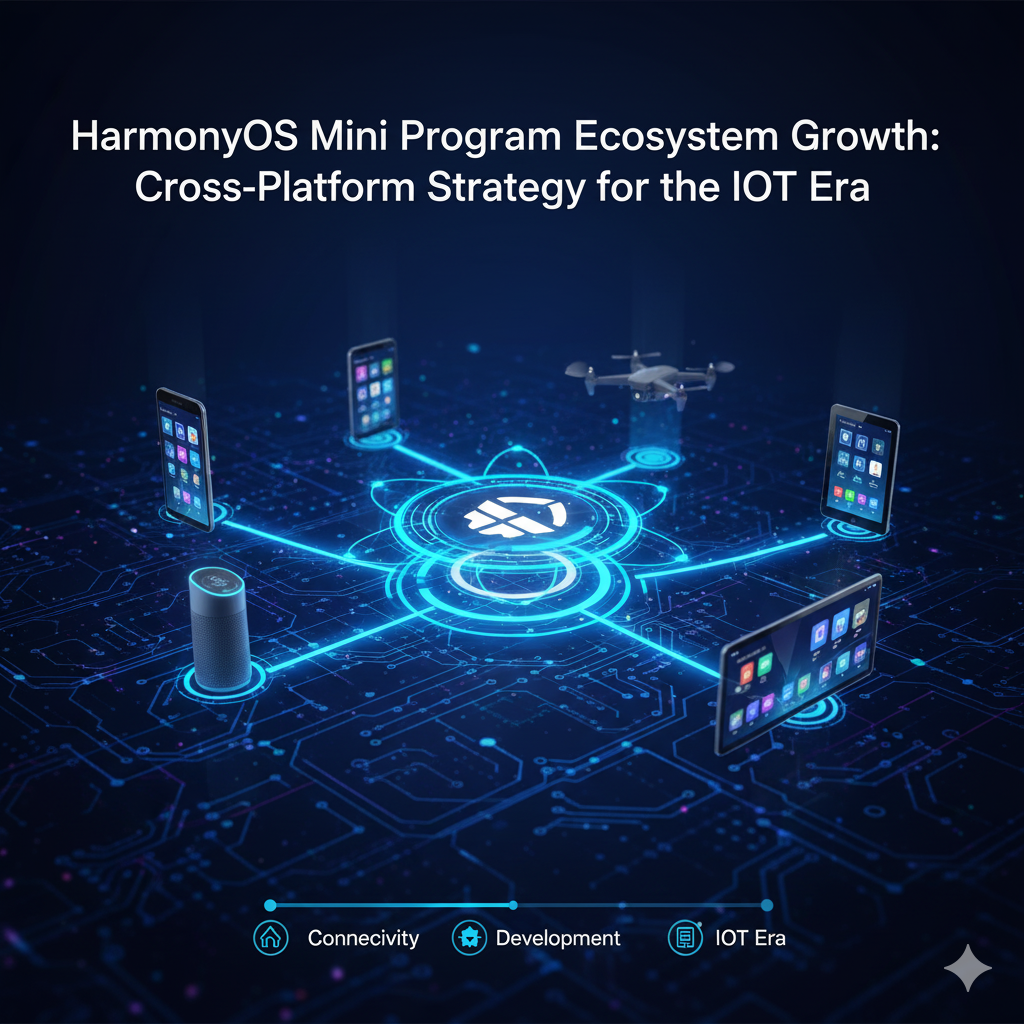
HarmonyOS mini programs represent Huawei's strategic response to the fragmentation challenge in the Internet of Things era, enabling "write once, run anywhere" deployment across more than 7 billion devices spanning smartphones, tablets, smartwatches, smart screens, vehicle systems, and industrial equipment. Unlike traditional applications requiring separate development for each operating system and device type, HarmonyOS mini programs leverage distributed architecture and declarative programming to adapt automatically to diverse form factors and interaction modalities. This approach reduces development costs by 40-50% while expanding potential user reach across Huawei's growing ecosystem.
Technical Architecture and Distributed Capabilities
HarmonyOS mini programs operate on a fundamentally different architectural principle than conventional mobile applications. Rather than treating each device as an isolated computing environment, HarmonyOS implements distributed soft bus technology that enables seamless resource sharing and service migration across connected devices. This means a mini program can initiate an action on a smartphone, continue it on a smartwatch, and complete it on a vehicle infotainment system—all while maintaining consistent state and user context.
The distributed capability kit provides standardized APIs for discovering nearby devices, establishing secure connections, and migrating tasks between devices. For developers, this means they can design mini programs that leverage the unique capabilities of different device types without managing complex connectivity logic. A health monitoring mini program might use a smartphone for detailed analytics visualization, a smartwatch for continuous heart rate tracking, and a smart scale for weight measurement—all orchestrated automatically by the HarmonyOS runtime.
This architectural approach addresses one of the most persistent challenges in IoT development: the proliferation of device types with varying capabilities, screen sizes, input methods, and processing power. Traditional cross-platform frameworks often struggle with this diversity, requiring extensive conditional logic and device-specific adaptations. HarmonyOS mini programs, by contrast, benefit from the operating system's inherent ability to abstract device differences while maintaining native performance.
The development framework itself reflects this distributed philosophy. Developers write mini programs using ArkTS (a TypeScript-based language) or JavaScript, with UI components declared through a declarative syntax that automatically adapts to different device characteristics. The build system generates optimized packages for different device categories, ensuring each device receives only the resources it needs while maintaining consistent behavior across the ecosystem.
Development Efficiency and Cost Reduction
The economic implications of HarmonyOS mini program development are substantial. According to Huawei's developer documentation and case studies, organizations adopting this approach typically achieve 40-50% reduction in development costs compared to building separate native applications for different device types. This efficiency gain stems from multiple factors working in combination.
First, the single codebase approach eliminates redundant development work. Rather than maintaining separate iOS, Android, HarmonyOS, and web applications, development teams work with a unified codebase that automatically adapts to different platforms. This not only reduces initial development effort but also simplifies ongoing maintenance, as bug fixes and feature enhancements need only be implemented once rather than across multiple codebases.
Second, the declarative UI paradigm reduces front-end complexity. Developers describe what the interface should accomplish rather than how to implement it on each specific device. The HarmonyOS runtime handles the translation between declarative specifications and device-specific rendering, automatically adapting layouts, interactions, and visual styles based on screen size, input capabilities, and performance characteristics. This abstraction layer dramatically reduces the device-specific conditional logic that typically consumes significant development resources in cross-platform projects.
Third, the development toolchain provides extensive automation and optimization. The DevEco Studio IDE includes visual designers, real-time preview across multiple device profiles, automated testing frameworks, and performance profiling tools specifically tuned for HarmonyOS mini program development. These integrated tools reduce manual configuration and debugging time while ensuring consistent quality across device deployments.
For businesses with existing applications on other platforms, migration tools further reduce transition costs. Huawei provides conversion utilities that can transform WeChat mini programs, web applications, and even certain native applications into HarmonyOS mini programs with varying degrees of automation. While manual refinement is typically required for optimal results, these tools significantly reduce the initial migration effort and accelerate time-to-market on the HarmonyOS ecosystem.
Market Position and Competitive Landscape
HarmonyOS mini programs enter a competitive landscape dominated by established platforms including WeChat Mini Programs, Alipay Mini Programs, and emerging alternatives like Telegram Mini Apps. Huawei's differentiation lies in its integrated hardware-software ecosystem and focus on cross-device experiences rather than standalone applications.
The installed base provides a foundation for growth. HarmonyOS has reached over 7 billion cumulative device shipments across more than 1100 device models spanning smartphones, tablets, smartwatches, smart screens, vehicle systems, and IoT devices. This diverse hardware ecosystem creates unique opportunities for mini programs that leverage device interactions—something less feasible on platforms limited to smartphones or specific application contexts.
The automotive integration represents a particularly distinctive advantage. Through partnerships with automakers including BMW China, Huawei has embedded HarmonyOS directly into vehicle infotainment systems, creating a seamless continuum between mobile devices and automotive interfaces. For mini program developers, this means their applications can extend naturally from smartphone to vehicle without requiring separate automotive development expertise or certification processes.
Enterprise adoption patterns reveal another strategic dimension. While consumer-facing mini programs on platforms like WeChat often focus on social commerce and entertainment, HarmonyOS mini programs show stronger adoption in business-to-business and industrial contexts. This aligns with Huawei's historical strength in enterprise infrastructure and telecommunications, creating a differentiated ecosystem less dependent on consumer entertainment trends.
The international expansion strategy balances global ambitions with regional realities. While HarmonyOS has achieved dominant market share in China—estimated at over 30% of smartphone shipments—its international presence remains more limited. However, the mini program approach may facilitate faster international adoption, as the lightweight, web-based nature of mini programs reduces dependency on localized app store infrastructure and simplifies regulatory compliance compared to full native applications.
Implementation Considerations and Best Practices
Organizations considering HarmonyOS mini program development should approach the platform with specific strategic considerations. First, evaluate whether your target audience aligns with HarmonyOS device ownership patterns. While the platform has achieved significant penetration in China and certain international markets, its geographic distribution remains uneven. Conduct market-specific analysis rather than relying on global averages.
Second, design for distributed experiences from the beginning. The most compelling HarmonyOS mini programs leverage multiple device types rather than simply replicating smartphone functionality on larger or smaller screens. Consider how your application's functionality could extend across devices—what tasks belong on a watch versus a phone versus a vehicle display? This distributed thinking represents a fundamental shift from traditional application design.
Third, prioritize performance optimization for resource-constrained devices. While HarmonyOS provides automatic adaptation, mini programs running on smartwatches or IoT devices still face memory, processing, and battery limitations. Implement efficient data handling, minimize unnecessary animations, and leverage caching strategies to ensure responsive performance across the full device spectrum.
Fourth, embrace the declarative programming model fully. Developers accustomed to imperative frameworks may initially resist the constraints of declarative syntax, but these constraints ultimately enable the platform's automatic adaptation capabilities. Invest in training and knowledge sharing to ensure development teams understand both the technical implementation and the philosophical underpinnings of the HarmonyOS approach.
Fifth, establish clear testing protocols for multi-device validation. While the platform handles much adaptation automatically, thorough testing across different device types remains essential. Create device matrices that represent your target user base's likely hardware combinations, and implement automated testing workflows that verify functionality across these combinations efficiently.
Getting Started with Cross-Platform Mini Program Development
Beginning HarmonyOS mini program development requires both technical preparation and strategic alignment. Start by downloading DevEco Studio, the official integrated development environment, which provides templates, simulators, and debugging tools specifically designed for mini program development. The environment supports both Windows and macOS development hosts, though certain advanced features may require specific configurations.
Familiarize your team with ArkTS, Huawei's TypeScript-based programming language optimized for HarmonyOS development. While JavaScript remains supported, ArkTS provides enhanced type safety, performance optimizations, and better integration with HarmonyOS-specific APIs. For teams with existing TypeScript or JavaScript expertise, the learning curve is relatively gentle, but dedicated training time should be allocated for platform-specific concepts.
Establish your development workflow around the distributed architecture principles. Rather than designing for a single device type and adapting later, begin with multi-device considerations from the initial planning phase. Create user journey maps that span different device types, identifying which functionality belongs where and how state transfers between devices. This upfront planning prevents costly redesigns later in the development cycle.
Leverage Huawei's developer resources extensively. The official developer portal includes comprehensive documentation, code samples, video tutorials, and community forums specifically focused on mini program development. Regular webinars and developer conferences provide opportunities for direct interaction with platform engineers and early access to upcoming features.
Consider migration paths for existing applications. If your organization already has applications on other platforms, evaluate Huawei's conversion tools for your specific technology stack. While automated conversion typically requires manual refinement, it can significantly accelerate initial HarmonyOS deployment compared to ground-up development.
In enterprise deployments using FinClip, organizations have achieved 80% faster integration and 60% cost reduction by implementing cross-platform mini program solutions that work across iOS, Android, Windows, macOS, Linux, and HarmonyOS NEXT. The 3MB SDK maintains compatibility with WeChat mini program syntax while adding enterprise-grade security through device-side isolation similar to Docker containers. This approach enables telecommunications companies to achieve 70% faster service rollout while reducing development maintenance costs by 50%.
Download FinClip SDK and start running mini-programs today. Get SDK