Enterprise Super App Architectures: Containerization and Modular Design Patterns for 2026
Introduction: The Enterprise Super App Imperative
Enterprise organizations across industries face mounting pressure to consolidate digital services, streamline user experiences, and modernize legacy systems—challenges increasingly addressed through super app architectures tailored for business contexts. Unlike consumer super apps that aggregate diverse public services, enterprise super apps focus on integrating internal tools, partner ecosystems, and customer interfaces within cohesive digital workplaces. This architectural approach represents a strategic response to digital transformation imperatives, offering pathways to reduce application sprawl, improve operational efficiency, and enhance user productivity while maintaining necessary security and compliance controls.
The enterprise super app concept has gained momentum as organizations recognize the limitations of fragmented digital environments. Employees routinely navigate between dozens of specialized applications for tasks like customer relationship management, project coordination, data analysis, communication, and reporting—each with distinct interfaces, authentication requirements, and data silos. This fragmentation creates cognitive load, reduces productivity, and increases training complexity. Enterprise super apps address these challenges through unified interfaces that maintain functional specialization while reducing navigation overhead and data isolation.
Architectural Foundations: Containerization Patterns
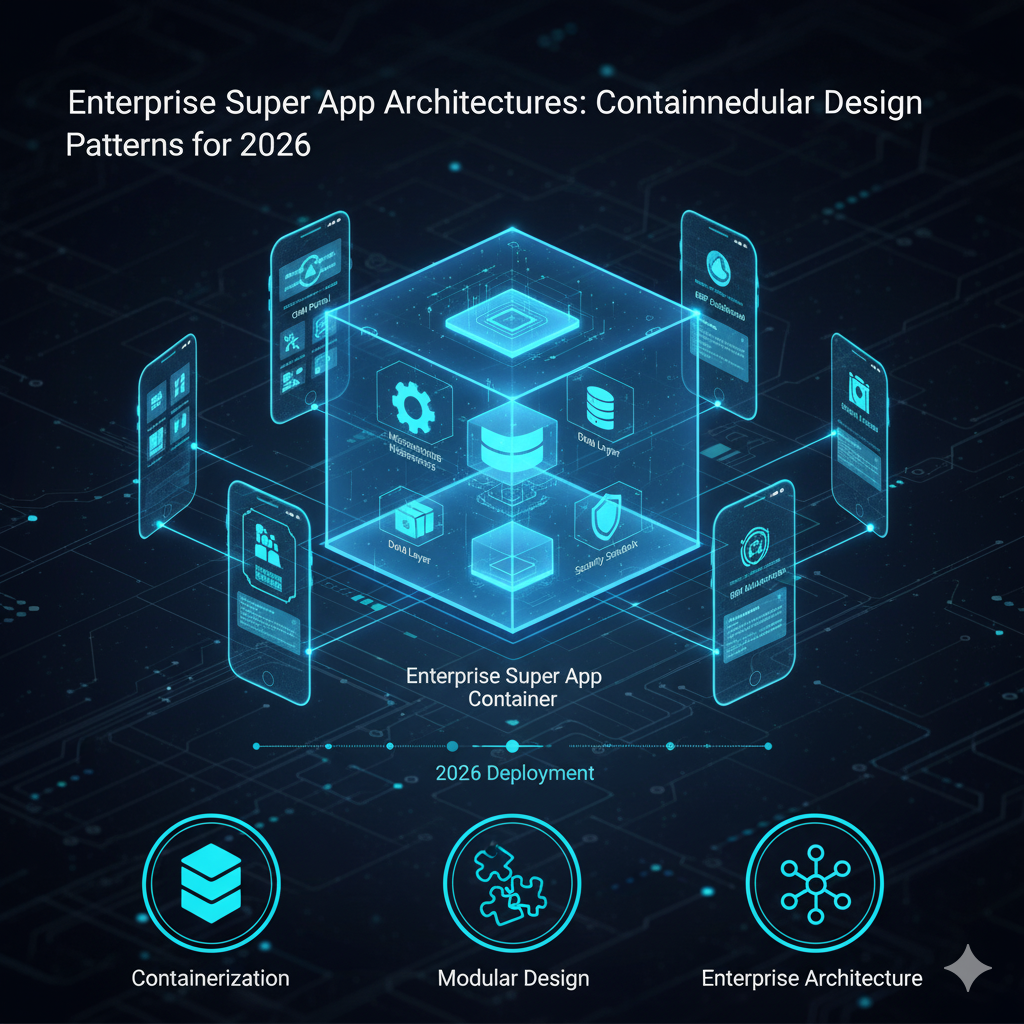
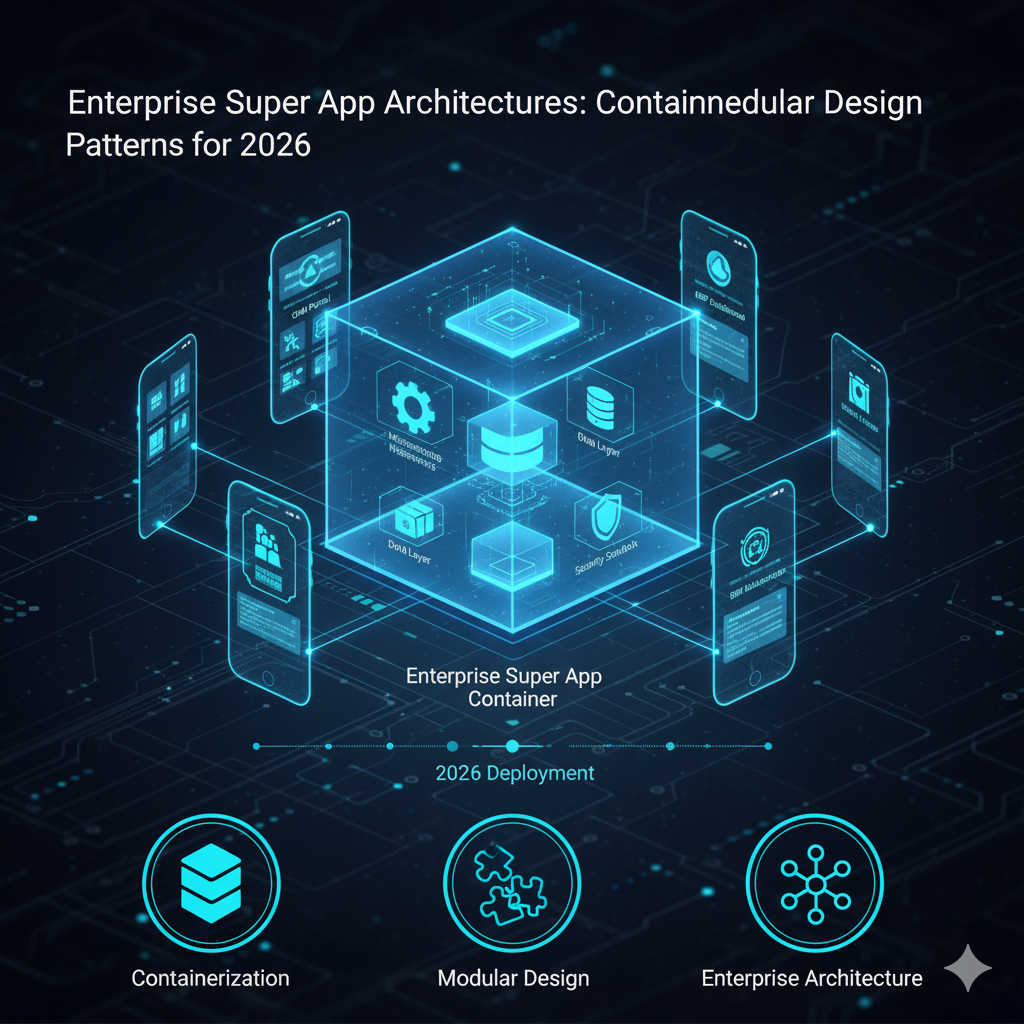
Containerization forms the technical foundation of modern enterprise super app architectures, enabling modular application components to operate within controlled runtime environments while sharing platform resources. Unlike traditional monolithic applications or loosely coupled microservices, containerized super apps employ specialized runtime containers optimized for mobile deployment, user interface integration, and security isolation. These containers execute modular mini-applications—often developed using web technologies like HTML5 and JavaScript—within host applications, creating cohesive user experiences while maintaining technical separation between components.
Three primary containerization patterns dominate enterprise implementations: native container frameworks, hybrid container approaches, and webview-based solutions. Native container frameworks, exemplified by platforms like FinClip, provide optimized runtime environments specifically designed for mini-application execution, offering performance advantages and deeper platform integration. Hybrid containers combine native and web technologies, balancing development flexibility with platform capabilities. Webview-based solutions leverage standard browser components for application rendering, maximizing development simplicity at potential performance cost.
Container selection involves trade-offs across multiple dimensions: performance requirements, development resources, security needs, and integration complexity. Native containers typically offer superior performance and security but require specialized development skills. Hybrid approaches provide balanced capabilities with moderate learning curves. Webview-based solutions maximize development velocity and resource availability but may encounter performance limitations for complex interactions. Enterprise architects must evaluate these trade-offs within specific organizational contexts, considering both immediate requirements and long-term evolution paths.
Modular Design Principles and Implementation
Modular design represents the conceptual complement to technical containerization, organizing enterprise functionality into discrete, reusable components with clear interfaces and dependencies. Effective modularization follows several guiding principles: single responsibility (each module addresses specific business capability), interface segregation (clear boundaries between modules), dependency inversion (high-level modules independent of low-level details), and composition over inheritance (functionality assembled from simple components). These principles enable incremental development, testing, and deployment while maintaining system coherence.
Enterprise super app modularization typically employs layered architecture patterns separating presentation, business logic, and data access concerns. Presentation modules handle user interface rendering and interaction, business modules implement core application logic, and data modules manage persistence and external integration. This separation enables independent evolution of each layer—for instance, updating user interfaces without modifying business logic or changing data sources without affecting presentation. Clear layer boundaries also facilitate testing, with each layer offering defined interfaces for verification.
Implementation patterns vary based on organizational scale and technical maturity. Large enterprises often adopt domain-driven design approaches, organizing modules around business capabilities rather than technical concerns. This alignment between software structure and organizational structure improves communication between technical and business teams while ensuring software evolution tracks business evolution. Smaller organizations may prefer feature-based modularization, grouping functionality by user tasks rather than organizational domains. Both approaches can succeed with appropriate adaptation to specific contexts.
Security Architecture and Compliance Considerations
Enterprise super apps introduce distinctive security challenges stemming from their integration of multiple application components within shared runtime environments. Security architecture must address several dimensions: container isolation (preventing malicious or buggy components from affecting host applications or other components), data protection (securing sensitive information across component boundaries), authentication and authorization (managing access controls consistently across integrated services), and compliance adherence (meeting regulatory requirements for data handling and privacy).
Container isolation employs multiple technical mechanisms: sandboxed execution environments restrict component access to system resources, capability-based security models grant explicit permissions rather than blanket access, and inter-process communication channels enforce controlled data exchange. These mechanisms collectively create defense-in-depth security, where breaches in one layer encounter additional barriers in subsequent layers. Effective isolation balances security rigor with performance requirements, avoiding excessive restrictions that undermine user experience or developer productivity.
Data protection strategies must account for the distributed nature of super app architectures, where user data may traverse multiple components, containers, and backend services. Encryption techniques protect data in transit and at rest, tokenization replaces sensitive data elements with non-sensitive equivalents for processing, and data minimization principles limit collection to necessary information. These strategies combine with access controls, audit logging, and anomaly detection to create comprehensive data protection frameworks adaptable to varying regulatory environments.
Integration Patterns and Ecosystem Development
Enterprise super apps rarely operate in isolation; they integrate with existing systems, partner ecosystems, and external services through defined integration patterns. Common integration approaches include API-based connectivity, message queue systems, event-driven architectures, and data synchronization mechanisms. Each approach addresses specific integration scenarios: APIs enable real-time service invocation, message queues support asynchronous communication, event-driven architectures propagate state changes across systems, and data synchronization maintains consistency between disparate data stores.
Integration complexity increases with ecosystem scale, particularly when super apps incorporate third-party components or connect with partner systems. Standardized interfaces, well-documented protocols, and versioning strategies help manage this complexity by establishing clear expectations and evolution paths. API gateways provide centralized management points for external integrations, offering capabilities like rate limiting, authentication, transformation, and monitoring. Service meshes extend these capabilities to internal microservices communication, creating consistent integration patterns across organizational boundaries.
Ecosystem development represents a strategic consideration beyond technical implementation. Successful enterprise super apps often cultivate developer communities—both internal and external—through comprehensive documentation, developer tools, support channels, and incentive programs. These communities contribute components, identify improvement opportunities, and provide feedback that shapes platform evolution. Community cultivation requires ongoing investment but yields substantial benefits in innovation velocity, quality improvement, and adoption acceleration.
Performance Optimization and Scalability Strategies
Enterprise super app performance optimization addresses multiple dimensions: application startup time, runtime responsiveness, memory utilization, and battery consumption. These factors collectively determine user satisfaction and adoption, particularly for mobile deployment where resource constraints are more pronounced than desktop environments. Optimization strategies employ profiling tools to identify bottlenecks, caching mechanisms to reduce redundant operations, lazy loading to defer non-essential initialization, and code splitting to minimize initial download sizes.
Scalability strategies ensure super apps maintain performance as user bases grow and functionality expands. Horizontal scaling distributes load across multiple container instances, vertical scaling increases resource allocation to individual instances, and auto-scaling adjusts capacity based on demand patterns. These technical approaches combine with architectural decisions like stateless design (enabling request distribution across instances), database partitioning (spreading data across multiple storage nodes), and content delivery networks (caching static assets geographically close to users).
Performance monitoring provides the foundation for optimization and scalability efforts, capturing metrics across multiple layers: container runtime performance, individual component efficiency, user interaction timing, and backend service responsiveness. These metrics inform capacity planning, identify optimization opportunities, and detect performance degradation before it affects user experience. Effective monitoring combines real-time alerting for critical issues with historical analysis for trend identification and capacity forecasting.
Migration Strategies and Legacy System Integration
Most enterprise super app initiatives involve migration from existing systems rather than greenfield development. Migration strategies balance several competing objectives: minimizing disruption to ongoing operations, maintaining data integrity throughout transition, preserving necessary functionality, and achieving target architecture benefits. Common migration patterns include strangler fig (gradually replacing legacy system components), parallel run (operating old and new systems simultaneously), and big bang (complete replacement at defined cutover).
Legacy system integration presents particular challenges when older technologies lack modern interfaces or documentation. Integration approaches include screen scraping (capturing legacy application output for presentation in new interfaces), database replication (copying data from legacy systems to modern stores), and service wrapping (encapsulating legacy functionality behind modern APIs). Each approach involves trade-offs between implementation complexity, performance impact, and functional fidelity. The optimal approach depends on specific legacy system characteristics and business requirements.
Migration planning must account for organizational factors beyond technical considerations: user training requirements, process adaptation needs, stakeholder communication, and change management support. Successful migrations typically employ phased approaches that deliver incremental value while managing risk through careful testing and rollback planning. Each phase builds confidence and organizational capability, creating momentum for subsequent phases while allowing adjustment based on lessons learned.
Future Evolution and Emerging Trends
Enterprise super app architectures continue evolving in response to technological advances and changing business requirements. Several emerging trends warrant attention: AI integration (embedding intelligent capabilities throughout super app components), edge computing (distributing processing closer to users for latency-sensitive applications), blockchain integration (enabling trusted transactions without central authorities), and augmented reality interfaces (overlaying digital information on physical environments). These trends represent both opportunities and challenges for enterprise architects.
AI integration offers particular promise for enterprise super apps, enabling capabilities like intelligent process automation, predictive analytics, natural language interfaces, and personalized recommendations. Implementation approaches range from embedding pre-trained models within containers to accessing cloud-based AI services through APIs. Each approach involves trade-offs between capability, latency, cost, and data privacy. As AI technology matures, enterprise super apps will likely incorporate increasingly sophisticated intelligent features while addressing associated challenges like explainability, bias mitigation, and ethical considerations.
The evolution of enterprise super apps also reflects broader shifts in digital workplace concepts. Remote and hybrid work models increase demand for mobile-optimized, context-aware applications that support distributed collaboration. Digital twin technologies create virtual representations of physical assets and processes, enabling simulation and optimization. Metaverse concepts introduce persistent virtual environments for work interaction. These developments will influence enterprise super app requirements, potentially expanding beyond traditional application boundaries to encompass more immersive and interconnected digital experiences.
Conclusion: Strategic Imperative with Practical Implementation
Enterprise super app architectures represent a strategic response to digital transformation challenges, offering pathways to consolidate services, improve user experiences, and modernize technical foundations. Successful implementation requires balancing architectural vision with practical constraints, integrating technical excellence with organizational change management, and maintaining evolution flexibility while delivering immediate value.
The containerization and modular design patterns discussed provide technical foundations, but organizational factors ultimately determine success. Executive sponsorship ensures resource allocation and priority alignment. Cross-functional collaboration bridges technical and business perspectives. Iterative development delivers continuous improvement rather than perfection pursuit. User-centric design maintains focus on actual needs rather than theoretical capabilities.
As enterprise super apps evolve, they will likely become increasingly central to digital workplace strategies, serving as primary interfaces for employee productivity, customer engagement, and partner collaboration. Their success will depend not only on technical implementation but also on ecosystem development, community cultivation, and adaptive evolution in response to changing business and technological landscapes. Organizations that navigate these complexities effectively will gain competitive advantages through enhanced agility, improved efficiency, and superior digital experiences.