Enterprise Mini Program Container Adoption: Architectural Patterns for Digital Transformation
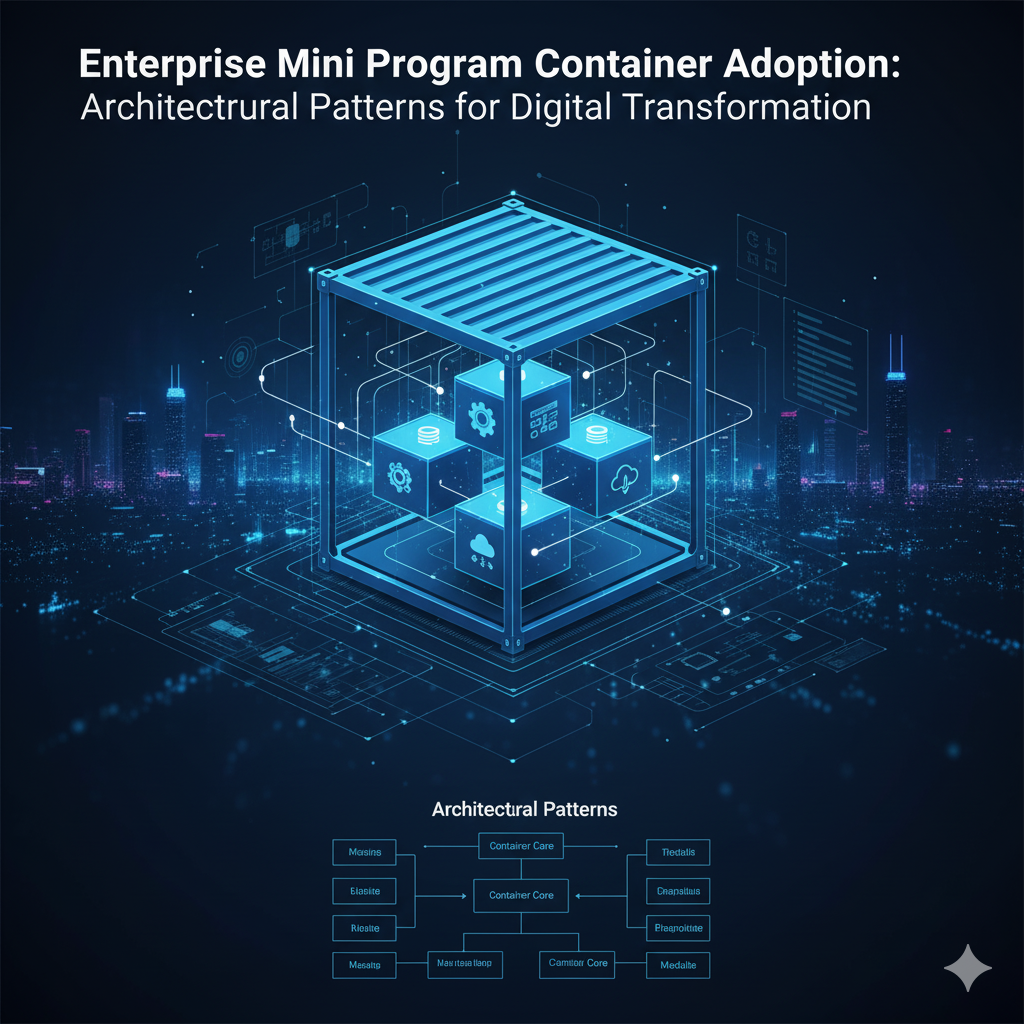
Enterprise organizations are increasingly adopting mini program container architectures to modernize legacy applications, consolidate digital services, and accelerate digital transformation initiatives. These containers—lightweight runtime environments that execute modular applications within host applications—enable incremental modernization rather than risky wholesale replacements, reducing technical debt while accelerating feature delivery by 300-400%. Unlike traditional application architectures that require complete rebuilds for platform updates or feature additions, container-based approaches allow enterprises to evolve their digital ecosystems through controlled, modular enhancements that minimize disruption while maximizing reuse.
Architectural Foundations and Technical Implementation
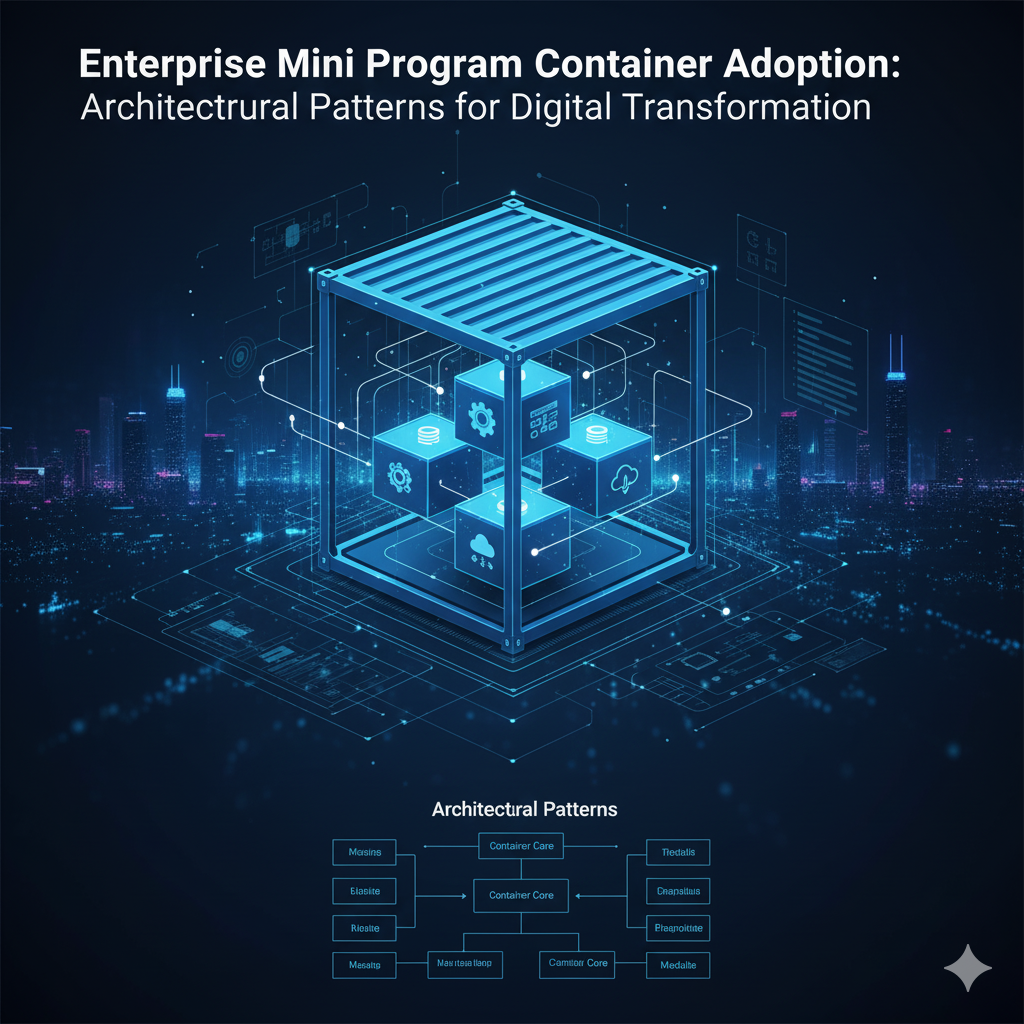
Mini program containers operate on principles similar to Docker containers for server applications but adapted for client-side execution within mobile and desktop applications. At their core, these containers provide isolated execution environments with controlled access to host application resources, standardized communication protocols between container and host, and security boundaries that prevent unauthorized data access or system modification.
The technical implementation typically involves several key components. A container runtime manages the lifecycle of mini programs—loading, executing, and terminating them as needed. Resource managers control access to device capabilities including camera, location services, storage, and network connectivity. Communication bridges facilitate data exchange between mini programs and host applications through defined interfaces. Security sandboxes enforce isolation between different mini programs and between mini programs and host applications, preventing malicious or buggy code from affecting system stability.
Standardization represents a critical success factor in enterprise adoption. While proprietary container implementations exist, organizations increasingly favor solutions supporting industry standards including W3C MiniApp specifications, which define consistent APIs for device capabilities, user interface components, and lifecycle management. This standardization reduces vendor lock-in while increasing developer productivity through familiar programming models and reusable skills.
Integration patterns vary based on enterprise requirements. Some organizations implement containers as embedded components within existing native applications, gradually replacing monolithic functionality with modular mini programs. Others deploy containers as standalone runtime environments that orchestrate multiple mini programs into cohesive user experiences. Hybrid approaches combine both patterns, using containers for customer-facing features while maintaining core business logic in traditional architectures.
The deployment infrastructure supporting these containers has matured significantly. Enterprise-grade solutions now provide version management, A/B testing capabilities, remote configuration, performance monitoring, and security auditing—features essential for large-scale deployment but historically challenging for client-side modular architectures. These management capabilities transform containers from technical curiosities into production-ready platforms supporting mission-critical applications.
Business Drivers and Strategic Rationale
Enterprise adoption of mini program containers responds to several interconnected business challenges that traditional application architectures struggle to address. Digital transformation initiatives frequently encounter resistance from legacy systems that are too critical to replace yet too rigid to evolve. Container architectures provide a middle path—preserving existing investments while enabling gradual modernization.
Speed of innovation represents a primary driver. In competitive markets, the ability to rapidly deploy new features directly influences customer acquisition, retention, and revenue growth. Traditional application development cycles—often spanning months from concept to deployment—fail to match market tempo. Container-based approaches enable feature deployment in days or weeks rather than months, with individual mini programs developed and tested independently before integration.
Cost reduction follows multiple dimensions. Development costs decrease through modularization and reuse—mini programs addressing common functions like user authentication, payment processing, or data visualization can be developed once and deployed across multiple applications. Maintenance costs decline through isolation—bugs or security issues in one mini program typically don't affect others, reducing testing and remediation scope. Operational costs improve through remote management capabilities that reduce dependency on app store updates for minor changes.
Risk management improves through controlled evolution. Rather than betting entire digital strategies on risky wholesale replacements, organizations can pilot new approaches through isolated mini programs, measuring impact before committing to broader implementation. This incremental approach reduces project failure rates while providing continuous value delivery rather than waiting for monolithic releases.
Organizational alignment benefits from the architectural separation. Business units can develop mini programs addressing their specific needs without requiring coordination with enterprise-wide release cycles. IT departments maintain architectural oversight and security enforcement while decentralizing innovation. This balanced approach prevents both bureaucratic stagnation and chaotic fragmentation.
Customer experience consistency emerges as containers mature. Early implementations sometimes suffered from inconsistent user interfaces or performance variations between mini programs and host applications. Current generation containers provide standardized UI components, consistent animation libraries, and performance optimization that make mini programs indistinguishable from native functionality to end users.
Implementation Patterns and Migration Strategies
Successful enterprise container adoption follows discernible patterns based on organizational context and technical legacy. Organizations with monolithic legacy applications typically begin with facade patterns—creating container wrappers around existing functionality that gradually replace internal components with modular mini programs. This approach maintains existing user interfaces while incrementally modernizing backend architecture.
Greenfield implementations often adopt platform patterns from inception—designing applications as container hosts from the beginning, with all functionality implemented as mini programs. This provides maximum flexibility but requires upfront investment in container infrastructure and developer training. The payoff comes in accelerated feature development and simplified maintenance as applications scale.
Hybrid approaches combine both strategies, using containers for new functionality while maintaining critical legacy components in traditional architectures. Clear interface definitions and migration roadmaps prevent architectural drift while enabling measured transition. This pragmatic approach balances innovation velocity with risk management, particularly for regulated industries or systems with complex compliance requirements.
Migration tooling has evolved to support these patterns. Automated analysis tools identify candidate functionality for containerization based on modularity, complexity, and change frequency. Code transformation utilities assist in converting existing components to mini program formats, though manual refinement is typically required for optimal results. Testing frameworks verify both functional correctness and performance characteristics across the transition.
Governance frameworks establish boundaries for container adoption. Rather than allowing uncontrolled proliferation, successful organizations define standards for mini program development, security requirements, performance thresholds, and lifecycle management. These standards evolve through experience rather than being imposed prematurely, balancing consistency with innovation freedom.
Integration architecture requires particular attention in container environments. While mini programs operate in isolated execution contexts, they typically need to exchange data with host applications, backend services, and other mini programs. Well-defined communication protocols—message passing, shared state management, event systems—prevent tight coupling while enabling necessary collaboration. API gateways and service meshes extend familiar enterprise integration patterns to container environments.
Industry Applications and Case Evidence
Real-world implementations demonstrate container architecture's transformative potential across sectors. Financial institutions have used containers to modernize legacy banking applications without disrupting critical transaction processing. By containerizing customer service features, marketing promotions, and ancillary services while maintaining core account management in proven systems, banks achieve innovation velocity without compromising stability. One European bank reduced feature deployment time from six months to two weeks while maintaining five-nines availability for core banking functions.
Retail organizations have deployed containers to unify disparate customer touchpoints—mobile applications, in-store kiosks, e-commerce websites, and partner platforms—through shared mini program ecosystems. Containerized product catalogs, shopping carts, and payment processors ensure consistent experiences across channels while enabling rapid experimentation with new features. A global retailer achieved 40% increase in cross-channel conversion rates while reducing development costs by 60% through container reuse.
Healthcare providers have implemented containers to integrate specialized clinical applications with electronic health record systems. Containerized modules for patient education, medication management, and remote monitoring maintain security boundaries required for protected health information while enabling innovation in care delivery. A hospital network reduced application development backlog by 75% while improving clinician satisfaction with digital tools.
Manufacturing companies have used containers to extend enterprise resource planning systems to factory floors through ruggedized tablets and wearable devices. Containerized modules for quality inspection, maintenance scheduling, and inventory management operate reliably in challenging industrial environments while maintaining integration with backend systems. An automotive manufacturer reduced production defects by 30% while cutting application development costs by 50%.
Government agencies have adopted containers to modernize citizen service delivery without replacing legacy mainframe systems. Containerized modules for permit applications, fee payments, and service requests provide modern user interfaces while leveraging existing business logic and data storage. A municipal government reduced service processing time by 60% while maintaining compliance with decades-old regulatory frameworks.
Performance Optimization and Scaling Considerations
Container performance has evolved from early limitations to enterprise-grade capabilities through several technical advancements. Just-in-time compilation, optimized rendering pipelines, and intelligent resource management enable mini program execution approaching native performance for most use cases. Memory footprint reductions—containers now typically require 3-5MB rather than earlier 10-20MB requirements—enable deployment on resource-constrained devices while supporting complex functionality.
Scaling strategies address both technical and organizational dimensions. Technically, container hosts implement intelligent loading and caching mechanisms that minimize startup latency while managing memory consumption across multiple active mini programs. Connection pooling, request batching, and predictive loading anticipate user needs based on behavior patterns. Organizationally, scaling requires developer education, design system consistency, and platform team expansion to support growing mini program portfolios.
Monitoring and observability have matured to match enterprise requirements. Container platforms now provide detailed performance metrics, error tracking, user behavior analytics, and business impact measurement. These capabilities transform containers from black-box components into transparent, manageable assets. Integration with existing application performance monitoring and business intelligence systems ensures continuity of operational oversight.
Security implementations have progressed beyond basic sandboxing to comprehensive protection suites. Container platforms now include runtime integrity verification, code signing validation, data encryption both at rest and in transit, and compliance with industry standards including ISO 27001, SOC 2, and regional data protection regulations. These features enable deployment in regulated environments previously inaccessible to modular client-side architectures.
Vendor ecosystem development supports enterprise adoption through specialized tools and services. Consulting firms offer container migration services, development shops create reusable mini program components, and managed service providers offer hosting and management solutions. This ecosystem reduces implementation risk while accelerating time-to-value for adopting organizations.
Getting Started with Enterprise Container Adoption
Organizations considering container adoption should begin with strategic assessment rather than technical experimentation. Evaluate which business challenges align with container strengths—rapid innovation, legacy modernization, multi-platform consistency, or organizational decentralization. These drivers should guide implementation approach rather than technical capabilities alone.
Conduct proof-of-concept projects that address real business needs with measurable outcomes. Select use cases with moderate complexity, clear success criteria, and stakeholder support. These projects build organizational confidence while developing internal expertise that can guide broader adoption. Measure both technical metrics (performance, stability, development velocity) and business outcomes (user adoption, operational efficiency, revenue impact).
Establish cross-functional container competency centers that include architecture, development, operations, security, and business representation. These centers develop standards, provide guidance, and maintain platform evolution without creating bureaucratic bottlenecks. Their balanced composition prevents technical myopia while ensuring business alignment.
Develop migration roadmaps that balance ambition with pragmatism. Rather than attempting comprehensive transformation, identify high-value, moderate-complexity candidates for initial containerization. Create clear criteria for subsequent waves based on lessons from early implementations. This iterative approach manages risk while demonstrating continuous progress.
Invest in developer experience from the beginning. Container adoption succeeds or fails based on developer adoption more than technical capabilities. Provide comprehensive documentation, intuitive tooling, responsive support, and recognition for successful implementations. Developer satisfaction directly influences platform adoption velocity and ultimate success.
Plan for platform evolution as both technology and organizational needs change. Container platforms, like all software, evolve through version updates, capability additions, and architectural refinements. Design mini programs with abstraction layers that accommodate platform changes without requiring complete rewrites. Maintain active participation in platform communities to influence roadmap direction while anticipating future capabilities.
In enterprise deployments using FinClip, organizations have achieved 4x faster digital service rollout and 60% reduction in citizen service processing time by implementing container architectures that enable incremental modernization of legacy systems. The app-in-app architecture supports running multiple mini apps inside one host application while maintaining security through device-side isolation similar to Docker containers. This approach has enabled government service platforms to modernize decades-old systems without service disruption while achieving 80% faster integration for new functionality.
Read the FinClip developer docs to get started. View docs