Elon Musk's X Money Enters Early Access, Testing Super App Ambitions in US Market
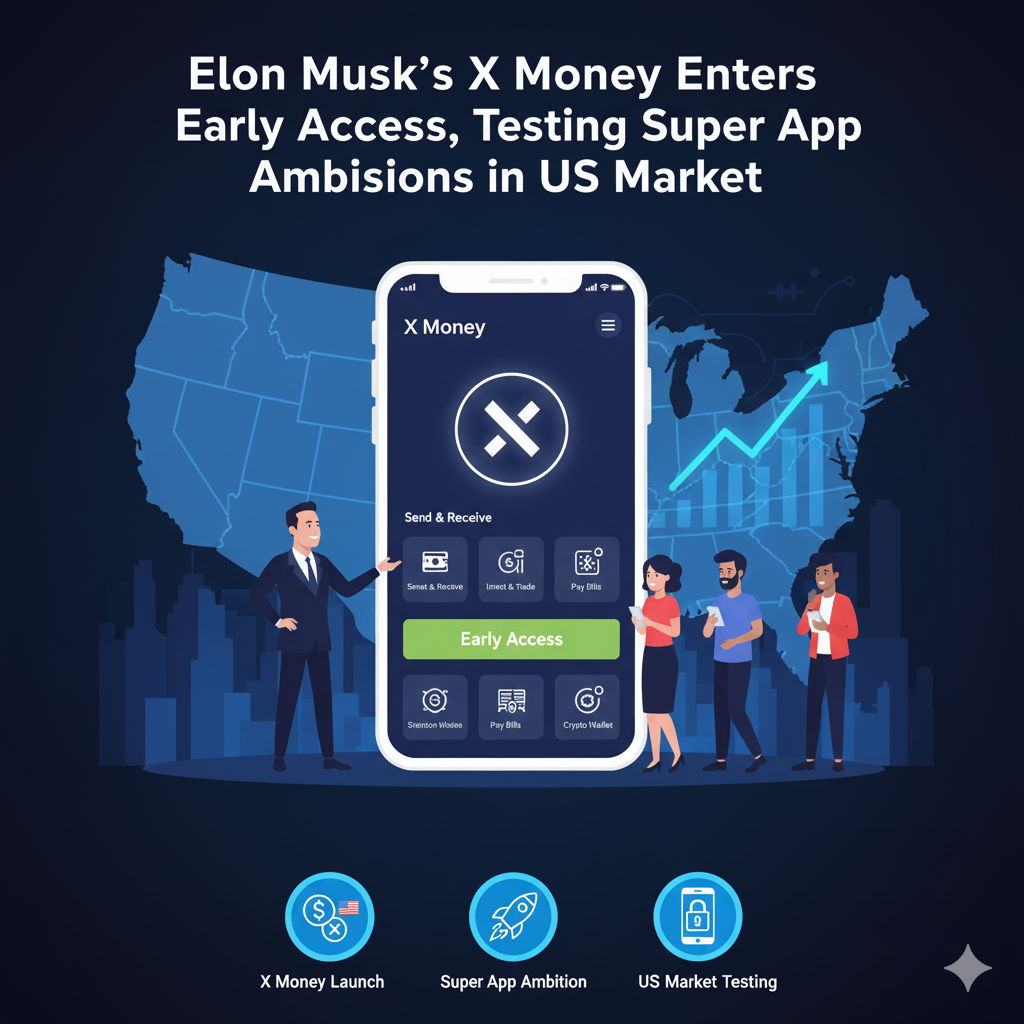
Elon Musk announced on March 10, 2026 that X Money will open for early public access next month, marking the most concrete step yet toward his long-standing "Everything App" vision. The payment product, which has been in development internally for years, enters its final sprint toward public availability with a 6% annualized yield, P2P instant transfers, and metal debit cards—positioning X not just as a social platform but as a financial gateway for its approximately 600 million monthly active users. This development matters because it represents the first serious Western attempt to replicate the WeChat Super App model at scale, testing whether American users will consolidate financial activities within a social media interface against established competitors like Apple Pay, Venmo, and PayPal.
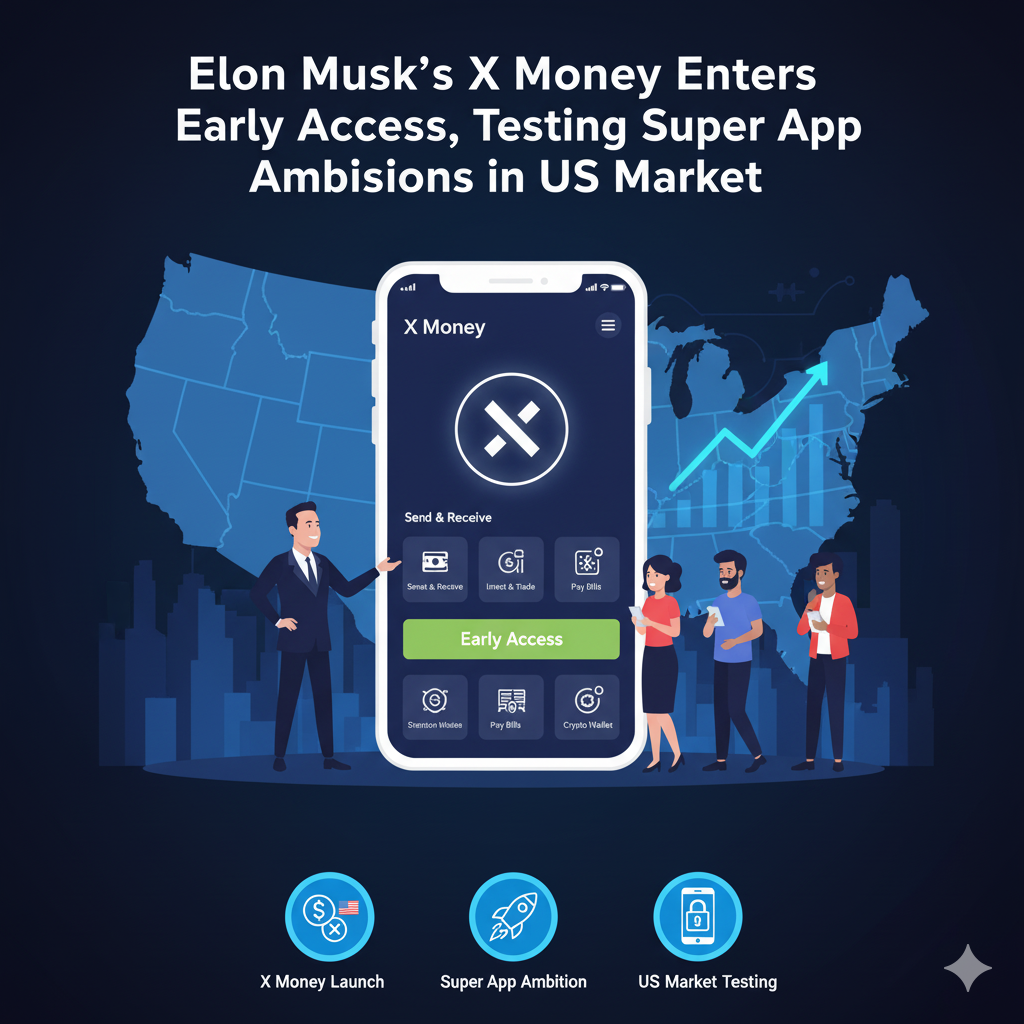
What Happened
On March 10, 2026, Elon Musk personally announced on the X platform that X Money will open for early public access next month. The short post triggered immediate market reactions: Dogecoin surged in response, media coverage intensified, and the US fintech industry began reassessing the competitive threat posed by the social media company. X Money represents Musk's return to his financial technology roots—in 1999, he founded X.com, which eventually evolved into PayPal after merging with Confinity. Now, decades later, he's pursuing the same vision through a different vehicle.
The product features disclosed include a 6% annualized yield (APY), P2P instant transfers, direct deposit functionality, metal debit cards engraved with usernames, cash back rewards, and zero foreign exchange fees. Transaction settlement relies on the Visa Direct network for near-instantaneous fund arrival, following a partnership announcement between X and Visa in January 2025 that made Visa the first official payment partner of X Money. User funds are held in custody by Cross River Bank, which has FDIC insurance qualifications with maximum coverage of $250,000.
The product has completed internal closed testing and entered an external Beta phase with distinct Musk-style marketing: X, through actor William Shatner, launched a charity auction where donations of $1,000 or more earned participants an invitation to X Money, releasing a total of 42 slots. Shatner himself was among the first to experience the product and shared screenshots on social media. Currently, X has obtained Money Transmitter Licenses in over 40 U.S. states and the District of Columbia, and is registered with the Financial Crimes Enforcement Network (FinCEN), though applications in a few markets like New York remain in progress.
Why This Matters for Digital Payments
X Money represents more than another payment option—it tests fundamental assumptions about consumer behavior, platform boundaries, and financial service distribution. The 6% annualized yield alone disrupts traditional US savings accounts that typically offer 0.5% or less, creating immediate economic incentive for adoption. More importantly, X Money attempts to leverage existing user attention and engagement patterns: approximately 600 million monthly active users already spend significant time on the platform daily. If payment functionality can be embedded within these existing usage scenarios, X transforms from an attention-grabbing platform into a true financial gateway.
The strategic implications extend beyond direct competition with Venmo or PayPal. X Money's success would validate the "attention-to-transaction" funnel that has powered WeChat's dominance in China, where social interactions naturally flow into commercial transactions within the same interface. For American users accustomed to dedicated financial apps, this represents a behavioral shift that previous attempts (like Facebook's Libra/Diem) failed to achieve. The product's design—featuring three main functional tabs: "Account," "Rewards," and "Activities"—resembles a lightweight digital bank account rather than a simple money transfer tool, signaling ambition beyond payments toward comprehensive financial services.
From a market structure perspective, X Money's partnership with Visa demonstrates pragmatic infrastructure strategy: X provides traffic and scenarios while Visa provides global clearing infrastructure, avoiding the high barriers of building a payment system from scratch. This combination could accelerate adoption but also creates dependency on traditional financial networks. The regulatory landscape presents both challenges and opportunities: while X has secured most necessary licenses, ongoing scrutiny around social media companies entering financial services—particularly regarding privacy, data use, and account security—will shape the product's evolution.
The Bigger Picture
Musk's frame of reference has always been WeChat, but the US market presents fundamentally different conditions. WeChat Pay's rapid rise benefited from China's unique ecosystem: an instant messaging tool used by almost everyone, a widely integrated merchant system, and the historical window before mobile payment was fully developed. X faces a mature US payment market where Apple Pay, Venmo, PayPal, and Zelle each hold established niches, and credit card networks are deeply embedded in daily consumption scenarios.
The psychological barrier may prove more significant than technical or regulatory hurdles. While X boasts approximately 600 million monthly active users, most people treat it as an information platform rather than a financial tool. Getting users to deposit money into a "social app" requires overcoming trust concerns, particularly given X's history of account bans and content moderation controversies. These concerns have already emerged at the regulatory level: in 2025, a New York State senator sent an open letter urging the State Department of Financial Services to exercise caution when approving licenses for X Money, citing privacy concerns and regulatory risks.
Cryptocurrency integration remains the elephant in the room. Musk's relationship with the crypto world is well-established—he has repeatedly expressed support for Dogecoin publicly and is a known Bitcoin supporter. When news of X Money broke, the crypto community immediately speculated about Dogecoin, XRP, or stablecoin integration. Currently, X Money will operate on a purely fiat currency system prioritizing the US dollar, with no official confirmation of crypto support. This ambiguity might be strategic: starting with fiat avoids additional regulatory complexities while preserving room for future crypto integration as a "card that can be played at the right time."
The distribution advantage cannot be overstated. X's reach of 600 million users requires no additional customer acquisition investment—an advantage that Venmo could only dream of when starting from scratch. Combined with a 6% annualized return during a period of declining interest rates, metal debit cards, and personalized name engraving, X Money possesses compelling user acquisition tools. However, the "super app" logic faces cultural limitations in the United States, where users are accustomed to using multiple dedicated apps rather than relying on a single super portal.
What Financial Platforms Should Do Now
Financial institutions and payment platforms should monitor X Money's early adoption metrics closely, particularly user engagement patterns and transaction volumes within the first 90 days. The 6% yield will attract initial users, but retention will depend on whether X can create genuine financial utility beyond promotional rates. Payment processors should evaluate their partnership strategies with social platforms, recognizing that distribution advantages may outweigh technical sophistication in user acquisition.
For enterprises considering platform strategies, the emergence of viable Super App contenders validates container-based approaches that enable incremental feature deployment. In enterprise deployments using FinClip, organizations have achieved 80% faster integration and 60% cost reduction by adopting lightweight SDKs that integrate into existing applications in minutes rather than rebuilding entire platforms. This approach allows companies to test new financial services within their existing user bases without the risk of full platform migration.
Developers building financial services should prioritize API-first architectures that can deploy across multiple platforms simultaneously. The container model—where a 3MB SDK enables mini-program functionality within host applications—has proven particularly effective for financial institutions needing to maintain security standards while accelerating feature delivery. This approach reduces development cycles from months to weeks while maintaining the isolation and compliance requirements of regulated industries.
FinClip's 3MB SDK integrates into existing apps in minutes. Start for free