DraftKings Super App Strategy: How Betting Platforms Are Becoming Digital Entertainment Hubs
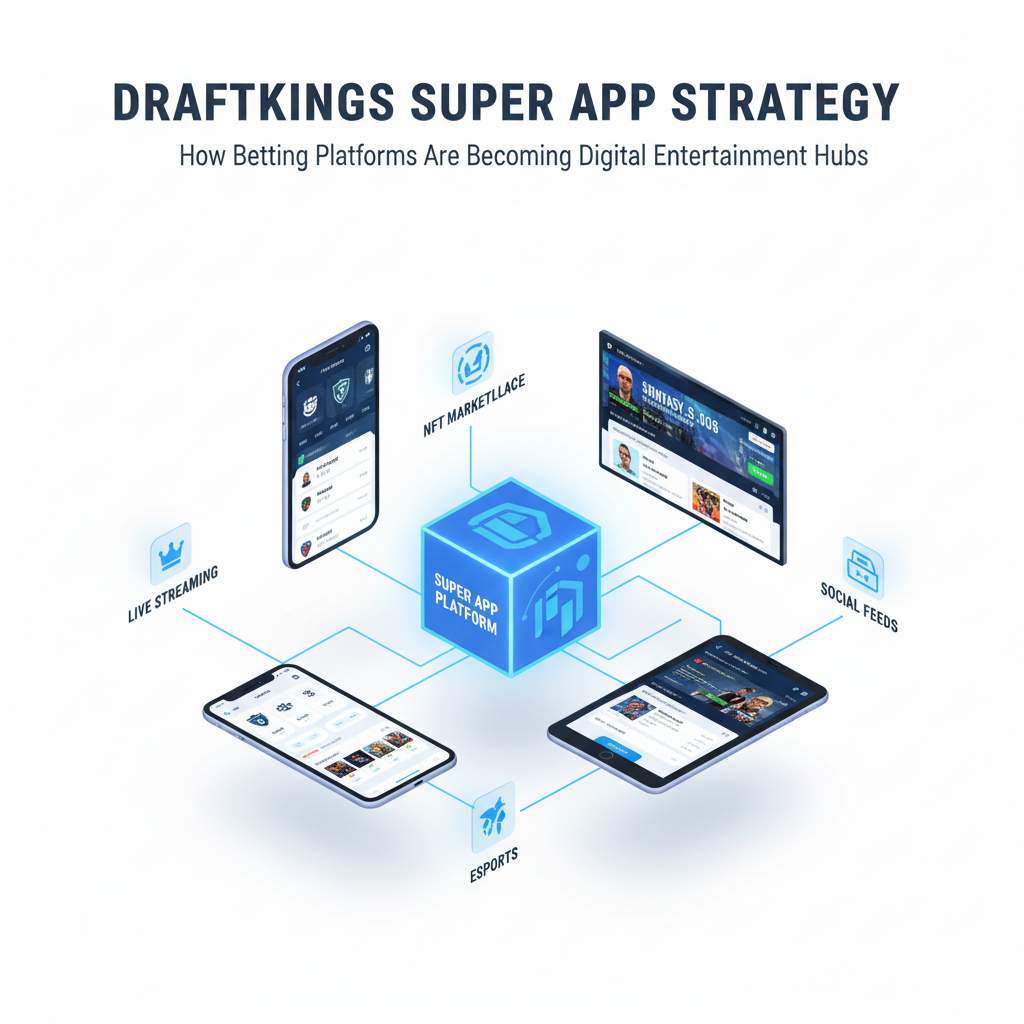
DraftKings confirmed plans to integrate prediction markets and lottery products into its existing sportsbook and online casino platform, expanding its "Super App" strategy beyond traditional sports betting. This move positions DraftKings as a broader digital wagering hub, mirroring global operators' approaches to ecosystem control. The integration aims to increase cross-sell opportunities and user engagement during off-peak sports periods, while diversifying revenue streams in a competitive market.
What Happened
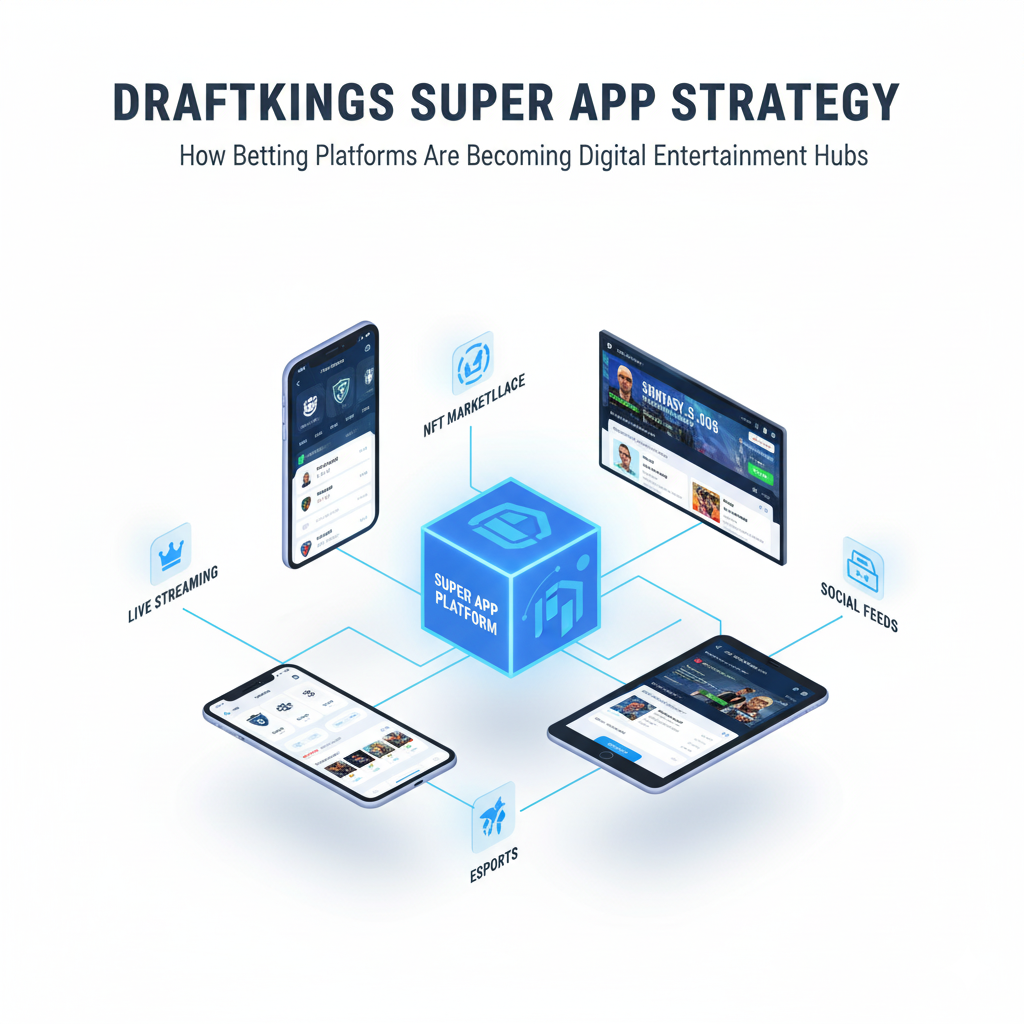
On March 3, 2026, DraftKings announced the expansion of its Super App strategy during its 2026 Virtual Investor Day. The company revealed plans to layer prediction-style event markets and lottery ticket access into its existing platform, which already combines online sports betting, iGaming in regulated states, daily fantasy sports, and retail sportsbook integration. Rather than creating standalone applications, DraftKings is centralizing all offerings under one unified user experience.
The strategic expansion includes prediction-style contracts within the app, lottery integration where legal, and unified wallet functionality. This approach follows a broader product retention strategy where the company aims to increase lifetime value per customer and reduce seasonality exposure. Management emphasized that the move signals clear intent to evolve beyond traditional sports betting and iGaming, targeting a $55-80 billion revenue range by 2030.
According to industry reports, DraftKings generated $1.99 billion in revenue during Q4 2025, a 43% year-over-year increase, with full-year 2025 revenue surpassing $6 billion. The Super App integration is expected to be phased throughout 2026, with the first phase targeting March Madness timing for maximum impact.
Why This Matters for Digital Platforms
The DraftKings Super App expansion represents a significant shift in how digital platforms approach customer retention and revenue diversification. By integrating multiple verticals under one interface, companies can capture more user attention and increase session frequency. This model demonstrates that modern digital success depends on ecosystem depth rather than standalone feature excellence.
For the gaming industry specifically, this move addresses several critical challenges. Prediction markets have emerged as both competitive threat and opportunity, with platforms like Kalshi operating under federal oversight through the Commodity Futures Trading Commission. DraftKings' interest in prediction-style products indicates major operators want exposure to this category without ceding ground to federally regulated competitors. The strategic value lies in diversifying beyond sports seasonality and capturing user engagement during off-peak periods.
Lottery integration represents another underdeveloped digital segment. Many states still restrict online lottery sales, but where permitted, digital lottery has proven to be a consistent revenue driver. By incorporating lottery into its Super App, DraftKings targets casual players who may not engage with traditional sports betting, driving incremental wallet deposits and cross-selling opportunities. This approach reflects broader industry trends where platforms seek to become comprehensive entertainment destinations rather than single-purpose applications.
The Bigger Picture
The Super App model gaining traction in the U.S. market signals a platform consolidation phase where single-product applications evolve into multi-vertical entertainment ecosystems. This mirrors strategies employed by major global operators like Flutter Entertainment, which have expanded product portfolios internationally to deepen ecosystem control. The direction suggests that standalone applications face increasing pressure to either expand their offerings or risk being absorbed into larger platforms.
From a technical perspective, this consolidation trend creates both challenges and opportunities for developers. Building and maintaining multiple integrated services requires sophisticated architecture and seamless user experience design. However, it also opens new possibilities for cross-service data utilization and personalized user experiences. The success of such integrated platforms depends on maintaining performance standards while adding complexity, a balance that requires careful engineering and user experience consideration.
Regulatory landscape remains a critical factor determining how quickly companies can implement these strategies. State-by-state compliance requirements, particularly given ongoing legal debates over event contracts, will shape the rollout pace. However, the overarching direction is clear: digital platforms are moving toward comprehensive ecosystem models where user retention and lifetime value optimization take precedence over individual feature excellence.
What Gaming Companies Should Do Now
Gaming companies evaluating their digital strategy should consider the ecosystem approach demonstrated by DraftKings. The first step involves assessing current platform capabilities and identifying integration opportunities across existing products. Companies with multiple digital offerings should explore unified account systems and wallet functionality to reduce user friction and increase cross-sell potential.
Technical teams should evaluate architecture requirements for supporting multiple integrated services while maintaining performance standards. This includes considering container-based approaches that allow modular service deployment and updates. In enterprise deployments using FinClip, development teams have achieved 80% faster integration and 60% cost reduction by implementing lightweight SDKs that enable rapid feature deployment without app store approvals.
The container approach provides device-side isolation similar to Docker, ensuring security while allowing hot updates that bypass traditional app store review cycles. This enables A/B testing and canary release strategies that optimize user experience based on real-time data. Companies should prioritize technical infrastructure that supports rapid iteration and cross-platform consistency.
FinClip's 3MB SDK integrates into existing applications in minutes. Start for free