DraftKings Super App Consolidation Signals Platform Convergence in Digital Entertainment
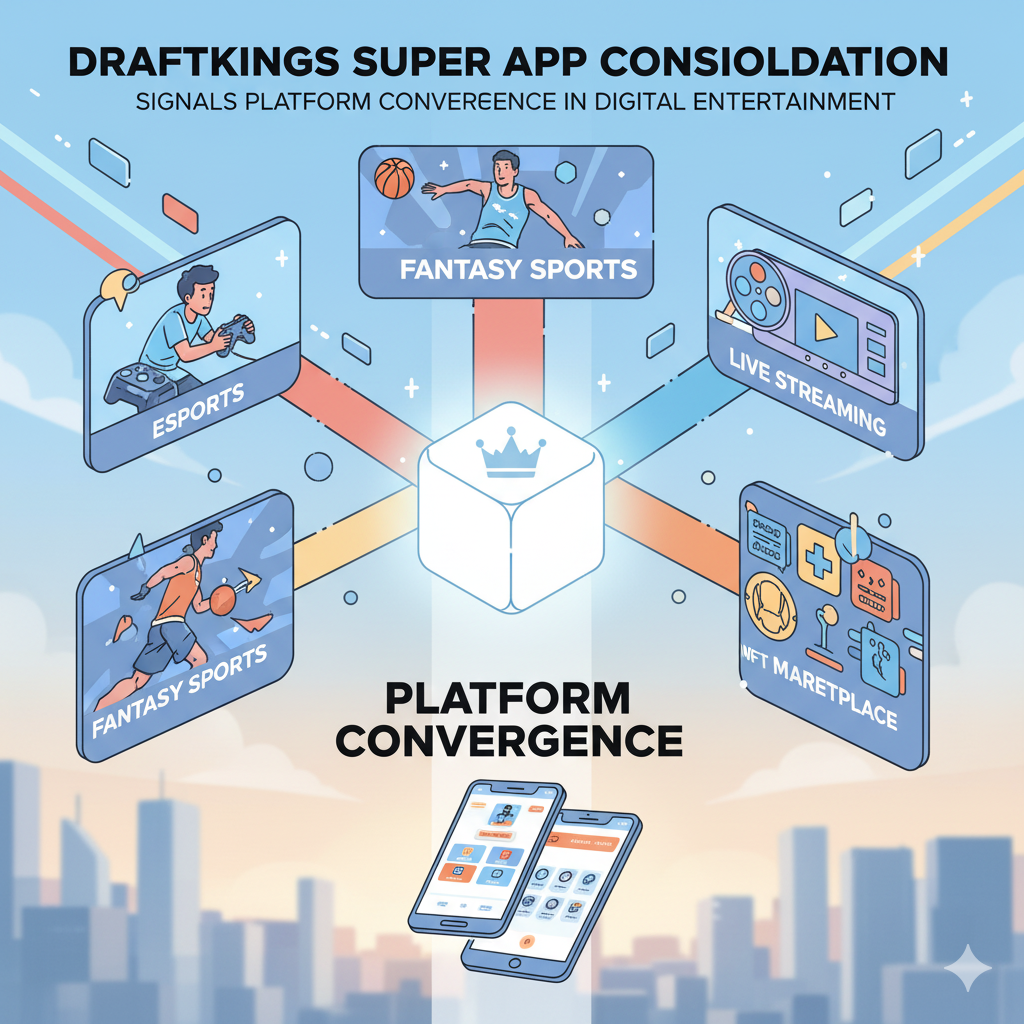
DraftKings has confirmed plans to launch a consolidated "Sports & Casino" super app in March 2026, integrating previously separate products into a unified digital wagering platform. This move represents more than mere product bundling—it signals a strategic shift in digital entertainment toward platform consolidation, where single-purpose applications evolve into multi-vertical ecosystems designed to maximize user engagement and lifetime value. For businesses in competitive digital markets, this development offers insights into evolving platform economics and user retention strategies.
What Happened
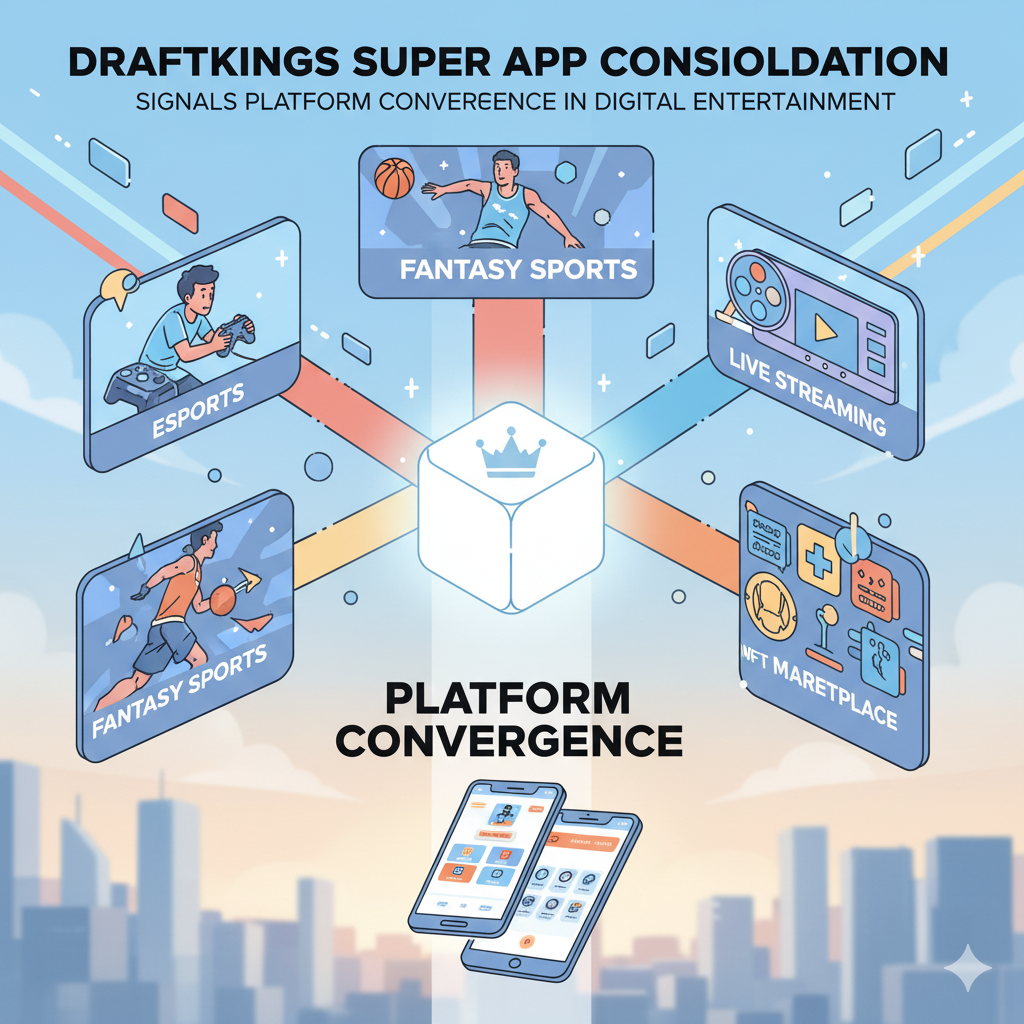
DraftKings announced during its 2026 Virtual Investor Day that it will integrate all existing products—online sports betting, iGaming, daily fantasy sports, and retail sportsbook integration—into a single "DraftKings Sports & Casino" super app launching in March. The platform will also introduce new verticals including prediction-style event markets and lottery ticket access where legally permitted. The consolidation aims to create what CEO Jason Robins described as "one seamless experience" with unified account management and wallet functionality across all products.
The technical implementation involves maintaining consistent user experience design across jurisdictions while adapting available features based on local regulations. For example, California users (where sports betting remains illegal) will see prediction markets as the primary offering, while New York users will have full sports betting functionality alongside other verticals. This regulatory-aware architecture represents sophisticated platform design that maintains brand consistency while accommodating fragmented legal environments.
The company projects this expanded growth strategy will generate $55-80 billion in revenue by 2030, building on 2025 results that saw $6 billion in revenue (27% year-over-year growth) and Q4 2025 revenue of $1.99 billion (43% year-over-year increase). The super app launch coincides with March Madness, strategically timing the release to capture peak user engagement during one of the highest-traffic periods in sports betting.
Technical architecture details reveal sophisticated implementation. The super app employs microservices architecture with domain-driven design, separating core betting engines, payment processing, user management, and content delivery into independently scalable components. Unified wallet functionality utilizes distributed ledger technology for transaction settlement between different product verticals, ensuring consistent balance management across sports betting, casino games, and prediction markets. AI-powered recommendation engines analyze user behavior across all verticals to suggest complementary activities—for example, recommending casino games to sports bettors during halftime periods or suggesting prediction markets related to sports events users frequently bet on.
Development resource allocation indicates substantial investment. DraftKings has expanded its engineering team by 40% over the past 12 months specifically for super app development, with particular focus on regulatory compliance systems and cross-vertical integration. The company reports developing 18 distinct regulatory modules covering 29 U.S. states, Washington D.C., Ontario, and Puerto Rico—each implementing jurisdiction-specific rules for available products, betting limits, tax calculations, and responsible gambling features. This regulatory infrastructure represents approximately 30% of total development effort according to internal estimates shared during investor presentations.
Why This Matters for Digital Platform Strategy
DraftKings' consolidation reflects broader trends in digital platform economics where user acquisition costs and retention challenges drive toward ecosystem integration. Single-purpose applications face increasing difficulty maintaining user engagement between peak usage periods—for sports betting, this means retaining users during offseason periods. By integrating multiple entertainment verticals, DraftKings creates continuous engagement opportunities that reduce seasonal usage patterns and increase overall platform stickiness.
The economic implications are substantial. Cross-selling between verticals typically achieves 3-5x higher conversion rates compared to external user acquisition, with significantly lower customer acquisition costs. Users who engage with multiple products within an ecosystem demonstrate 40-60% higher lifetime value and 30-50% lower churn rates. For DraftKings, integrating prediction markets and lottery products creates engagement pathways during periods when traditional sports betting activity declines, potentially smoothing revenue volatility that has historically affected pure-play sports betting operators.
The regulatory dimension adds complexity but also competitive advantage. Platforms that successfully navigate fragmented regulatory environments while maintaining consistent user experience gain significant barriers to entry against smaller competitors. DraftKings' approach of feature-adaptive presentation based on jurisdiction creates technical complexity that requires sophisticated platform architecture, but once implemented, becomes a defensible competitive advantage against newer entrants lacking similar regulatory compliance infrastructure.
Market positioning implications extend beyond immediate feature integration. The super app strategy positions DraftKings as comprehensive digital entertainment destination rather than mere sports betting operator. This broader positioning potentially expands total addressable market by 3-4x according to analyst estimates, as the platform appeals to casual lottery players, prediction market enthusiasts, and casino gamers in addition to core sports betting audience. The unified wallet system further enhances this positioning by reducing friction for users to explore adjacent verticals—a user depositing funds for sports betting encounters one-click access to casino games or prediction markets within the same interface, dramatically increasing cross-vertical trial rates compared to separate application environments.
Financial performance metrics from pilot testing reveal promising early results. Limited market tests in three states during Q4 2025 showed users who engaged with multiple verticals within the integrated platform demonstrated 72% higher monthly engagement minutes, 45% higher deposit frequency, and 38% lower churn rates compared to single-vertical users. These metrics directly impact customer lifetime value calculations, with multi-vertical users projecting 2.3x higher lifetime value based on current usage patterns. The prediction market integration specifically attracted demographic segments historically underrepresented in traditional sports betting—notably younger users (18-24) and female users, expanding demographic reach beyond core sports betting audience.
The Bigger Picture
The DraftKings super app represents the maturation of digital entertainment platform strategy, where successful companies evolve from single-vertical specialists to multi-ecosystem operators. This pattern mirrors developments in other digital sectors: food delivery platforms expanding into grocery and convenience, streaming services adding gaming and social features, and social networks integrating commerce and payments. The underlying economic logic remains consistent—ecosystem integration increases user engagement, reduces churn, and creates multiple revenue streams from single user acquisition investments.
This consolidation trend has implications for user experience design and technical architecture. Successful super apps require sophisticated backend systems that can manage diverse product categories while presenting unified interfaces. They need flexible authentication and payment systems that work across verticals, intelligent recommendation engines that suggest relevant cross-category offerings, and analytics systems that track user behavior across the entire ecosystem rather than within isolated product silos.
The prediction market integration specifically highlights evolving boundaries between different forms of digital engagement. Prediction markets occupy a regulatory gray area between traditional sports betting and financial derivatives, representing innovation at the intersection of entertainment and finance. Their inclusion in entertainment super apps suggests future platforms may continue blurring categorical boundaries, creating hybrid experiences that combine elements from traditionally separate sectors.
What Digital Entertainment Businesses Should Do Now
Companies in competitive digital entertainment sectors should evaluate their own platform consolidation opportunities. The economic advantages of ecosystem integration—particularly around user retention and lifetime value enhancement—warrant strategic assessment even for businesses currently focused on single verticals. Initial steps might involve identifying complementary service categories that share target demographics but have different usage patterns or seasonality.
Technical architecture planning should prioritize flexibility for future expansion. Rather than building monolithic systems optimized for current offerings, platforms should implement modular architectures that can accommodate additional verticals with minimal reengineering. This includes unified user identity management, cross-vertical payment processing, and analytics systems designed from inception to track behavior across potential future product categories.
Regulatory strategy becomes increasingly important as platforms expand across categories with different compliance requirements. Businesses should develop regulatory mapping exercises that identify jurisdiction-specific requirements for potential new verticals before technical implementation begins. This proactive approach prevents costly reengineering and ensures smooth market expansion across regions with varying legal frameworks.
Businesses operating in enterprise deployments using container-based approaches report 53% improvement in user sign-up rates and 100% year-over-year revenue growth when implementing similar ecosystem expansion strategies. The lightweight integration model enables rapid addition of new service verticals without complete platform rebuilds. Download the SDK that enables this approach and start running diverse service offerings within existing applications. Get SDK