DraftKings Expands Super App with Prediction Markets and Lottery Integration
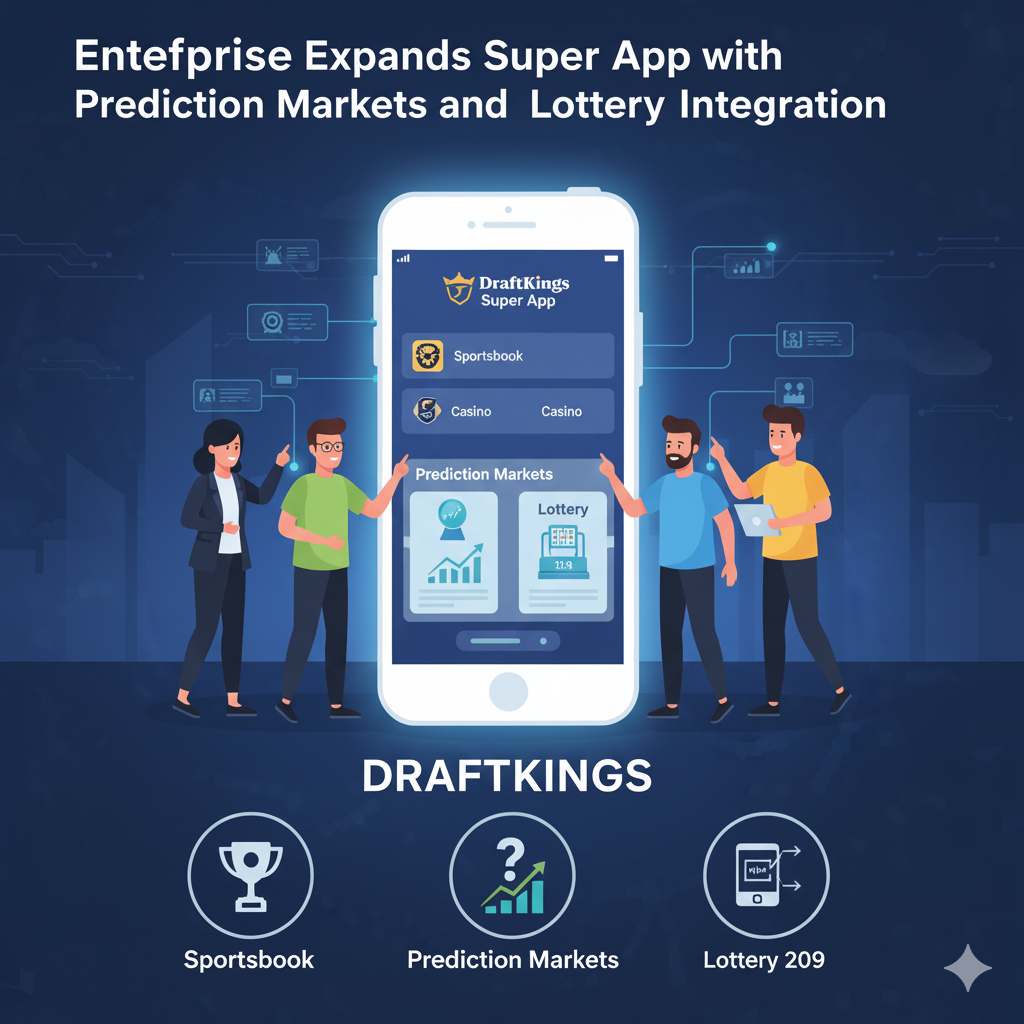
DraftKings has confirmed plans to integrate prediction markets and lottery products into its consolidated "Sports & Casino" Super App launching in March 2026. The expansion represents more than feature addition—it signals DraftKings' strategic evolution from sports betting operator to comprehensive digital wagering platform. By layering prediction-style event markets and lottery ticket access onto existing sportsbook, casino, and daily fantasy offerings, DraftKings aims to increase user engagement, cross-sell opportunities, and platform retention. This move exemplifies how Super Apps in regulated industries expand through strategic product diversification while navigating complex compliance requirements across multiple jurisdictions.
What Happened
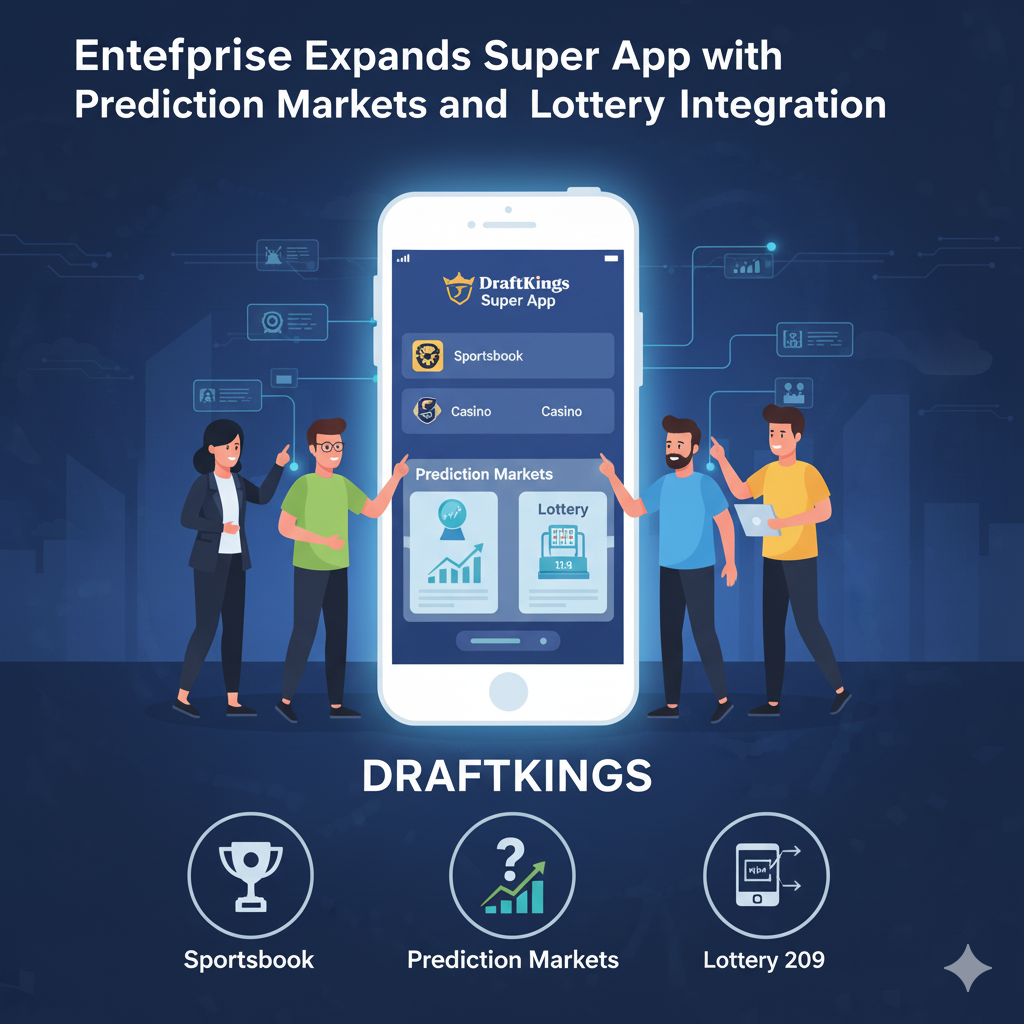
DraftKings announced during its 2026 Virtual Investor Day that prediction markets and lottery products will join the company's Super App ecosystem alongside existing sports betting, iGaming, and daily fantasy sports offerings. The "DraftKings Sports & Casino" Super App, scheduled for March 2026 launch, consolidates previously separate products into a unified digital wagering platform with shared wallet functionality and integrated user experience.
Prediction markets represent a new product category for DraftKings, moving beyond traditional sports betting into event-based contracts that function similarly to financial derivatives. These markets allow users to wager on outcomes like election results, economic indicators, or entertainment awards alongside traditional sports events. The category has gained traction through platforms like Kalshi, which operates under Commodity Futures Trading Commission oversight.
Lottery integration involves providing digital access to state lottery products where legally permitted. Many states still restrict online lottery sales, but digital lottery has proven revenue potential in jurisdictions allowing online access. DraftKings' strategy involves capturing casual players who might not engage with traditional sports betting but participate in lottery games.
The company emphasized this expansion represents platform evolution rather than standalone application development. DraftKings is centralizing offerings under one user experience rather than maintaining separate applications for different product categories. This approach mirrors Super App strategies employed by global operators like Flutter Entertainment while addressing specific U.S. market characteristics.
Why This Matters for Digital Entertainment Platforms
DraftKings' expansion illustrates how Super Apps in regulated industries navigate product diversification within compliance constraints. Prediction markets operate under different regulatory frameworks than traditional sports betting, requiring additional legal considerations and compliance infrastructure. Lottery integration involves state-by-state approval processes and partnerships with existing lottery operators. Successfully managing these complexities demonstrates platform maturity that could translate to other regulated verticals.
The move signals platform consolidation in digital entertainment, where single-purpose applications evolve into multi-vertical ecosystems. DraftKings' strategy suggests the U.S. market is entering a phase where user acquisition costs and retention challenges make diversified platforms more economically viable than specialized applications. This trend mirrors broader Super App adoption patterns observed in Asian markets, now emerging in Western contexts with industry-specific adaptations.
From a technical perspective, integrating prediction markets and lottery products requires robust platform architecture capable of handling diverse transaction types, compliance requirements, and user interface adaptations. DraftKings' existing infrastructure for sports betting and iGaming provides foundation, but prediction markets introduce unique settlement mechanisms and lottery integration demands partnership interfaces. These technical challenges resemble those faced by Super App platforms integrating third-party services through mini-program architectures.
User experience consistency across diverse product categories presents both challenge and opportunity. Prediction markets involve different risk profiles and engagement patterns than sports betting, while lottery products appeal to distinct user segments. DraftKings must maintain cohesive experience while accommodating these differences—a challenge familiar to Super App designers balancing multiple service categories within unified interfaces.
The Bigger Picture
DraftKings' expansion reflects broader convergence between entertainment, gaming, and financialized prediction markets. The lines between derivatives trading and event wagering blur as platforms like Kalshi gain regulatory approval and user adoption. DraftKings' entry into this space suggests major operators view prediction markets as complementary to traditional betting rather than competitive threat.
Lottery integration represents digital transformation of established government revenue streams. State lotteries have historically relied on physical retail distribution, but digital access expands reach and convenience. DraftKings' platform could accelerate lottery digitization while creating cross-selling opportunities between lottery players and other wagering products.
The regulatory landscape for these expansions remains complex. Prediction markets face ongoing legal debates about whether event contracts constitute gambling or financial instruments. Lottery integration requires state-level approvals and potentially revenue-sharing agreements. DraftKings' ability to navigate these regulations while expanding its Super App could establish precedents for other operators considering similar diversification.
From a market structure perspective, DraftKings' move signals maturation of U.S. digital wagering beyond initial legalization phases. The industry appears shifting from land grab mentality focused on market entry toward platform optimization and user lifetime value maximization. This evolution mirrors patterns observed in other digital industries where consolidation follows initial fragmentation.
What Platform Operators Should Do Now
Entertainment and gaming platform operators should evaluate how DraftKings' expansion strategy applies to their verticals. Consider product diversification opportunities that leverage existing user bases while addressing regulatory considerations. Prediction markets and lottery integration represent specific examples, but other verticals might identify different adjacency opportunities based on user behavior and regulatory frameworks.
Technical teams should assess platform architecture readiness for multi-vertical expansion. DraftKings' approach demonstrates importance of flexible infrastructure capable of integrating diverse product categories with varying compliance requirements. Mini-program architectures offer one model for this flexibility, allowing third-party services to integrate within containerized environments while maintaining platform consistency.
User experience designers must balance cohesion and specialization when expanding platform scope. DraftKings faces challenge of presenting prediction markets (with derivative-like characteristics), lottery products (simple number games), and traditional sports betting within consistent interface. Similar challenges arise in Super Apps combining financial services, retail, and entertainment—each vertical has unique interaction patterns that must adapt to shared design language.
Compliance and legal teams become increasingly critical as platforms expand across regulated verticals. DraftKings' expansion involves multiple regulatory jurisdictions and product-specific requirements. Successful platforms in regulated industries invest in compliance infrastructure that scales with product diversification, ensuring regulatory adherence doesn't become bottleneck to innovation.
For organizations building digital platforms in regulated industries, containerized architectures provide flexibility to integrate diverse services while maintaining compliance boundaries. In enterprise deployments using FinClip's security sandbox, financial institutions have achieved 70% faster service rollout and 50% lower development maintenance costs by isolating third-party services within controlled environments while maintaining platform integration.
FinClip's security sandbox provides device-side isolation similar to Docker containers, ensuring mini-program content operates within controlled environments regardless of source or functionality. This isolation enables platforms to integrate diverse services while maintaining security and compliance standards. Explore FinClip ChatKit—open-source AI chat middleware. GitHub