Digital Wallet Super App Development: Building Financial Ecosystems
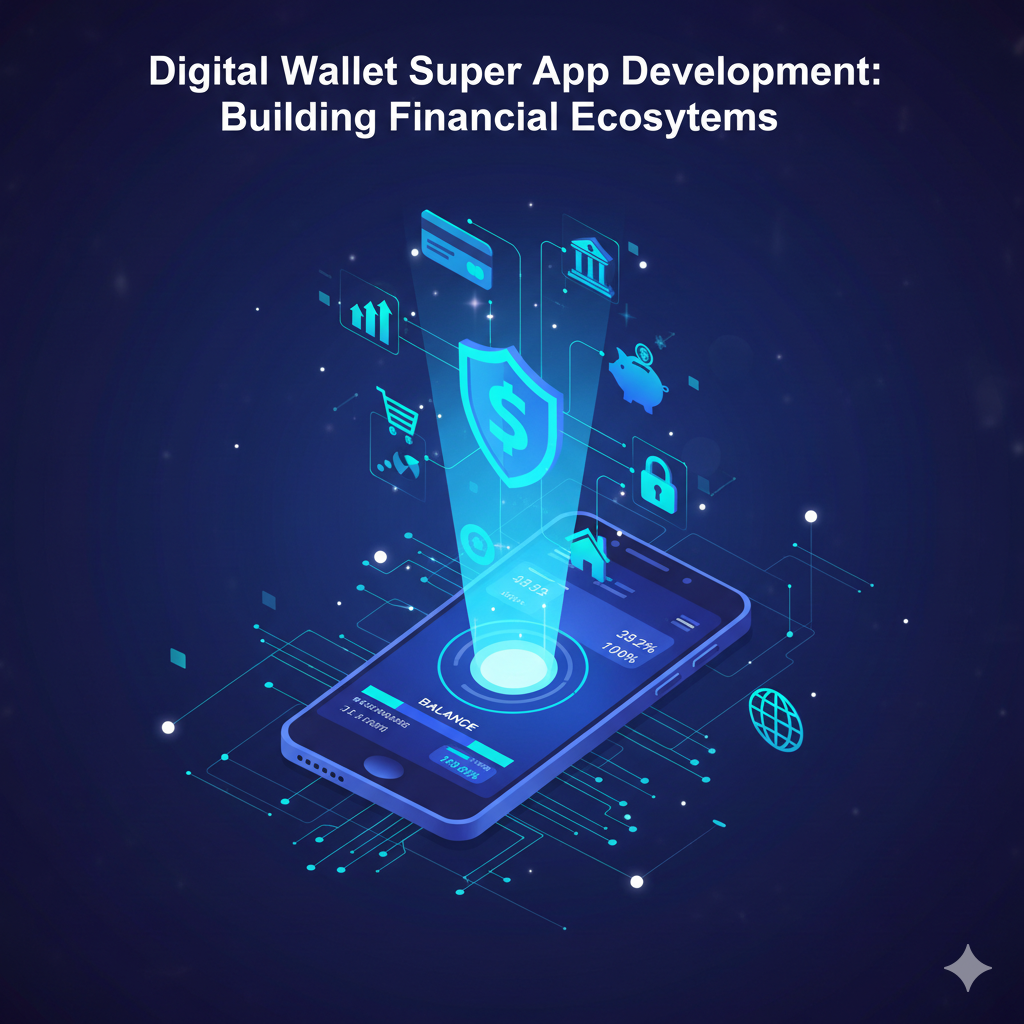
Digital wallet super apps represent the convergence of payment functionality, financial services, and lifestyle applications within unified platforms. These ecosystems combine core payment processing with value-added services like lending, insurance, investment, and merchant tools, creating comprehensive financial hubs that serve diverse user needs. The mini-program architecture provides an ideal foundation for this convergence, enabling rapid service deployment, secure transaction processing, and seamless user experiences across multiple financial domains. Understanding the technical and business considerations for wallet super app development enables organizations to build platforms that drive user engagement, increase transaction volumes, and create sustainable competitive advantages.
Architecture Foundations
Digital wallet super apps require architectures that balance security, performance, and extensibility. The containerized mini-program model addresses these requirements by providing sandboxed execution environments for individual financial services while maintaining centralized control over payment processing and user authentication. Begin by designing a core payment engine that handles transaction processing, settlement, and reconciliation across different payment methods—card payments, bank transfers, mobile wallets, and cryptocurrency.
Implement a modular service architecture where individual financial functions operate as independent mini-programs within the container environment. This approach allows services to evolve independently while maintaining consistent user authentication, payment processing, and compliance monitoring. In digital wallet deployments using containerized architectures, organizations have achieved 2.5x increases in in-app service adoption and 45% improvements in user retention rates compared to standalone financial applications.
Security architecture deserves particular attention given the sensitive nature of financial transactions. Implement multi-layered security controls including device fingerprinting, behavioral biometrics, transaction pattern analysis, and real-time fraud detection. The container model provides natural isolation between different financial services, reducing the attack surface compared to monolithic applications. However, additional security measures are required for inter-service communications and data sharing within the wallet ecosystem.
Performance optimization for financial transactions requires specialized approaches. Payment processing involves multiple synchronous and asynchronous operations with strict latency requirements. Implement distributed transaction processing that maintains consistency across different financial systems while providing responsive user feedback. Use message queues for asynchronous operations like settlement and reconciliation, ensuring reliable processing even during peak transaction volumes.
Payment Integration Strategies
Modern digital wallets must support diverse payment methods to serve different user segments and geographic markets. Implement a payment gateway abstraction layer that normalizes integration with different payment processors, card networks, and alternative payment methods. This approach simplifies adding new payment options as market needs evolve while maintaining consistent transaction monitoring and reporting.
Real-time payment processing represents a critical capability for competitive wallet applications. Implement immediate payment confirmation using webhook notifications, push notifications, and in-app status updates. For peer-to-peer transfers, consider implementing instant settlement using blockchain-based systems or real-time payment networks where available. In enterprise deployments using real-time payment architectures, organizations have reported 53% improvement in user sign-up rates and 100% year-over-year revenue growth.
Cross-border payment functionality expands wallet utility for international users and businesses. Implement currency conversion, international transfer processing, and compliance with different regulatory requirements across target markets. Consider partnerships with international payment processors or banking institutions to simplify cross-border transaction processing while maintaining competitive exchange rates and fees.
Merchant payment integration enables wallet ecosystems to serve business users alongside consumers. Implement point-of-sale integration, invoicing tools, subscription billing, and business analytics within merchant-focused mini-programs. Provide APIs that allow merchants to integrate wallet payment processing into their existing systems, creating seamless checkout experiences across web, mobile, and physical retail environments.
Financial Service Expansion
Beyond core payment functionality, digital wallet super apps can incorporate diverse financial services that increase user engagement and revenue opportunities. Lending services represent a natural extension, providing users with access to credit based on their transaction history and wallet activity. Implement risk assessment algorithms that analyze user behavior within the wallet ecosystem to determine creditworthiness and loan terms.
Investment and wealth management services transform wallets from transaction tools into comprehensive financial management platforms. Implement portfolio tracking, automated investment recommendations, and integration with brokerage accounts or cryptocurrency exchanges. Consider implementing robo-advisor functionality that provides personalized investment advice based on user financial goals and risk tolerance.
Insurance products add another dimension to wallet ecosystems. Implement micro-insurance offerings for specific transactions (travel insurance for flight bookings, device protection for electronics purchases) alongside traditional insurance products. Use transaction data to personalize insurance offerings and streamline the application process through pre-filled forms and automated underwriting.
Personal financial management (PFM) tools enhance wallet value by helping users understand and optimize their financial behavior. Implement spending categorization, budget tracking, savings goals, and financial health scoring. Use machine learning to identify spending patterns and provide actionable recommendations for improving financial outcomes.
User Experience Considerations
Digital wallet interfaces must balance functionality with simplicity, particularly for users who may be less comfortable with financial technology. Implement progressive disclosure that reveals advanced features as users become more familiar with the application. Provide clear visual feedback for transaction status, account balances, and security indicators to build user trust and confidence.
Accessibility features ensure wallet services reach diverse user populations. Implement screen reader compatibility, high-contrast modes, larger text options, and simplified navigation for users with different abilities. Consider regional adaptations for interfaces, supporting different languages, cultural conventions, and regulatory requirements across target markets.
Onboarding optimization significantly impacts user acquisition and retention. Implement streamlined registration processes that minimize required information while maintaining compliance with know-your-customer (KYC) regulations. Consider progressive KYC approaches that collect additional information as users access more advanced financial services, reducing initial friction while maintaining regulatory compliance.
Security communication builds user trust while maintaining application usability. Implement clear indicators for security status, authentication methods, and transaction verification. Use biometric authentication where available, providing fallback options for users who cannot or choose not to use these methods. Implement transaction confirmation workflows that balance security requirements with user convenience.
Platform Strategy and Ecosystem Development
Successful digital wallet super apps evolve into platforms that support third-party developers and service providers. Implement developer APIs that allow external organizations to build mini-programs within the wallet ecosystem, expanding available services without requiring direct development by the platform owner. Provide documentation, testing tools, and sandbox environments to support third-party development.
Monetization strategies for wallet platforms extend beyond transaction fees. Consider revenue sharing models with third-party service providers, premium features for power users, advertising within appropriate contexts, and data analytics services for merchants. In retail platform deployments using ecosystem approaches, organizations have achieved 3x faster feature launch cycles and 40% increases in merchant onboarding compared to traditional development models.
Partnership development accelerates ecosystem growth by integrating established financial services and brands. Identify potential partners whose services complement the wallet's existing offerings, then implement integration workflows that minimize technical complexity while maintaining security and compliance standards. Consider white-label solutions that allow partners to offer wallet functionality under their own branding.
International expansion requires adaptation to different regulatory environments and market conditions. Implement region-specific compliance monitoring, localized user interfaces, and partnerships with local financial institutions. Consider implementing multi-currency support, cross-border transaction processing, and regional payment methods that meet local user expectations.
Continuous innovation maintains competitive advantage in rapidly evolving financial technology markets. Monitor emerging trends in areas like decentralized finance (DeFi), central bank digital currencies (CBDCs), embedded finance, and open banking. Implement modular architectures that allow integration of new technologies as they mature, maintaining platform relevance as user needs and market conditions evolve.
Cross-platform deployment ensures consistent user experiences across iOS, Android, Windows, macOS, Linux, HarmonyOS NEXT, and IoT devices. The standardized container approach enables development once and deployment everywhere, significantly reducing development costs and time-to-market for new financial services. In IoT platform deployments using cross-platform architectures, organizations have achieved 3x faster device service integration and 50% reductions in application development cycles.
Lightweight container SDKs enable rapid integration of financial services while maintaining security through sandboxed execution environments. The 3MB container approach reduces initialization overhead and memory footprint, enabling responsive transaction processing even on resource-constrained mobile devices. This architectural efficiency translates directly to improved user satisfaction and increased transaction volumes.
See how FinClip turns any app into a SuperApp.