Bridging the Gap: Using Mini-App Containers as Secure Web3 Wallets
Introduction: The "UX Crisis" in Web3
The blockchain industry has a technology problem, but it has an even bigger User Experience (UX) problem.
We talk about onboarding the "Next Billion Users" to crypto. Yet, the current mobile experience for interacting with Decentralized Apps (dApps) is archaic.
To use a DeFi protocol or an NFT marketplace on mobile, a user typically has to:
- Open a Wallet App (like MetaMask or Trust Wallet).
- Navigate to an internal "dApp Browser."
- Type in a URL (risking phishing attacks).
- Wait for a heavy, responsive website to load over a mobile connection.
- Interact with a sluggish web interface that feels disconnected from the native phone hardware.
This "Browser-inside-an-App" model is a dead end. It is slow, insecure, and confusing for non-technical users. It feels like the mobile internet of 2010.
To achieve mass adoption, Web3 needs to stop behaving like the Web and start behaving like Apps.
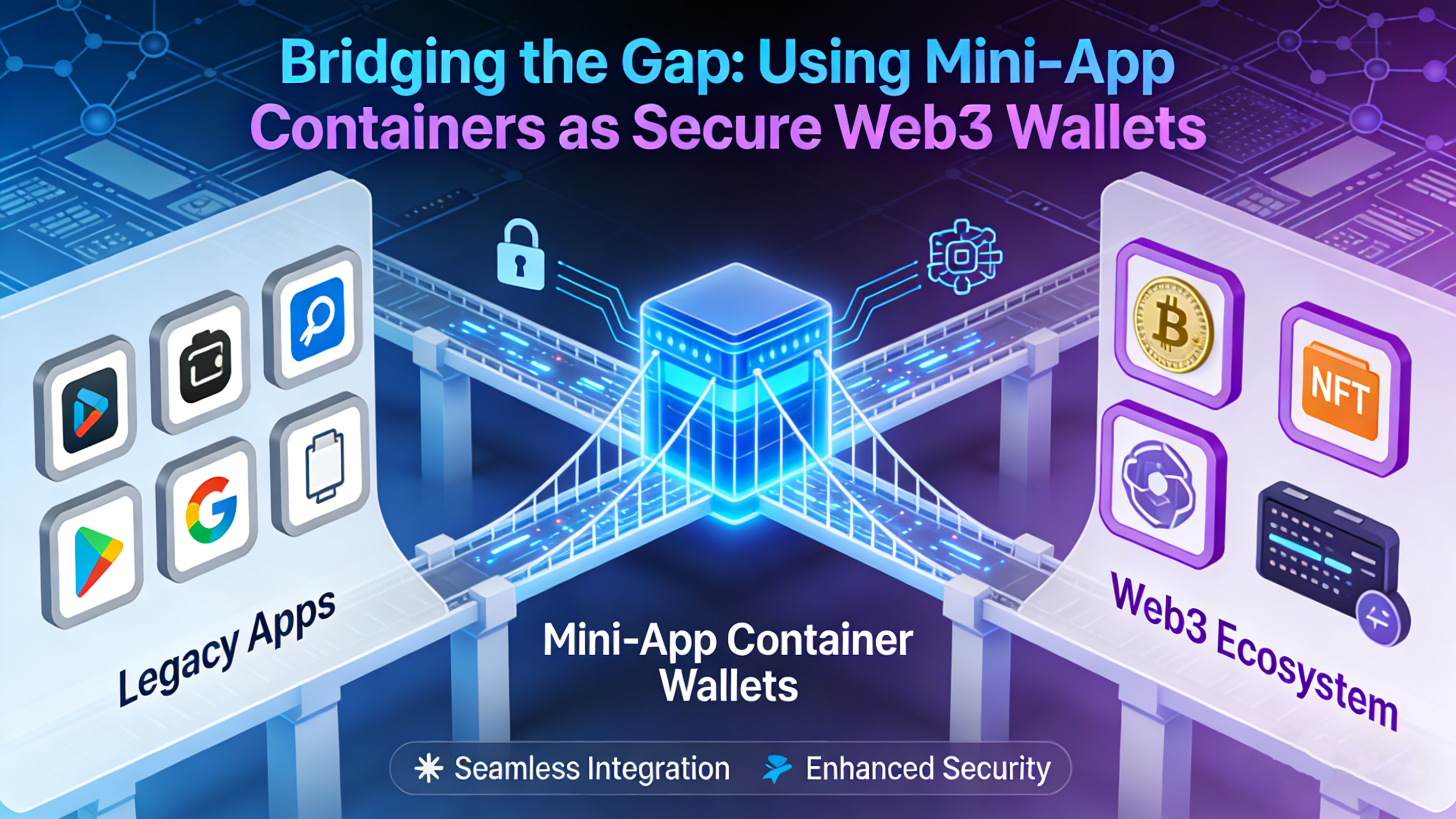
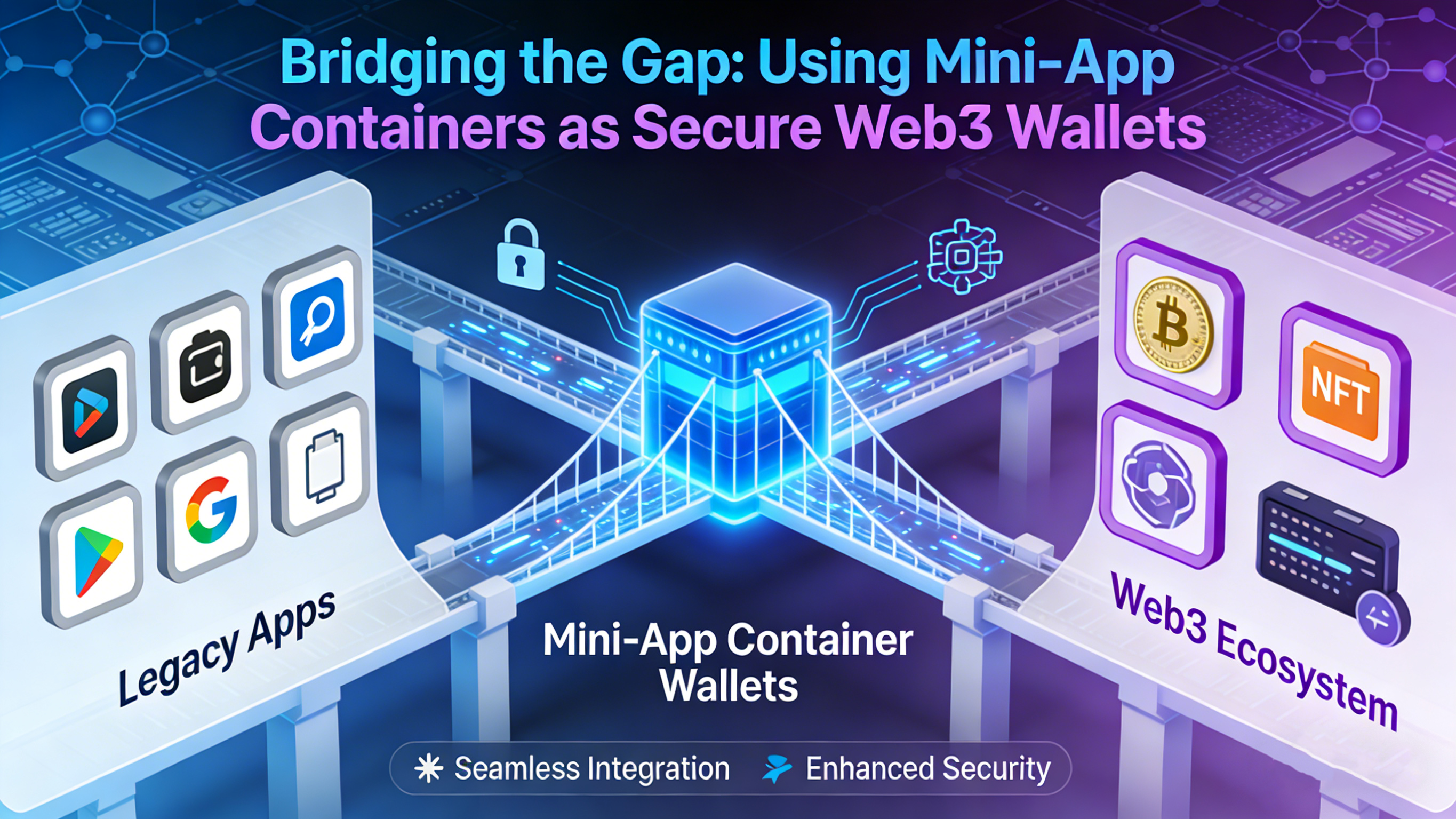
FinClip offers the infrastructure to make this leap. By replacing the "dApp Browser" with a "Mini-App Runtime," wallet providers and exchanges can transform dApps into fast, secure, and native-feeling experiences that live directly inside the wallet.
1. The Performance Leap: From WebView to Runtime
The fundamental flaw of current mobile wallets is that they treat dApps as websites. Websites are heavy. They require constant network requests to fetch HTML, CSS, and heavy JavaScript libraries every time they load.
FinClip changes the delivery mechanism.
In a FinClip-powered Wallet, a dApp (e.g., Uniswap or OpenSea) is not a URL; it is a Mini-App Package.
- Local Caching: When the user taps the "Uniswap" icon, the core logic and UI assets are downloaded once and cached on the device. Subsequent launches are instant.
- Native Rendering: FinClip provides a dual-thread architecture. The UI rendering is separated from the business logic (smart contract interaction). This ensures that even if the blockchain network is congested or the logic is heavy, the interface remains buttery smooth at 60fps.
For the user, the difference is night and day. Trading tokens feels as snappy as using a centralized banking app, yet the underlying logic remains decentralized.
2. Security Architecture: The "Sandboxed Bridge"
Security is the third rail of crypto. One wrong click in a dApp browser can drain a user's life savings. The "Open Browser" model allows users to navigate to malicious URLs that look like legitimate dApps.
FinClip introduces a "Walled Garden" Security Model to Web3.
The Isolation Layer
In the FinClip architecture, the dApp (Mini-App) runs in a strict Sandbox. It is completely isolated from the Host Wallet’s memory space.
Critically, the dApp never touches the Private Keys.
The Signing Bridge
How does the dApp sign a transaction if it can't see the keys? Via the FinClip Bridge.
- Request: The dApp (e.g., a Lending Protocol) constructs a transaction object and calls ft.requestSigning(txData).
- Interception: The FinClip SDK intercepts this call and pauses the dApp.
- Verification: The Host Wallet (Native Layer) takes over. It displays a clear, native "Confirm Transaction" screen to the user, parsing the transaction data into human-readable format.
- Signature: Only if the user confirms (via Biometrics/Pin) does the Host Wallet sign the data with the Private Key.
- Response: The signed payload is returned to the dApp to broadcast to the blockchain.
This architecture ensures that the dApp logic serves only as a View Layer, while the Host Wallet retains absolute custody and control over security.
3. Governance: The "Vetted" dApp Store
The "Wild West" nature of Web3 is a barrier to entry for mainstream users. They are terrified of scams.
Wallets and Exchanges can use FinClip to build a Curated dApp Store.
Instead of giving users a blank URL bar, the Wallet Operator acts as a gatekeeper.
- Audit: The Operator reviews the dApp code for known vulnerabilities or malicious redirects before publishing it to the store.
- Versioning: The Operator ensures that users are always running the official, verified version of the dApp protocol, eliminating the risk of "Front-end Injection Attacks" (like the famous BadgerDAO hack).
This allows Centralized Exchanges (CEX) like Binance or Coinbase to offer Decentralized (DeFi) services within their apps, providing a "Safe Mode" for users to explore Web3.
4. Strategic Use Case: The "Super Wallet"
The battle for the "Super App of Web3" is heating up. Wallets are trying to become more than just storage; they want to be portals.
With FinClip, a Wallet can aggregate an entire ecosystem of services without bloating its codebase.
- NFT Gallery Mini-App: A specialized, high-performance viewer for digital art.
- DAO Voting Mini-App: A tool for governance participation.
- GameFi Mini-App: Lightweight crypto games that run natively within the wallet.
Each of these is built by different teams (or DAOs) but deployed into the same Wallet Super App. The Wallet becomes the Platform, and the Protocols become the Plugins.
5. Bridging Web2 and Web3 (The Hybrid Model)
Finally, FinClip is the perfect bridge for Traditional Enterprises (Web2) entering the space.
Consider a traditional Bank. They want to offer a "Loyalty NFT" program, but they cannot rewrite their legacy banking app to support Web3 libraries.
- The Solution: They build the "NFT Loyalty" feature as a FinClip Mini-App.
- The Integration: They embed the FinClip SDK into their existing Banking App.
- The Result: The Web3 functionality runs as a modular overlay. It connects to the blockchain, but it visually sits inside the trusted Banking App.
This allows traditional companies to experiment with Web3 features rapidly, without risking the stability or security compliance of their core legacy systems.
Conclusion: The Interface Is the Innovation
We have spent the last few years innovating on Consensus Algorithms and Zero-Knowledge Proofs. It is time to innovate on the Interface.
Mass adoption will not come from users memorizing seed phrases or navigating clunky mobile websites. It will come when Web3 feels invisible—when using a dApp feels just like using any other high-quality mobile app.
FinClip provides the container technology to deliver this experience. It bridges the security of a cold wallet with the agility of a hot dApp. For the Web3 industry, this is the missing link to the next billion users.