Minghan Xu

132 posts published

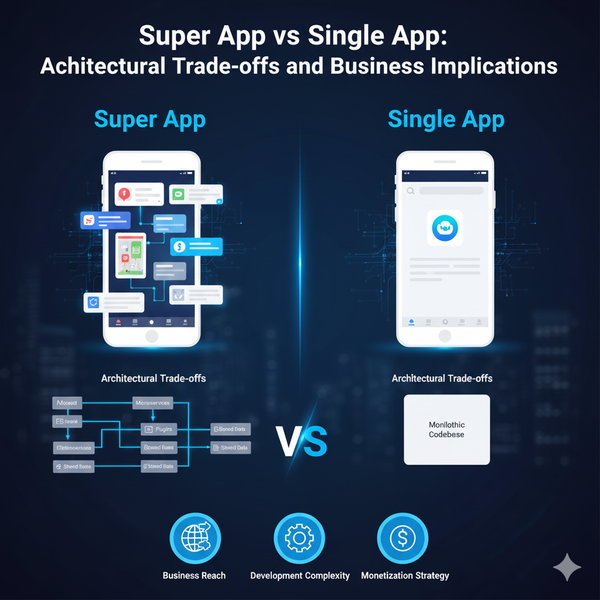
Super App vs Single App: Architectural Trade-offs and Business Implications

Super App vs Single App: Architectural Trade-offs and Business Implications

The architectural decision between building a super app platform or developing single-purpose applications represents one of the most consequential choices in mobile strategy, involving technical trade-offs, business model implications, and user experience considerations that vary significantly across markets, audiences, and organizational capabilities. Understanding these differences requires examining not just technical

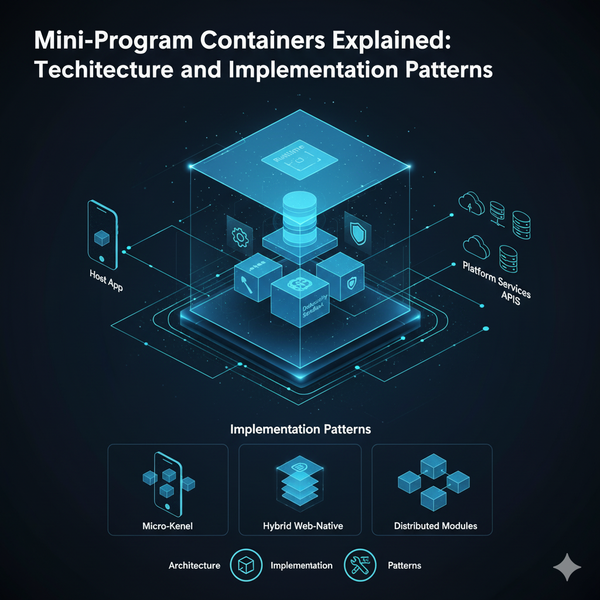
Mini-Program Containers Explained: Technical Architecture and Implementation Patterns

Mini-Program Containers Explained: Technical Architecture and Implementation Patterns

Mini-program containers represent specialized runtime environments designed specifically for lightweight, isolated application components operating within larger host platforms. Unlike traditional virtual machines or container technologies optimized for server deployment, mini-program containers address unique requirements including mobile resource constraints, user interface integration, and security isolation for untrusted code execution. Understanding their

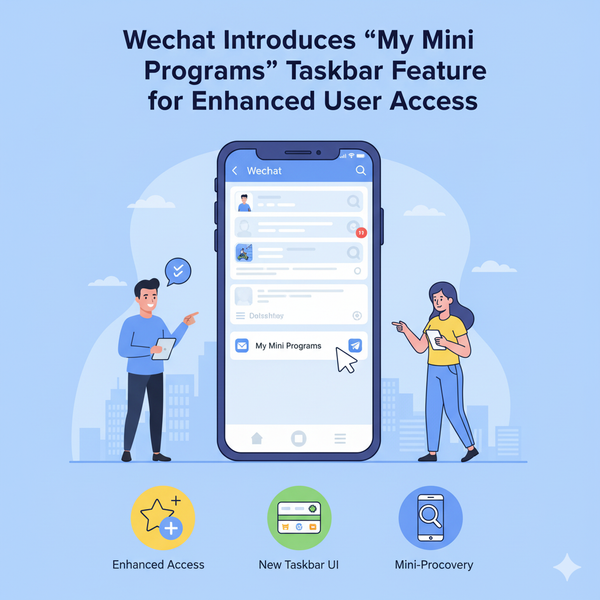
WeChat Introduces "My Mini Programs" Taskbar Feature for Enhanced User Access

WeChat Introduces "My Mini Programs" Taskbar Feature for Enhanced User Access

WeChat has deployed a significant update to its mini-program ecosystem, introducing a "My Mini Programs" section within the chat interface's pull-down taskbar. The feature, currently in testing with selected user groups, represents the most substantial accessibility improvement since mini-programs launched in 2017. For developers building lightweight applications within WeChat's ecosystem,

Mini Program Security Best Practices for Enterprise Deployments in 2026

Mini Program Security Best Practices for Enterprise Deployments in 2026

Mini-program security requires specific considerations distinct from traditional web or native applications, combining container isolation benefits with web technology vulnerabilities within controlled execution environments. Enterprise deployments in regulated industries like banking, healthcare, and government services demand rigorous security practices that protect user data, ensure transaction integrity, and maintain compliance across

Understanding Super App Development Costs in 2026: Budgeting for Platform Success

Understanding Super App Development Costs in 2026: Budgeting for Platform Success

Super App development costs vary significantly based on platform scope, feature complexity, and organizational requirements, but understanding cost components enables effective budgeting and resource allocation. Unlike single-purpose applications, Super Apps integrate multiple services, user management systems, and third-party integrations within cohesive experiences—architectural decisions that directly influence development timelines and

DraftKings Expands Super App with Prediction Markets and Lottery Integration

DraftKings Expands Super App with Prediction Markets and Lottery Integration

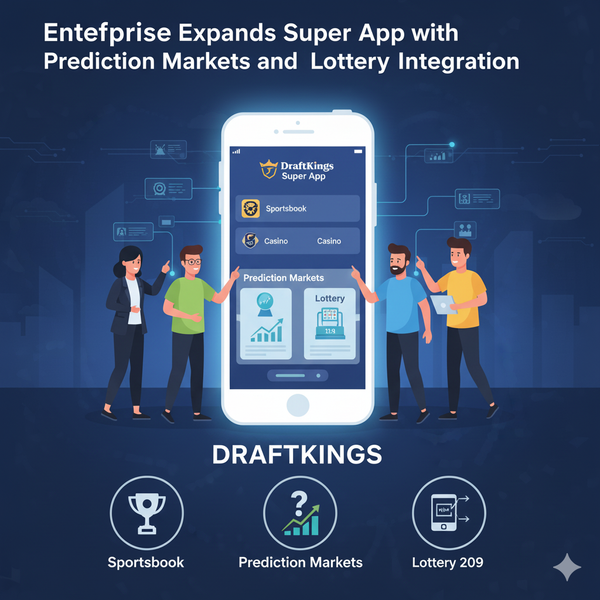
DraftKings has confirmed plans to integrate prediction markets and lottery products into its consolidated "Sports & Casino" Super App launching in March 2026. The expansion represents more than feature addition—it signals DraftKings' strategic evolution from sports betting operator to comprehensive digital wagering platform. By layering prediction-style event markets and lottery

MWC 2026 Hardware Evolution Sets Stage for Next-Generation Super App Experiences

MWC 2026 Hardware Evolution Sets Stage for Next-Generation Super App Experiences

Mobile World Congress 2026 concluded in Barcelona with hardware announcements that will fundamentally reshape mobile computing capabilities and user experiences. From Qualcomm's first 3nm wearable processor to Honor's record-thin foldable and TECNO's modular smartphone concept, this year's event demonstrated how hardware innovation enables new application paradigms. These advancements matter for

HarmonyOS Mini Program Ecosystem Growth: Cross-Platform Strategy for the IoT Era

HarmonyOS Mini Program Ecosystem Growth: Cross-Platform Strategy for the IoT Era

HarmonyOS mini programs represent Huawei's strategic response to the fragmentation challenge in the Internet of Things era, enabling "write once, run anywhere" deployment across more than 7 billion devices spanning smartphones, tablets, smartwatches, smart screens, vehicle systems, and industrial equipment. Unlike traditional applications requiring separate development for each operating system

No-Code App Development Platforms: Democratizing Super App Creation for Non-Technical Teams

No-Code App Development Platforms: Democratizing Super App Creation for Non-Technical Teams

No-code development platforms are transforming how organizations create and deploy mini programs within super app ecosystems, enabling business teams without engineering expertise to build functional applications through visual interfaces and configuration rather than traditional programming. These platforms typically reduce development barriers by 70-80% while accelerating deployment timelines from months to

Enterprise Mini Program Container Adoption: Architectural Patterns for Digital Transformation

Enterprise Mini Program Container Adoption: Architectural Patterns for Digital Transformation

Enterprise organizations are increasingly adopting mini program container architectures to modernize legacy applications, consolidate digital services, and accelerate digital transformation initiatives. These containers—lightweight runtime environments that execute modular applications within host applications—enable incremental modernization rather than risky wholesale replacements, reducing technical debt while accelerating feature delivery by 300-400%

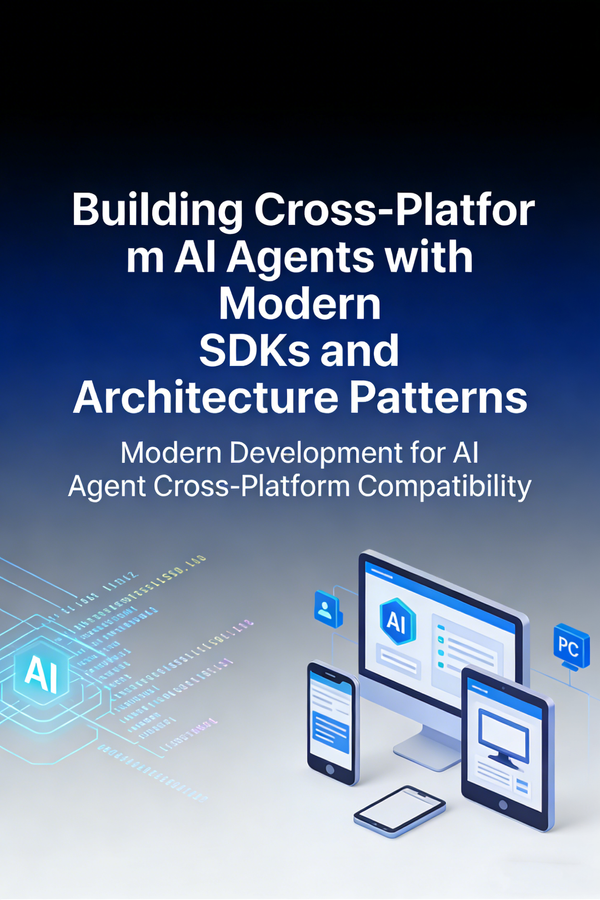
Building Cross-Platform AI Agents with Modern SDKs and Architecture Patterns

Building Cross-Platform AI Agents with Modern SDKs and Architecture Patterns

Cross-platform AI agent development presents unique challenges: maintaining consistent behavior across diverse runtime environments, managing platform-specific capabilities and limitations, and ensuring performance parity while minimizing code duplication. Modern SDKs and architectural patterns address these challenges through containerization, unified APIs, and adaptive execution strategies. This guide provides practical approaches for development

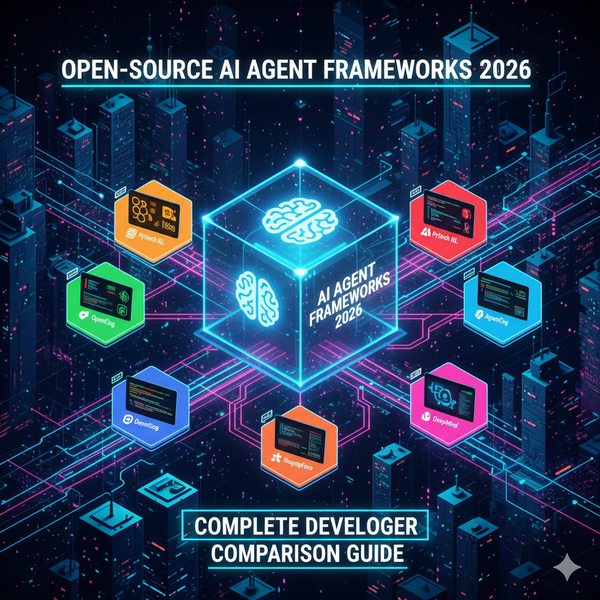
Open-Source AI Agent Frameworks 2026: Complete Developer Comparison Guide

Open-Source AI Agent Frameworks 2026: Complete Developer Comparison Guide

Selecting the right AI agent framework determines project success, development velocity, and long-term maintainability. The 2026 landscape offers mature, production-ready options across different architectural approaches, each optimized for specific use cases and team requirements. This guide analyzes the eight leading open-source frameworks based on real enterprise deployment patterns, technical capabilities,

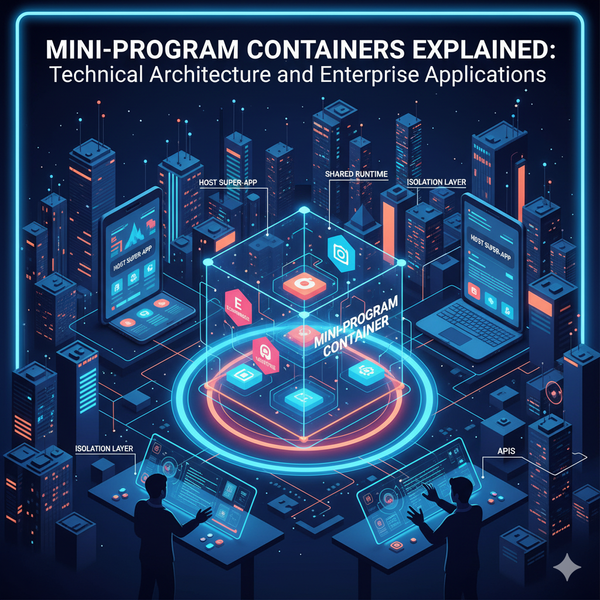
Mini-Program Containers Explained: Technical Architecture and Enterprise Applications

Mini-Program Containers Explained: Technical Architecture and Enterprise Applications

Mini-program containers represent a specialized class of runtime environments designed specifically for lightweight, isolated application components operating within larger host platforms. Unlike traditional virtual machines or container technologies optimized for server deployment, mini-program containers address unique requirements including mobile resource constraints, user interface integration, and security isolation for untrusted code

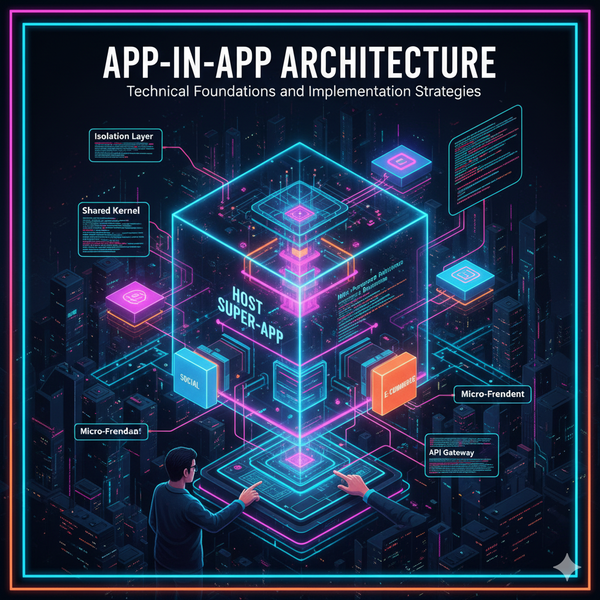
App-in-App Architecture: Technical Foundations and Implementation Strategies

App-in-App Architecture: Technical Foundations and Implementation Strategies

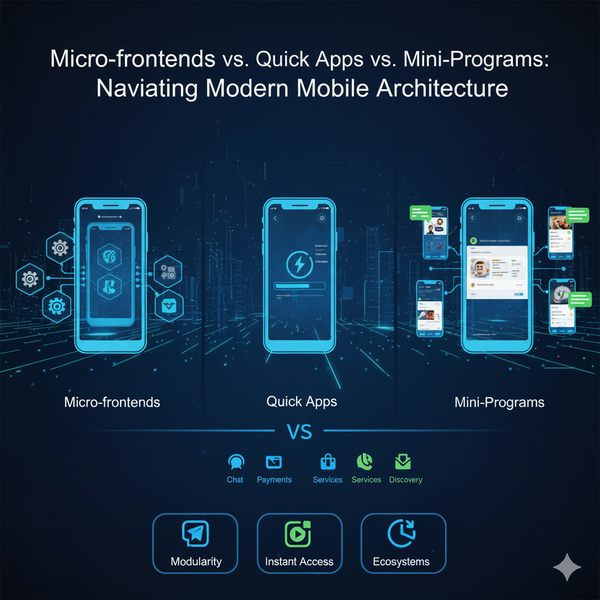
App-in-app architectures represent a fundamental shift in how applications are constructed, deployed, and experienced by users. Unlike traditional monolithic applications or loosely connected microservices, app-in-app approaches enable multiple independent mini-applications to operate within a single host container, creating cohesive user experiences while maintaining technical separation between components. This architectural pattern

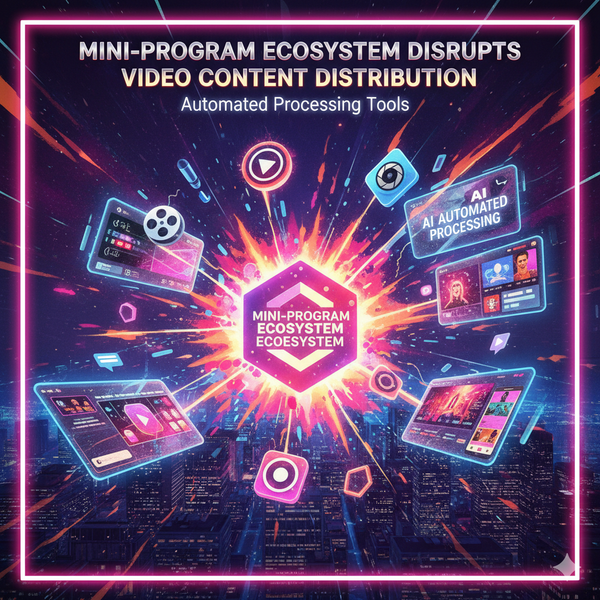
Mini-Program Ecosystem Disrupts Video Content Distribution with Automated Processing Tools

Mini-Program Ecosystem Disrupts Video Content Distribution with Automated Processing Tools

The mini-program ecosystem is fundamentally transforming video content distribution workflows through specialized applications that automate previously manual processing tasks. Tools like Xiaoqing and Kunkun—mini-programs operating within WeChat and other platforms—enable creators to remove platform watermarks, extract embedded text, and reformat video content with single-tap operations powered by cloud-based