Apple Ends Traditional IAP Promo Codes, Transitions to Offer Code System
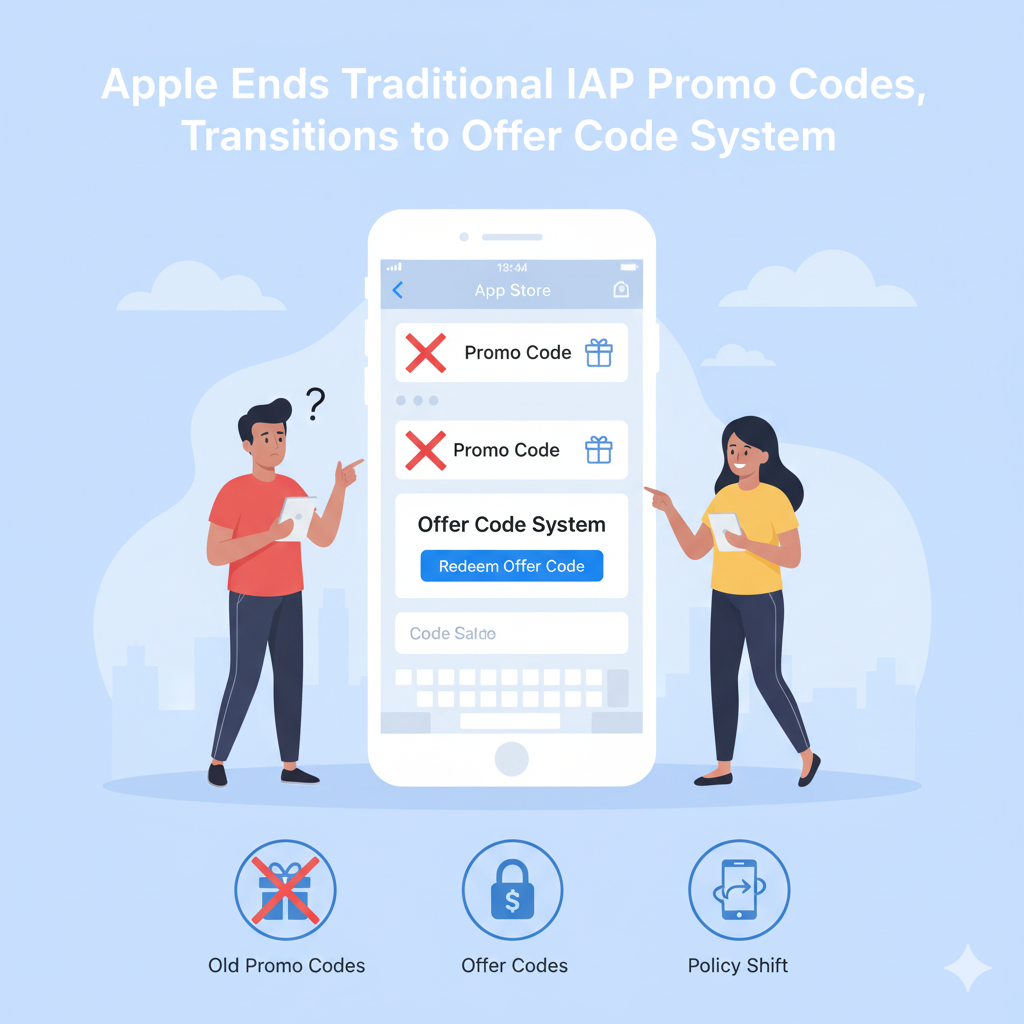
Apple has announced the discontinuation of traditional in-app purchase promo codes, replacing them with a more flexible offer code system effective March 26, 2026. The change affects how developers distribute promotional content, track redemption, and manage limited-time offers within iOS, iPadOS, macOS, and other Apple platform applications. For mobile application developers relying on promotional strategies to drive user acquisition and engagement, this transition requires technical adjustments and strategic reconsideration of promotional mechanics.
The timing is significant. Promo codes have served as a primary promotional tool since the App Store's early days, enabling developers to provide free access to paid content, subscriptions, and features. However, the traditional system suffered from limitations including fixed expiration dates, lack of redemption tracking beyond basic counts, and minimal flexibility in offer configuration. Apple's transition to offer codes addresses these constraints while introducing new capabilities and compliance requirements that affect development workflows and marketing strategies.
What Happened
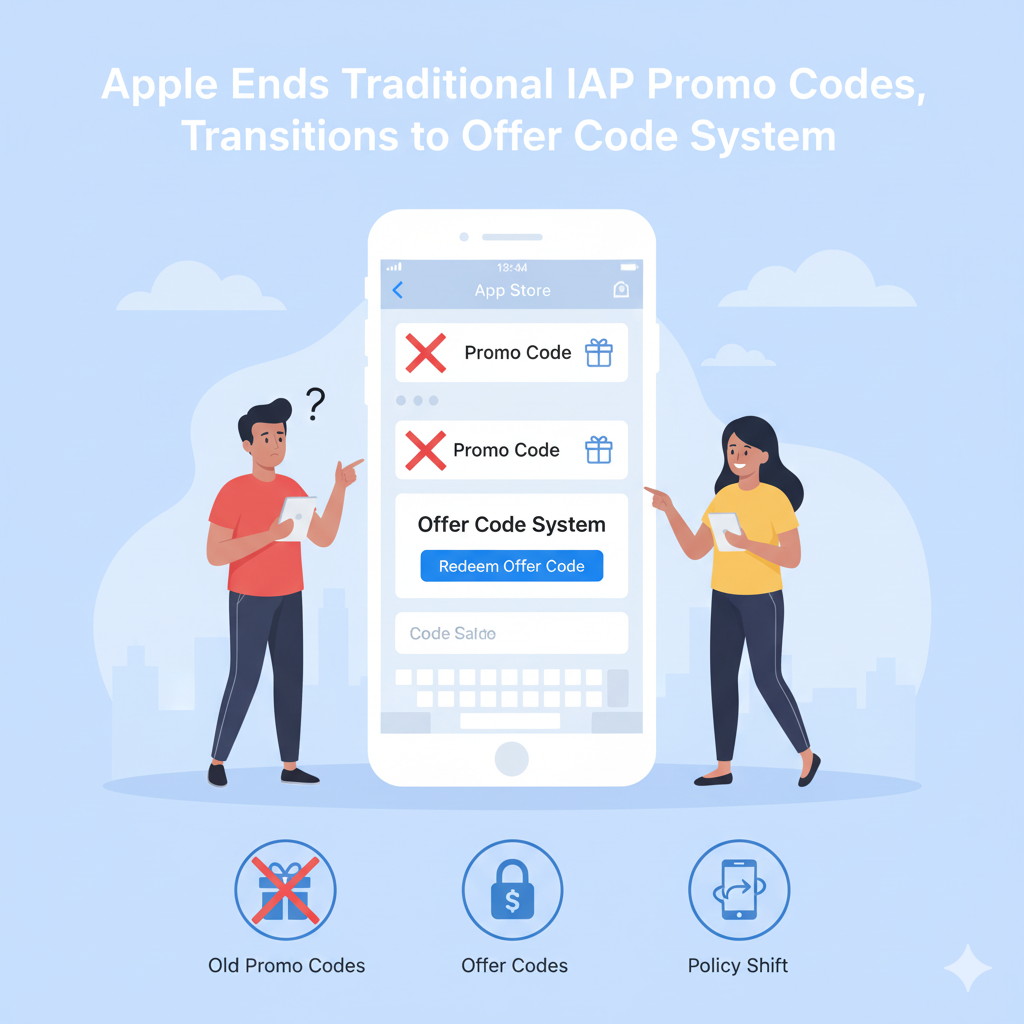
On March 8, 2026, Apple updated its App Store Connect documentation to announce that developers will no longer be able to create new traditional in-app purchase promo codes after March 26, 2026. Existing codes will continue to function until their expiration dates, but the creation interface will be removed from App Store Connect. Simultaneously, Apple introduced expanded capabilities for offer codes, which have been available in limited form since 2020 but now become the primary promotional mechanism.
The new offer code system includes several significant enhancements over traditional promo codes. First, developers can now create offer codes with customizable redemption limits, including single-use, multi-use with specific quantity limits, or unlimited redemption within a defined timeframe. This replaces the previous binary system where codes were either single-use or limited to a specific number of redemptions with minimal control.
Second, offer codes support sophisticated targeting and personalization. Developers can generate unique codes for specific user segments, marketing campaigns, or partner distributions. Each code can include metadata for tracking purposes, enabling detailed analysis of which promotional channels drive the highest quality redemptions. The system also supports automatic generation of codes through the App Store Connect API, facilitating integration with marketing automation platforms.
Third, redemption tracking and reporting receive substantial improvements. Developers can now view detailed redemption analytics including user demographics, device information, and subsequent engagement metrics for each offer code. This addresses a long-standing limitation where traditional promo codes provided only basic redemption counts without context about who redeemed them or what actions followed.
Fourth, offer codes integrate more deeply with Apple's subscription management system. Developers can create codes specifically for subscription trials, discounted introductory periods, or special pricing for existing subscribers. The system automatically handles the transition from promotional pricing to standard rates, reducing implementation complexity and potential user confusion.
Fifth, the user experience improves through more seamless redemption flows. Offer codes can be redeemed directly within applications through enhanced StoreKit APIs, reducing the friction of switching to the App Store for code entry. Users can also receive and redeem codes through Apple's messaging systems, including Messages and Mail, with single-tap activation in supported regions.
The transition follows Apple's pattern of gradually deprecating older systems while providing extended support for existing implementations. Traditional promo codes created before March 26, 2026, will remain active until their expiration dates, giving developers time to migrate promotional strategies. Apple has also published comprehensive migration guides and updated StoreKit documentation to assist with the technical transition.
Why This Matters for Mobile Application Monetization
Apple's shift from traditional promo codes to enhanced offer codes fundamentally changes promotional strategy execution, measurement capabilities, and technical implementation for iOS application developers. The most immediate impact is on promotional campaign design and execution. Traditional promo codes operated as relatively blunt instruments: developers created codes, distributed them through various channels, and hoped for redemptions with minimal tracking. The new system enables sophisticated campaign structures with precise targeting, controlled distribution, and detailed performance measurement.
Monetization strategy flexibility increases substantially. Developers can now create tiered promotional offers with different code values for different user segments, test pricing strategies through controlled code distributions, and implement complex subscription promotions with automatic rate transitions. This granular control supports more nuanced monetization approaches that move beyond simple "free vs. paid" binaries to include graduated pricing, limited-time offers, and personalized promotions based on user behavior.
Measurement and analytics capabilities transform promotional effectiveness evaluation. Traditional promo codes provided almost no insight into who redeemed codes or what value those redemptions generated beyond the immediate transaction. The new offer code system connects redemptions to user profiles, enabling cohort analysis of promotional users versus organic users, lifetime value comparisons, and engagement pattern tracking. This data informs future promotional decisions, marketing spend allocation, and product development priorities.
Technical implementation complexity increases, particularly for applications with sophisticated promotional needs. While basic offer code redemption remains straightforward through StoreKit APIs, advanced implementations requiring dynamic code generation, real-time validation, or integration with external systems require more development effort. However, this complexity enables capabilities previously impossible with traditional promo codes, such as generating unique codes for each user in a marketing list or creating time-limited offers that automatically expire.
User experience considerations shift with the new system. Traditional promo codes required users to leave the application, navigate to the App Store, find the redeem interface, enter codes manually, and return to the application—a process with multiple friction points. Enhanced offer codes support in-app redemption through improved StoreKit integration and messaging system activation, reducing abandonment rates and improving conversion from code receipt to actual usage.
Compliance and fraud prevention capabilities improve through the new system's enhanced controls. Traditional promo codes offered minimal protection against code sharing, unauthorized distribution, or redemption beyond intended limits. Offer codes include configurable restrictions, usage monitoring, and revocation capabilities that help maintain promotional integrity and prevent abuse. This is particularly valuable for high-value promotions or limited-distribution offers.
The Bigger Picture
Apple's transition from traditional promo codes to enhanced offer codes reflects broader trends in digital platform evolution, developer tool sophistication, and ecosystem governance. Three interconnected developments explain this change: platform maturity, competitive dynamics, and regulatory considerations.
Platform maturity drives feature evolution from basic utilities to sophisticated tools. Early App Store systems focused on enabling basic functionality: developers could create applications, users could download them, and simple promotional mechanisms facilitated discovery. As the ecosystem matured and developer needs grew more complex, these basic systems became inadequate. The offer code system represents Apple's response to sophisticated developer requirements for targeted promotion, detailed analytics, and automated campaign management—needs that emerged as the mobile application market professionalized.
Competitive dynamics influence platform feature development. Google Play's promotional systems, while historically less sophisticated than Apple's, have gained capabilities in recent years. Third-party platforms specializing in mobile user acquisition and retention offer sophisticated promotional tools that integrate with multiple app stores. Apple's enhanced offer code system represents competitive parity with these alternatives, ensuring developers can execute sophisticated promotional strategies within Apple's ecosystem rather than relying on external tools that might compromise user experience or data privacy.
Regulatory considerations shape platform governance changes. Traditional promo codes presented minimal tracking capabilities, making it difficult for developers to understand promotional effectiveness or for regulators to monitor potential anti-competitive practices. The enhanced offer code system provides greater transparency into promotional activities while maintaining Apple's privacy standards through anonymized analytics and controlled data sharing. This balance addresses regulatory concerns about opaque promotional practices while preserving user privacy protections.
The transition also reflects Apple's strategic emphasis on subscription services and recurring revenue models. Traditional promo codes worked adequately for one-time purchases but struggled with subscription promotions, trial management, and renewal transitions. The enhanced offer code system specifically addresses these use cases with features like automatic subscription transitions, trial period management, and renewal pricing controls. This alignment with Apple's broader services revenue strategy indicates the company's continued focus on subscription-based monetization across its ecosystem.
Technical architecture evolution enables the enhanced capabilities. The new offer code system leverages improvements in StoreKit, App Store Connect APIs, and Apple's backend infrastructure that have accumulated over several years. These technical foundations support real-time code validation, detailed analytics processing, and seamless user experiences that were impractical with earlier system architectures. The transition represents not just a feature update but an architectural modernization that enables future promotional innovations.
What iOS Application Developers Should Do Now
Developers should immediately audit their current promotional code usage and develop a migration plan for the March 26, 2026, transition deadline. Begin by inventorying all active traditional promo codes, their expiration dates, and their associated marketing campaigns. Create a timeline for migrating each campaign to the new offer code system, prioritizing codes with distant expiration dates that will remain active longest.
Review and update technical implementation for code redemption. Test the enhanced StoreKit APIs for offer code handling, ensuring your application can properly recognize, validate, and process the new code formats. Implement fallback mechanisms for users who attempt to redeem traditional promo codes after the transition, providing clear guidance on alternative redemption methods or expiration notifications.
Reevaluate promotional strategy in light of the new capabilities. The enhanced offer code system enables more sophisticated campaigns than were possible with traditional promo codes. Consider implementing tiered promotions for different user segments, time-limited offers with automatic expiration, or personalized codes based on user behavior. These approaches can increase promotional effectiveness while providing better data for optimization.
Integrate offer code analytics into existing measurement systems. The detailed redemption data available through the new system provides valuable insights into promotional effectiveness. Plan to capture and analyze this data alongside other user acquisition and engagement metrics. Consider how offer code redemption correlates with user retention, lifetime value, and feature adoption to optimize future promotional investments.
Update marketing workflows and partner communications. Traditional promo code distribution channels may need adjustment to accommodate the new offer code formats and redemption mechanisms. Communicate changes to marketing partners, affiliate networks, and internal teams responsible for promotional distribution. Provide clear guidance on the enhanced capabilities and any process changes required for effective campaign execution.
Consider how alternative distribution approaches can complement or replace traditional promotional strategies. In enterprise deployments using FinClip, the ability to bypass app store reviews for updates enables more flexible promotional approaches including time-limited feature access, targeted content delivery, and A/B testing of promotional offers without requiring code distribution through traditional app store mechanisms.
Download FinClip SDK and start running mini-programs today. Get SDK