Apple Cuts China App Store Commission Rates to 25%: Impact on Super App Ecosystems
Introduction: A Watershed Moment for China's Mobile Economy
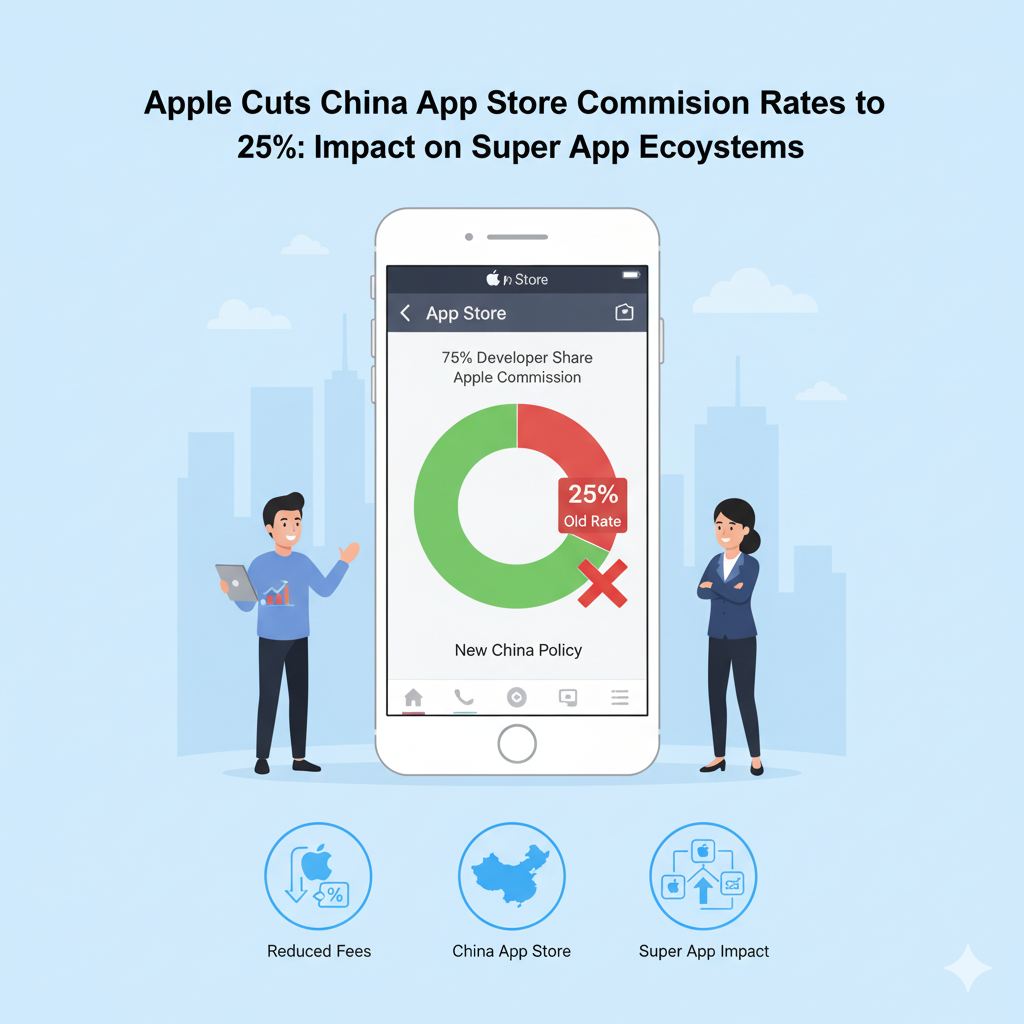
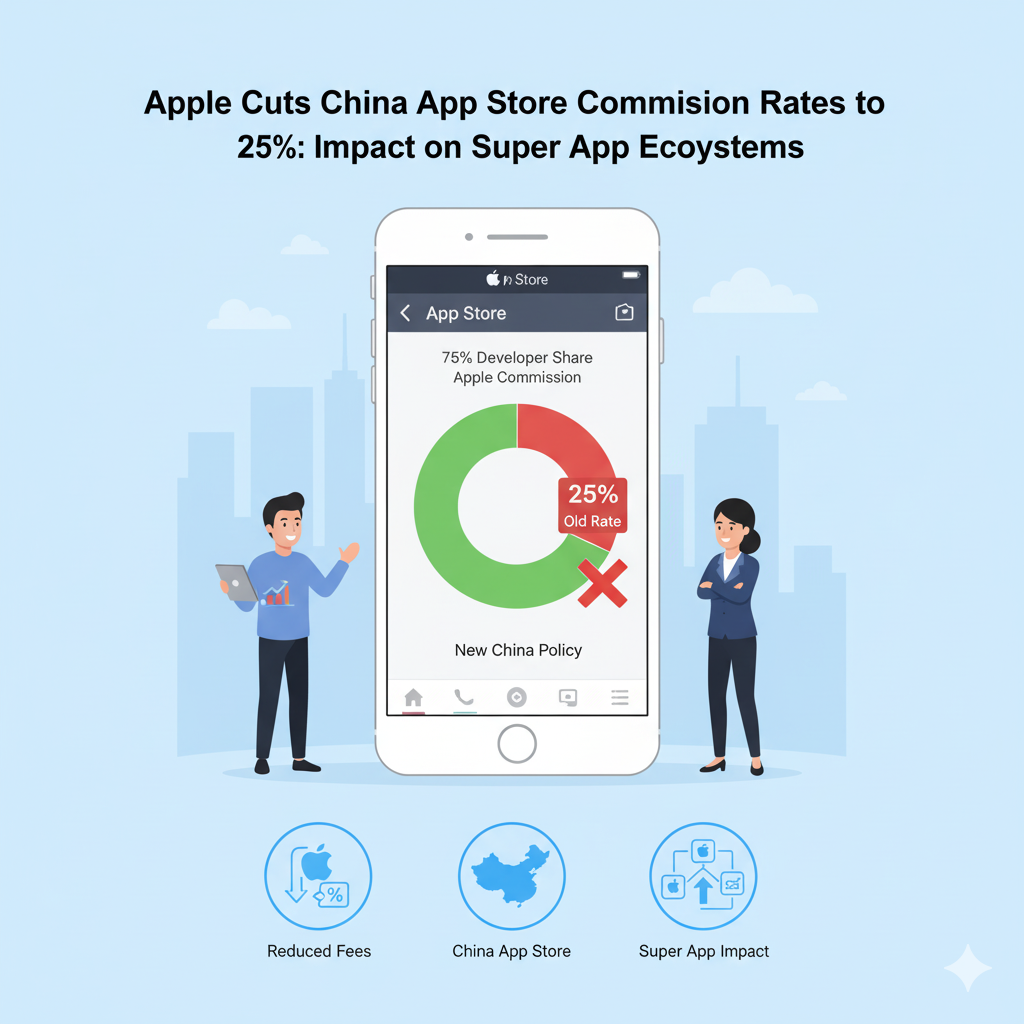
On March 15, 2026, Apple implemented a significant policy change that will reshape China's digital landscape: commission rates for the China mainland storefront of the App Store dropped from 30% to 25% for standard Apple In-App Purchase and paid app transactions. This 5% reduction represents more than just a minor adjustment in Apple's revenue model—it signals a strategic response to China's unique mobile ecosystem dynamics and creates substantial implications for super app developers, mini-program platforms, and digital service providers operating in the world's largest smartphone market.
The commission reduction arrives at a critical juncture when China's mobile application landscape has evolved beyond traditional app store distribution models. With over 900 million iOS and iPadOS users in China, the financial impact of this change extends across the entire digital economy, potentially redirecting billions in annual revenue from Apple's coffers to developers' balance sheets. This policy shift reflects Apple's recognition of China's distinctive mobile environment, where super apps and mini-programs have become dominant paradigms for digital service delivery.
Understanding the Commission Structure
Apple's commission structure has long been a point of contention in global developer communities. The standard 30% rate for in-app purchases and subscriptions—reduced to 15% for subscriptions after their first year—has faced regulatory scrutiny and competitive pressure worldwide. In China, this model has been particularly challenging given the country's preference for integrated digital ecosystems where multiple services operate within unified platforms rather than as standalone applications.
The new 25% rate applies specifically to transactions processed through China's mainland App Store, excluding Hong Kong, Macau, and Taiwan. This geographic targeting acknowledges China's unique market conditions, where domestic payment systems like Alipay and WeChat Pay dominate transaction processing, and where regulatory frameworks increasingly favor local technology standards and data sovereignty requirements. The reduction brings Apple's commission structure closer to competing Android app stores in China, which typically charge between 20-25% for in-app purchases.
Impact on Super App Development Economics
For super app developers, the commission reduction creates immediate financial benefits and strategic opportunities. Super apps—platforms that integrate multiple services like messaging, payments, e-commerce, and mobility within a single interface—typically generate revenue through transaction fees, subscriptions, and advertising. A 5% reduction in Apple's commission directly improves the unit economics of these revenue streams, potentially increasing developer margins by 15-20% on iOS transactions.
Consider a typical super app scenario: A user purchases a ¥100 digital service through an iOS mini-program within a super app. Under the previous 30% commission structure, Apple would collect ¥30, leaving ¥70 for the developer. With the new 25% rate, Apple collects ¥25, increasing the developer's share to ¥75. This 7% increase in net revenue per transaction may seem modest at the individual level, but when scaled across millions of transactions in China's massive digital economy, the cumulative impact becomes substantial.
The commission reduction also affects how super apps structure their iOS monetization strategies. Developers may now find iOS-specific features and optimizations more economically viable, potentially leading to enhanced user experiences on Apple devices. This could include better integration with iOS-specific capabilities like Face ID authentication, Apple Pay integration, or advanced AR features—investments that were previously difficult to justify given the higher commission burden.
Mini-Program Platform Implications
Mini-program platforms—lightweight applications that run within super apps without requiring separate installation—represent a particularly interesting case study for the commission reduction. These platforms have flourished in China precisely because they bypass traditional app store distribution and its associated fees. However, many mini-program platforms also maintain iOS companion apps that serve as entry points to their ecosystems.
For platforms like WeChat Mini Programs, Alipay Mini Programs, and Baidu Smart Programs, the commission reduction makes their iOS companion apps more financially sustainable. These companion apps often serve as discovery and management interfaces for mini-programs rather than revenue-generating applications themselves. With lower commission rates, platform operators can allocate more resources to iOS-specific optimizations, potentially improving user acquisition and retention on Apple devices.
The timing of Apple's commission reduction coincides with significant updates to China's mini-program ecosystem. WeChat recently announced its 2026 AI integration plan and homepage redesign, while Alipay continues to expand its mini-program capabilities. These developments, combined with Apple's more favorable commission structure, create a synergistic environment where mini-program platforms can more aggressively pursue iOS users without compromising their economic models.
Developer Response and Strategic Adjustments
Initial reactions from China's developer community have been cautiously optimistic. Major gaming companies, subscription service providers, and digital content platforms are reportedly reevaluating their iOS pricing strategies and feature development roadmaps. Some developers are considering passing the savings directly to consumers through lower prices or enhanced value propositions, while others plan to reinvest the additional revenue into platform improvements and user acquisition.
For international developers entering China's market, the commission reduction lowers one of the significant barriers to iOS monetization. China's unique regulatory environment, payment systems, and user preferences already present substantial challenges for foreign developers. The improved commission structure makes the iOS market more accessible, potentially encouraging more international developers to localize their applications for Chinese users.
The commission change also interacts with Apple's broader China strategy, which includes compliance with local data protection regulations, integration with Chinese payment systems, and adaptation to China's distinctive digital ecosystem. By reducing commission rates, Apple demonstrates responsiveness to market conditions and regulatory pressures, potentially improving its relationship with both developers and Chinese authorities.
Competitive Landscape and Market Dynamics
Apple's commission reduction occurs within a highly competitive Chinese mobile ecosystem where Android devices dominate market share but iOS users represent a disproportionately valuable demographic. Chinese Android app stores, operated by companies like Huawei, Xiaomi, Oppo, and Vivo, typically charge 20-25% commissions, with some offering reduced rates for strategic partnerships or high-volume developers.
The commission alignment between Apple and major Android app stores reduces one of the economic advantages that Android distribution previously offered. Developers may now view iOS and Android deployment as more economically equivalent, potentially leading to more balanced platform development strategies. This could benefit users through more consistent experiences across platforms and encourage developers to prioritize feature parity rather than platform-specific optimizations.
The commission reduction also affects the competitive dynamics between native applications and web-based or mini-program alternatives. With lower iOS commissions, the economic argument for developing native iOS applications becomes stronger relative to web-based solutions that bypass app stores entirely. This could influence platform choice decisions for new digital services, particularly those targeting China's premium user segments who disproportionately use Apple devices.
Regulatory Context and Future Implications
Apple's commission adjustment follows increasing regulatory scrutiny of app store practices worldwide. In China, regulatory authorities have been examining digital platform competition, data privacy, and consumer protection issues. While not explicitly mandated by regulators, Apple's commission reduction appears responsive to the broader regulatory environment and competitive pressures in China's digital market.
Looking forward, the commission reduction may signal further changes to Apple's global app store policies. Other regions with distinctive market conditions or regulatory pressures could see similar adjustments. For super app developers operating in multiple markets, this creates both opportunities and complexities in managing global monetization strategies across varying commission structures.
The commission change also interacts with China's broader digital economy policies, including initiatives to promote domestic technology innovation, data sovereignty, and platform interoperability. By adapting its commission structure to local market conditions, Apple positions itself as a more collaborative participant in China's digital ecosystem rather than an inflexible global platform imposing uniform policies.
Technical Implementation and Platform Considerations
For developers implementing the new commission structure, several technical considerations emerge. Apple's updated commission rates apply automatically to transactions processed after March 15, 2026, requiring no specific action from developers using standard App Store Connect configurations. However, developers should verify their revenue reporting and analytics systems accurately reflect the new commission rates.
Super app developers should particularly examine how the commission reduction affects their cross-platform revenue models. Many super apps operate across multiple platforms—iOS, Android, web, and mini-program environments—each with different commission structures and payment processing requirements. The iOS commission reduction may justify reallocating development resources or adjusting feature prioritization across platforms.
Platforms like FinClip that enable mini-program deployment across multiple super app environments should consider how Apple's commission changes affect their value proposition. With lower iOS commissions, the economic advantages of mini-program distribution—which traditionally bypasses app store fees—become relatively less pronounced. However, mini-program platforms continue to offer benefits beyond commission avoidance, including faster deployment cycles, smaller application sizes, and seamless user experiences without installation requirements.
Conclusion: A More Balanced Mobile Ecosystem
Apple's decision to reduce China App Store commission rates represents a significant milestone in the evolution of China's mobile ecosystem. By acknowledging the distinctive characteristics of China's digital market and responding to competitive and regulatory pressures, Apple creates a more balanced economic environment for developers while maintaining its position in the world's most valuable smartphone market.
For super app developers and mini-program platforms, the commission reduction offers immediate financial benefits and strategic opportunities. The improved economics of iOS monetization may encourage more aggressive investment in Apple-specific optimizations, potentially enhancing user experiences for China's premium mobile users. As the digital landscape continues to evolve, this policy adjustment demonstrates how global platforms must adapt to local market realities while maintaining consistent user experiences and developer relationships.
The commission change also highlights the ongoing tension between centralized app store distribution and decentralized super app ecosystems. While Apple's adjustment makes its platform more economically competitive, the fundamental advantages of super apps and mini-programs—integrated experiences, reduced friction, and platform independence—remain compelling for both developers and users. As China's digital economy continues to innovate, the interplay between these distribution models will shape the future of mobile service delivery.