Alibaba's OpenSandbox AI Agent Sandbox Launch: What It Means for Enterprise Security
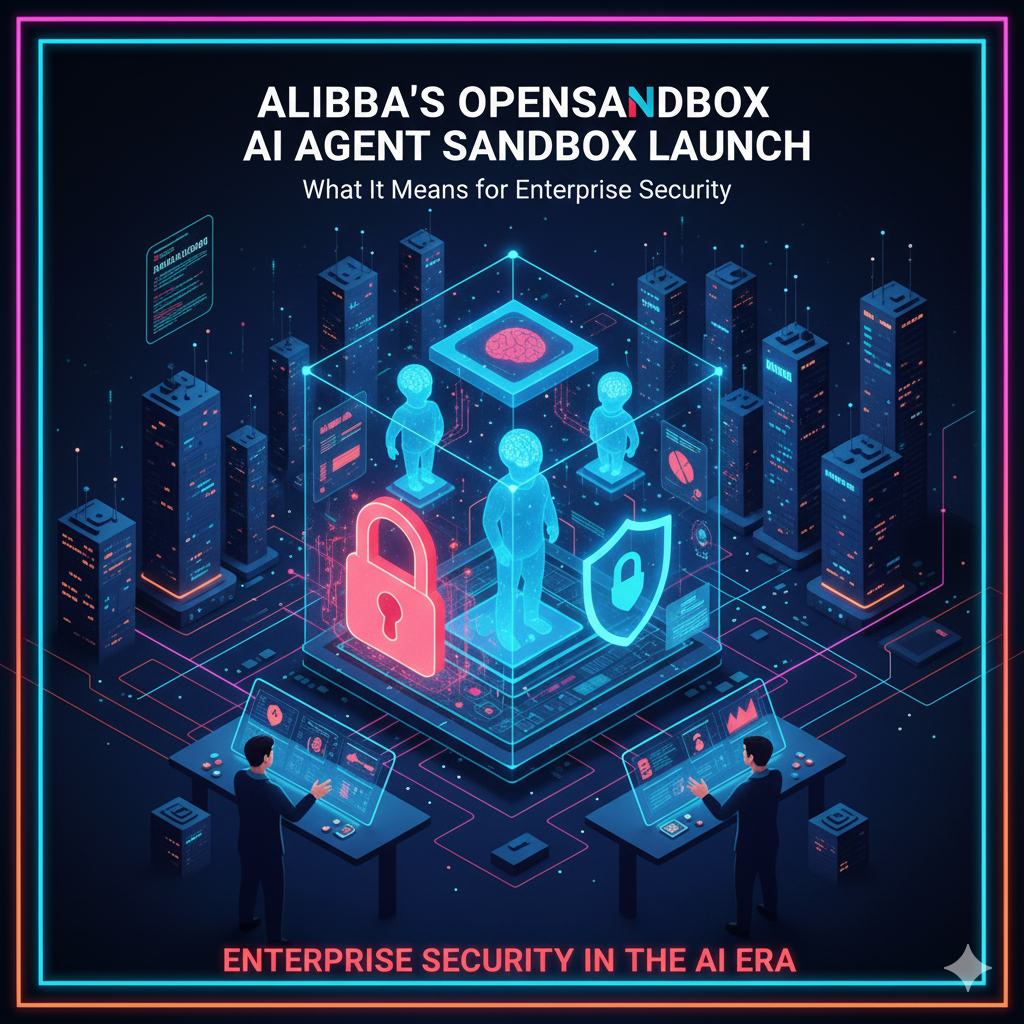
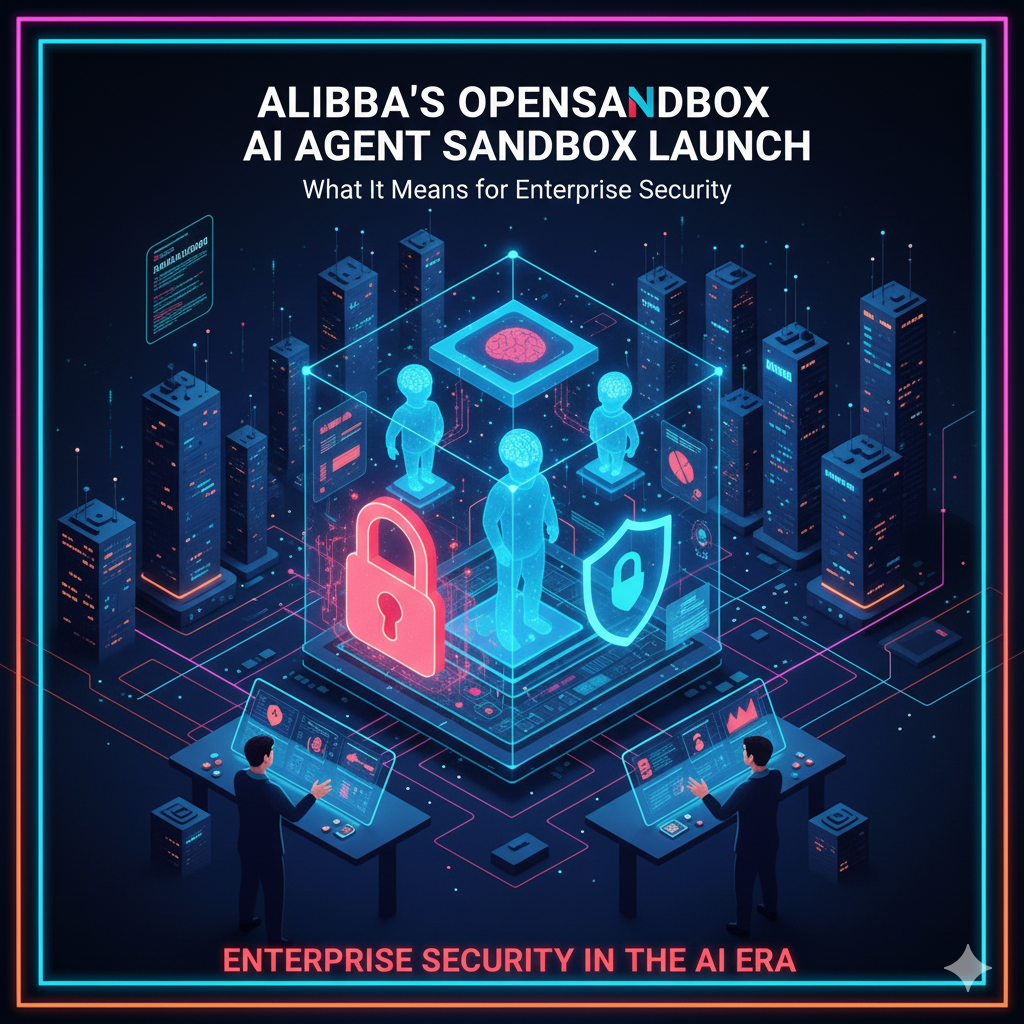
Alibaba open-sourced OpenSandbox on March 1, 2026, handing the AI agent community production-grade sandbox infrastructure at zero cost. The platform reached 3,845 GitHub stars in two days, trending #5 with multi-language SDKs, Docker and Kubernetes runtimes, and unified APIs for safely executing untrusted AI agent code. This development matters because 100% of enterprises have agentic AI on their roadmap, but 71% aren't prepared to secure those deployments. OpenSandbox fills a critical infrastructure gap that has prevented widespread enterprise adoption of AI agents.
What Happened
Alibaba released OpenSandbox under the Apache 2.0 license, providing a general-purpose sandbox platform for AI applications. The platform includes multi-language SDKs for Python, Java/Kotlin, JavaScript/TypeScript, and C#/.NET, with Go support planned. It offers unified sandbox APIs across all languages and dual runtime support for Docker (local development) and Kubernetes (production scale).
The architecture separates concerns through two main APIs: the Sandbox Lifecycle API handles creation, management, and cleanup, while the Sandbox Execution API runs commands and manages file operations. An extensible sandbox protocol allows integration of custom runtimes. The built-in feature set includes browser automation via Chrome and Playwright, desktop environments with VNC access for visual automation, VS Code integration for full IDE sandboxes, and network controls with per-sandbox egress filtering and unified ingress gateways.
Alibaba built the server on Python FastAPI (44.4% of the codebase), with Go (25%) handling backend components. The repository shows 564 commits and active development, indicating this isn't experimental software but production-ready infrastructure. The timing coincides with growing enterprise anxiety about AI agent security—a Kiteworks survey of 225 security and IT leaders found that while 100% have agentic AI deployment plans, only 29% feel prepared to secure them.
Why This Matters for Enterprise Security
The OWASP AI Agent Security Top 10 for 2026 lists untrusted code execution as the primary risk. Microsoft explicitly warns enterprises to treat agent code as untrusted execution with persistent credentials. Standard Docker containers won't cut it for AI agent security—they share the host kernel through namespace and cgroup isolation, meaning a kernel vulnerability or misconfiguration hands attackers host access.
For untrusted code execution, stronger boundaries are necessary: user-space kernels like gVisor, or hardware-enforced isolation via microVMs like Firecracker and Kata Containers. OpenSandbox supports three security tiers: Docker provides namespace and cgroup isolation with a shared host kernel (acceptable for development); gVisor adds a user-space kernel that intercepts syscalls before they reach the host kernel; and microVMs via Kata Containers or Firecracker provide hardware-enforced isolation with dedicated kernels per workload.
The coding agent use case drives the strongest adoption signals. Developers using Claude Code or GitHub Copilot generate hundreds of code snippets daily. Most execute those snippets directly in their development environments or, worse, in production. OpenSandbox isolates that execution, preventing supply chain attacks where malicious code suggestions exploit developer trust. For Kubernetes deployments, RuntimeClass specifications declare isolation requirements—Google Cloud's Agent Sandbox integrates gVisor and Kata Containers directly into GKE, automatically provisioning microVMs for pods that specify the Kata RuntimeClass.
The Bigger Picture
OpenSandbox represents more than another open-source project—it signals maturation of the AI agent ecosystem. The 3,845 stars in two days indicate pent-up demand for production sandbox solutions. The trending position (#5 on GitHub) reflects developers actively searching for solutions to a problem that has constrained AI agent adoption.
The cost comparison matters for enterprise adoption. OpenSandbox competes with commercial sandbox platforms: E2B, Northflank, Modal, and Daytona. E2B charges for Firecracker microVMs with a 24-hour session limit. Northflank runs $0.0167 per vCPU-hour, 65% cheaper than Modal's $0.047. Both beat OpenSandbox's zero licensing cost, but you still pay infrastructure.
Self-hosting OpenSandbox on AWS EC2 costs roughly $0.01-0.02 per vCPU-hour for infrastructure alone, undercutting even Northflank. At scale, that's 70-90% total cost savings versus managed platforms. The tradeoff: you run the infrastructure yourself. For teams that already operate Kubernetes clusters, that's not a burden. For startups without DevOps capacity, managed platforms make sense.
The feature comparison favors OpenSandbox on flexibility. E2B locks you into Firecracker. Modal doesn't support bring-your-own-cloud or on-premises deployments. OpenSandbox runs anywhere you can run Docker or Kubernetes. The multi-language SDK support (4+ languages vs. Python-first alternatives) matters for polyglot enterprise teams.
What Enterprise Development Teams Should Do Now
Evaluate your current AI agent security posture against the OWASP AI Agent Security Top 10. If you're executing LLM-generated code directly in development or production environments, you're exposed to supply chain attacks. Implement sandboxing for all untrusted code execution, starting with development workflows where AI coding assistants generate code.
For teams deploying AI agents in enterprise deployments using FinClip, security becomes non-negotiable. The device-side isolation provided by security sandboxes prevents entire classes of attacks that could compromise user data or enterprise systems. This approach has demonstrated 53% improvement in security audit outcomes for financial services applications.
Start with OpenSandbox for development and testing workflows. The three-command installation makes initial experimentation straightforward. For production deployments, evaluate whether self-hosting or managed platforms better fit your operational capabilities. Remember Microsoft's security recommendations: treat agent code as untrusted, deploy with dedicated non-privileged credentials, implement continuous monitoring, and maintain a rebuild plan.
FinClip's 3MB SDK integrates into existing apps in minutes. Start for free