AI Agent Integration in Super Apps: Tencent QClaw Case Study and Implementation Patterns
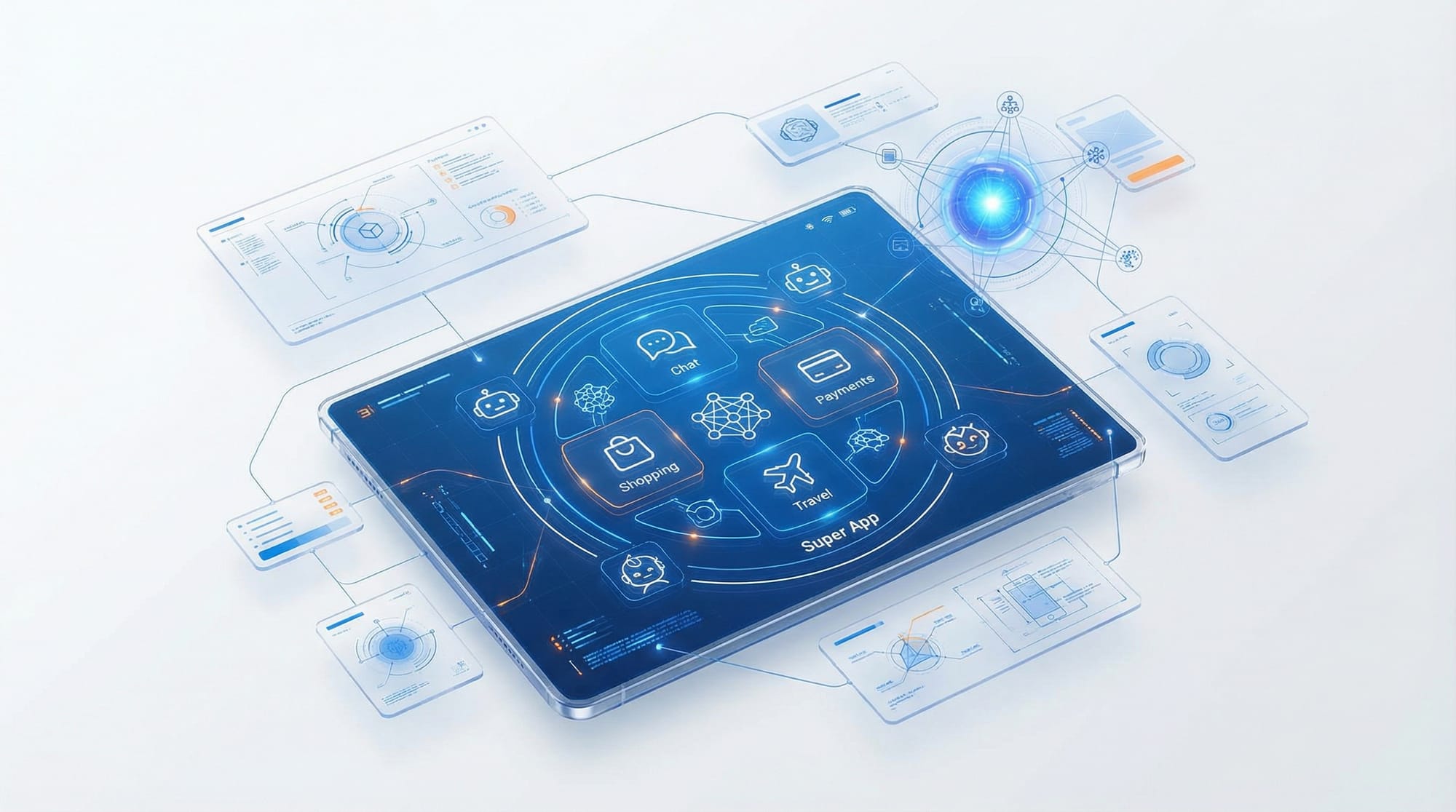
The integration of AI agents into super app ecosystems represents one of the most significant developments in digital platform evolution. Tencent's QClaw (Tencent Lobster) AI agent, recently upgraded to integrate directly with WeChat mini programs, provides a compelling case study in how conversational AI transforms user interaction within established platforms. The March 2026 update enables file transfer between devices, prepares for multimodal interaction, and demonstrates how AI capabilities can enhance rather than replace existing ecosystem functionality. This integration pattern offers valuable insights for organizations considering similar AI implementations within their digital platforms.
Understanding the QClaw Integration Architecture
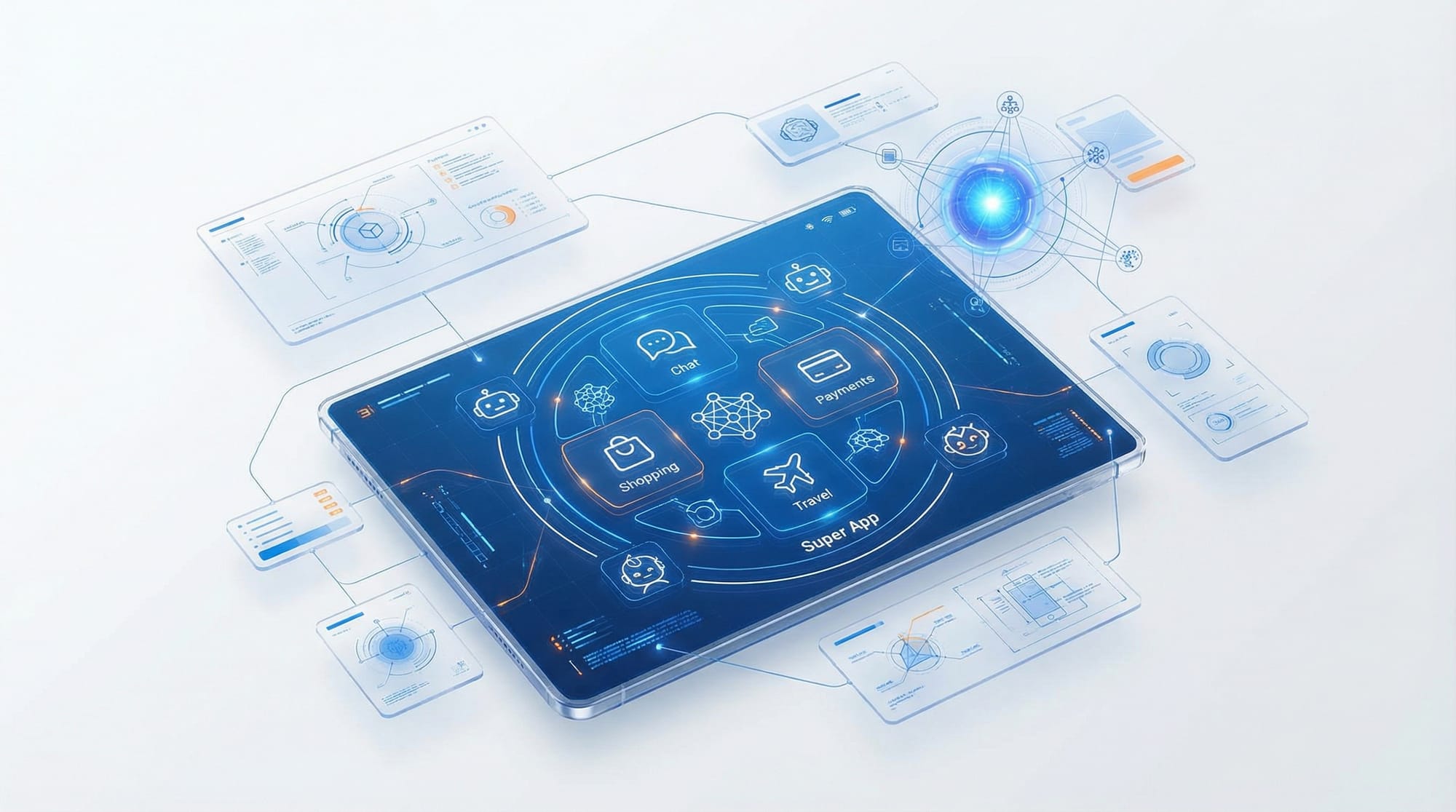
Tencent QClaw's integration with WeChat mini programs follows a carefully designed architecture that balances AI capability with platform constraints. The system moves beyond simple chatbot functionality to enable substantive task execution within the WeChat ecosystem. The integration architecture centers on several key components that enable seamless operation while maintaining platform security and performance standards.
The file transfer capability represents a particularly significant technical achievement. QClaw enables direct file exchange between desktop AI interactions and mobile WeChat mini program interfaces, overcoming traditional barriers between device environments. This capability utilizes WeChat's established file handling infrastructure while adding AI-specific context preservation and workflow management. The implementation demonstrates how AI agents can bridge device boundaries within ecosystem constraints.
Multimodal interaction readiness represents another architectural consideration. While the initial release focuses on file transfer, the architecture prepares for future voice and image interaction capabilities native to WeChat. This forward-looking design enables gradual capability expansion without requiring fundamental architectural changes. The approach reflects lessons from earlier AI integrations that struggled with adding modalities after initial deployment.
The "Inspiration Square" feature addresses user onboarding and discovery challenges common to AI applications. By pre-installing common task templates for office productivity, research, and entertainment scenarios, QClaw reduces the cognitive load associated with prompt engineering. This architectural decision recognizes that most users prefer task-oriented interaction over open-ended conversation, particularly in productivity contexts.
Ecosystem connectivity forms the foundation of the integration architecture. QClaw maintains connections to WeChat's social graph, payment systems, and mini program infrastructure while operating through conversational interfaces. This connectivity enables the AI agent to trigger real ecosystem actions—initiating payments, accessing user data with permission, and interacting with third-party services—rather than operating in isolation.
Implementation Patterns for AI Agent Integration
The QClaw case study reveals several implementation patterns applicable to AI agent integration in super app environments. These patterns address common challenges in conversational AI deployment while leveraging platform-specific advantages.
The bridge pattern connects AI conversation flows with existing platform capabilities. Instead of recreating functionality within the AI system, QClaw identifies when user requests align with existing mini programs or platform features and routes interactions accordingly. This approach maximizes ecosystem utilization while minimizing redundant development. Implementation involves intent recognition, context preservation, and seamless handoff mechanisms between conversational and application interfaces.
The scaffolding pattern provides structured guidance for complex tasks. Rather than expecting users to articulate complete workflows through natural language, QClaw offers template-based approaches for common scenarios. This pattern recognizes that most users benefit from suggested structures even when they customize details. Implementation requires task decomposition, template management, and progressive disclosure of complexity based on user expertise.
The transparency pattern maintains user awareness of AI limitations and capabilities. QClaw clearly indicates when it's accessing external services, processing files, or encountering knowledge boundaries. This transparency builds user trust while managing expectations about AI performance. Implementation involves status communication, capability disclosure, and graceful degradation when encountering unsupported requests.
The ecosystem amplification pattern utilizes AI to enhance rather than replace existing platform features. QClaw doesn't attempt to recreate WeChat's social or payment functionality but instead makes these features more accessible through conversational interfaces. This pattern respects platform investment while improving usability. Implementation requires API integration, permission management, and consistent user experience across conversational and traditional interfaces.
Security and Privacy Considerations
AI agent integration in super app environments introduces significant security and privacy considerations that require careful architectural attention. The National Internet Emergency Response Center recently issued warnings about security risks associated with AI agents requiring high system permissions, highlighting the importance of robust security implementation.
Environment isolation represents a critical security consideration. QClaw operates within controlled sandbox environments that restrict access to sensitive system resources while enabling necessary functionality. This approach balances capability with security, preventing unauthorized access to user data or device functions. Implementation involves permission granularity, runtime restrictions, and audit capabilities for security monitoring.
Data minimization and purpose limitation guide privacy-preserving implementation. The integration collects only necessary data for specific tasks and maintains clear boundaries between different data usage contexts. User consent mechanisms operate at appropriate granularity levels, distinguishing between different types of data access and processing. Implementation includes data classification, consent management, and usage tracking.
Plugin source verification addresses security risks associated with third-party component integration. QClaw implements verification processes for any external components or data sources accessed during operation. This approach prevents malicious code injection or data compromise through supply chain vulnerabilities. Implementation involves signature verification, source reputation assessment, and runtime behavior monitoring.
User control and transparency mechanisms ensure appropriate oversight of AI agent operations. The integration provides users with visibility into AI actions, data access patterns, and external service interactions. Control interfaces enable users to adjust permissions, review activity, and modify AI behavior according to personal preferences. Implementation includes activity logging, permission management interfaces, and explanation capabilities for AI decisions.
Performance and Scalability Challenges
The QClaw integration faces significant performance and scalability challenges inherent to AI agent deployment in large-scale super app environments. These challenges require architectural solutions that maintain responsiveness while supporting growing user bases and increasing complexity.
Conversation context management represents a performance-critical consideration. AI agents must maintain context across potentially lengthy interactions while managing memory usage and response latency. QClaw implements efficient context encoding, selective memory retention, and context pruning strategies to balance continuity with performance. Implementation involves context window optimization, relevance scoring, and compression techniques for conversation history.
Model inference optimization addresses the computational demands of AI processing. The integration utilizes model quantization, caching strategies, and request batching to reduce latency and resource consumption. These optimizations become increasingly important as user volumes grow and conversation complexity increases. Implementation requires performance monitoring, adaptive optimization, and resource allocation strategies.
Ecosystem API integration performance affects overall user experience. The speed of interactions with WeChat's various services—mini program invocation, payment processing, social graph access—directly impacts perceived AI responsiveness. QClaw implements parallel request handling, connection pooling, and predictive prefetching to minimize integration latency. Implementation involves API performance analysis, connection management, and error handling for degraded service conditions.
Scalability architecture supports growing usage patterns without service degradation. The integration employs distributed processing, load balancing, and auto-scaling mechanisms to accommodate variable demand. This architecture becomes particularly important during peak usage periods or viral adoption scenarios. Implementation requires infrastructure planning, monitoring systems, and capacity management processes.
Development and Deployment Workflows
Organizations implementing similar AI agent integrations can benefit from structured development and deployment workflows informed by the QClaw case study. These workflows address the unique challenges of conversational AI development while leveraging established software engineering practices.
Development typically begins with capability definition and constraint identification. Teams should map desired AI functionalities against platform capabilities, identifying integration points and potential limitations. This phase establishes technical feasibility and informs architectural decisions about bridge patterns, scaffolding approaches, and ecosystem connectivity.
Prototyping focuses on core interaction patterns before expanding to comprehensive functionality. Initial implementations should validate conversation flows, integration mechanisms, and user experience fundamentals. This iterative approach enables early feedback and course correction before significant development investment. Prototyping tools specific to conversational AI can accelerate this phase while maintaining alignment with eventual production architecture.
Testing requires specialized approaches for conversational interfaces. Beyond traditional software testing, AI agent testing must evaluate conversation quality, context management, error handling, and integration reliability. Test automation frameworks for conversational AI, combined with human evaluation protocols, provide comprehensive quality assurance. Integration testing with platform APIs ensures consistent performance across ecosystem interactions.
Deployment follows phased rollout patterns to manage risk and gather feedback. Initial releases to limited user groups enable performance monitoring, bug identification, and user experience refinement before broader availability. Canary releases, A/B testing, and feature flagging support controlled experimentation and gradual capability expansion. Monitoring systems should track conversation quality metrics, integration performance, and user satisfaction indicators.
Maintenance and evolution recognize the continuous nature of AI system improvement. Regular model updates, conversation flow refinements, and integration enhancements maintain system relevance and performance. User feedback mechanisms, usage analytics, and competitive monitoring inform prioritization of improvements. Version management and backward compatibility considerations become increasingly important as user bases grow and dependencies expand.
Getting Started with AI Agent Integration
For organizations beginning AI agent integration projects, several starting points emerge from the QClaw case study. First, define clear scope boundaries based on platform capabilities and user needs. Attempting to replicate comprehensive platform functionality within conversational interfaces often leads to complexity and performance challenges. Instead, focus on specific use cases where AI augmentation provides distinctive value.
Second, establish integration architecture early in the development process. Decisions about bridge patterns, scaffolding approaches, and ecosystem connectivity significantly impact implementation complexity and user experience quality. Reference architectures from successful implementations provide valuable guidance while allowing customization for specific requirements.
Third, implement robust security and privacy controls from project inception. Retrofitting security measures after initial deployment often proves challenging and may require significant architectural changes. Early attention to environment isolation, data minimization, and user control mechanisms prevents later security complications.
Fourth, plan for performance and scalability considerations appropriate to expected usage patterns. Even initial implementations should include monitoring capabilities, performance testing approaches, and scalability planning. Early attention to these considerations reduces later rework and supports smooth growth as user adoption increases.
Fifth, establish feedback mechanisms and iteration processes specific to conversational AI. Unlike traditional software where functionality is relatively static between releases, AI systems benefit from continuous improvement based on user interaction patterns. Regular model updates, conversation flow refinements, and integration enhancements maintain system relevance and performance.
For organizations building AI-enhanced platforms, containerized approaches to third-party functionality integration offer proven patterns for maintaining control while enabling innovation. These approaches provide security isolation, performance management, and update flexibility that supports continuous improvement. In enterprise deployments using containerized integration, organizations have achieved 3x faster device service integration and 50% reduction in application development cycles compared to custom AI implementation.
Implementing AI capabilities within established platforms requires balancing innovation with integration quality. Explore how structured approaches to AI agent development enable conversational interfaces while maintaining platform performance and security standards.