AI Agent Enterprise Applications Development Guide 2026: Architecture Patterns and Implementation Strategies
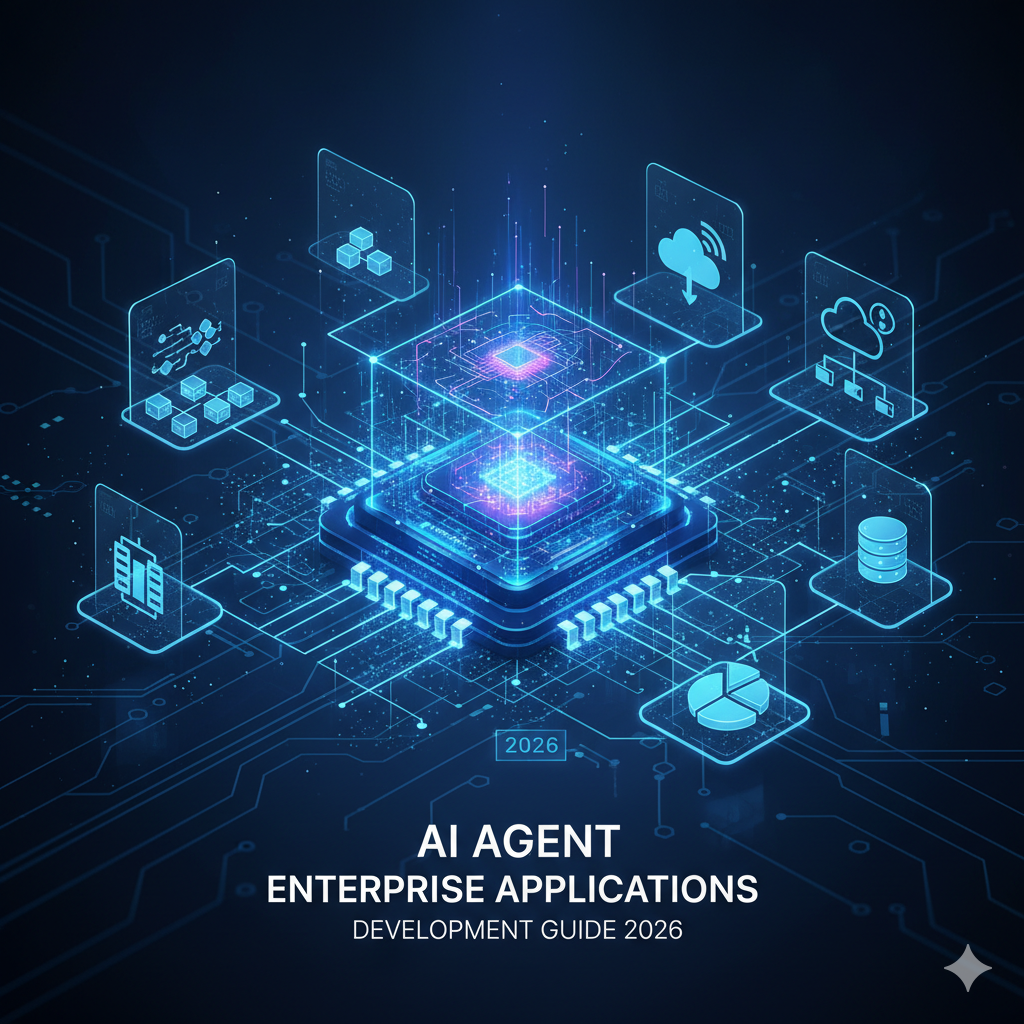
AI agent applications represent a significant evolution in enterprise software, moving beyond passive assistance tools to active systems that can plan, execute, and adapt workflows autonomously. Unlike traditional applications that respond to explicit user commands, AI agents operate with greater autonomy—analyzing contexts, determining appropriate actions, executing multi-step processes, and learning from outcomes to improve future performance. For development teams building enterprise applications in 2026, understanding AI agent architecture patterns, security considerations, integration approaches, and deployment strategies is essential for creating systems that deliver tangible business value while maintaining appropriate oversight and control. This guide provides a comprehensive framework for planning, developing, and deploying AI agent applications within enterprise technology environments.
Understanding AI Agent Architecture Fundamentals
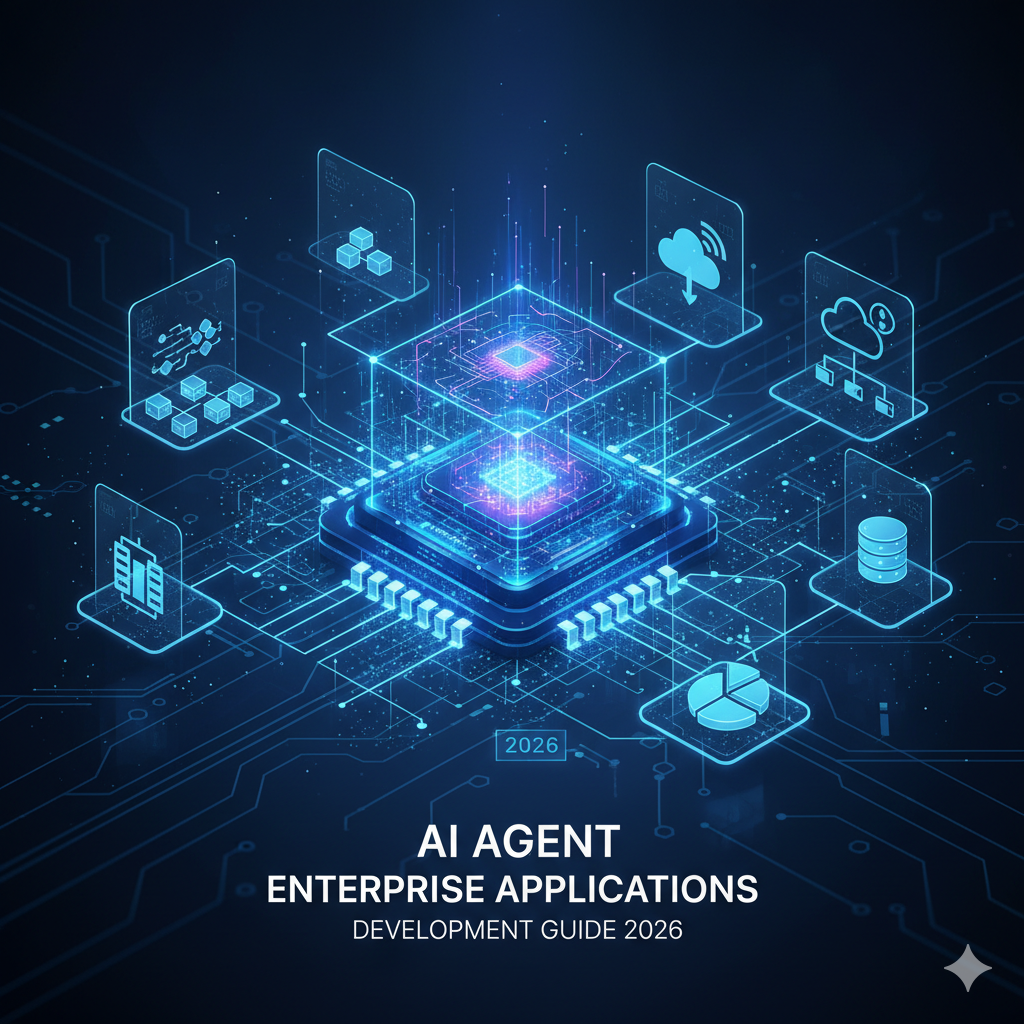
AI agent applications differ fundamentally from traditional software in their architectural requirements and operational characteristics. At the core, agents consist of several interconnected components: perception modules that interpret inputs from users, systems, and data sources; reasoning engines that analyze contexts and determine appropriate actions; execution modules that carry out determined actions through APIs, interfaces, or direct system controls; and learning components that incorporate feedback to improve future performance. This architecture enables the autonomous operation that distinguishes agents from simpler automation scripts or rule-based systems.
The perception layer represents a critical architectural consideration, particularly in enterprise environments where agents must interpret information from diverse sources with varying formats, reliability levels, and access constraints. Effective agent applications incorporate multiple perception channels—natural language understanding for user communications, API integration for system data access, file processing for document analysis, and potentially sensor inputs for physical environment awareness. Each channel requires specialized processing capabilities and error handling mechanisms to ensure agents operate on accurate, timely information regardless of source characteristics.
Reasoning engines form the decision-making core of AI agent applications, balancing several competing requirements: processing speed for real-time responsiveness, reasoning depth for complex problem-solving, explainability for audit and oversight purposes, and safety constraints to prevent harmful actions. Modern implementations typically combine multiple AI techniques—large language models for natural language understanding and generation, specialized reasoning models for domain-specific logic, and rule-based systems for safety-critical constraints. This hybrid approach allows agents to leverage the strengths of different AI methodologies while mitigating their individual limitations.
Execution capabilities determine an agent's practical utility in enterprise environments. While reasoning identifies appropriate actions, execution carries them out through available interfaces—API calls to business systems, user interface interactions for applications without APIs, communication channels for coordinating with human team members, or direct system commands for privileged operations. Execution modules must handle partial failures gracefully, maintain transaction integrity where appropriate, and provide comprehensive logging for audit trails and performance analysis. The complexity of execution requirements often scales with the breadth of systems an agent must interact with, making integration architecture a key determinant of agent capability.
Security and Compliance Considerations
Enterprise AI agent applications operate within environments where security, privacy, and regulatory compliance are non-negotiable requirements. Unlike consumer applications where convenience might outweigh security concerns, enterprise systems must maintain rigorous controls even when enabling autonomous agent operation. Several security dimensions require specific attention in agent application architecture: authentication and authorization for system access, data protection during processing and storage, action validation to prevent harmful operations, and audit trails for compliance verification.
Authentication and authorization present particular challenges for AI agents because they often need to operate across multiple systems with different credential requirements. Rather than storing credentials directly within agent code (a significant security risk), modern implementations use credential management systems that provide temporary, scoped access tokens based on agent identity and intended actions. These systems enable fine-grained permission control—agents can be authorized for specific operations on particular systems without obtaining blanket access to all capabilities. This principle of least privilege becomes increasingly important as agents gain more autonomous capabilities.
Data protection requirements extend throughout the agent lifecycle—from initial perception through reasoning to eventual execution. Sensitive enterprise information processed by agents must remain protected regardless of where processing occurs (local devices, edge servers, or cloud infrastructure). Encryption during transmission, secure storage practices, and data minimization principles (agents should access only necessary information for their tasks) help maintain protection while enabling functionality. Additional considerations include data residency requirements for regulated industries and cross-border data transfer restrictions that might affect where agent processing can occur.
Action validation represents a critical safety mechanism for autonomous systems. Before executing any action—particularly those with potential business impact—agents should validate that the action aligns with intended purposes, falls within authorized boundaries, and doesn't violate established constraints. Validation mechanisms can include rule-based checks, approval workflows for high-impact actions, simulation of potential outcomes before actual execution, and human-in-the-loop review for particularly sensitive operations. These controls help prevent unintended consequences while still enabling agent autonomy for routine, well-understood tasks.
Compliance and audit requirements demand comprehensive logging and monitoring capabilities. Every agent action—from initial perception through final execution—should generate detailed logs including timestamps, involved systems, processed data elements, reasoning paths, and execution outcomes. These logs serve multiple purposes: troubleshooting performance issues, investigating security incidents, demonstrating regulatory compliance, and providing training data for agent improvement. Logging systems must balance detail with performance impact, ensuring comprehensive coverage without degrading agent responsiveness below acceptable thresholds.
Integration Patterns and Implementation Approaches
Successful AI agent deployment in enterprise environments depends heavily on integration architecture—how agents connect with existing systems, data sources, and user interfaces. Several integration patterns have emerged as effective approaches for different enterprise contexts: API-based integration for modern cloud-native systems, interface automation for legacy applications without APIs, event-driven architectures for real-time responsiveness, and hybrid approaches that combine multiple patterns based on specific system characteristics.
API-based integration represents the most straightforward approach for systems with well-defined, documented interfaces. Agents communicate with these systems through standard API calls, receiving structured responses that facilitate automated processing. This pattern works well for cloud services, modern business applications, and custom-developed systems with API layers. Implementation considerations include rate limiting management, error handling for temporary failures, and version compatibility as APIs evolve. For systems with comprehensive API coverage, this approach enables deep integration with minimal custom development.
Interface automation becomes necessary for legacy systems, desktop applications, or other software without accessible APIs. Agents interact with these systems through their user interfaces—reading screen contents, simulating mouse clicks and keyboard input, and interpreting visual feedback. While more fragile than API integration (interface changes can break automation), this approach enables agent functionality where no alternative exists. Implementation typically requires specialized automation frameworks, robust error detection and recovery mechanisms, and regular maintenance to accommodate interface changes. This pattern works best for stable systems with infrequent interface modifications.
Event-driven architectures enable agents to respond to real-time occurrences within enterprise systems. Rather than periodically polling for changes, agents subscribe to event streams—database changes, system notifications, user actions, or external triggers—and initiate appropriate responses when relevant events occur. This pattern provides timely responsiveness while reducing unnecessary processing overhead. Implementation requires event bus infrastructure, reliable delivery mechanisms, and careful design to prevent event storms (cascading agent responses that overwhelm systems). For scenarios requiring immediate reaction to changing conditions, event-driven approaches offer significant advantages.
Hybrid integration combines multiple patterns based on specific system characteristics and agent requirements. A single agent might use API integration for modern cloud services, interface automation for legacy mainframe applications, and event-driven responses for critical monitoring scenarios. This pragmatic approach acknowledges that enterprise environments typically contain heterogeneous systems with different integration capabilities. Implementation requires careful abstraction layers that present a consistent interface to agent reasoning components regardless of underlying integration mechanics, simplifying agent logic while accommodating diverse system characteristics.
Deployment and Scaling Strategies
Deploying AI agent applications at enterprise scale introduces operational considerations beyond initial development. Effective deployment strategies address several dimensions: infrastructure requirements for different deployment models, performance characteristics under varying loads, monitoring and management capabilities for operational oversight, and scaling approaches to accommodate growth. These considerations influence both technical architecture and organizational processes for maintaining agent applications throughout their lifecycle.
Infrastructure decisions begin with deployment model selection: cloud-based, on-premises, edge deployment, or hybrid approaches combining multiple environments. Cloud deployment offers scalability advantages and reduces infrastructure management burden but may face limitations for data-sensitive applications or latency-critical scenarios. On-premises deployment maintains data within organizational boundaries but requires substantial infrastructure investment and management expertise. Edge deployment places agents closer to action points (devices, local networks) for reduced latency but introduces distributed management complexity. Hybrid models attempt to balance these trade-offs based on specific application requirements.
Performance characteristics require careful evaluation throughout the development lifecycle. Agent applications typically exhibit different performance patterns than traditional software—reasoning components may have variable processing times based on complexity, execution components depend on external system responsiveness, and learning components introduce background processing loads. Load testing should simulate realistic usage patterns including peak concurrent users, typical request mixes, and edge-case scenarios. Performance monitoring in production environments should track both overall responsiveness and component-level metrics to identify bottlenecks and optimization opportunities.
Monitoring and management capabilities extend beyond traditional application monitoring to include agent-specific metrics: reasoning quality, action success rates, learning effectiveness, and autonomy appropriateness. Effective monitoring dashboards provide visibility into both technical performance (response times, error rates, resource utilization) and functional outcomes (task completion rates, user satisfaction, business impact). Alerting systems should notify appropriate personnel when agents deviate from expected behavior patterns, encounter unfamiliar scenarios requiring human guidance, or exhibit performance degradation that might indicate underlying issues.
Scaling approaches must accommodate both vertical growth (increasing usage of existing capabilities) and horizontal expansion (adding new agent capabilities or integration points). Vertical scaling typically involves adding computational resources, optimizing performance bottlenecks, and improving efficiency through architectural refinements. Horizontal expansion requires more substantial architectural considerations: modular component design that allows independent scaling, clear interface definitions between components, and deployment automation that simplifies adding new capabilities. Successful scaling strategies anticipate both dimensions of growth rather than optimizing exclusively for initial requirements.
Getting Started with AI Agent Development
Development teams beginning AI agent projects should follow several foundational steps to establish solid architecture and implementation practices. First, define clear scope boundaries for initial agent capabilities, focusing on well-understood, high-value use cases rather than attempting comprehensive functionality from the outset. Narrow scope enables faster iteration, clearer success measurement, and more manageable complexity during initial development phases. Document both functional requirements (what the agent should accomplish) and non-functional requirements (performance, security, compliance constraints) to guide architectural decisions.
Second, establish development environments that mirror production characteristics as closely as practical. Agent development often involves experimentation with different AI techniques, integration approaches, and user interaction patterns—environments that support rapid iteration without production system risks accelerate learning and refinement. Consider containerized development environments, mock services for external system dependencies, and synthetic data generation for training and testing purposes. These environments should support the full agent lifecycle from perception through execution to enable comprehensive testing.
Third, implement monitoring and feedback mechanisms from the earliest development phases. Even prototype agents should generate logs, capture performance metrics, and record user interactions to inform iterative improvement. Early monitoring establishes patterns that scale to production deployment while providing valuable data for refining agent behavior. Consider implementing A/B testing capabilities for different reasoning approaches, execution strategies, or user interface designs to gather empirical data about what works best for specific use cases.
Fourth, establish governance processes that balance autonomy with appropriate oversight. Define approval workflows for agent actions with potential business impact, review mechanisms for agent behavior patterns, and escalation procedures for unfamiliar scenarios. These governance structures should evolve as agents mature—initially more restrictive oversight that gradually transitions to greater autonomy as confidence in agent capabilities grows. Regular review cycles ensure governance remains appropriate for current agent sophistication and business context.
In enterprise deployments using FinClip, development teams have achieved 70% faster service rollout and 50% lower development maintenance costs through containerized mini-program architectures. The security sandbox provides device-side isolation that prevents agent actions from affecting host application stability, while hot update capabilities enable continuous improvement based on performance monitoring data. This architectural approach supports rapid iteration of agent capabilities while maintaining production system reliability and security standards.
Explore FinClip ChatKit—open-source AI chat middleware.