Agentic AI Meets Embedded Finance: The Future of Intelligent Banking Platforms in 2026
Executive Summary
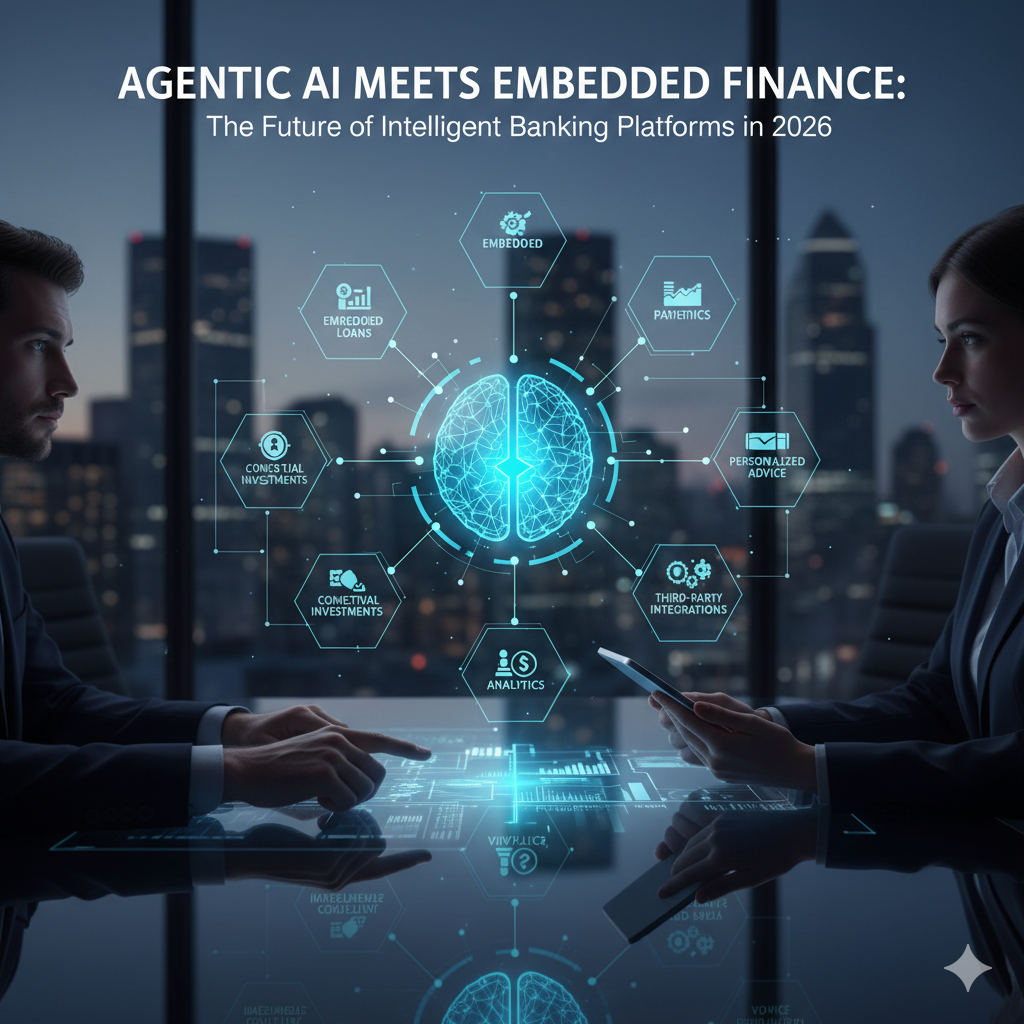
The convergence of Agentic AI and embedded finance is creating a paradigm shift in how financial services are delivered and consumed. According to Backbase's 2026 predictions, AI is moving from experimental labs to frontline banking operations, with 78% of banks transitioning from "tactical mode" to enterprise-wide AI deployment. Simultaneously, the embedded finance market, valued at $104.8 billion in 2024, is projected to reach over $834 billion by 2034, representing a 23% annual growth rate. This article explores how platforms like FinClip are enabling financial institutions to harness these twin trends, creating intelligent banking ecosystems where AI-driven agents seamlessly orchestrate embedded financial services within unified customer experiences.
The Rise of Agentic AI in Financial Services
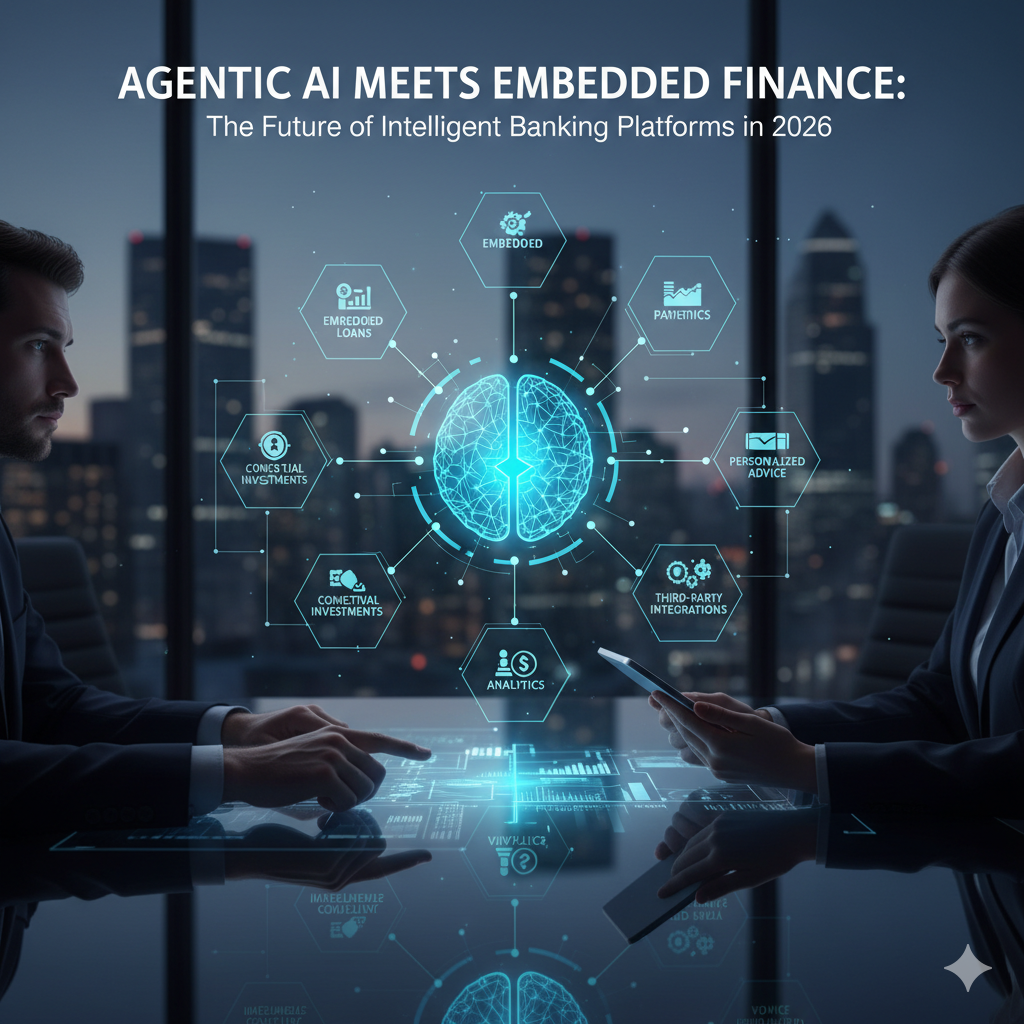
From Chatbots to Autonomous Financial Agents
The evolution of AI in banking has followed a clear trajectory from basic automation to sophisticated autonomy:
- Rule-Based Systems (Pre-2020): Simple automated responses based on predefined rules and decision trees.
- Conversational AI (2020-2024): Natural language processing enabling more fluid customer interactions but limited to information retrieval and basic transactions.
- Agentic AI (2025-Present): Systems capable of autonomous decision-making, proactive service delivery, and complex workflow orchestration.
According to research from S&P Global, Agentic AI represents the next era of automation in B2B payments and is becoming a significant fraud detection tool. These systems don't just respond to user requests—they anticipate needs, make decisions, and execute transactions with minimal human intervention.
Technical Capabilities of Modern Agentic AI
Today's most advanced financial AI agents possess several key capabilities:
- Contextual Understanding: Ability to interpret user requests within broader financial contexts, including transaction history, market conditions, and personal financial goals.
- Multi-Step Workflow Execution: Capacity to orchestrate complex sequences of actions across multiple systems and services.
- Learning and Adaptation: Continuous improvement based on user feedback and changing financial circumstances.
- Explainable Decision-Making: Transparent reasoning processes that build user trust and facilitate regulatory compliance.
Embedded Finance: The Infrastructure for Service Integration
Evolution from API Banking to Comprehensive Ecosystems
Embedded finance has evolved significantly from its origins in simple payment APIs:
Phase 1: API Integration (2018-2022)
- Basic financial functionality exposed through APIs
- Limited to payments and account information
- Primarily compliance-driven (open banking mandates)
Phase 2: Embedded Services (2023-2025)
- Deeper integration of lending, insurance, and investment products
- Contextual placement within user journeys
- Emergence of Banking-as-a-Service (BaaS) platforms
Phase 3: Intelligent Ecosystems (2026-Present)
- AI-driven service orchestration
- Dynamic personalization based on real-time data
- Seamless blending of financial and non-financial services
The Technical Architecture Behind Embedded Finance
Modern embedded finance solutions rely on sophisticated technical architectures:
- Modular Service Components: Independent, reusable financial service modules that can be combined in various configurations.
- Real-Time Data Integration: Immediate access to transaction data, user behavior, and market information.
- Compliance Automation: Built-in regulatory checks and reporting capabilities.
- Orchestration Layer: Intelligent routing of requests to appropriate service providers based on cost, speed, and quality factors.
FinClip: Enabling the AI-Finance Convergence
Container Technology as the Unifying Platform
FinClip provides the essential infrastructure that allows Agentic AI and embedded finance to work together effectively:
Technical Integration Points:
- Unified Service Container: All embedded financial services, whether first-party or third-party, run within FinClip's secure sandbox environment, providing consistent management and security controls.
- AI Agent Interface Layer: Specialized APIs and SDKs allow AI systems to discover, invoke, and monitor embedded services without needing to understand their underlying technical implementations.
- Real-Time Performance Monitoring: Comprehensive analytics on both AI agent behavior and embedded service performance, enabling continuous optimization.
Case Study: Intelligent Financial Assistant Implementation
A leading European bank implemented an AI-powered financial assistant using FinClip's platform, achieving remarkable results:
- 45% Reduction in Customer Service Calls: Common inquiries and transactions handled autonomously by AI agents.
- 28% Increase in Cross-Sell Success Rate: AI-driven recommendations based on holistic understanding of customer needs across embedded services.
- 63% Faster New Service Deployment: Modular architecture allowing rapid integration of additional financial products.
Business Implications and Value Creation
Revenue Opportunities in Intelligent Banking Ecosystems
The combination of Agentic AI and embedded finance creates multiple new revenue streams:
- Intelligent Service Fees: Charging for premium AI-driven financial guidance and automation.
- Enhanced Partner Monetization: More effective matching of customer needs with appropriate third-party services, increasing conversion rates and commission income.
- Data-Driven Product Development: Insights from AI-agent interactions informing the creation of new, highly targeted financial products.
Operational Efficiency Gains
Financial institutions implementing these technologies report significant operational benefits:
- 70% Reduction in Manual Processing: AI agents handling routine transactions and compliance checks.
- 40% Improvement in Fraud Detection: Advanced AI algorithms identifying suspicious patterns across embedded services.
- 85% Faster Resolution of Complex Issues: AI systems coordinating multiple service providers to resolve customer problems.
Regulatory and Ethical Considerations
Navigating the AI-Finance Regulatory Landscape
The integration of Agentic AI with embedded finance raises several important regulatory considerations:
- Algorithmic Accountability: Regulators are increasingly focused on ensuring that AI-driven decisions can be explained and justified, particularly in areas like credit scoring and investment recommendations.
- Data Privacy Across Ecosystems: Ensuring that user data shared across embedded services receives appropriate protection and that AI systems respect privacy boundaries.
- Consumer Protection in Automated Transactions: Establishing clear liability frameworks for transactions initiated by AI agents without direct human approval.
FinClip's Regulatory Compliance Features
FinClip addresses these challenges through several key capabilities:
- Transparent AI Integration Points: Clear documentation of how AI systems interact with embedded services, facilitating regulatory review.
- Granular Consent Management: Sophisticated tools for managing user permissions across multiple services and AI functions.
- Comprehensive Audit Trails: Detailed logging of all AI agent activities and embedded service interactions.
Future Trends and Strategic Implications
The Next Evolution: Predictive and Prescriptive Finance
Looking beyond 2026, the convergence of Agentic AI and embedded finance will evolve in several important directions:
- Predictive Financial Health: AI systems that can forecast individual financial situations and proactively suggest interventions.
- Prescriptive Financial Planning: Automated creation and execution of comprehensive financial plans spanning multiple embedded services.
- Context-Aware Service Orchestration: AI that understands not just what services are available, but which combinations create optimal outcomes for specific situations.
Strategic Recommendations for Financial Institutions
Based on current technological developments and market trends, financial institutions should consider the following strategic approaches:
- Develop AI-First Service Architectures: Design new financial services with AI integration as a core requirement rather than an afterthought.
- Create Modular Service Portfolios: Build financial products as independent, composable modules that can be easily combined and reconfigured by AI systems.
- Invest in Explainable AI Capabilities: Prioritize transparency and interpretability in AI systems to build user trust and ensure regulatory compliance.
- Establish Clear Governance Frameworks: Develop comprehensive policies for AI decision-making, particularly in areas with significant financial consequences for users.
Implementation Roadmap
Phase 1: Foundation Building (6-12 Months)
- Implement container technology (e.g., FinClip) to create unified service platform
- Develop basic AI capabilities for customer service and transaction processing
- Establish initial set of embedded financial services
Phase 2: Integration and Optimization (12-24 Months)
- Connect AI systems to embedded services through standardized interfaces
- Implement advanced personalization algorithms
- Develop comprehensive analytics and monitoring capabilities
Phase 3: Advanced Intelligence (24-36 Months)
- Deploy predictive and prescriptive financial capabilities
- Establish full ecosystem orchestration
- Implement sophisticated ethical and regulatory compliance frameworks
Conclusion
The convergence of Agentic AI and embedded finance represents one of the most significant developments in financial services technology. By creating intelligent platforms that can autonomously discover, evaluate, and orchestrate financial services, institutions can deliver unprecedented value to customers while creating new business opportunities.
Platforms like FinClip provide the essential infrastructure that makes this convergence possible, offering the security, scalability, and flexibility needed to build sophisticated financial ecosystems. As we move through 2026 and beyond, the institutions that successfully harness these technologies will be those that balance technical innovation with ethical considerations, user-centric design with commercial objectives, and platform expansion with robust governance.
The future of banking is not just digital—it's intelligent, integrated, and increasingly autonomous. The tools and frameworks now exist to make this vision a reality; the question is whether financial institutions have the strategic vision and execution capability to lead this transformation.